The detailed biomineralization mechanisms of planktic and benthic foraminifera is still enigmaticand a topic of active research. Much progress has been achieved in developing biomineralizationmodels for some benthic hyaline species (e.g. Erez, 2009; de Nooijer, 2014) and in discovering thatthe original phase composition of planktic Orbulina universa (d’Orbigny, 1839) is metastablevaterite and not calcite, supporting a non-classical crystallization pathway for this importantspecies (Jacob et al. 2017). It is, however, less clear to date whether these results can be replicatedin other foraminifera species and models for their formation can be generalized.To extend our earlier studies on planktic species, we studied four species of benthic foraminiferafrom the Australian Great Barrier Reef, namely Amphistegina lobifera (Larsen, 1976),Baculogypsina sphaerulata (Parker and Jones, 1860), Calcarina capricornia (Mamo, 2016) andMarginopora vertebralis (Quoy and Gaimard, 1830). Samples were collected alive and pulsechase labelled with Sr in aquaculture before carrying out a detailed, multi-scale study of theirarchitecture. We used Electron Backscatter Diffraction, Nano-SIMS, Focussed Ion Beam assistedTransmission Electron Microscopy, Micro-Raman Spectroscopy and Photo-induced ForceMicroscopy (Otter et al. 2021) to elucidate and compare phase compositions, micro-architectureand organic chemistry of the shells. Our results contribute to understand the details offoraminiferal biomineralization and to develop a general model for shell formation across allforaminifera species.de Nooijer , L.J. et al. (2014). Biomineralization in perforate foraminifera. Earth-Science Reviews135, 48-58.Erez, J. (2003). The source of ions for biomineralization in foraminifera and their implications forpaleoceanographic proxies. Reviews in Mineralogy and Geochemistry 54, 115-149.Jacob, D.E. et al. (2017). Planktic foraminifera form their shells via metastable carbonate phases.Nature Communications, 8, 1265Otter, L.M. et al. (2021) Nanoscale Chemical Imaging by Photo‐Induced Force Microscopy:Technical Aspects and Application to the Geosciences. Geostandards and Geoanalytical Research45, 5-27.
The cratonic crust contains abundant mineral deposits of metals such as gold, copper and rare earths1–5 and is underlain by a thick mantle lithosphere rich in the volatiles carbon, sulfur and water6–8. Although volatiles are known to be key components in metallogenesis9, how and where they are distributed in the cratonic lithosphere mantle and their role in the initial enrichment of metals have not been sufficiently explored. Here we compile sulfur and copper contents of global cratonic peridotites, identifying sulfide-rich and copper-rich continental roots at depths of 160–190 km at cratonic margins. Our new high-pressure experiments show that carbonated silicate melts originating from the asthenosphere lose silicate components during reaction with lithospheric peridotite, evolving to carbonatite melts that become concentrated at cratonic margins. Sulfur solubility in melts substantially decreases as the SiO2 content of melts decreases during this process, forcing sulfide precipitation and the formation of sulfide-rich continental roots at the base of the mantle lithosphere. The migration of carbonated melts towards cratonic margins replenishes the continental roots there with sulfur, explaining the co-location of magmatic metal deposits with carbonatites close to cratonic margins. These findings highlight the notable role of carbonated melts in metallogenesis and provide a potential platform for metal ore exploration. Examination of the sulfur and copper contents of global cratonic peridotites combined with new high-pressure experiments shows that the migration of carbonated melts towards cratonic margins explains the co-location of magmatic metal deposits with carbonatites.
The continental lithosphere is an enormous reservoir for carbon, but its sequestration and release over geological time are poorly understood. Recent advances indicate that estimates of the amount of carbon released by gradual degassing from the mantle need to be revised upwards, whereas the carbon supplied by plumes may have been overestimated in the past. Variations in rock types and oxidation state may be very local, exerting strong influences on carbon storage and release mechanisms. Deep subduction of thick sedimentary packages may be prevented by diapirism, whereas thinner sequences may be subducted. Carbonates stored in the transition zone melt when they heat up, a process which is recognised by coupled stable isotope systems (e.g. Mg, Zn, Ca). There is no uniform “mantle oxygen fugacity”, and heterogeneous oxidation conditions are likely to exist, particularly at the thermal boundary layer and in the lowermost lithosphere where very local mixtures of rock types coexist. The infiltration of carbonate-rich melts from either subduction or melting of the uppermost asthenosphere leads to trapping of carbon by redox freezing or as carbonate-rich dykes in this zone. Deeply-derived, reduced melts may form additional diamond reservoirs, recognised as polycrystalline diamonds associated with websteritic silicate minerals. Carbon is released by either edge-driven convection, which tears down sections of the thermal boundary layer and lower lithosphere so that they melt by a mixture of heating and oxidation, or by lateral advection of solids beneath rifts. Both mechanisms are concentrated at changes in lithosphere thickness and result in carbonate-rich melts, explaining the spatial association of craton edges and carbonate-rich magmatism. High-pressure experiments on individual rock types, and increasingly on reactions between rocks and melts, are fine-tuning our understanding of processes and providing unexpected results that are not seen in experiments on single rocks. Future research should concentrate on elucidating local variations and integrating these with the interpretation of geophysical signals. Global concepts such as average sediment compositions and a uniform mantle oxidation state are not appropriate models for small scale processes; an increased focus on local variations will help to refine carbon budget models.
Polycrystalline diamond aggregates (PDAs) are small rocks composed mostly of diamond grains, but often containing also peridotitic, eclogitic and/or websteritic minerals as accessory phases. PDAs are formed rapidly in Earth's mantle, and the diamonds preserve heterogeneity not often seen in monocrystalline diamond. Here, diamond grains from forty-three PDAs from the Venetia diamond mine (RSA) with grain-sizes < 1 mm are presented. They have heterogeneous and complex cathodoluminescence signatures that are best explained by multiple, separate diamond growth episodes from compositionally distinct COH fluids/melts. The diamonds show a large range of nitrogen concentrations (0.5 to 2,891 at. ppm), delta N-15 (-4.3 to + 16.8 parts per thousand) and delta C-13 values (-27.8 to -7.6 parts per thousand). The positive delta N-15 median of + 6.4 parts per thousand and negative delta C-13 median of -21.2 parts per thousand indicate derivation of the diamond-forming fluid from organic materials in subducted oceanic crust and lithosphere. Two PDAs have delta C-13 and delta N-15 values typical for Earth's mantle. Thirty-three PDAs contain websteritic garnets, or peridotitic garnets and clinopyroxenes and/or micas. Unradiogenic epsilon Nd-i values in the garnets (-15.9 to -29.7) and clinopyroxene (-8.3) and delta O-18 values of 6.49 to 8.09 parts per thousand in websteritic garnets are consistent with an origin from subducted altered oceanic crust and support the findings from N and C systematics in the diamonds. Nitrogen aggregation data for the diamonds range from 25 % to 100 %B and vary by as much as 60 % within some individual PDAs. We explain the geochemical and isotopic heterogeneity of diamonds and silicates as well as the complex cathodoluminescence features with a model of episodic melt/fluid -rock interaction involving a reducing asthenospheric melt in the cratonic roots or the thermal boundary layer. We suggest that large volumes of PDA are formed in the cratonic roots and thermal boundary layer by this mechanism, making them an important reservoir for carbon storage, which is corroborated with their locally high abundance (ca. 20 %) in some kimberlites.
Key Points An analytical strategy for determining boron isotope ratios in Ca‐amphiboles using LA‐MC‐ICP‐MS is presented. Accurate δ 11 B results can be achieved using the USGS BHVO‐2G glass as the calibrating reference material. Two proposed Ca‐amphibole RMs exhibit good homogeneity with δ 11 B intermediate measurement precision of 2.86‰ and 3.96‰ (2 s ).
Recent advances indicate that the amount of carbon released by gradual degassing from the mantle needs to be revised upwards, whereas the carbon supplied by plumes may have been overestimated in the past. Variations in rock types and oxidation state may be very local and exert strong influences on carbon storage and release mechanisms. Deep subduction may be prevented by diapirism in thick sedimentary packages, whereas carbonates in thinner sequences may be subducted. Carbonates stored in the mantle transition zone will melt when they heat up, recognized by coupled stable isotope systems (e.g. Mg, Zn, Ca). There is no single 'mantle oxygen fugacity', particularly in the thermal boundary layer (TBL) and lowermost lithosphere, where very local mixtures of rock types coexist. Carbonate-rich melts from either subduction or melting of the uppermost asthenosphere trap carbon by redox freezing or as carbonate-rich dykes in this zone. Deeply derived, reduced melts may form further diamond reservoirs, recognized as polycrystalline diamonds associated with websteritic silicate minerals. Carbon is released by either edge-driven convection, which tears sections of the TBL and lower lithosphere down so that they melt by a mixture of heating and oxidation, or by lateral advection of solids beneath rifts. Both mechanisms operate at steps in lithosphere thickness and result in carbonate-rich melts, explaining the spatial association of craton edges and carbonate-rich magmatism. High-pressure experiments on individual rock types, and increasingly on reactions between rocks and melts, are fine-tuning our understanding of processes and turning up unexpected results that are not seen in studies of single rocks. Future research should concentrate on elucidating local variations and integrating these with the interpretation of geophysical signals. Global concepts such as average sediment compositions and a uniform mantle oxidation state are not appropriate for small-scale processes; an increased focus on local variations will help to refine carbon budget models.
AbstractThis article describes a novel dataset on non‐diamondiferous eclogite and garnet pyroxenite xenoliths from four kimberlite pipes of the Ekati Diamond Mine (Central Slave Craton, Canada). Xenoliths brought to the surface by kimberlite eruptions are direct sources of information on the composition and evolution of the Earth's mantle. Eclogite and garnet pyroxenite xenoliths, specifically, are testimony of subduction into, and metasomatism of, the mantle beneath cratons. Furthermore, these rocks are major hosts for diamond and thus an important part of the deep carbon cycle. The sample suite consists of 41 small xenoliths (2–5 cm) recovered from drill cores. The dataset includes major and trace element concentrations for garnet, clinopyroxene and ilmenite, as well as stable oxygen isotope compositions of garnets. Strontium and neodymium isotopic compositions are reported for garnet and clinopyroxene for four samples which were large enough to allow for analysis. Overall, this dataset significantly expands and complements existing datasets on diamondiferous and non‐diamondiferous xenoliths from the Slave Craton in Canada, furthering our understanding of the composition of the Slave subcratonic lithosphere. The dataset includes several samples with rare mineral assemblages, including an olivine‐bearing eclogite as well as ilmenite and apatite‐bearing garnet‐pyroxenites, and thus provides data shedding light on rarely reported compositional nuances in xenolith suites found in kimberlites.
Biominerals, such as nacreous bivalve shells, are important archives of environmental information. Most marine calcifiers form their shells from amorphous calcium carbonate, hypothesised to occur via particle attachment and stepwise crystallisation of metastable precursor phases. However, the mechanism of this transformation, including the incorporation of trace elements used for environmental reconstructions, are poorly constrained. Here, using shells of the Mediterranean mussel, we explore the formation of nacre from the meso- to the atomic scale. We use a combination of strontium pulse-chase labelling experiments in aquaculture and correlated micro- to sub-nanoscale analysis to show that nacre grows in a dynamic two-step process with extensional and space-filling growth components. Furthermore, we show that nacre crystallizes via localised dissolution and reprecipitation within nanogranules. Our findings elucidate how stepwise crystallization pathways affect trace element incorporation in natural biominerals, while preserving their intricate hierarchical ultrastructure.
Kimberlitic, kamafugitic and alkaline-carbonatitic (KKAC) rocks have been proposed to be directly related to supercontinent cycles. However, the hybrid nature of KKAC magmas complicates the geochronological studies required to understand their mutual relationships. Robust evaluation of their history depends on appropriate choice of dating techniques and careful attention to the nature of the dated material. Extensive KKAC outcrops in the magmatic province on the south-western margin of the Sao Francisco Craton (SW-SFC) are heavily weathered and most existing ages are based on residual perovskite, phlogopite, apatite and zircon. A multi-methodological appraisal (in situ U-Pb on perovskite and zircon, in situ Rb-Sr on phlogopite; major and trace elements) shows that both primary minerals and entrained xenocrysts (perovskite, phlogopite, zircon) can be found within the same pipe. Most xenocrysts can be recognised from microstructural features, chemical/isotopic differences and/or the petrological incompatibility of a phase (e.g., zircon) that cannot be cognate in the KKAC melts. Xenocrysts of phlogopite and a few apatites suggest that the KKAC magmatism may have begun as early as ca 110 Ma but is cryptic, i.e. poorly expressed in surface eruptions. When the (maximum) ages derived from xenocrysts are filtered out, accepted intrusion ages group almost entirely in the period of 76-88 Ma, with mean ages of 80, 79 and 83 Ma for kimberlites, kamafugites and alkaline-carbonatite rocks, respectively. This timing, and the location of the KKAC eruptions 400-900 km from the continental shelf margin, are consistent with a geodynamic model in which far-field mantle melting and magmatism is driven by the migration of convective instabilities from the margin of an opening ocean, beneath the adjacent craton roots. The refined geochronological framework thus suggests that the KKAC magmatism in the SW-SFC is best interpreted as a far-field effect of the South Atlantic opening (ca 127 Ma). & COPY; 2023 International Association for Gondwana Research. Published by Elsevier B.V. All rights reserved.
Olivines are a major constituent of kimberlites and carry important information on the evolution of the kimberlite magma. In this study, eighty-six olivines from the Jericho kimberlite in the Slave Craton, Canada were analyzed for major and trace elements, and fourteen major element transects were acquired across magmatic rims. Three main olivine populations are identified based on chemical composition: peridotite xenocrysts, megacryst xenocrysts, and phenocrysts. Peridotite xenocrysts (72 vol%) have Al-in-olivine temperatures (950-1100 degrees C) indicating that they are derived from the 150 km interface between the shallow and deep lithospheric mantle layers. Megacryst xenocrysts (18 vol%) have positively-correlated Mg# (87-90) and NiO contents (0.15-0.45 wt%) which can be reproduced by crystal fractionation of an Fe-rich, reduced siliceous melt originating at ca 350 km depth as constrained by melting experiments. This modelling and geothermobarometric calculations on polymineralic megacryst xenoliths place emplacement depth at ca 150 km. Phenocrysts (10 vol %) have a wider range of Mg# (89.6-91) than is typical for other kimberlites and come in two varieties. HighNiO phenocrysts (0.25-0.40 wt%) are often angular and finely-veined, and have compositions similar to the transitional and internal zones of rimed xenocrysts. Low-NiO phenocrysts (0.10-0.25 wt%) are small and euhedral, have compositions similar to the outer rim, and are higher in Na, Ca, Al, Cr, V, Sc and lower in Y, Zr, Ti, Nb, P compared to high-NiO phenocrysts. These petrographic and compositional characteristics indicate that high-NiO phenocrysts represent olivine from peridotite metasomatized by a melt, while low-NiO phenocrysts represent crystallization products. Low-NiO phenocryst compositions can be reproduced by orthopyroxene digestion and olivine fractionation of a reduced, siliceous "protokimberlite" melt which had fractionated 12 to 20% olivine. These results suggest a major change in the properties and composition of the Jericho kimberlite parental melt at the 150 km interface between the shallow and deep lithospheric mantle layers, which is attributed to assimilation of carbonate at this depth.
Increased interest in backyard food production has drawn attention to the risks associated with urban trace element contamination, in particular lead (Pb) that was used in abundance in Pb-based paints and gasoline. Here we examine the sources, pathways and risks associated with environmental Pb in urban gardens, domestic chickens and their eggs. A suite of other trace element concentrations (including As, Cd, Cr, Cu, Hg, Mn, Ni, Pb, Zn) are reported from the sampled matrices. Sixty-nine domestic chickens from 55 Sydney urban gardens were sampled along with potential sources (feed, soil, water), blood Pb concentrations and corresponding concentrations in eggs. Age of the sampled chickens and house age was also collected. Commercial eggs (n = 9) from free range farms were analysed for comparative purposes. Study outcomes were modelled using the large Australian VegeSafe garden soil database (>20,000 samples) to predict which areas of inner-city Sydney, Melbourne and Brisbane are likely to have soil Pb concentrations unsuitable for keeping backyard chickens. Soil Pb concentrations was a strong predictor of chicken blood and egg Pb (p=<0.00001). Almost 1 in 2 (n = 31/69) chickens had blood Pb levels >20 μg/dL, the level at which adverse effects may be observed. Older homes were correlated with higher chicken blood Pb (p = 0.00002) and egg Pb (p = 0.005), and younger chickens (<12 months old) had greater Pb concentrations, likely due to increased Pb uptake during early life development. Two key findings arose from the study data: (i) in order to retain chicken blood Pb below 20 μg/dL, soil Pb needs to be < 166 mg/kg; (ii) to retain egg Pb < 100 μg/kg (i.e. a food safety benchmark value), soil Pb needs to be < 117 mg/kg. These concentrations are significantly lower than the soil Pb guideline of 300 mg/kg for residential gardens. This research supports the conclusion that a large number of inner-city homes may not be suitable for keeping chickens and that further work regarding production and consumption of domestic food is warranted.
 Steve Foley合作论文数School of Natural Sciences, Macquarie University46
 Laura M. Otter合作论文数Macquarie Univ, Dept Earth & Planetary Sci, Sydney, NSW, Australia22
 Ursula Wehrmeister合作论文数18
 Analia L Soldati合作论文数14
 Gregor Markl合作论文数Fachbereich Geowissenschaften, Mathematisch-Naturwissenschaftliche Fakultat, Universitat Tubingen13
 Thomas Zack合作论文数Mineralogisches Institut, Universität Heidelberg13
 Oluwatoosin Agbaje合作论文数12
 Wolfgang Hofmeister合作论文数12
 Jochen Halfar合作论文数Department of Earth Sciences, Faculty of Arts and Science, University of Toronto10Tatjana Rehfeldt合作论文数10Buhre Stephan合作论文数9
 Stephan E Wolf合作论文数Institut für Anorganische;Johannes Gutenberg-Universität Mainz;Institut für Anorganische, Johannes Gutenberg-Universität Mainz9Analia L. Soldati合作论文数9
 Holger Sommer合作论文数University of the Free State Department of Geology9
 Robert Hovden合作论文数Department of Materials Science & Engineering, College of Engineering, University of Michigan8
 Gim, J.合作论文数8
 Förster Michael合作论文数Department of Physiology, McGill University;Complex Traits Group, McGill University;McGill University, McGill University8
 Richard Stern合作论文数Department of Earth and Atmospheric Sciences, Faculty of Science, University of Alberta8
 Ulrike Weis合作论文数Max Planck Inst Chem, D-55020 Mainz, Germany8
 Patrick Trimby合作论文数Carl Zeiss Ltd8
 Klaus Jochum合作论文数Max-Planck-Institut für Chemie8
 B. Stoll合作论文数Max-Planck-Institut für Chemie8
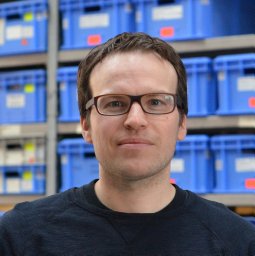 Steffen Hetzinger合作论文数IFM-GEOMAR, Leibniz Institut für Meereswissenschaften8
 Dejan Prelevic合作论文数Institute of Geosciences, Johannes Gutenberg University Mainz8
 Robert Steneck合作论文数School of Marine Sciences, The University of Maine7
 Sue O'Reilly合作论文数School of Natural Sciences, Faculty of Science and Engineering, Macquarie University7
 Andreas Kronz合作论文数IDS Scheer AG7
 Regina Mertz-Kraus合作论文数7
 Fabrizio Nestola合作论文数Dipartimento di Geoscienze, Università di Padova7
 Michael Marks合作论文数Universität Tübingen, Universität Tübingen7Matt R. Kilburn合作论文数Centre for Microscopy, Characterisation and Analysis, The University of Western Australia7
 Bruno Colas合作论文数Australian Nucl Sci & Technol Org, Australian Ctr Neutron Scattering6
 Derek Nowak合作论文数6Katja Eder合作论文数6K. S. (Fanus) Viljoen合作论文数6
 Thomas Wenzel合作论文数6
 Branwen Williams合作论文数School of Geography;McMaster University;School of Geography, McMaster University6
 Sonja Aulbach合作论文数Department of Geosciences, Goethe-Universität Frankfurt;Institut für Geowissenschaften, Goethe-Universität Frankfurt6
 Graham Pearson合作论文数Faculty of Science, University of Alberta6
 Emil Jagoutz合作论文数Max-Planck-Institut far Chemie;Abteilung Kosmochemie6Padraic O'Reilly合作论文数5
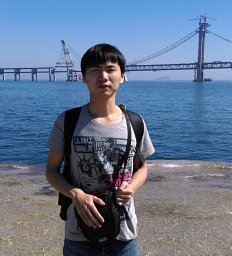 Chunfei Chen (陈春飞)合作论文数State Key Lab Geol Proc & Mineral Resources, China Univ Geosci5
 Hadrien Henry合作论文数CCFS and GEMOC ARC National Key Centre, Macquarie University5
 Richard Wirth合作论文数Helmholtz Centre Potsdam, German Research Centre for Geosciences5
 Bernd R. Schöne合作论文数Institute of Geosciences, University of Mainz;Max Planck Graduate Center5Bernd Hoppe合作论文数5
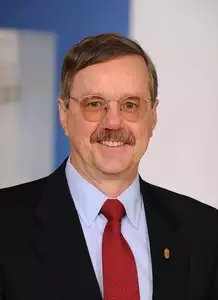 Meinrat O. Andreae合作论文数Department of Biogeochemistry, Max Planck Institute for Chemistry5
 Thomas Stachel合作论文数Department of Earth and Atmospheric Sciences, Faculty of Science, University of Alberta5




