Nucleophilic addition to strained rings is an efficient approach for the synthesis of polysubstituted cyclobutanes, which are privileged structural scaffolds in many pharmaceuticals. In this work, we have developed a simple, efficient, transition-metal-free, and scalable route for the synthesis of trisubstituted methylenecyclobutanes via ring opening of bicyclo[1.1.0]butanes with silyl ketene imines, using B(C6F5)3 as the catalyst under mild reaction conditions. In this fashion, 24 new potential bioisosteres containing trisubstituted methylene cyclobutanes were obtained in good to excellent yields (up to 99% yield). Furthermore, example reactions were performed on a gram scale, and a proposed mechanism is discussed.
Comprehensive Summary Redox‐active ligands on transition metals have been shown to provide access to biradical reaction pathways, however the corresponding reaction pathway for main group systems is not known. The compound ((2,6‐ i Pr 2 C 6 H 3 )NC(Me)) 2 AlCl(THF) 1 reacts with aldehyde or ketone effecting SET and prompting C−C coupling to afford diradical products. However, the corresponding reactions with 2,2,6,6‐tetramethylpiperidine‐ N ‐oxide, azides and diazomethanes proceed to give products derived from both single electron transfer (SET) and hydrogen atom transfer (HAT). Computations show that these latter products are formed via initial SET affording a biradical intermediate which prompts HAT.
Hydrazine is reacted with main group Lewis acids including those with LUMOs derived from either vacant p-orbitals, or low lying σ* orbitals and of varying Lewis acidities. This is shown to give a diverse range of resulting products. For Lewis acids with vacant 2p-orbitals such as the boranes, BF3, Mes2BH, MesBH2, PhBBN, and C6F5BBN reacts with hydrazine gave the Lewis acid-base mono- and bis-adducts (F3B)2(N2H4) 1, Mes2BH(NH2NH2) 2, MesBH2(NH2NH2) 3, (PhBBN)2(NH2NH2) 4, and (C6F5BBN)NH2NH25, respectively. In contrast, the reaction of the 3p-Lewis acid [Et3Si(HSiEt3)]+ showed no evidence of Si-hydrazine coordination. Rather, the hydrazinium salt [(NH2NH2)2H][B(C6F5)4] 6 was obtained and prepared independently via reaction with triflic acid and subsequent anion exchange. Reaction of GaCl3 (a 4p-Lewis acid) with hydrazine afforded the polymeric species [Cl3GaNH2NH2]n7. The phosphonium bromides [R3PBr]Br (R = Ph, Et) are σ*-derived Lewis acids and react with hydrazine to afford the salts, [Ph3PNHNH2]Br 8 and [(Ph3PNH)2]X2 (X = Br 9, GaCl410) and [(Et3PNH)2]Br211 respectively. In contrast, the corresponding reaction of [(C6F5)3PCl]Cl afforded (H2NNHC6F4)3PO 12 which exhibited an extended H-bonding network structure in the solid state. These products of the reactions of Lewis acids with hydrazine are documented and the range of structural features discussed.
The salt [(C6H5)2P(C6H4)P]2[O3SCF3]2 which was synthesized via reductive P-P coupling of C6H4(PPh2)(PCl2), exhibits Lewis acidity derived from the σ*-orbitals of the central PP bond. This was evidenced by the Guttmann-Beckett test, the isolation of [(C6H5)2P(C6H4)P]2Br[O3SCF3] where bromide is associated with the P-P bond, and supported by computational studies.
The salt [(C6H5)2P(C6H4)P]2[O3SCF3]2 which was synthesized via reductive P-P coupling of C6H4(PPh2)(PCl2), exhibits Lewis acidity derived from the σ*-orbitals of the central P=P bond. This was evidenced by the Guttmann-Beckett...
While reactions of phosphino-phosphenium and phosphirenium cations with carbodiimides were explored, the combination of PPh2Cl, AlCl3 or K[B(C6F5)4] and carbodiimides, dimines or imines, provided direct and general routes to salts of cationic five-membered PN2C2-rings.
Liu Leo Liu, Viktoria H. Gessner and Douglas W. Stephan introduce the Inorganic Chemistry Frontiers themed issue on frontiers in main group chemistry.
A series of α-diimine-supported, spiro-Al2E2-bridged diradicaloids (E = S, Se or NPh) were isolated from reactions of LAl(thf)Cl with S8, Se and LiNHPh, respectively. Each species features a ligand-centered, open-shell singlet diradical ground state with a small singlet-triplet energy gap.
Well-controlled generation and utilization of phosphorus-ylide-stabilized diazo compounds remain largely unexplored, despite their potential applications. Here, we report a general strategy that transforms Bestmann ylide derivatives into α-diazophosphonium ylide, triazole, or thiadiazole derivatives via reactions with organo-azides, enabling the first isolation of α-diazophosphonium ylide, species that combines the properties of classical ylides with diazo functionality. Its reactivity was examined with diverse E-H bonds across the p-block elements. DFT studies elucidate the factors governing product selectivity and the unique charge distribution that determines the subsequent reactivity. This work establishes α-diazophosphonium ylide as a new entry point into diazo chemistry and opens avenues for future applications in synthesis.
The synthesis of B(C 6 F 5 ) 2 -derived, N-rich polycyclic species provide a narrower HOMO–LUMO gaps and the N,B-fused bistriazaborole 8 exhibits strong fluorescence with a large Stokes shift, making it a potential dye scaffold.
The aluminum-azido species (Me3SiN3)Al(C6F5)3 thermally converts to [(C6F5)2Al(mu-N3)]22. Further reactions with Me3SiN3 afford [(C6F5)2Al(mu-N3)2]3Al which contains unique four Al centers bound to six bridging azides. Compound 2 is shown to be a Lewis superacid both experimentally and theoretically, forming dimeric products in reactions with diphenylphosphine oxide or tetrahydrofuran and a monomeric adduct with an NHC donor. Compound 2 also undergoes "click" reactions with alkynes to give dimeric, trimeric and tetrameric products depending on the nature of the substitution on the alkyne, which demonstrates the ability of the reagent to control the nature of aggregation.
2-Diphenylphosphinobenzaldehyde 1 reacts with the group 13 Lewis acids to give simple phosphine adducts C6H4P(C(O)H)(Ph)2InX3; X = Br 2 and I 3. In contrast, the Lewis acids GaCl3, AlCl3, E(C6F5)3 (E = B or Al), and ClAl(C6F5)2 affect Lewis acid/phosphine addition to a carbonyl group, affording zwitterions with either the eight-membered ring products [(C6H4C(H)(OER3)P(Ph)2)]2 ER3 = Al(C6F5)3 4, Al(C6F5)2Cl 5, AlCl3 6, or GaCl3 7 or the six-membered ring species (C6H4C(H)(OB(C6F5)3)P(Ph)2(C6H4C(H)(O) P(Ph)2)) 8. These products derived from the frustrated Lewis pair additions to aldehyde fragments are fully characterized and described, and the differing reactivity is considered.
The compounds [tBu3PCO2B(C6F5)3] 1 and [TMPH][C5H6Me4NCO2B(C6F5)3] 7 are easily handled synthons releasing CO2 on warming generating the corresponding FLPs which can activate H2, disulfides, alkynes, silanes and phenols. Compound 7 was also shown to be an effective FLP catalyst precursor for the hydrogenation and hydrosilylation of imines, electron deficient olefins, and ketones while less effective for electron-rich olefins. The advantages and limitations of this approach are considered.
.This article presents an overview of some of our developments of the chemistry of “frustrated Lewis pairs” (FLPs). We begin with a brief outline of the foundations of this discovery and applications of FLPs in hydrogenations. Recent advances in asymmetric hydrogenations and CO2 reduction are discussed. Early studies of FLPs with alkynes and olefins are introduced and shown to lead to the more recent uncovering of phosphino-phosphination reactions, affording a route to dissymmetric bidentate phosphines, a class of understudied ligands for transition metal catalysis. The concept of FLP is further expanding into alkali metal species, with applications in the chemistry with CO or H2 as well as Fischer Tropsch chemistry. Efforts to use FLPs to model the reduction of N2 in Haber Bosch type chemistry is also discussed. The concept of FLPs is applied to xenon difluoride chemistry and the fluorination of electron deficient boranes and borates affording new anions that offer potential applications in catalysis. Finally, the broad scope of chemistry where FLPs are being applied is briefly highlighted, demonstrating the impact of this concept around the world and across the periodic table.
A metal-free, catalytic route to the activation of C(sp3)-H bonds in N-protected dialkylpyrroles to diazodicarboxylates is reported using HB(C6F5)2 as the optimized catalyst. These reactions tolerate aryl and alkyl substituents on the pyrrole N-atom as well as variation in the azodicarboxylates giving rise to 41 examples. These reactions were also performed on a gram scale and conversion to the corresponding amino-esters is demonstrated. A DFT computation study reveals that the Lewis acid adduct of azodicarboxylates generates a Lewis acidic N-atom capable of hydride abstraction from dimethylpyrrole, ultimately effecting C(sp3)-H functionalization.
Amidines are a privileged structural motif in a series of pharmaceuticals. In this work, we developed a simple, scalable, and transition-metal-free method for the efficient [2π + 2σ] cycloaddition of carbodiimides with bicyclo[1.1.0]butanes. The approach enabled the synthesis of 28 examples of functionalized amidines under mild reaction conditions in up to 99% yield with Z/E ratios of up to >19:1.
This commentary reflects on the remarkably broad impact the concept of "frustrated Lewis pairs" (FLPs) has had over the past 20 years. Since its initial articulation, this concept has found applications across the periodic table and the discipline, leading to new avenues for synthesis and catalysis, building on the 2011 publication (R. C. Neu, E. Otten, A. Lough and D. W. Stephan, Chem. Sci., 2011, 2, 170, https://doi.org/10.1039/C0SC00398K).
The known species (Ph3P)2N2 was previously described as two phosphine donors associated with a doubly Lewis acidic N2-unit based on its thermal liberation of N2. Herein, we prepare the related species [C6H4(PPh2)2(μ-N2)] 4, where the cisoid chelation of the N2 fragment facilitates both N2 liberation and N-N bond cleavage reactions. In addition, these reactions can be achieved selectively via thermolysis of a Lewis acid adduct of 4 or by direct photolysis, respectively. These findings provide insights on avenues to P(V) reduction, photochemical N-C bond formation, and the design of donor-acceptor combinations for N2 capture and functionalization.
The diphenylphosphirenium salts of the form [Ph2PC(R)C(H)][AlCl4] are readily generated and select examples react with secondary phosphines, R2PH, to give dissymmetric bidentate phosphonium salts, [Ph2PC(R)C(H)P(R')2H][AlCl4]. While these reactions work well for sterically encumbered combinations of the phosphirenium cations and secondary phosphines (R = tBu, Cy, Mes), less encumbered combinations provide a mixture of products arising from alkyne displacement. As expected the protonated bis-phosphine salts are easily deprotonated, demonstrating easy access to a rare class of dissymmetric bidentate phosphine ligands.
tert-Butyl isocyanoacetate 1 reacted with B(C6F5)3 to give a Lewis acid-base adduct 2. GaCl3 and GaI3 promoted cyclization affording the N-bound Lewis acid adducts of the cyclized product 5-oxazolone derivatives 3 and 4, resulting from isocyano insertion into the ester C-O bond, with the loss of isobutylene. In contrast, the reactions with InBr3 and InI3 afforded the analogous adducts of 5(4H)-oxazolone derivatives 5 and 6, without the loss of the tert-butyl group. A proposed reaction mechanism is provided for these reactions of 1.
 Stefan Grimme合作论文数Clausius Institut für Physikalische und Theoretische Chemie, Universität Bonn;Mulliken Center for Theoretical Chemistry, Universität Bonn48
 Cao Levy L合作论文数44
 Zheng-wang Qu合作论文数42
 Alan Lough合作论文数Department of Chemistry, Faculty of Arts & Science, University of Toronto33
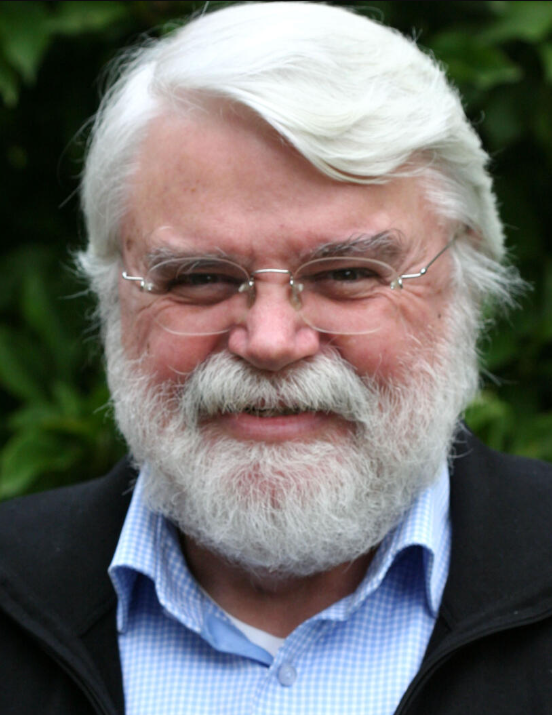 Gerhard Erker合作论文数Organisch-Chemisches Institut, University of Münster32
 Liu Liu (刘柳)合作论文数Department of Chemistry, Southern University of Science and Technology29
 Timothy C. Johnstone合作论文数25
 Gregory Welch合作论文数Department of Chemistry, Faculty of Science, University of Calgary22
 Stephen J Geier合作论文数Department of Chemistry, Mount Allison University22
 Lauren E. Longobardi合作论文数21Pingrong Wei合作论文数21
 James LaFortune合作论文数20
 Christopher B. Caputo合作论文数Department of Chemistry, University of Toronto20
 Jupp Andrew R合作论文数Chemistry Research Laboratory, University of Oxford20Jiliang Zhou合作论文数19
 Karlee Bamford合作论文数Chem Dept, Dalhousie Univ19Preston A. Chase合作论文数19
 Tayseer Mahdi合作论文数Department of Chemistry, University of Toronto19
 Rebecca Melen合作论文数18Michael J Sgro合作论文数17
 Maotong Xu (许茂桐)合作论文数School of Chemical Science and Engineering, Tongji University17
 Yile Wu合作论文数17Michael H. Holthausen合作论文数17Gerald Kehr合作论文数17Ting Chen (挺 陳)合作论文数15
 Stephen J. Loeb合作论文数Loeb Research Group, University of Windsor15Ménard Gabriel合作论文数Department of Chemistry, University of Toronto15
 Hounjet Lindsay J合作论文数Department of Chemistry, University of Alberta15Farrell Jeffrey M合作论文数14Dahcheh Fatme合作论文数14Boone Michael P合作论文数Department of Chemistry, University of Toronto14Dureen Meghan A合作论文数13
 Roman Dobrovetsky合作论文数Department of Chemistry, University of Toronto13
 Julia M Bayne合作论文数12
 A. Stephen K. Hashmi合作论文数Catalysis Research Laboratory, Heidelberg University12Roland Fröhlich合作论文数12Kevin M Szkop合作论文数11
 Conor Pranckevicius合作论文数Department of Chemistry, Irving K. Barber Faculty of Science, The University of British Columbia11
 Pradip Mascharak合作论文数Physical & Biological Sciences Division, University of California, Santa Cruz;Chemistry & Biochemistry Department, University of California, Santa Cruz11Manuel Pérez合作论文数11Tsao Fu An合作论文数11Hansmann Max M合作论文数11McKinty Adam M合作论文数11
 Edwin Otten合作论文数11E Hollink合作论文数10Shaoying Ju合作论文数10Jenny S. J. Mccahill合作论文数10Mallov Ian合作论文数10
 Bidraha Bagh合作论文数10




