LTLf synthesis under partial observability requires reasoning about unobservable environment variables, which is typically handled by constructing a belief-state DFA via subset construction that universally quantifies these variables. Existing approaches perform this construction as a separate step prior to game solving, often generating belief states that are unnecessary in practice. We propose an on-the-fly approach to LTLf synthesis under partial observability based on observable progression. Our method incrementally builds the belief-state DFA by progressing the specification with respect to observable variables only, universally quantifying unobservable variables on the fly. We prove the correctness of the construction and show that it naturally enables on-the-fly game solving, leading to a fully on-the-fly synthesis framework. Our implementation leverages DFAs represented using Multi-Terminal Binary Decision Diagrams: a compact representation that has proven highly effective for LTLf synthesis under full observability. Experimental results demonstrate that our approach significantly outperforms existing methods and further highlight the practical benefits of integrating on-the-fly game solving with belief-state construction.
Model counting (#SAT) is a fundamental yet #P-complete problem central to probabilistic reasoning. In this work, we address incremental model counting, where sequences of structurally similar formulas must be counted. We propose an approach that amortizes computation via a persistent caching mechanism, retaining component data across solver calls to avoid redundant search. Additionally, we investigate branching heuristics adapted for this setting. We focus on the problems of argumentation and soft core, for which incremental model counting is natural. Experiments demonstrate that our method improves performance compared to current model counters, highlighting the capability of structure-aware reuse in dynamic environments.
Given a Linear Temporal Logic (LTL) formula over input and output variables, reactive synthesis requires us to design a deterministic Mealy machine that gives the values of outputs at every time step for every sequence of inputs, such that the LTL formula is satisfied. In this paper, we investigate the notion of dependent variables in the context of reactive synthesis. Inspired by successful pre-processing steps in Boolean functional synthesis, we define dependent variables as output variables that are uniquely assigned, given an assignment, to all other variables and the history so far. We describe an automata-based approach for finding a set of dependent variables. Using this, we show that dependent variables are surprisingly common in reactive synthesis benchmarks. Next, we develop a novel synthesis framework that exploits dependent variables to construct an overall synthesis solution. By implementing this framework using the widely used library Spot, we show that reactive synthesis using dependent variables can solve some problems beyond the reach of several existing techniques. Further, among benchmarks with dependent variables, if the number of non-dependent variables is low (at most 3 in our experiments), our method is able outperform all state-of-the-art tools for synthesis.
Devising a strategy to make a system mimic behaviors from another system is a problem that naturally arises in many areas of Computer Science. In this work, we interpret this problem in the context of intelligent agents, from the perspective of LTLf, a formalism commonly used in AI for expressing finite-trace properties. Our model consists of two separated dynamic domains, D-A and D-B, and an LTLf specification that formalizes the notion of mimicking by mapping properties on behaviors (traces) of D-A into properties on behaviors of D-B. The goal is to synthesize a strategy that step-by-step maps every behavior of D-A into a behavior of D-B so that the specification is met. We consider several forms of mapping specifications, ranging from simple ones to full LTLf, and for each, we study synthesis algorithms and computational properties.
Motivated by the need to improve the scalability of Intel’s in-house Static Timing Analysis (STA) tool, we consider the problem of enumerating all the solutions of a single-output combinational Boolean circuit, called AllSAT-CT. While AllSAT-CT is immediately reducible to enumerating the solutions of a Boolean formula in Conjunctive Normal Form (AllSAT-CNF), our experiments had shown that such a reduction, followed by applying state-of-the-art AllSAT-CNF tools, does not scale well on neither our industrial AllSAT-CT instances nor generic circuits, both when the user requires the solutions to be disjoint or when they can be non-disjoint. We focused on understanding the reasons for this phenomenon for the well-known iterative blocking family of AllSAT-CNF algorithms. We realized that existing blocking AllSAT-CNF algorithms fail to generalize efficiently for AllSAT-CT, since they are restricted to Boolean logic. Consequently, we introduce three dedicated AllSAT-CT algorithms that are ternary-logic-aware: a ternary simulation-based algorithm TALE , a dual-rail&MaxSAT-based algorithm MARS , and their combination. Specifically, we introduce in MARS two novel blocking clause generation approaches for the disjoint and non-disjoint cases. We implemented our algorithms in our new tool HALL . We show that HALL scales substantially better than any reduction to existing AllSAT-CNF tools on our industrial STA instances as well as on publicly available families of combinational circuits for both the disjoint and the non-disjoint cases.
Inexact computing also referred to as approximate computing is a style of designing algorithms and computing systems wherein the accuracy of correctness of algorithms executing on them is deliberately traded for significant resource savings. Significant progress has been reported in this regard both in terms of hardware as well as software or custom algorithms that exploited this approach resulting in some loss in solution quality (accuracy) while garnering disproportionately high savings. However, these approaches tended to be ad-hoc and were tied to specific algorithms and technologies. Consequently, a principled approach to designing and analyzing algorithms was lacking. In this paper, we provide a novel model which allows us to characterize the behavior of algorithms designed to be inexact, as well as characterize opportunities and benefits that this approach offers. Our methods therefore are amenable to standard asymptotic analysis and provides a clean unified abstraction through which an algorithm's design and analysis can be conducted. With this as a backdrop, we show that inexactness can be significantly beneficial for some fundamental problems in that the quality of a solution can be exponentially better if one exploits inexactness when compared to approaches that are agnostic and are unable to exploit this approach. We show that such gains are possible in the context of evaluating Boolean functions rooted in the theory of Boolean functions and their spectra, PAC learning, and sorting. Formally, this is accomplished by introducing the twin concepts of inexactness aware and inexactness oblivious approaches to designing algorithms and the exponential gains are shown in the context of taking the ratio of the quality of the solution using the "aware" approach to the "oblivious" approach.
Boolean functional synthesis is the process of constructing a Boolean function from a Boolean specification that relates input and output variables. Despite recent developments in synthesis algorithms, Boolean functional synthesis remains a challenging problem even when state-of-the-art techniques are used for decomposing the specification. In this work, we present a new decomposition approach that decomposes the specification into separate input and output components. To begin with, we adapt the notion of “sequential decomposition” and present a framework that allows the input and output components to be independently synthesized and then re-composed to yield an implementation of the overall specification. Although theoretically appealing, this approach suffers from some practical drawbacks, as evidenced by our experiments. This motivates us to propose a relaxed approach to synthesis by decomposition. In the relaxed approach, we start with a specification given as a conjunctive normal form (CNF) formula, and obtain a decomposition of the specification by alternatingly analyzing the input and output components repeatedly. We also exploit specific properties of these components to ultimately implement the overall specification. We prove that if the input component of the CNF specification has specific structural properties, our approach can achieve synthesis in polynomial time. We also show by experimental evaluations that our algorithm performs well in practice on instances that are challenging for existing state-of-the-art tools. Thus, our decomposition-based synthesis approach serves as a good complement to other state-of-the-art techniques in a portfolio approach to Boolean functional synthesis.
Similarly to humans, facial expressions in animals are closely linked with emotional states. However, in contrast to the human domain, automated recognition of emotional states from facial expressions in animals is underexplored, mainly due to difficulties in data collection and establishment of ground truth concerning emotional states of non-verbal users. We apply recent deep learning techniques to classify (positive) anticipation and (negative) frustration of dogs on a dataset collected in a controlled experimental setting. We explore the suitability of different backbones (e.g. ResNet, ViT) under different supervisions to this task, and find that features of a self-supervised pretrained ViT (DINO-ViT) are superior to the other alternatives. To the best of our knowledge, this work is the first to address the task of automatic classification of canine emotions on data acquired in a controlled experiment.
The concept of decomposition in computer science and engineering is considered a fundamental component of computational thinking and is prevalent in design of algorithms, software construction, hardware design, and more. We propose a simple and natural formalization of sequential decomposition, in which a task is decomposed into two sequential sub-tasks, with the first sub-task to be executed out before the second sub-task is executed. These tasks are specified by means of input/output relations. We define and study decomposition problems, which is to decide whether a given specification can be sequentially decomposed. Our main result is that de-composition itself is a difficult computational problem. More specifically, we study decomposition problems in three settings: where the input task is specified explicitly, by means of Boolean circuits, and by means of automatic relations. We show that in the first setting decomposition is NP-complete, in the second setting it is NEXPTIME-complete, and in the third setting there is evidence to suggest that it is undecidable. Our results indicate that the intuitive idea of decomposition as a system-design approach requires further investigation. In particular, we show that adding human to the loop by asking for a decomposition hint lowers the complexity of decomposition problems considerably.
In the Adapter Design Pattern, a programmer implements a Target interface by constructing an Adapter that accesses an existing Adaptee code. In this work, we present a reactive synthesis interpretation to the adapter design pattern, wherein an algorithm takes an Adaptee and a Target transducers, and the aim is to synthesize an Adapter transducer that, when composed with the Adaptee, generates a behavior that is equivalent to the behavior of the Target. One use of such an algorithm is to synthesize controllers that achieve similar goals on different hardware platforms. While this problem can be solved with existing synthesis algorithms, current state-of-the-art tools fail to scale. To cope with the computational complexity of the problem, we introduce a special form of specification format, called Separated GR(k), which can be solved with a scalable synthesis algorithm but still allows for a large set of realistic specifications. We solve the realizability and the synthesis problems for Separated GR(k), and show how to exploit the separated nature of our specification to construct better algorithms, in terms of time complexity, than known algorithms for GR(k) synthesis. We then describe a tool, called SGR(k), that we have implemented based on the above approach and show, by experimental evaluation, how our tool outperforms current state-of-the-art tools on various benchmarks and test-cases.
Discrete integration is a fundamental problem in computer science that concerns the computation of discrete sums over exponentially large sets. Despite intense interest from researchers for over three decades, the design of scalable techniques for computing estimates with rigorous guarantees for discrete integration remains the holy grail. The key contribution of this work addresses this scalability challenge via an efficient reduction of discrete integration to model counting. The proposed reduction is achieved via a significant increase in the dimensionality that, contrary to conventional wisdom, leads to solving an instance of the relatively simpler problem of model counting. Building on the promising approach proposed by Chakraborty et al, our work overcomes the key weakness of their approach: a restriction to dyadic weights. We augment our proposed reduction, called DeWeight, with a state of the art efficient approximate model counter and perform detailed empirical analysis over benchmarks arising from neural network verification domains, an emerging application area of critical importance. DeWeight, to the best of our knowledge, is the first technique to compute estimates with provable guarantees for this class of benchmarks.
We present an algorithm that takes a discrete random variable $X$ and a number $m$ and computes a random variable whose support (set of possible outcomes) is of size at most $m$ and whose Kolmogorov distance from $X$ is minimal. In addition to a formal theoretical analysis of the correctness and of the computational complexity of the algorithm, we present a detailed empirical evaluation that shows how the proposed approach performs in practice in different applications and domains.
This paper introduces a motion-planning framework for a hybrid system with general continuous dynamics to satisfy a temporal logic specification consisting of cosafety and safety components in a partially unknown environment. The framework employs a multilayered synergistic planner to generate trajectories that satisfy the specification and adopt an iterative replanning strategy to deal with unknown obstacles. When the discovery of an obstacle renders the specification unsatisfiable, a division between the constraints in the specification is considered. The cosafety component of the specification is treated as a soft constraint, whose partial satisfaction is allowed, while the safety component is viewed as a hard constraint, whose violation is forbidden. To partially satisfy the cosafety component, inspirations are taken from indoor-robotic scenarios, and three types of (unexpressed) restrictions on the ordering of subtasks in the specification are considered. For each type, a partial satisfaction method is introduced, which guarantees the generation of trajectories that do not violate the safety constraints while attending to partially satisfying the cosafety requirements with respect to the chosen restriction type. The efficacy of the framework is illustrated through case studies on a hybrid car-like robot in an office environment.
We propose a mathematical model for wireless industrial control systems and analyze the engineering challenge of co-scheduling networking and control in this context. We demonstrate the use of the model using a small case study and explain how our modelling approach allows for self-configuring and self-adapting systems. The main theoretical contribution of the paper is a mathematical formulation of the computational problem of synthesizing a co-design of scheduling and control for wireless industrial control systems and a mathematical proof that this problem is computationally hard. We also identify relevant special network topologies for which the problem can be efficiently solved.
Boolean functional synthesis is the process of automatically obtaining a constructive formalization from a declarative relation that is given as a Boolean formula. Recently, a framework was proposed for Boolean functional synthesis that is based on Craig Interpolation and in which Boolean functions are represented as And-Inverter Graphs (AIGs). In this work we adapt this framework to the setting of Binary Decision Diagrams (BDDs), a standard data structure for representation of Boolean functions. Our motivation in studying BDDs is their common usage in temporal synthesis, a fundamental technique for constructing control software/hardware from temporal specifications, in which Boolean synthesis is a basic step. Rather than using Craig Interpolation, our method relies on a technique called Self-Substitution, which can be easily implemented by using existing BDD operations. We also show that this yields a novel way to perform quantifier elimination for BDDs. In addition, we look at certain BDD structures called input-first, and propose a technique called TrimSubstitute, tailored specifically for such structures. Experiments on scalable benchmarks show that both Self-Substitution and TrimSubstitute scale well for benchmarks with good variable orders and significantly outperform current Boolean-synthesis techniques.
The specification of complex motion goals through temporal logics is increasingly favored in robotics to narrow the gap between task and motion planning. A major limiting factor of such logics, however, is their Boolean satisfaction condition. To relax this limitation, we introduce a method for quantifying the satisfaction of co-safe linear temporal logic specifications, and propose a planner that uses this method to synthesize robot trajectories with the optimal satisfaction value. The method assigns costs to violations of specifications from user-defined proposition costs. These violation costs define a distance to satisfaction and can be computed algorithmically using a weighted automaton. The planner utilizes this automaton and an abstraction of the robotic system to construct a product graph that captures all possible robot trajectories and their distances to satisfaction. Then, a plan with the minimum distance to satisfaction is generated by employing this graph as the high-level planner in a synergistic planning framework. The efficacy of the method is illustrated on a robot with unsatisfiable specifications in an office environment.
Constrained sampling and counting are two fundamental problems in artificial intelligence with a diverse range of applications, spanning probabilistic reasoning and planning to constrained-random verification. While the theory of these problems was thoroughly investigated in the 1980s, prior work either did not scale to industrial size instances or gave up correctness guarantees to achieve scalability. Recently, we proposed a novel approach that combines universal hashing and SAT solving and scales to formulas with hundreds of thousands of variables without giving up correctness guarantees. This paper provides an overview of the key ingredients of the approach and discusses challenges that need to be overcome to handle larger real-world instances.
The recent surge of interest in reasoning about probabilistic graphical models has led to the development of various techniques for probabilistic reasoning. Of these, techniques based on weighted model counting are particularly interesting since they can potentially leverage recent advances in unweighted model counting and in propositional satisfiability solving. In this paper, we present a new approach to weighted model counting via reduction to unweighted model counting. Our reduction, which is polynomial-time and preserves the normal form (CNF/DNF) of the input formula, allows us to exploit advances in unweighted model counting to solve weighted model counting instances. Experiments with weighted model counters built using our reduction indicate that these counters performs much better than a state-of-the-art weighted model counter.
 Moshe Y. Vardi合作论文数Department of Computer Science, Rice University9
 Supratik Chakraborty合作论文数Department of Computer Science and Engineering, Indian Institute of Technology Bombay;Centre for Formal Design and Verification of Software, Indian Institute of Technology Bombay;Centre for Liberal Education, Indian Institute of Technology Bombay5
 Lucas M. Tabajara合作论文数Rice University4
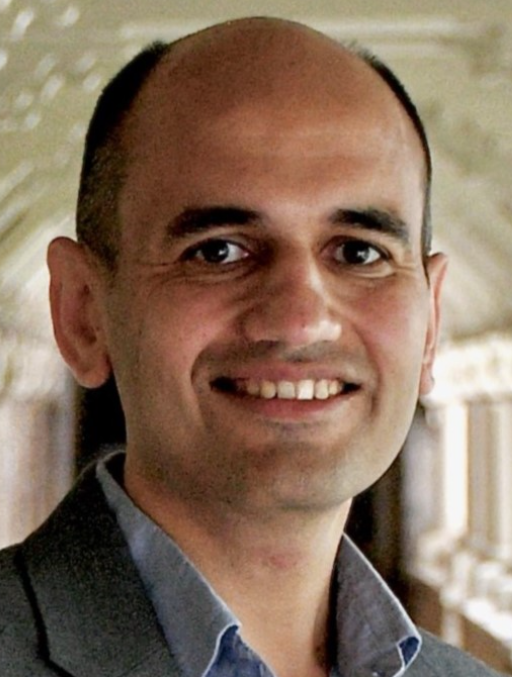 Kuldeep S. Meel合作论文数School of Computer Science, College of Computing, Georgia Institute of Technology;Vector Institute, University of Toronto3
 Gera Weiss合作论文数University of Pennsylvania3
 Jeffrey Dudek合作论文数Google2
 Shufang Zhu合作论文数Dipartimento di Ingegneria Informatica, Automatica e Gestionale. Sapienza University of Rome2
 Zahy Bnaya合作论文数Deutsche Telekom Labs, Ben-Gurion University2Alexander Nadel合作论文数Intel Corporation2
 Solomon Eyal Shimony合作论文数Department of Computer Science, Ben-Gurion University of the Negev2
 Lydia E. Kavraki合作论文数Department of Computer Science, Rice University2
 Morteza Lahijanian合作论文数Dept Comp Sci, Rice Univ2
 Ariel Felner合作论文数Ben-Gurion University2
 S Akshay合作论文数Department of Computer Science and Engineering, Indian Institute of Technology Bombay1Tali Boneh-Shitrit合作论文数1Duc-Hung Pham合作论文数1
 Shir Amir合作论文数Computer Science Department, Weizmann Institute1
 Annika Bremhorst合作论文数Dogs & Science-Institute for Canine Science and Applied Cynology, Zurich, Switzerland.1
 Suguman Bansal合作论文数Dept. of Computer and Information Sciences, University of Pennsylvania1
 Maly, M.R.合作论文数1Liat Cohen合作论文数Computer Science Department, Ben Gurion University of The Negev1
 Daniel Mills合作论文数Department of Life Sciences, College of Health and Science, University of Lincoln;School of Natural Sciences, College of Health and Science, University of Lincoln1
 Sharad Malik合作论文数Department of Electrical and Computer Engineering, School of Engineering and Applied Science, Princeton University1
 Axel Legay合作论文数Institute of Information and Communication Technologies, Electronics and Applied Mathematics, Université Catholique de Louvain1
 Sanjit A. Seshia合作论文数Department of Electrical Engineering and Computer Sciences, University of California, Berkeley1
 Joël Ouaknine合作论文数Max Planck Institute for Software Systems;Department of Computer Science, University of Oxford;Saarland University1
 Giuseppe De Giacomo合作论文数Department of Computer Science, University of Oxford;Green Templeton College, University of Oxford;Dipartimento Di Ingegneria Informatica, Automatica E Gestionale, Facoltà Di Ingegneria Dell'informazione, Informatica E Statistica, Sapienza Universita' di Roma1
 Anshumali Shrivastava合作论文数Ken Kennedy Institute, Rice University1Olga Maksin合作论文数1
 Anna Zamansky合作论文数Jerusalem College of Engineering;Dept. of Software Engineering1
 Fabio Patrizi合作论文数Department of Computer, Control and Management Engineering, Sapienza University of Rome1
 Stefanie Riemer合作论文数Clever Dog Lab, Nussgasse 4, 1090 Vienna, Austria1
 Shaull Almagor合作论文数Hebrew University of Jerusalem1
 Amit Benbassat合作论文数Ben-Gurion University of the Negev1
 John Augustine合作论文数Department of Computer Science and Engineering, Indian Institute of Technology Madras1
 Daniel J. Fremont合作论文数Univ Calif Berkeley1
 Krishna V. Palem合作论文数Department of Computer Science, George R. Brown School of Engineering and Computing, Rice University1
 Gal Amram合作论文数1
 Cenny Wenner合作论文数1
 Jean-Marie Lagniez合作论文数Artois University1
 Alexander Ivrii合作论文数IBM Research1
 Roberto Sebastiani合作论文数Dipartimento di Ingegneria e Scienza dell'Informazione, Università di Trento1
 Hadas Kress-Gazit合作论文数Sibley School of Mechanical and Aerospace Engineering, College of Engineering, Cornell University1




