Extracting structured clinical information from free-text radiology reports can enable the use of radiology report information for a variety of critical healthcare applications. In our work, we present RadGraph, a dataset of entities and relations in full-text chest X-ray radiology reports based on a novel information extraction schema we designed to structure radiology reports. We release a development dataset, which contains board-certified radiologist annotations for 500 radiology reports from the MIMIC-CXR dataset (14,579 entities and 10,889 relations), and a test dataset, which contains two independent sets of board-certified radiologist annotations for 100 radiology reports split equally across the MIMIC-CXR and CheXpert datasets. Using these datasets, we train and test a deep learning model, RadGraph Benchmark, that achieves a micro F1 of 0.82 and 0.73 on relation extraction on the MIMIC-CXR and CheXpert test sets respectively. Additionally, we release an inference dataset, which contains annotations automatically generated by RadGraph Benchmark across 220,763 MIMIC-CXR reports (around 6 million entities and 4 million relations) and 500 CheXpert reports (13,783 entities and 9,908 relations) with mappings to associated chest radiographs. Our freely available dataset can facilitate a wide range of research in medical natural language processing, as well as computer vision and multi-modal learning when linked to chest radiographs.
Clinical deployment of deep learning algorithms for chest x-ray interpretation requires a solution that can integrate into the vast spectrum of clinical workflows across the world. An appealing approach to scaled deployment is to leverage the ubiquity of smartphones by capturing photos of x-rays to share with clinicians using messaging services like WhatsApp. However, the application of chest x-ray algorithms to photos of chest x-rays requires reliable classification in the presence of artifacts not typically encountered in digital x-rays used to train machine learning models. We introduce CheXphoto, a dataset of smartphone photos and synthetic photographic transformations of chest x-rays sampled from the CheXpert dataset. To generate CheXphoto we (1) automatically and manually captured photos of digital x-rays under different settings, and (2) generated synthetic transformations of digital x-rays targeted to make them look like photos of digital x-rays and x-ray films. We release this dataset as a resource for testing and improving the robustness of deep learning algorithms for automated chest x-ray interpretation on smartphone photos of chest x-rays.
 Steven Q. H. Truong合作论文数VinBrain JSC, Hanoi, Vietnam2
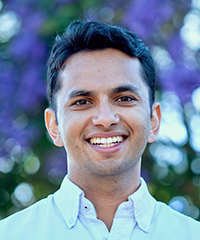 Pranav Rajpurkar合作论文数Department of Biomedical Informatics, Harvard Medical School, Harvard University2
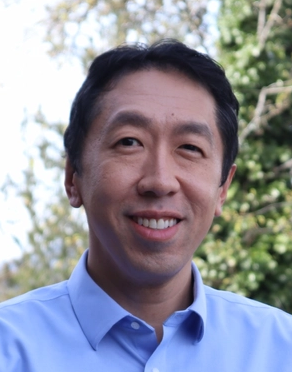 Andrew Ng (吳恩達)合作论文数Landing AI;Deeplearning. Ai;AI Fund;Coursera;Computer Science Department, Stanford University2
 Matthew Lungren合作论文数Department of Biomedical Data Science, Stanford University2
 Nick A. Phillips合作论文数1
 Pierre Chambon合作论文数Paris-Saclay University, Stanford University1Tan Bui合作论文数1
 Ashwin Agrawal合作论文数1
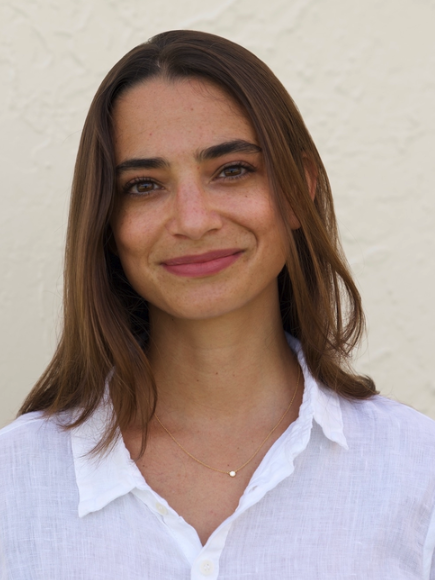 Adriel Saporta合作论文数Courant Institute, New York University1
 Rayan Krishnan合作论文数1Mark Sabini合作论文数1
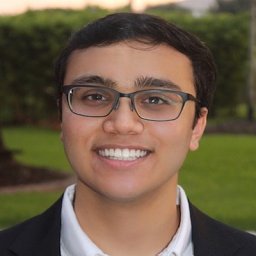 Saahil Jain合作论文数stanford University1Nguyet Minh Phu合作论文数1Chris Wang合作论文数Univ Kentucky, Dept Comp Sci, Lexington, KY USA1Yuhao Zhang (张宇浩)合作论文数1
 Anuj Pareek合作论文数Department of Radiology, Hospital Littlebelt1
 Sharon Zhou合作论文数Lamini;Coursera1
 Mudit Jain合作论文数Microsoft1
 Curtis P. Langlotz合作论文数School of Medicine, Stanford University;Center for Artificial Intelligence in Medicine and Imaging, Stanford University1




