Insider threats and attacks have witnessed a concerning rise in recent years, posing significant risks and financial implications for businesses. Malicious insiders exploit memory dumping tools to leak data, resulting in a substantial surge in data breach incidents. Evaluating the true extent of damage caused by insider attacks proves challenging, particularly in defence scenarios. This research presents a novel architecture designed to prevent data leaks by intercepting memory dump calls and generating privacy-preserved context-sensitive dumps. By ensuring that such dumps do not con- tain significant sensitive data, the architecture mitigates the risk of data leakage by malicious insiders. In this approach, unauthorized attempts to generate memory dumps using popular tools like ProcDump are directed to the proposed program, which creates privacy-preserving context-sensitive dumps, convincingly resembling legitimate memory dumps generated by the original tools. The prevention of sensitive data leaks is achieved while upholding organizational privacy through the utilization of a deep learning model. The attacker is deceived as the memory dump generated contains only non-sensitive user information in the device. The feasibility and effectiveness of this innovative approach are demonstrated through a military use case within the proposed architecture.
Automatic extraction of medical conditions from free-text radiology reports is critical for supervising computer vision models to interpret medical images. In this work, we show that radiologists labeling reports significantly disagree with radiologists labeling corresponding chest X-ray images, which reduces the quality of report labels as proxies for image labels. We develop and evaluate methods to produce labels from radiology reports that have better agreement with radiologists labeling images. Our best performing method, called VisualCheXbert, uses a biomedically-pretrained BERT model to directly map from a radiology report to the image labels, with a supervisory signal determined by a computer vision model trained to detect medical conditions from chest X-ray images. We find that VisualCheXbert outperforms an approach using an existing radiology report labeler by an average F1 score of 0.14 (95% CI 0.12, 0.17). We also find that VisualCheXbert better agrees with radiologists labeling chest X-ray images than do radiologists labeling the corresponding radiology reports by an average F1 score across several medical conditions of between 0.12 (95% CI 0.09, 0.15) and 0.21 (95% CI 0.18, 0.24).
Deep learning in medical image analysis often requires an extensive amount of high-quality labeled data for training to achieve Human-level accuracy. We propose Gist-set Online Active Learning (GOAL), a novel solution for limited high-quality labeled data in medical imaging analysis. Our approach advances the existing active learning methods in three aspects. Firstly, we improve the classification performance with fewer manual annotations by presenting a sample selection strategy called gist set selection. Secondly, unlike traditional methods focusing only on random uncertain samples of low prediction confidence, we propose a new method in which only informative uncertain samples are selected for human annotation. Thirdly, we propose an application of online learning where high-confidence samples are automatically selected, iteratively assigned, and pseudo-labels are updated. We validated our approach on two private and one public dataset. The experimental results show that, by applying GOAL, we can reduce required labeled data up to 88% while maintaining the same F1 scores compared to the models trained on full datasets
Clinical deployment of deep learning algorithms for chest x-ray interpretation requires a solution that can integrate into the vast spectrum of clinical workflows across the world. An appealing approach to scaled deployment is to leverage the ubiquity of smartphones by capturing photos of x-rays to share with clinicians using messaging services like WhatsApp. However, the application of chest x-ray algorithms to photos of chest x-rays requires reliable classification in the presence of artifacts not typically encountered in digital x-rays used to train machine learning models. We introduce CheXphoto, a dataset of smartphone photos and synthetic photographic transformations of chest x-rays sampled from the CheXpert dataset. To generate CheXphoto we (1) automatically and manually captured photos of digital x-rays under different settings, and (2) generated synthetic transformations of digital x-rays targeted to make them look like photos of digital x-rays and x-ray films. We release this dataset as a resource for testing and improving the robustness of deep learning algorithms for automated chest x-ray interpretation on smartphone photos of chest x-rays.
This Research Paper is totally concentrated to define different memory systems that are present in the market, and what is their importance in today’s generation. In this paper, we review the different hierarchies of the memory systems. It talks about cache-memory based systems and its various levels. Cache memories along with the virtual memories and processor registers form a field of memory hierarchies that depends on the principle of locality of reference. Most applications show the temporal and spatial zones among order and data. Then it describes about RAM (Random Access Memory) and its types which include DRAM (Dynamic Random-Access Memory) and SRAM (Static Random-Access Memory), it also describes the flash memory and its importance because of its small size and large memory containing abilities Memory hierarchies are intended to keep most likely referenced items in the fastest devices.
With mobile phones becoming first-class citizens in the online world, the rich location data they bring to the table is set to revolutionize all aspects of online life including content delivery, recommendation systems, and advertising. However, user-tracking is a concern with such location-based services, not only because location data can be linked uniquely to individuals, but because the low-level nature of current location APIs and the resulting dependence on the cloud to synthesize useful representations virtually guarantees such tracking. In this paper, we propose privacy-preserving location-based matching as a fundamental platform primitive and as an alternative to exposing low-level, latitude-longitude (lat-long) coordinates to applications. Applications set rich location-based triggers and have these be fired based on location updates either from the local device or from a remote device (e.g., a friend's phone). Our Koi platform, comprising a privacy-preserving matching service in the cloud and a phone-based agent, realizes this primitive across multiple phone and browser platforms. By masking low-level lat-long information from applications, Koi not only avoids leaking privacy-sensitive information, it also eases the task of programmers by providing a higher-level abstraction that is easier for applications to build upon. Koi's privacy-preserving protocol prevents the cloud service from tracking users. We verify the non-tracking properties of Koi using a theorem prover, illustrate how privacy guarantees can easily be added to a wide range of location-based applications, and show that our public deployment is performant, being able to perform 12K matches per second on a single core.
 Steven Q. H. Truong合作论文数VinBrain JSC, Hanoi, Vietnam3
 Venkat Padmanabhan合作论文数Microsoft Research India3
 Saikat Guha合作论文数Microsoft Research Lab, Microsoft Research India3
 Thanh M. Huynh合作论文数2
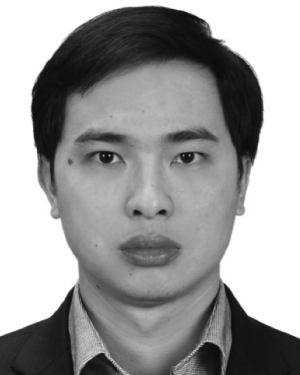 Chanh D. Tr. Nguyen合作论文数Vinbrain JSC, Hanoi 11619, Vietnam2Meyer Scott A合作论文数2
 Pranav Rajpurkar合作论文数Department of Biomedical Informatics, Harvard Medical School, Harvard University2
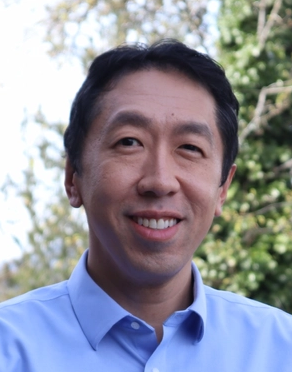 Andrew Ng (吳恩達)合作论文数Landing AI;Deeplearning. Ai;AI Fund;Coursera;Computer Science Department, Stanford University2
 Matthew Lungren合作论文数Department of Biomedical Data Science, Stanford University2P. Sanjeevi合作论文数1Du Nguyen Duong合作论文数1Nick A. Phillips合作论文数1
 Vo Tan Duc合作论文数1RA Sim合作论文数1
 Ankush Jain合作论文数1
 Rayan Krishnan合作论文数1Nguyen Ngoc Hoang合作论文数1Mark Sabini合作论文数1
 Saahil Jain合作论文数stanford University1
 Akshay Smit合作论文数Dept Comp Sci, Stanford Univ1Nguyet Minh Phu合作论文数1Chris Wang合作论文数Univ Kentucky, Dept Comp Sci, Lexington, KY USA1
 Victor Bahl合作论文数Microsoft1
 Tran Minh Quan合作论文数Ctr Rech Gif Sur Yvette, CNRS1
 Anuj Pareek合作论文数Department of Radiology, Hospital Littlebelt1
 Sharon Zhou合作论文数Lamini;Coursera1
 Victoria Young合作论文数1
 Alec Wolman合作论文数Microsoft Research1
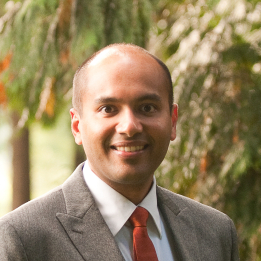 Sharad Agarwal合作论文数Microsoft Research1
 Ranveer Chandra合作论文数Microsoft Research1
 Trung H. Bui合作论文数Adobe Research1
 Ryen W. White合作论文数School of Computer Science & Engineering, University of Washington;Data Science Team, Microsoft Research1




