A detection of excess cosmic microwave background (CMB) B-mode polarization on large scales allows the possibility of measuring not only the amplitude of these fluctuations but also their scale dependence, which can be parametrized as the tensor tilt nT. Measurements of this scale dependence will be hindered by the secondary B-mode polarization anisotropy induced by gravitational lensing. Fortunately, these contaminating B modes can be estimated and removed with a sufficiently good estimate of the intervening gravitational potential and a good map of CMB E-mode polarization. We present forecasts for how well these gravitational lensing B modes can be removed, assuming that the lensing potential can be estimated either internally from CMB data or using maps of the cosmic infrared background (CIB) as a tracer. We find that CIB maps are as effective as CMB maps for delensing at the noise levels of the current generation of CMB experiments, while the CMB maps themselves will ultimately be best for delensing at polarization noise below Δ P ?> = 1 μK arcmin. At this sensitivity level, CMB delensing will be able to measure nT to an accuracy of 0.02 or better, which corresponds to the tensor tilt predicted by the consistency relation for single-field slow-roll models of inflation with r = 0.2. However, CIB-based delensing will not be sufficient for constraining nT in simple inflationary models.
BICEP2/Keck and Planck Collaborations: P. A. R. Ade, N. Aghanim, Z. Ahmed, R. W. Aikin, K. D. Alexander, M. Arnaud, J. Aumont, C. Baccigalupi, A. J. Banday, 9 D. Barkats, R. B. Barreiro, J. G. Bartlett, 13 N. Bartolo, 15 E. Battaner, 17 K. Benabed, 19 A. Benôıt, A. Benoit-Lévy, 18, 19 S. J. Benton, J.-P. Bernard, 9 M. Bersanelli, 24 P. Bielewicz, 9, 7 C. A. Bischoff, J. J. Bock, 4 A. Bonaldi, L. Bonavera, J. R. Bond, J. Borrill, 28 F. R. Bouchet, 29 F. Boulanger, J. A. Brevik, M. Bucher, I. Buder, E. Bullock, C. Burigana, 32, 33 R. C. Butler, V. Buza, E. Calabrese, J.-F. Cardoso, 12, 18 A. Catalano, 37 A. Challinor, 39, 40 R.-R. Chary, H. C. Chiang, 43 P. R. Christensen, 45 L. P. L. Colombo, 13 C. Combet, J. Connors, F. Couchot, A. Coulais, B. P. Crill, 4 A. Curto, 11 F. Cuttaia, L. Danese, R. D. Davies, R. J. Davis, P. de Bernardis, A. de Rosa, G. de Zotti, 7 J. Delabrouille, J.-M. Delouis, 19 F.-X. Désert, C. Dickinson, J. M. Diego, H. Dole, 52 S. Donzelli, O. Doré, 4 M. Douspis, C. D. Dowell, L. Duband, A. Ducout, 54 J. Dunkley, X. Dupac, C. Dvorkin, G. Efstathiou, F. Elsner, 18, 19 T. A. Enßlin, H. K. Eriksen, E. Falgarone, J. P. Filippini, 58 F. Finelli, 33 S. Fliescher, O. Forni, 9 M. Frailis, A. A. Fraisse, E. Franceschi, A. Frejsel, S. Galeotta, S. Galli, K. Ganga, T. Ghosh, M. Giard, 9 E. Gjerløw, S. R. Golwala, J. González-Nuevo, 7 K. M. Górski, 61 S. Gratton, 38 A. Gregorio, 60, 63 A. Gruppuso, J. E. Gudmundsson, M. Halpern, F. K. Hansen, D. Hanson, 13, 26 D. L. Harrison, 39 M. Hasselfield, G. Helou, S. Henrot-Versillé, D. Herranz, S. R. Hildebrandt, 4 G. C. Hilton, E. Hivon, 19 M. Hobson, W. A. Holmes, W. Hovest, V. V. Hristov, K. M. Huffenberger, H. Hui, G. Hurier, K. D. Irwin, 68, 66 A. H. Jaffe, T. R. Jaffe, 9 J. Jewell, W. C. Jones, M. Juvela, A. Karakci, K. S. Karkare, J. P. Kaufman, B. G. Keating, S. Kefeli, E. Keihänen, S. A. Kernasovskiy, R. Keskitalo, T. S. Kisner, R. Kneissl, 73 J. Knoche, L. Knox, J. M. Kovac, N. Krachmalnicoff, M. Kunz, 2, 76 C. L. Kuo, 68 H. Kurki-Suonio, 77 G. Lagache, 2 A. Lähteenmäki, 77 J.-M. Lamarre, A. Lasenby, 39 M. Lattanzi, C. R. Lawrence, E. M. Leitch, R. Leonardi, F. Levrier, A. Lewis, M. Liguori, 15 P. B. Lilje, M. Linden-Vørnle, M. López-Caniego, 11 P. M. Lubin, M. Lueker, J. F. Maćıas-Pérez, B. Maffei, D. Maino, 24 N. Mandolesi, 32 A. Mangilli, 47 M. Maris, P. G. Martin, E. Mart́ınez-González, S. Masi, P. Mason, S. Matarrese, 15, 84 K. G. Megerian, P. R. Meinhold, A. Melchiorri, 85 L. Mendes, A. Mennella, 24 M. Migliaccio, 39 S. Mitra, 13 M.-A. Miville-Deschênes, 26 A. Moneti, L. Montier, 9 G. Morgante, D. Mortlock, A. Moss, D. Munshi, J. A. Murphy, P. Naselsky, 45 F. Nati, P. Natoli, 89, 31 C. B. Netterfield, H. T. Nguyen, H. U. Nørgaard-Nielsen, F. Noviello, D. Novikov, I. Novikov, 91 R. O’Brient, R. W. Ogburn IV, 68 A. Orlando, L. Pagano, 85 F. Pajot, R. Paladini, D. Paoletti, 33 B. Partridge, F. Pasian, G. Patanchon, T. J. Pearson, 41 O. Perdereau, L. Perotto, V. Pettorino, F. Piacentini, M. Piat, D. Pietrobon, S. Plaszczynski, E. Pointecouteau, 9 G. Polenta, 94 N. Ponthieu, 51 G. W. Pratt, S. Prunet, 19 C. Pryke, 30 J.-L. Puget, J. P. Rachen, 56 W. T. Reach, R. Rebolo, 98, 99 M. Reinecke, M. Remazeilles, 2, 12 C. Renault, A. Renzi, 101 S. Richter, I. Ristorcelli, 9 G. Rocha, 4 M. Rossetti, 24 G. Roudier, 37, 13 M. Rowan-Robinson, J. A. Rubiño-Mart́ın, 99 B. Rusholme, M. Sandri, D. Santos, M. Savelainen, 77 G. Savini, R. Schwarz, D. Scott, M. D. Seiffert, 4 C. D. Sheehy, 103 L. D. Spencer, Z. K. Staniszewski, 13 V. Stolyarov, 39, 104 R. Sudiwala, R. Sunyaev, 105 D. Sutton, 39 A.-S. Suur-Uski, 77 J.-F. Sygnet, J. A. Tauber, G. P. Teply, L. Terenzi, 31 K. L. Thompson, L. Toffolatti, 11, 31 J. E. Tolan, M. Tomasi, 24 M. Tristram, M. Tucci, A. D. Turner, 80 L. Valenziano, J. Valiviita, 77 B. Van Tent, L. Vibert, P. Vielva, A. G. Vieregg, 110 F. Villa, L. A. Wade, B. D. Wandelt, 19, 58 R. Watson, A. C. Weber, I. K. Wehus, M. White, S. D. M. White, J. Willmert, C. L. Wong, K. W. Yoon, 68 D. Yvon, A. Zacchei, and A. Zonca
We present new measurements of cosmic infrared background (CIB) anisotropies using Planck. Combining HFI data with IRAS, the angular autoand cross-frequency power spectrum is measured from 143 to 3000 GHz, and the auto-bispectrum from 217 to 545 GHz. The total areas used to compute the CIB power spectrum and bispectrum are about 2240 and 4400 deg, respectively. After careful removal of the contaminants (cosmic microwave background anisotropies, Galactic dust, and Sunyaev-Zeldovich emission), and a complete study of systematics, the CIB power spectrum is measured with unprecedented signal to noise ratio from angular multipoles ∼ 150 to 2500. The bispectrum due to the clustering of dusty, star-forming galaxies is measured from ∼ 130 to 1100, with a total signal to noise ratio of around 6, 19, and 29 at 217, 353, and 545 GHz, respectively. Two approaches are developed for modelling CIB power spectrum anisotropies. The first approach takes advantage of the unique measurements by Planck at large angular scales, and models only the linear part of the power spectrum, with a mean bias of dark matter haloes hosting dusty galaxies at a given redshift weighted by their contribution to the emissivities. The second approach is based on a model that associates star-forming galaxies with dark matter haloes and their subhaloes, using a parametrized relation between the dust-processed infrared luminosity and (sub-)halo mass. The two approaches simultaneously fit all autoand cross-power spectra very well. We find that the star formation history is well constrained up to redshifts around 2, and agrees with recent estimates of the obscured star-formation density using Spitzer and Herschel. However, at higher redshift, the accuracy of the star formation history measurement is strongly degraded by the uncertainty in the spectral energy distribution of CIB galaxies. We also find that the mean halo mass which is most efficient at hosting star formation is log (Meff/M ) = 12.6 and that CIB galaxies have warmer temperatures as redshift increases. The CIB bispectrum is steeper than that expected from the power spectrum, although well fitted by a power law; this gives some information about the contribution of massive haloes to the CIB bispectrum. Finally, we show that the same halo occupation distribution can fit all power spectra simultaneously. The precise measurements enabled by Planck pose new challenges for the modelling of CIB anisotropies, indicating the power of using CIB anisotropies to understand the process of galaxy formation.
The Planck design and scanning strategy provide many levels of redundancy that can be exploited to provide tests of internal consistency. One of the most important is the comparison of the 70 GHz (amplifier) and 100 GHz (bolometer) channels. Based on different instrument technologies, with feeds located differently in the focal plane, analysed independently by different teams using different software, and near the minimum of diffuse foreground emission, these channels are in effect two different experiments. The 143 GHz channel has the lowest noise level on Planck, and is near the minimum of unresolved foreground emission. In this paper, we analyse the level of consistency achieved in the 2013 Planck data. We concentrate on comparisons between the 70, 100, and 143 GHz channel maps and power spectra, particularly over the angular scales of the first and second acoustic peaks, on maps masked for diffuse Galactic emission and for strong unresolved sources. Difference maps covering angular scales from 8◦ to 15′ are consistent with noise, and show no evidence of cosmic microwave background structure. Including small but important corrections for unresolved-source residuals, we demonstrate agreement (measured by deviation of the ratio from unity) between 70 and 100 GHz power spectra averaged over 70 ≤ ` ≤ 390 at the 0.8% level, and agreement between 143 and 100 GHz power spectra of 0.4% over the same ` range. These values are within and consistent with the overall uncertainties in calibration given in the Planck 2013 results. We also present results based on the 2013 likelihood analysis showing consistency at the 0.35% between the 100, 143, and 217 GHz power spectra. We analyse calibration procedures and beams to determine what fraction of these differences can be accounted for by known approximations or systematic errors that could be controlled even better in the future, reducing uncertainties still further. Several possible small improvements are described. Subsequent analysis of the beams quantifies the importance of asymmetry in the near sidelobes, which was not fully accounted for initially, affecting the 70/100 ratio. Correcting for this, the 70, 100, and 143 GHz power spectra agree to 0.4% over the first two acoustic peaks. The likelihood analysis that produced the 2013 cosmological parameters incorporated uncertainties larger than this. We show explicitly that correction of the missing near sidelobe power in the HFI channels would result in shifts in the posterior distributions of parameters of less than 0.3σ except for As, the amplitude of the primordial curvature perturbations at 0.05 Mpc−1, which changes by about 1σ. We extend these comparisons to include the sky maps from the complete nine-year mission of the Wilkinson Microwave Anisotropy Probe (WMAP), and find a roughly 2% difference between the Planck and WMAP power spectra in the region of the first acoustic peak.
We discuss the effect of unresolved point source contamination on estimates of the CMB lensing potential, from components such as the thermal Sunyaev-Zel'dovich effect, radio point sources, and the Cosmic Infrared Background. We classify the possible trispectra associated with such source populations, and construct estimators for the amplitude and scale-dependence of several of the major trispectra. We show how to propagate analytical models for these source trispectra to biases for lensing. We also construct a ``source-hardened'' lensing estimator which experiences significantly smaller biases when exposed to unresolved point sources than the standard quadratic lensing estimator. We demonstrate these ideas in practice using the sky simulations of Sehgal et al., for cosmic-variance limited experiments designed to mimic ACT, SPT, and Planck. We find that for radio sources and SZ the bias is significantly reduced, but for CIB it is essentially unchanged. However, by using the high-frequency, all-sky CIB measurements from Planck and Herschel it may be possible to suppress this contribution.
Primordial isocurvature fluctuations between photons and either neutrinos or non-relativistic species such as baryons or dark matter are known to be sub-dominant to adiabatic fluctuations. Perturbations in the relative densities of baryons and dark matter (known as compensated isocurvature perturbations, or CIPs), however, are surprisingly poorly constrained. CIPs leave no imprint in the cosmic microwave background (CMB) on observable scales, at least at linear order in their amplitude and zeroth order in the amplitude of adiabatic perturbations. It is thus not yet empirically known if baryons trace dark matter at the surface of last scattering. If CIPs exist, they would spatially modulate the Silk damping scale and acoustic horizon, causing distinct fluctuations in the CMB temperature/polarization power spectra across the sky: this effect is first order in both the CIP and adiabatic mode amplitudes. Here, temperature data from the Wilkinson Microwave Anisotropy Probe (WMAP) are used to conduct the first CMB-based observational search for CIPs, using off-diagonal correlations and the CMB trispectrum. Reconstruction noise from weak lensing and point sources is shown to be negligible for this data set. No evidence for CIPs is observed, and a 95%-confidence upper limit of $1.1\times 10^{-2}$ is imposed to the amplitude of a scale-invariant CIP power spectrum. This limit agrees with CIP sensitivity forecasts for WMAP, and is competitive with smaller scale constraints from measurements of the baryon fraction in galaxy clusters. It is shown that the root-mean-squared CIP amplitude on 5-100 degree scales is smaller than 0.07-0.17 (depending on the scale) at the 95%-confidence level. Temperature data from the Planck satellite will provide an even more sensitive probe for the existence of CIPs, as will the upcoming ACTPol and SPTPol experiments on smaller angular scales.
Gravitational lensing provides a significant source of cosmological information in modern cosmic microwave background parameter analyses. It is measured in both the power spectrum and trispectrum of the temperature fluctuations. These observables are often treated as independent, although as they are both determined from the same map, this is impossible. In this paper, we perform a rigorous analysis of the covariance between lensing power spectrum and trispectrum analyses. We find two dominant contributions coming from (i) correlations between the disconnected noise bias in the trispectrum measurement and sample variance in the temperature power spectrum and (ii) sample variance of the lenses themselves. The former is naturally removed when the dominant N-(0) Gaussian bias in the reconstructed deflection spectrum is dealt with via a partially data-dependent correction, as advocated elsewhere for other reasons. The remaining lens-cosmic-variance contribution is easily modeled but can safely be ignored for a Planck-like experiment, justifying treating the two observable spectra as independent. We also test simple likelihood approximations for the deflection power spectrum, finding that a Gaussian with a parameter-independent covariance performs well.
We have constructed the first all-sky map of the thermal Sunyaev-Zeldovich (tSZ) effect by applying specifically tailored component separation algorithms to the 100 to 857 GHz frequency channel maps from the Planck survey. These maps show an obvious galaxy cluster tSZ signal that is well matched with blindly detected clusters in the Planck SZ catalogue. To characterize the signal in the tSZ map we have computed its angular power spectrum. At large angular scales (‘ 500) the clustered Cosmic Infrared Background (CIB) and residual point sources are the major contaminants. These foregrounds are carefully modelled and subtracted. We measure the tSZ power spectrum in angular scales, 0:17 . . 3:0 , that were previously unexplored. The measured tSZ power spectrum is consistent with that expected from the Planck catalogue of SZ sources, with additional clear evidence of signal from unresolved clusters and, potentially, diffuse warm baryons. We use the tSZ power spectrum to obtain the following cosmological constraints: 8( m=0:28) 3:2=8:1 = 0:784 0:016(68 % C:L:). Marginalized band-powers of the Planck tSZ power spectrum and the best-fit model are given. The non-Gaussianity of the Compton parameter map is further characterized by computing its 1D probability distribution function and its bispectrum. These are used to place additional independent constraints on 8.
We derive a constraint on patchy screening of the cosmic microwave background from inhomogeneous reionization, using off-diagonal TB and TT correlations in WMAP-7 temperature/polarization data. We interpret this as a constraint on the rms optical-depth fluctuation Δτ as a function of a coherence multipole Lc. We relate these parameters to a comoving coherence scale, of bubble size Rc, in a phenomenological model where reionization is instantaneous but occurs on a crinkly surface, and also to the bubble size in a model of "Swiss cheese" reionization where bubbles of fixed size are spread over some range of redshifts. The current WMAP data are still too weak, by several orders of magnitude, to constrain reasonable models, but forthcoming Planck and future EPIC data should begin to approach interesting regimes of parameter space. We also present constraints on the parameter space imposed by the recent results from the EDGES experiment.
Polarization data will soon provide the best avenue for measurements of the CMB lensing potential, although it is potentially sensitive to several instrumental effects including beam asymmetry, polarization angle uncertainties, sky coverage, as well as analysis choices such as masking. We derive “bias-hardened” lensing estimators to mitigate these effects, at the expense of somewhat larger reconstruction noise, and test them numerically on simulated data. We find that the mean-field bias from masking is significant for the EE quadratic lensing estimator, however the bias-hardened estimator combined with filtering techniques can mitigate the mean field. On the other hand, the EB estimator does not significantly suffer from the mean-field from the point source masking and survey window function. The contamination from beam asymmetry and polarization angle uncertainties, however, can generate mean-field biases for the EB estimator. These can also be mitigated using bias-hardened estimators, with at most a factor of 3 degradation of noise level compared to the conventional approach.
A Chern-Simons coupling of a new scalar field to electromagnetism may give rise to cosmological birefringence, a rotation of the linear polarization of electromagnetic waves as they propagate over cosmological distances. Prior work has sought this rotation, assuming the rotation angle to be uniform across the sky, by looking for the parity-violating TB and EB correlations that a uniform rotation produces in the cosmic microwave background temperature/polarization. However, if the scalar field that gives rise to cosmological birefringence has spatial fluctuations, then the rotation angle may vary across the sky. Here we search for direction-dependent cosmological birefringence in the WMAP-7 data. We report the first cosmic microwave background constraint on the rotation-angle power spectrum C-L(alpha alpha) for multipoles between L = 0 and L = 512. We also obtain a 68% confidence-level upper limit of root C-2(alpha alpha)/(4 pi) less than or similar to 1 degrees on the quadrupole of a scale-invariant rotation-angle power spectrum.
One of the primary scientific targets of current and future CMB polarization experiments is the search for a stochastic background of gravity waves in the early universe. As instrumental sensitivity improves, the limiting factor will eventually be B-mode power generated by gravitational lensing, which can be removed through use of so-called delensing algorithms. We forecast prospects for delensing using lensing maps which are obtained externally to CMB polarization: either from large-scale structure observations, or from high-resolution maps of CMB temperature. We conclude that the forecasts in either case are not encouraging, and that significantly delensing large-scale CMB polarization requires high-resolution polarization maps with sufficient sensitivity to measure the lensing B-mode. We also present a simple formalism for including delensing in CMB forecasts which is computationally fast and agrees well with Monte Carlos.
Lensing of the CMB generates a significant bispectrum, which should be detected by the Planck satellite at the 5-sigma level and is potentially a non-negligible source of bias for fNL estimators of local non-Gaussianity. We extend current understanding of the lensing bispectrum in several directions: (1) we perform a non-perturbative calculation of the lensing bispectrum which is ~ 10% more accurate than previous, first-order calculations; (2) we demonstrate how to incorporate the signal variance of the lensing bispectrum into estimates of its amplitude, providing a good analytical explanation for previous Monte-Carlo results; and (3) we discover the existence of a significant lensing bispectrum in polarization, due to a previously-unnoticed correlation between the lensing potential and E-polarization as large as 30% at low multipoles. We use this improved understanding of the lensing bispectra to re-evaluate Fisher-matrix predictions, both for Planck and cosmic variance limited data. We confirm that the non-negligible lensing-induced bias for estimation of local non-Gaussianity should be robustly treatable, and will only inflate fNL error bars by a few percent over predictions where lensing effects are completely ignored (but note that lensing must still be accounted for to obtain unbiased constraints). We also show that the detection significance for the lensing bispectrum itself is ultimately limited to 9 sigma by cosmic variance. The tools that we develop for non-perturbative calculation of the lensing bispectrum are directly relevant to other calculations, and we give an explicit construction of a simple non-perturbative quadratic estimator for the lensing potential and relate its cross-correlation power spectrum to the bispectrum. Our numerical codes are publicly available as part of CAMB and LensPix.
We study the reconstruction of the lensing potential power spectrum from CMB temperature data, with an eye to the Planck experiment. We work with the optimal quadratic estimator of Okamoto and Hu, which we characterize thoroughly in an application to the reconstruction of the lensing power spectrum. We find that at multipoles L < 250, our current understanding of this estimator is biased at the 15% level by beyond-gradient terms in the Taylor expansion of lensing effects. We present the full lensed trispectrum to fourth order in the lensing potential to explain this effect. We show that the low-L bias, as well as a previously known bias at high L, is relevant to the determination of cosmology and must be corrected for in order to avoid significant parameter errors. We also investigate the covariance of the reconstructed power, finding broad correlations of approximate to 0.1%. Finally, we discuss several small improvements which may be made to the optimal estimator to mitigate these problems.
A large sub-mm survey with Herschel will enable many exciting science opportunities, especially in an era of wide-field optical and radio surveys and high resolution cosmic microwave background experiments. The Herschel-SPIRE Legacy Survey (HSLS), will lead to imaging data over 4000 sq. degrees at 250, 350, and 500 micron. Major Goals of HSLS are: (a) produce a catalog of 2.5 to 3 million galaxies down to 26, 27 and 33 mJy (50% completeness; 5 sigma confusion noise) at 250, 350 and 500 micron, respectively, in the southern hemisphere (3000 sq. degrees) and in an equatorial strip (1000 sq. degrees), areas which have extensive multi-wavelength coverage and are easily accessible from ALMA. Two thirds of the of the sources are expected to be at z > 1, one third at z > 2 and about a 1000 at z > 5. (b) Remove point source confusion in secondary anisotropy studies with Planck and ground-based CMB data. (c) Find at least 1200 strongly lensed bright sub-mm sources leading to a 2% test of general relativity. (d) Identify 200 proto-cluster regions at z of 2 and perform an unbiased study of the environmental dependence of star formation. (e) Perform an unbiased survey for star formation and dust at high Galactic latitude and make a census of debris disks and dust around AGB stars and white dwarfs.
The cosmic microwave background (CMB) represents a unique source for the study of gravitational lensing. It is extended across the entire sky, partially polarized, located at the extreme distance of z = 1,100, and is thought to have the simple, underlying statistics of a Gaussian random field. Here we review the weak lensing of the CMB, highlighting the aspects which differentiate it from the weak lensing of other sources, such as galaxies. We discuss the statistics of the lensing deflection field which remaps the CMB, and the corresponding effect on the power spectra. We then focus on methods for reconstructing the lensing deflections, describing efficient quadratic maximum-likelihood estimators and delensing. We end by reviewing recent detections and observational prospects.
It has been argued recently by Copi et al. 2009 that the lack of large angular correlations of the CMB temperature field provides strong evidence against the standard, statistically isotropic, inflationary Lambda cold dark matter (Lambda CDM) cosmology. We compare various estimators of the temperature correlation function showing how they depend on assumptions of statistical isotropy and how they perform on the Wilkinson Microwave Anisotropy Probe (WMAP) 5-yr Internal Linear Combination (ILC) maps with and without a sky cut. We show that the low multipole harmonics that determine the large-scale features of the temperature correlation function can be reconstructed accurately from the data that lie outside the sky cuts. The reconstructions are only weakly dependent on the assumed statistical properties of the temperature field. The temperature correlation functions computed from these reconstructions are in good agreement with those computed from the ILC map over the whole sky. We conclude that the large-scale angular correlation function for our realization of the sky is well determined. A Bayesian analysis of the large-scale correlations is presented, which shows that the data cannot exclude the standard Lambda CDM model. We discuss the differences between our results and those of Copi et al. Either there exists a violation of statistical isotropy as claimed by Copi et al., or these authors have overestimated the significance of the discrepancy because of a posteriori choices of estimator, statistic and sky cut.
Beam asymmetries result in statistically anisotropic cosmic microwave background (CMB) maps. Typically, they are studied for their effects on the CMB power spectrum, however they more closely mimic anisotropic effects such as gravitational lensing and primordial power asymmetry. We discuss tools for studying the effects of beam asymmetry on general quadratic estimators of anisotropy, analytically for full-sky observations as well as in the analysis of realistic data. We demonstrate this methodology in application to a recently detected 9 sigma quadrupolar modulation effect in the WMAP data, showing that beams provide a complete and sufficient explanation for the anomaly.
The lack of large angular correlations of the temperature fluctuation on the cosmic microwave background (hereafter CMB) sky have been considered by some to be the serious problems for the standard inflationary L cold dark matter cosmology (hereafter Lambda CDM). In this work, we analyze the angular correlation function of the CMB sky. We present a method of reconstructing the multipole coefficient a(lm) of temperature fluctuation on the entire sky from the CMB maps that include a sky-cut (e. g. KQ75 mask). From these reconstructions we calculate the angular correlation function of the temperature fluctuations. We apply an optimal estimator of the a(lm) and show that it is possible to compute the angular correlation function at large angular scales from our realization of the sky even if a sky cut is applied to the data.
We study the effects of gravitational lensing on the estimation of non-Gaussianity from the bispectrum of the cosmic microwave background (CMB) temperature anisotropies. We find that the effect of lensing on the bispectrum may qualitatively be described as a smoothing of the acoustic features analogous to the temperature power spectrum. In contrast to previous results, for a Planck-like experiment which is cosmic-variance limited to L=2000, we find that lensing causes no significant degradation of our ability to constrain the non-Gaussianity amplitude fNL for both local and equilateral configurations, provided that the biases due to the cross correlation between the lensing potential and the integrated-Sachs-Wolfe (ISW) contribution to the CMB temperature are adequately understood. With numerical simulations, we also verify that low-order Taylor approximations to the lensed bispectrum and ISW-lensing biases are accurate.
 George Efstathiou合作论文数Institute of Astronomy, University of Cambridge;King's College, University of Cambridge7
 Antony Lewis合作论文数Department of Physics and Astronomy, School of Mathematical and Physical Sciences, University of Sussex6
 Douglas Scott合作论文数Department of Physics & Astronomy, The University of British Columbia6
 Anthony Challinor合作论文数Institute of Astronomy, University of Cambridge6
 R. Belén Barreiro合作论文数Instituto de Física de Cantabria, Joint Centre with the combined effort of Spanish National Research Council and University of Cantabria5
 Patricio Vielva合作论文数Instituto de Fisica de Cantabria5
 Gustavo Polenta合作论文数Dipartimento di Fisica, Universitá di Roma La Sapienza5
 Diego Herranz Muñoz合作论文数Universidad de Cantabria;Instituto de Física de Cantabria5
 Francesco Piacentini合作论文数Dipartimento di Fisica, Sapienza - Università di Roma5
 Gianfranco De Zotti合作论文数INAF - Astronomical Observatory of Padova5Etienne Pointecouteau合作论文数5Marian Douspis合作论文数Université Paris-Saclay5
 Graca Rocha合作论文数5
 Luigi Danese合作论文数SISSA5
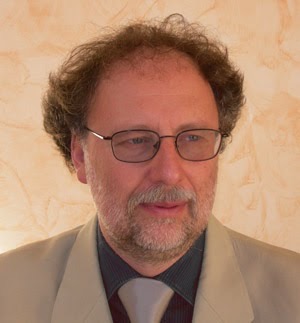 Paolo de Bernardis合作论文数Dipartimento di Fisica, Sapienza Università di Roma5
 Krzysztof Gorski合作论文数5Pawel Bielewicz合作论文数5
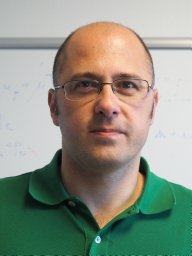 Paolo Natoli合作论文数Dipartimento di Fisica e Scienze della Terra, Università degli Studi di Ferrara5
 J. Richard Bond合作论文数Department of Physics, University of Toronto;Canadian Institute for Theoretical Astrophysics, University of Toronto5
 Julian Borrill合作论文数Computational Cosmology Center, Lawrence Berkeley National Laboratory;Space Sciences Laboratory, UC Berkeley5
 François Bouchet合作论文数Laboratoire d'Informatique de Paris 6, Sorbonne Université;CNRS;Institut d'Astrophysique de Paris5
 Alessandro Melchiorri合作论文数Dipartimento di Fisica, Sapienza Universita di Roma5Karim Benabed合作论文数Institut Astrophysique de Paris, Université Pierre et Marie Curie5
 Guillaume Patanchon合作论文数5
 Dipak Munshi合作论文数Queen Mary and Westfield College5Silvia Masi合作论文数4
 Hans Kristian Eriksen合作论文数Institute of Theoretical Astrophysics, The Faculty of Mathematics and Natural Sciences, University of Oslo4
 Reijo Keskitalo合作论文数Lawrence Berkeley National Laboratory4H. Dole合作论文数4
 Jean-Michel Lamarre合作论文数Laboratoire D'Études Du Rayonnement Et De La Matière En Astrophysique Et Atmosphères, À L’Observatoire De Paris4
 Enrique Martínez González合作论文数Consejo Superior de Investigaciones Científicas, Instituto de Física de Cantabria4
 n mandolesi合作论文数4
 Guilaine Lagache合作论文数Galaxies, Etoiles et COsmologie Department, Laboratoire d’Astrophysique de Marseille4l p l colombo合作论文数INAF4
 P. B. Lilje合作论文数4D. Paoletti合作论文数4
 Clive Dickinson合作论文数Jodrell Bank Centre for Astrophysics, The University of Manchester;School of Physics and Astronomy, University of Manchester4
 Sabino Matarrese合作论文数Department of Physics and Astronomy, University of Padua4A. Catalano合作论文数4Fabio Finelli合作论文数Istituto Nazionale Dl Astrofisica, Osservatorio di Astrofsica e Scienza dello Spazio di Bologna4
 Andrea Zacchei合作论文数Osservatorio Astronomico di Trieste4
 Marco Frailis合作论文数Astronomical Observatory of Trieste, National Institute of Astrophysics4
 Eduardo Battaner López合作论文数Instituto Carlos I de Física Teórica y Computacional, Universidad de Granada4Isabelle Ristorcelli合作论文数4
 Enrico Franceschi合作论文数Osservatorio di Astrofisica e Scienza dello Spazio di Bologna, Istituto Nazionale di Astrofisica4Luca Pagano合作论文数Physics Department;Universita ' di Roma;Physics Department, Universita ' di Roma4
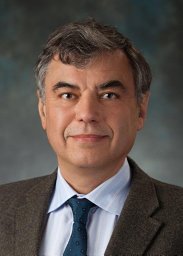 D. Novikov合作论文数Astro-Space Center, P.N.Lebedev Physical Institute4
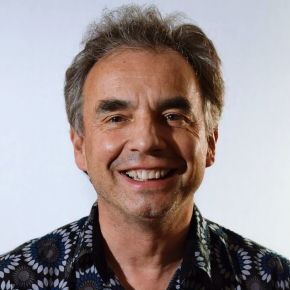 Martin Giard合作论文数CNRS4
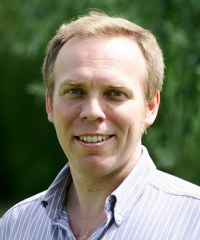 Mike Hobson合作论文数The Cavendish Laboratory, Department of Physics, University of Cambridge;Trinity Hall College, University of Cambridge;Cambridge Inference Ltd4




