Wire-directed energy deposition (W-DED) produces steep thermal gradients and rapid heating-cooling cycles due to the moving heat source, where modest variations in process parameters significantly alter heat input per unit length and therefore the full thermal history. This sensitivity makes process tuning by trial-and-error or repeated FE sweeps expensive, motivating inverse analysis. This work proposes an inverse thermal process design framework that couples single-track experiments, a calibrated finite element (FE) thermal model, and a parametric physics-informed neural network (PINN) surrogate. By using experimentally calibrated heat-loss physics to define the training constraints, the PINN learns a parameterized thermal response from physics alone (no temperature data in the PINN loss), enabling inverse design without repeated FE runs. Thermocouple measurements are used to calibrate the convection film coefficient and emissivity in the FE model, and those parameters are used to train a parametric PINN over continuous ranges of arc power (1.5–3.0 kW) and travel speed (0.005–0.015 m/s) without using temperature data in the loss function. The trained PINN model was validated against the calibrated FE model at 3 probe locations with different power and travel speed combinations. Across these benchmark conditions, the mean absolute errors are between 6.5–17.4 °C, with cooling-tail errors ranging from 1.8–12.1 °C. The trained surrogate is then embedded in a sampling-based inverse optimization loop to identify power-speed combinations that achieve prescribed interlayer temperatures at a fixed dwell time. For target interlayer temperatures of 100, 130, and 160 °C with a 10 s dwell time, the optimized solutions remain within 3.3–5.6 °C of the target according to the PINN, while FE verification is within 4.0–6.6 °C. The results demonstrate that a physics-only parametric PINN surrogate enables inverse thermal process design without repeated FE runs while establishing a single-track baseline for extension to multi-track and multi-layer builds.
Bentonite slurries play a vital role in maintaining excavation stability in shield tunneling. Therefore, accurate modeling of bentonite flow behavior is crucial for enhancing performance in slurry shield tunneling operations. In this work, we investigate the pressure drop and centerline velocity of non-Newtonian bentonite slurries governed by the Herschel-Bulkley model, by integrating numerical simulations with machine-learning-based surrogate modeling. The Extra Trees model achieved an R2 of 0.92 for pressure prediction, and the Light Gradient Boosting Machine (LightGBM) model attained an R2 greater than 0.98 for velocity prediction. Beyond forward modeling, the trained machine-learning models are combined with Gaussian-process-based Bayesian optimization to determine optimal combinations of rheological parameters, geometric features, and formulation composition. The robustness of the predicted parameters was assessed by accounting for realistic operational variability using Monte Carlo sampling. In addition, the physical reliability of the proposed approach was evaluated by comparing the predicted results with ground truth values, showing strong agreement (R2 = 0.99). To the best of the author's knowledge, especially in the context of slurry shield tunneling, inverse machinelearning techniques have not been extensively used to directly infer rheological characteristics of bentonite slurry pipe flow from pressure and velocity measurements. The proposed framework supports real-time, datadriven flow control and rheological monitoring, while offering a computationally efficient solution for intelligent decision-making in slurry-based tunneling systems.
This paper details the development of an autonomous robotic solution for the long-term surveillance of low-level radiation in nuclear facilities. Implementing such a system mitigates personnel health risks by minimizing radiation exposure and automating a mundane, repetitive task. To address the inherent challenges of deploying robots in highly unstructured environments, the core contribution of this work is a novel, error-tolerant behavioral architecture. Specifically, a custom behavior tree is designed to absorb execution imperfections and tolerate environmental uncertainties. This allows the robot to adapt and continue its mission rather than experiencing a hard failure. Bayesian optimization is utilized to perform adaptive mapping via a manipulator-equipped Spot quadruped robot, which features a Kromek Sigma50 gamma spectrometer attached to its end effector. Experiments were conducted in an obstacle-rich testbed using a Cesium-137 source. The results demonstrate the feasibility of the proposed system and its behavioral design approach, as the robot successfully performed adaptive mapping and correctly identified the location and approximate intensity of the radiation source.
Real-Time In-Line Monitoring (RTIM) of rheological properties such as slurry yield stress is important in different industries for its various benefits such as significant time savings and increased safety/efficiency of processes while reducing secondary waste due to sampling or inaccurate procedures. This paper discusses two methods for characterizing yield stress in real time: the Pressure Loss method and the Liquid Rise method. The Liquid Rise method uses the height of the slurry in a vertical column and the pressure difference to quantify the yield stress. The Pressure Loss method uses the drop of pressure in a laminar flow of slurry to determine the yield stress. Kaolin-water slurry is used as a simulant of the non-Newtonian fluid. An experimental setup is built to demonstrate the methods, and data obtained from the experimental setup is compared with the yield stress obtained from a conventional table-top rheometer (baseline rheology). The results show a good agreement between the experimental yield stress and baseline rheology.
The deployment of wall-climbing robotic systems plays an important role for executing inspection and maintenance tasks in high-risk environments and minimizing the risk to operators tasked with the inspection. Conventional adhesion techniques, such as magnetic, suction, and dry adhesives, encounter significant challenges when applied to diverse surface types. This study presents a four-wheeled robotic platform utilizing dual electric ducted fans (EDFs) to produce adjustable adhesion forces, facilitating uninterrupted movement from horizontal to vertical planes. A comprehensive multibody dynamics model constructed using MSC Adams analyzed wheel-surface interaction, thrust forces, and system stability during transitional phases, revealing essential force parameters for stable vertical operation and determining minimum thrust levels required to sustain four-point contact during orthogonal transitions. These findings informed thrust distribution optimization between the two EDF units to reduce rotational effects while ensuring sufficient safety margins during the ground to vertical wall transition. The findings also allowed for appropriate thrust application ensuring the generation of the required normal force distribution at wheel contact interfaces during vertical movement. A physical prototype was developed and experimentally validated, demonstrating dependable adhesion and maneuverability across a spectrum of orientations and highlighting the efficacy of simulation-driven design for thrust-based adhesion systems.
Radiation mapping is a desirable task to automate because of the inherent risks involved and its tedious nature. A novel system was designed to address this by combining various existing technologies, utilizing behavior-based robotics and Bayesian optimization. The system uses a quadruped robot equipped with a manipulator and gamma detector to take measurements at locations that are selected based on the uncertainty of a surrogate model used to estimate the true radiation field. The robot uses input from the world with depth cameras to avoid collisions with the robot’s body, and unreachable points for the end effector are addressed by both allowing for a soft collision with the environment to occur, prompting the system to abandon that point, and varying the exploration tendency of the optimization based on consecutive collisions. This approach provides unique traversability and adaptability over other strategies in the literature. Experiments were performed by placing a Cesium-137 source on the ground and varying geometric setups and an optimization parameter demonstrating the adaptability to diverse environments and the increased robustness resulting from the designed behavior. The results additionally demonstrate that dynamically adjusting the optimization algorithm’s exploration tendency based on the arm’s collision history improves the system’s ability to navigate cluttered environments and construct accurate radiation maps without getting stuck in unreachable areas.
Precise thermal management remains a critical challenge in Wire Arc-Direct Energy Deposition (W-DED) processes due to significant temperature fluctuations that can adversely impact part quality, dimensional accuracy, and process reliability. To address these issues, this study introduces a novel Hybrid Interlayer Hysteresis Controller (HIHC) designed specifically for W-DED, which integrates real-time thermal feedback and adaptive dwell time control. The system implements a dual-mode cooling strategy based on a temperature threshold, utilizing optical character recognition-based temperature monitoring and a rolling buffer system for stability. Experimental validation demonstrated improvements in thermal management, with the dynamic control system maintaining an average temperature undershoot of 1.38% while achieving 96.29% optimal temperature window compliance. Surface quality analysis revealed an 8.67% improvement in front face smoothness and a 5.15% enhancement in top surface quality. The dynamic control system also exhibited superior dimensional accuracy, producing thin walls with widths of 61.98 mm versus 66.43 mm in fixed dwell time samples, relative to the intended 60 mm specification. This study advances the field of additive manufacturing by establishing a robust framework for precise thermal management in W-DED processes, contributing to enhanced part quality, reduced post-processing requirements, and improved process reliability. Despite these advances, limitations include the system’s dependence on external optical monitoring hardware, potential scalability constraints for complex geometries, and limited testing across diverse material systems. Future work should focus on integrating multi-axis thermal sensors, extending the framework to multi-material deposition scenarios and implementing machine learning algorithms for predictive thermal modeling.
This work presents a physics-guided parameter estimation framework for cold spray additive manufacturing (CSAM), focusing on simulating and validating deposit profiles across diverse process conditions. The proposed model employs a two-zone flow representation: quasi-constant velocity near the nozzle exit followed by an exponentially decaying free jet to capture particle acceleration and impact dynamics. The framework employs a comprehensive approach by numerically integrating drag-dominated particle trajectories to predict deposit formation with high accuracy. This physics-based framework incorporates both operational and geometric parameters to ensure robust prediction capabilities. Operational parameters include spray angle, standoff distance, traverse speed, and powder feed rate, while geometric factors encompass nozzle design characteristics such as exit diameter and divergence angle. Validation is performed using 36 experimentally measured profiles of commercially pure titanium powder. The simulator shows excellent agreement with the experimental data, achieving a global root mean square error (RMSE) of 0.048 mm and a coefficient of determination R2=0.991, improving the mean absolute error by more than 40% relative to a neural network-based approach. Sensitivity analyses reveal that nozzle geometry, feed rate, and critical velocity strongly modulate the amplitude and shape of the deposit. Notably, decreasing the nozzle exit diameter or divergence angle significantly increases local deposition rates, while increasing the standoff distance dampens particle velocities, thereby reducing deposit height. Although the partial differential equation (PDE)-based framework entails a moderate increase in computational time—about 50 s per run, roughly 2.5 times longer than simpler empirical models—this remains practical for most process design and optimization tasks. Beyond its accuracy, the PDE-based simulation framework’s principal advantage lies in its minimal reliance on sampling data. It can readily be adapted to new materials or untested process parameters, making it a powerful predictive tool in cold spray process design. This study underscores the simulator’s potential for guiding parameter selection, improving process reliability and offering deeper physical insights into cold spray deposit formation.
"The U.S. DOE Hanford Site has the largest number of high-level waste (HLW) storage tanks and the largest volume of HLW in the United States. The safe storage, retrieval, treatment, and disposal of approximately 53 million gallons of highly toxic, high-level radioactive waste stored in Hanford's 177 underground tanks are a national priority. Retrieval and treatment of waste from these tanks pose a considerable challenge. Florida International University has been conducting research on several promising alternative processes and technologies that can be applied to address several technology gaps in the current waste retrieval and conditioning plans. Specifically, FIU has been involved in: the evaluation of non-metallic materials in the waste transfer system, evaluation of alternative HLW instrumentation for in-tank applications and the development of technologies to assist in the inspection of tank bottoms at Hanford."
The waste transfer lines at the United States Department of Energy ' s Hanford Site Tank Farm in Benton County, Washington, USA have flexible sections that are fabricated from ethylene propylene diene monomer (EPDM) hoses. The hoses are of a hose-in-hose design with an inner hose that carries the waste and an outer hose that acts as containment in the event of an inner hose failure. During waste transport, the inner hoses are exposed to several stressors including caustic solutions at high temperatures and high pressures. These hose-in-hose transfer lines (HIHTL) are exposed to several stressors including caustic solutions at high temperatures and high pressures during the waste transport. The aging behavior of the HIHTL inner hose were evaluated by exposure to solutions at 77 degrees C containing 6.25, 12.50, and 25.00% (v/v) sodium hydroxide (NaOH) for 12-months. After the exposure, the burst pressure of the HIHTL specimens were measured and compared to the unaged samples. The burst pressure of the HIHTL specimens exposed to the 6.25% NaOH solution exhibited the most significant deterioration and those exposed to 25.00% NaOH solution had the least deterioration. Examination of the inside surface of the HIHTL specimens with scanning electron microscopy showed that the surface deterioration for the specimens exposed to 6.25% NaOH solution were the most severe and the samples exposed to 25.00% NaOH solution had the least deterioration. Scanning Electron Microscope with Energy Dispersive Spectroscopy (SEMEDS) analysis of the specimens showed that the specimen aged with the 6.25% NaOH solution had that greatest sodium ion penetration into the material with the sodium concentration being significantly higher than those seen with the other specimens. In addition, when the specimens aged with both the 12.50% and the 25.00% NaOH solutions were examined, a white crystalline coating was observed on the inside surfaces of the specimens which appears to have acted as a barrier that protected the EPDM material from attack by the NaOH solutions.
The violent nature of storm sewer geysers has been puzzling researchers worldwide for a very long time. This paper investigates the geyser simulation methodology using a small-scale set-up, where important flow structures such as slugs, eruption patterns, and pressure oscillations are compared with experimental results to test the fidelity of the numerical modelling. In this exercise, a geyser-like process is produced using a continuous insertion of air in the horizontal pipe. The established methodology is used to simulate the hypothesized scenario of a finite trapped air pocket in the relatively longer pipe system. A geyser produced from a finitely trapped air pocket shows a different eruption mechanism compared to those found in previous studies. First, no slug is observed in the horizontal pipe, resulting in continuous air release. Second, the interface continuously atomizes in the vertical pipe, creating a churn-slug flow that produces a large number of small eruptions.
The particle drag force coefficient is a critical variable in modeling multiphase energy systems. Even though various empirical drag models with limited conditions have been published before, developing a general drag model is still an important topic. Existing analytical and modeling techniques of particle drag are incapable of supporting the application’s complexity due to their limitations to very specific conditions. This paper proposes the Drag Coefficient Correlation-aided Deep Neural Network (DCC-DNN) architecture to predict the particle drag force coefficient from various single-particle experimental data. Beyond sphericity and Reynolds number, the proposed approach includes an expanded set of features supported by the literature. Simultaneously, model regularization and meta-learning help train a generalized and more reliable drag model, despite the limited data available and the variance exhibited in individual single-particle studies. The presented model applies to spherical and non-spherical particles, providing much-needed generality and reliability for industrial applications.
Thermal simulation is essential in wire-arc-directed energy deposition (W-DED) to accurately estimate temperature distributions, impacting residual stress and distortion in components. Proper calibration of simulation models minimizes inaccuracies caused by varying material properties, machine settings, and environmental conditions. The lack of standardized calibration methods further complicates thermal predictions. This paper introduces a novel calibration method integrating both machine learning, as the high-fidelity (HF) model, and response surface modeling, as the low-fidelity (LF) model, within a multi-fidelity (MF) framework. The approach utilizes Bayesian optimization to effectively explore the search space for optimal solutions. A two-tiered model employs the LF model to identify feasible regions, followed by the HF model to refine calibration parameters, such as thermal efficiency (η), convection coefficient (h), and emissivity (ε), which are difficult to determine experimentally. A three-factor Box–Behnken design (BBD) is applied to explore the design space, requiring only thirteen parameter configurations, conserving resources and enabling robust model training. The efficacy of this MF model is demonstrated in multi-layer W-DED calibration, showing strong alignment between experimental and simulated temperatures, with a mean absolute error (MAE) of 7.47 °C. This method offers a replicable framework for broader additive manufacturing processes.
Data center thermal management requires a good understanding of critical cooling airflow path. While CFD modeling excels at portraying airflow and temperature fields, it is often computationally intensive. Recent advancement in deep learning offers a rapid prediction of key parameters at several points of interest based on operation conditions of data centers. However, these models fail to deliver the comprehensive flow physics of an entire domain that CFD provides. This paper presents an innovative super-resolution approach, originating from computer vision, to model the air flow and temperature field in the cold aisle of a realistic data center. The proposed model reconstructs a high-fidelity CFD-generated flow field that typically takes several hours by using a low-fidelity CFD-generated flow field which only takes several minutes. The drastic reduction in computational time makes real-time prediction feasible, while providing detailed information for data center engineers to understand the flow field. Two variations of the framework are proposed and compared with the ground truth generated by the high-fidelity CFD model. A Mean Absolute Error less than 0.5 degrees C is achieved for air temperature prediction across all test scenarios, and less than 0.1 m/s for air velocity prediction. A sensitivity study is also conducted to determine the importance of input features.
Flooding is one of the most frequent natural hazards and causes more economic loss than all the other natural hazards. Fast and accurate flood prediction has significance in preserving lives, minimizing economic damage, and reducing public health risks. However, current methods cannot achieve speed and accuracy simultaneously. Numerical methods can provide high-fidelity results, but they are time-consuming, particularly when pursuing high accuracy. Conversely, neural networks can provide results in a matter of seconds, but they have shown low accuracy in flood map generation by all existing methods. This work combines the strengths of numerical methods and neural networks and builds a framework that can quickly and accurately model the high-fidelity flood inundation map with detailed water depth information. In this paper, we employ the U-Net and generative adversarial network (GAN) models to recover the lost physics and information from ultra-fast, low-resolution numerical simulations, ultimately presenting high-resolution, high-fidelity flood maps as the end results. In this study, both the U-Net and GAN models have proven their ability to reduce the computation time for generating high-fidelity results, reducing it from 7-8 h down to 1 min. Furthermore, the accuracy of both models is notably high.
The storm sewer geyser is a process where an air–water mixture violently erupts from a manhole. Despite the low hydrostatic pressure, violent eruptions can achieve a height of tens of meters above the ground. This current study experimentally investigates large-scale violent geysers using a large air pocket inserted from a pressurized air tank. The total length of the pipe system is approximately 88 m with a 0.1572 m diameter pipe. This large-scale experiment facilitates the investigation of spontaneous geyser eruptions. This study identifies the role of air–water volume ratio and coefficient of pressure (ratio of absolute initial static pressure to initial dynamic pressure) on the geyser intensity using eruption images and pressure plots. A total of 116 cases are tested, in which the volume ratio is parametrically increased from 0 to 1.1 under various operating conditions. A geyser score is defined to quantify the geyser eruption nature based on visual observations. The key findings are as follows: first, a sharp transition in geyser intensity is observed at the critical volume ratio of 0.5, and pre-transition and post-transition intensity exhibit a linear relationship with the volume ratio; and second, the critical volume ratio linearly varies with the coefficient of pressure.
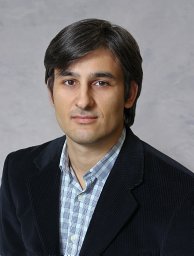 Seckin Gokaltun合作论文数Informatics Institute, Istanbul Technical University18
 Lagos Leonel合作论文数Applied Research Center, Florida International University13
 Amer Awwad合作论文数Applied Research Center, Florida International University12
 Ibrahim Nur Tansel合作论文数Department of Mechanical and Materials Engineering, Florida International University10
 Amin Baghalian合作论文数Dept Mech & Mat Engn, Florida Int Univ9
 Shervin Tashakori合作论文数Dept Mech & Mat Engn, Florida Int Univ9
 David Roelant合作论文数9
 Tomas Pribanic合作论文数8
 Abderrachid Hamrani合作论文数Dept Mech & Mat Engn, Florida Int Univ8
 Volkan Yusuf Senyurek合作论文数Geosystems Research Institute, Mississippi State University8jose varona合作论文数6Mackenson Telusma合作论文数6
 Aparna Aravelli合作论文数Appl Res Ctr, Florida Int Univ6
 Benjamin Boesl合作论文数Plasma Forming Lab, Florida Int Univ6j varona合作论文数5
 Juliette Dubon合作论文数5
 Sakhrat Khizroev合作论文数Department of Electrical and Computer Engineering, College of Engineering, University of Miami5
 Arvind Agarwal合作论文数Department of Mechanical & Nuclear Engineering, College of Engineering, Virginia Commonwealth University5Muhammet Unal合作论文数Technical Education Faculty, Marmara University5Anthony Abrahao合作论文数4Jose Rivera合作论文数4jairo crespo合作论文数4
 Gonzalo Seisdedos合作论文数4Beichao Hu合作论文数4
 Hadi Fekrmandi合作论文数Mech Engn, South Dakota Sch Mines & Technol4
 Arturo Segundo Leon合作论文数4romani patel合作论文数3
 Mauricio Pajon合作论文数3
 Mariana Ontiveros合作论文数3Tyler Dolmetsch合作论文数College of Engineering and Computing, Florida International University3
 Pratik Mahyawansi合作论文数Dept. of Civil and Environmental Engineering, Florida International Univ.3Xiangyang Zhou (周向阳)合作论文数3Clarice Davila合作论文数2Zeda Yin合作论文数2
 Sumit R. Zanje合作论文数Dept. of Civil and Environmental Engineering, Florida International Univ.2Dennis Toledo合作论文数Department of Electrical & Computer Engineering, Florida International University2
 Elric Zhang合作论文数Dept Elect & Comp Engn, Univ Miami2
 Saman Farhangdoust合作论文数Coll Engn & Comp, Florida Int Univ2
 Abbas Sharifi合作论文数Urmia Univ Technol UUT, Dept Mech Engn, POB 57166-419, Orumiyeh, Iran2
 Guduru Rakesh合作论文数Department of Cellular Biology &Herbert Wertheim College of Medicine, Florida International University;Herbert Wertheim College of Medicine, Florida International University2
 Ping Wang (王萍)合作论文数School of Electrical and Information Engineering, Tianjin University2
 George S. Dulikravich合作论文数School of Biomedical, Materials and Mechanical Engineering, Florida International University2Richard Burton合作论文数2
 Berrin Tansel合作论文数Department of Civil and Environmental Engineering, College of Engineering and Computing, Florida International University2
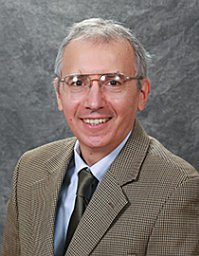 Paul G. A. Cizmas合作论文数Department of Aerospace Engineering, Texas A&M University2
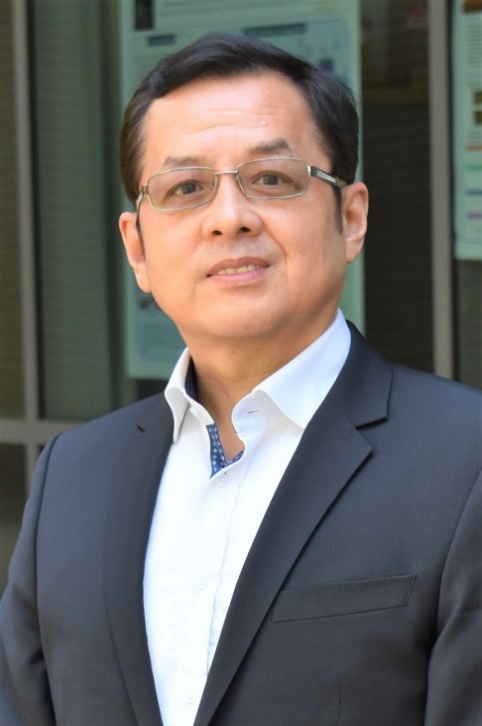 Ping Liang合作论文数Department of Electrical Engineering, College of Engineering, University of California, Riverside2
 Cristian Pantea合作论文数Los Alamos National Laboratory2Juanjuan Zhou合作论文数Department of Chemistry, Shandong University2
 William (Buddy) Clark合作论文数Swanson School of Engineering, University of Pittsburgh2




