This documents describes the technical design and the expected performance of the Barrel DIRC detector for the PANDA experiment. The Barrel DIRC will provide hadronic charged particle identification in the polar angle range of $22^\circ$ to $140^\circ$ for particle momenta between 0.5 GeV/c and 3.5 GeV/c. The design is based on the successful BaBar DIRC with several key improvements. The performance and system cost were optimized in detailed detector simulations and validated with full system prototypes using particle beams at GSI and CERN. The final design meets or exceeds the PID goal of clean $π/K$ separation with at least 3 standard deviations over the entire phase space of charged kaons in the Barrel DIRC.
The (P) over bar ANDA (anti-Proton ANnihiliation at DArmstadt) experiment will be one of the four flagship experiments at the new international accelerator complex FAIR (Facility for Antiproton and Ion Research) in Darmstadt, Germany. (P) over bar ANDA will address fundamental questions of hadron physics and quantum chromodynamics using high-intensity cooled antiproton beams with momenta between 1.5 and 15 GeV/c and a design luminosity of up to 2 x 10(32) cm(-2) S-1. Excellent particle identification (PID) is crucial to the success of the (P) over bar ANDA physics program. Hadronic PID in the barrel region of the target spectrometer will be performed by a fast and compact Cherenkov counter using the detection of internally reflected Cherenkov light (DIRC) technology. It is designed to cover the polar angle range from 22 degrees to 140 degrees and will provide at least 3 standard deviations (s.d.) pi/K separation up to 3.5 GeV/c, matching the expected upper limit of the final state kaon momentum distribution from simulation. This documents describes the technical design and the expected performance of the (P) over bar ANDA Barrel DIRC detector. The design is based on the successful BaBar DIRC with several key improvements. The performance and system cost were optimized in detailed detector simulations and validated with full system prototypes using particle beams at GSI and CERN. The final design meets or exceeds the PID goal of clean pi/K separation with at least 3 s.d. over the entire phase space of charged kaons in the Barrel DIRC.
Production of $\pi^0$ and $\eta$ mesons has been measured at midrapidity in Cu$+$Au collisions at $\sqrt{s_{_{NN}}}$=200 GeV. Measurements were performed in $\pi^0(\eta)\rightarrow\gamma\gamma$ decay channel in the 1(2)-20 GeV/$c$ transverse momentum range. A strong suppression is observed for $\pi^0$ and $\eta$ meson production at high transverse momentum in central Cu$+$Au collisions relative to the $p$$+$$p$ results scaled by the number of nucleon-nucleon collisions. In central collisions the suppression is similar to Au$+$Au with comparable nuclear overlap. The $\eta/\pi^0$ ratio measured as a function of transverse momentum is consistent with $m_T$-scaling parameterization down to $p_T=$2 GeV/$c$, its asymptotic value is constant and consistent with Au$+$Au and $p$$+$$p$ and does not show any significant dependence on collision centrality. Similar results were obtained in hadron-hadron, hadron-nucleus, and nucleus-nucleus collisions as well as in $e^+e^-$ collisions in a range of collision energies $\sqrt{s_{_{NN}}}=$3--1800 GeV. This suggests that the quark-gluon-plasma medium produced in Cu$+$Cu collisions either does not affect the jet fragmentation into light mesons or it affects the $\pi^0$ and $\eta$ the same way.
The PHENIX experiment at the Relativistic Heavy Ion Collider has measured the differential cross section of phi(1020)-meson production at forward rapidity in p + p collisions at root s = 510 GeV via the dimuon decay channel. The partial cross section in the rapidity and P-T ranges 1.2 < vertical bar y vertical bar < 2.2 and 2 < p(T) < 7 GeV/c is sigma(phi) = [2.28 +/- 0.09(stat) +/- 0.14(syst) +/- 0.27(norm)] x 10(-2) mb. The energy dependence of sigma(phi) (1.2 < vertical bar y vertical bar < 2.2,2 < p(T) < 5 GeV/c) is studied using the PHENIX measurements at root s = 200 and 510 GeV and the Large Hadron Collider measurements at root s = 2.76 and 7 TeV. The experimental results arc compared to various event generator predictions (PYTHIA6, PYTHIA8, PHOJET, AMPT, EPOS3, and EPOS-LHC).
We present midrapidity charged-pion invariant cross sections, the ratio of the pi(-) to pi(+) cross sections and the charge-separated double-spin asymmetries in polarized p + p collisions at root s = p + 200 GeV. While the cross section measurements are consistent within the errors of next-to-leading-order (NLO) perturbative quantum chromodynamics predictions (pQCD), the same calculations overestimate the ratio of the chargedpion cross sections. This discrepancy arises from the cancellation of the substantial systematic errors associated with the NLO-pQCD predictions in the ratio and highlights the constraints these data will place on flavor-dependent pion fragmentation functions. The charge-separated pion asymmetries presented here sample an x range of similar to 0.03-0.16 and provide unique information on the sign of the gluon-helicity distribution. Disciplines Elementary Particles and Fields and String Theory | Physics Comments This is an article from Physical Review D 91 (2015): 032001, doi:10.1103/PhysRevD.91.032001. Posted with permission. Authors Andrew Adare, Alan Dion, John C. Hill, Todd Kempel, John G. Lajoie, Alexandre Lebedev, Craig Ogilvie, H. Pei, Marzia Rosati, C. L. Silva, Feng Wei, et al., and PHENIX Collaboration This article is available at Iowa State University Digital Repository: http://lib.dr.iastate.edu/physastro_pubs/232 Charged-pion cross sections and double-helicity asymmetries in polarized pþ p collisions at ffiffi s p 1⁄4 200 GeV A. Adare, C. Aidala, N. N. Ajitanand, Y. Akiba, R. Akimoto, H. Al-Ta’ani, J. Alexander, K. R. Andrews, A. Angerami, K. Aoki, N. Apadula, E. Appelt, Y. Aramaki, R. Armendariz, E. C. Aschenauer, E. T. Atomssa, T. C. Awes, B. Azmoun, V. Babintsev, M. Bai, B. Bannier, K. N. Barish, B. Bassalleck, A. T. Basye, S. Bathe, V. Baublis, C. Baumann, A. Bazilevsky, R. Belmont, J. Ben-Benjamin, R. Bennett, D. S. Blau, J. S. Bok, K. Boyle, M. L. Brooks, D. Broxmeyer, H. Buesching, V. Bumazhnov, G. Bunce, S. Butsyk, S. Campbell, P. Castera, C.-H. Chen, C. Y. Chi, M. Chiu, I. J. Choi, J. B. Choi, R. K. Choudhury, P. Christiansen, T. Chujo, O. Chvala, V. Cianciolo, Z. Citron, B. A. Cole, Z. Conesa del Valle, M. Connors, M. Csanád, T. Csörgő, S. Dairaku, A. Datta, G. David, M. K. Dayananda, A. Denisov, A. Deshpande, E. J. Desmond, K. V. Dharmawardane, O. Dietzsch, A. Dion, M. Donadelli, O. Drapier, A. Drees, K. A. Drees, J. M. Durham, A. Durum, L. D’Orazio, Y. V. Efremenko, T. Engelmore, A. Enokizono, H. En’yo, S. Esumi, B. Fadem, D. E. Fields, M. Finger, M. Finger, Jr., F. Fleuret, S. L. Fokin, J. E. Frantz, A. Franz, A. D. Frawley, Y. Fukao, T. Fusayasu, C. Gal, I. Garishvili, F. Giordano, A. Glenn, X. Gong, M. Gonin, Y. Goto, R. Granier de Cassagnac, N. Grau, S. V. Greene, M. Grosse Perdekamp, T. Gunji, L. Guo, H.-Å. Gustafsson, J. S. Haggerty, K. I. Hahn, H. Hamagaki, J. Hamblen, R. Han, J. Hanks, C. Harper, K. Hashimoto, E. Haslum, R. Hayano, X. He, T. K. Hemmick, T. Hester, J. C. Hill, R. S. Hollis, W. Holzmann, K. Homma, B. Hong, T. Horaguchi, Y. Hori, D. Hornback, S. Huang, T. Ichihara, R. Ichimiya, H. Iinuma, Y. Ikeda, K. Imai, M. Inaba, A. Iordanova, D. Isenhower, M. Ishihara, M. Issah, D. Ivanischev, Y. Iwanaga, B. V. Jacak, J. Jia, X. Jiang, D. John, B. M. Johnson, T. Jones, K. S. Joo, D. Jouan, J. Kamin, S. Kaneti, B. H. Kang, J. H. Kang, J. S. Kang, J. Kapustinsky, K. Karatsu, M. Kasai, D. Kawall, A. V. Kazantsev, T. Kempel, A. Khanzadeev, K. M. Kijima, B. I. Kim, D. J. Kim, E.-J. Kim, Y.-J. Kim, Y. K. Kim, E. Kinney, Á. Kiss, E. Kistenev, D. Kleinjan, P. Kline, L. Kochenda, B. Komkov, M. Konno, J. Koster, D. Kotov, A. Král, G. J. Kunde, K. Kurita, M. Kurosawa, Y. Kwon, G. S. Kyle, R. Lacey, Y. S. Lai, J. G. Lajoie, A. Lebedev, D. M. Lee, J. Lee, K. B. Lee, K. S. Lee, S. H. Lee, S. R. Lee, M. J. Leitch, M. A. L. Leite, X. Li, S. H. Lim, L. A. Linden Levy, H. Liu, M. X. Liu, B. Love, D. Lynch, C. F. Maguire, Y. I. Makdisi, A. Manion, V. I. Manko, E. Mannel, Y. Mao, H. Masui, M. McCumber, P. L. McGaughey, D. McGlinchey, C. McKinney, N. Means, M. Mendoza, B. Meredith, Y. Miake, T. Mibe, A. C. Mignerey, K. Miki, A. Milov, J. T. Mitchell, Y. Miyachi, A. K. Mohanty, H. J. Moon, Y. Morino, A. Morreale, D. P. Morrison, S. Motschwiller, T. V. Moukhanova, T. Murakami, J. Murata, S. Nagamiya, J. L. Nagle, M. Naglis, M. I. Nagy, I. Nakagawa, Y. Nakamiya, K. R. Nakamura, T. Nakamura, K. Nakano, J. Newby, M. Nguyen, M. Nihashi, R. Nouicer, A. S. Nyanin, C. Oakley, E. O’Brien, C. A. Ogilvie, M. Oka, K. Okada, A. Oskarsson, M. Ouchida, K. Ozawa, R. Pak, V. Pantuev, V. Papavassiliou, B. H. Park, I. H. Park, S. K. Park, S. F. Pate, L. Patel, H. Pei, J.-C. Peng, H. Pereira, D. Yu. Peressounko, R. Petti, C. Pinkenburg, R. P. Pisani, M. Proissl, M. L. Purschke, H. Qu, J. Rak, I. Ravinovich, K. F. Read, K. Reygers, V. Riabov, Y. Riabov, E. Richardson, D. Roach, G. Roche, S. D. Rolnick, M. Rosati, S. S. E. Rosendahl, J. G. Rubin, B. Sahlmueller, N. Saito, T. Sakaguchi, V. Samsonov, S. Sano, M. Sarsour, T. Sato, M. Savastio, S. Sawada, K. Sedgwick, R. Seidl, R. Seto, D. Sharma, I. Shein, T.-A. Shibata, K. Shigaki, H. H. Shim, M. Shimomura, K. Shoji, P. Shukla, A. Sickles, C. L. Silva, D. Silvermyr, C. Silvestre, K. S. Sim, B. K. Singh, C. P. Singh, V. Singh, M. Slunečka, T. Sodre, R. A. Soltz, W. E. Sondheim, S. P. Sorensen, I. V. Sourikova, P. W. Stankus, E. Stenlund, S. P. Stoll, T. Sugitate, A. Sukhanov, J. Sun, J. Sziklai, E. M. Takagui, A. Takahara, A. Taketani, R. Tanabe, Y. Tanaka, S. Taneja, K. Tanida, M. J. Tannenbaum, S. Tarafdar, A. Taranenko, E. Tennant, H. Themann, D. Thomas, M. Togawa, L. Tomášek, M. Tomášek, H. Torii, R. S. Towell, I. Tserruya, Y. Tsuchimoto, K. Utsunomiya, C. Vale, H.W. van Hecke, E. Vazquez-Zambrano, A. Veicht, J. Velkovska, R. Vértesi, M. Virius, A. Vossen, V. Vrba, E. Vznuzdaev, X. R. Wang, D. Watanabe, K. Watanabe, Y. Watanabe, Y. S. Watanabe, F. Wei, R. Wei, J. Wessels, S. N. White, D. Winter, C. L. Woody, R. M. Wright, M. Wysocki, Y. L. Yamaguchi, R. Yang, A. Yanovich, J. Ying, S. Yokkaichi, J. S. Yoo, Z. You, G. R. Young, I. Younus, I. E. Yushmanov, W. A. Zajc, A. Zelenski, and S. Zhou (PHENIX Collaboration) Abilene Christian University, Abilene, Texas 79699, USA Department of Physics, Augustana College, Sioux Falls, South Dakota 57197, USA Department of Physics, Banaras Hindu University, Varanasi 221005, India PHYSICAL REVIEW D 91, 032001 (2015) 1550-7998=2015=91(3)=032001(13) 032001-1 © 2015 American Physical Society Bhabha Atomic Research Centre, Bombay 400 085, India Baruch College, City University of New York, New York, New York 10010, USA Collider-Accelerator Department, Brookhaven National Laboratory, Upton, New York 11973-5000, USA Physics Department, Brookhaven National Laboratory, Upton, New York 11973-5000, USA University of California Riverside, Riverside, California 92521, USA Charles University, Ovocný trh 5, Praha 1, 116 36 Prague, Czech Republic Chonbuk National University, Jeonju 561-756, Korea Science and Technology on Nuclear Data Laboratory, China Institute of Atomic Energy, Beijing 102413, People’s Republic of China Center for Nuclear Study, Graduate School of Science, University of Tokyo, 7-3-1 Hongo, Bunkyo, Tokyo 113-0033, Japan University of Colorado, Boulder, Colorado 80309, USA Columbia University, New York, New York 10027, USA and Nevis Laboratories, Irvington, New York 10533, USA Czech Technical University, Zikova 4, 166 36 Prague 6, Czech Republic Dapnia, CEA Saclay, F-91191 Gif-sur-Yvette, France ELTE, Eötvös Loránd University, Pázmany Péter sétány 1/A, H-1117 Budapest, Hungary Ewha Womans University, Seoul 120-750, Korea Florida State University, Tallahassee, Florida 32306, USA Georgia State University, Atlanta, Georgia 30303, USA Hanyang University, Seoul 133-792, Korea Hiroshima University, Kagamiyama, Higashi-Hiroshima 739-8526, Japan IHEP Protvino, State Research Center of Russian Federation, Institute for High Energy Physics, Protvino 142281, Russia University of Illinois at Urbana-Champaign, Urbana, Illinois 61801, USA Institute for Nuclear Research of the Russian Academy of Sciences, prospekt 60-letiya Oktyabrya 7a, Moscow 117312, Russia Institute of Physics, Academy of Sciences of the Czech Republic, Na Slovance 2, 182 21 Prague 8, Czech Republic Iowa State University, Ames, Iowa 50011, USA Advanced Science Research Center, Japan Atomic Energy Agency, 2-4 Shirakata Shirane, Tokai-mura, Naka-gun, Ibaraki-ken 319-1195, Japan Helsinki Institute of Physics and University of Jyväskylä, P.O. Box 35, FI-40014 Jyväskylä, Finland KEK, High Energy Accelerator Research Organization, Tsukuba, Ibaraki 305-0801, Japan Korea University, Seoul 136-701, Korea Russian Research Center “Kurchatov Institute”, Moscow 123098, Russia Kyoto University, Kyoto 606-8502, Japan Laboratoire Leprince-Ringuet, Ecole Polytechnique, CNRS-IN2P3, Route de Saclay, F-91128 Palaiseau, France Physics Department, Lahore University of Management Sciences, Lahore 54792, Pakistan Lawrence Livermore National Laboratory, Livermore, California 94550, USA Los Alamos National Laboratory, Los Alamos, New Mexico 87545, USA LPC, Université Blaise Pascal, CNRS-IN2P3, Clermont-Fd, 63177 Aubiere Cedex, France Department of Physics, Lund University, Box 118, SE-221 00 Lund, Sweden University of Maryland, College Park, Maryland 20742, USA Department of Physics, University of Massachusetts, Amherst, Massachusetts 01003-9337, USA Department of Physics, University of Michigan, Ann Arbor, Michigan 48109-1040, USA Institut fur Kernphysik, University of Muenster, D-48149 Muenster, Germany Muhlenberg College, Allentown, Pennsylvania 18104-5586, USA Myongji University, Yongin, Kyonggido 449-728, Korea Nagasaki Institute of Applied Science, Nagasaki-shi, Nagasaki 851-0193, Japan National Research Nuclear University, MEPhI, Moscow Engineering Physics Institute, Moscow 115409, Russia University of New Mexico, Albuquerque, New Mexico 87131, USA New Mexico State University,
The exclusive charmonium production process in $\overline{p}p$ annihilation with an associated ${\ensuremath{\pi}}^{0}$ meson $\overline{p}p\ensuremath{\rightarrow}J/\ensuremath{\psi}{\ensuremath{\pi}}^{0}$ is studied in the framework of QCD collinear factorization. The feasibility of measuring this reaction through the $J/\ensuremath{\psi}\ensuremath{\rightarrow}{e}^{+}{e}^{\ensuremath{-}}$ decay channel with the AntiProton ANnihilation at DArmstadt ($\overline{\mathsf{P}}\mathsf{ANDA}$) experiment is investigated. Simulations on signal reconstruction efficiency as well as the background rejection from various sources including the $\overline{p}p\ensuremath{\rightarrow}{\ensuremath{\pi}}^{+}{\ensuremath{\pi}}^{\ensuremath{-}}{\ensuremath{\pi}}^{0}$ and $\overline{p}p\ensuremath{\rightarrow}J/\ensuremath{\psi}{\ensuremath{\pi}}^{0}{\ensuremath{\pi}}^{0}$ reactions are performed with PandaRoot, the simulation and analysis software framework of the $\overline{\mathsf{P}}\mathsf{ANDA}$ experiment. It is shown that the measurement can be done at $\overline{\mathsf{P}}\mathsf{ANDA}$ with significant constraining power under the assumption of an integrated luminosity attainable in four to five months of data taking at the maximum design luminosity.
We report the first measurement of the fraction of J/ψ mesons coming from B-meson decay (FB→J/ψ) in p+p collisions at s=510 GeV. The measurement is performed using the forward silicon vertex detector and central vertex detector at PHENIX, which provide precise tracking and distance-of-closest-approach determinations, enabling the statistical separation of J/ψ due to B-meson decays from prompt J/ψ. The measured value of FB→J/ψ is 8.1%±2.3%(stat)±1.9%(syst) for J/ψ with transverse momenta 0<pT<5 GeV/c and rapidity 1.2<|y|<2.2. The measured fraction FB→J/ψ at PHENIX is compared to values measured by other experiments at higher center of mass energies and to fixed-order-next-to-leading-logarithm and color-evaporation-model predictions. The bb¯ cross section per unit rapidity [dσ/dy(pp→bb¯)] extracted from the obtained FB→J/ψ and the PHENIX inclusive J/ψ cross section measured at 200 GeV scaled with color-evaporation-model calculations, at the mean B hadron rapidity y=±1.7 in 510 GeV p+p collisions, is 3.63-1.70+1.92 μb. It is consistent with the fixed-order-next-to-leading-logarithm calculations.
Bound nuclear systems with two units of strangeness are still poorly known despite their importance for many strong interaction phenomena. Stored antiprotons beams in the GeV range represent an unparalleled factory for various hyperon-antihyperon pairs. Their outstanding large production probability in antiproton collisions will open the floodgates for a series of new studies of systems which contain two or even more units of strangeness at the PANDA experiment at FAIR. For the first time, high resolution gamma-spectroscopy of doubly strange Lambda Lambda-hypernuclei will be performed, thus complementing measurements of ground state decays of Lambda Lambda-hypernuclei at J-PARC or possible decays of particle unstable hypernuclei in heavy ion reactions. High resolution spectroscopy of multistrange Xi(-) -atoms will be feasible and even the production of Omega(-) -atoms will be within reach. The latter might open the door to the vertical bar S vertical bar = 3 world in strangeness nuclear physics, by the study of the hadronic Omega(-) -nucleus interaction. For the first time it will be possible to study the behavior of Xi(+) in nuclear systems under well controlled conditions. (C) 2016 Elsevier B.V. All rights reserved.
We report on the first measurement of $p\Lambda$ and $pp$ correlations via the femtoscopy method in p+Nb reactions at $\mathrm{\sqrt{s_{NN}}=3.18} ~\mathrm{GeV}$, studied with the High Acceptance Di-Electron Spectrometer (HADES). By comparing the experimental correlation function to model calculations, a source size for $pp$ pairs of $r_{0,pp}=2.02 \pm 0.01(\mathrm{stat})^{+0.11}_{-0.12} (\mathrm{sys}) ~\mathrm{fm}$ and a slightly smaller value for $p\Lambda$ of $r_{0,\Lambda p}=1.62 \pm 0.02(\mathrm{stat})^{+0.19}_{-0.08}(\mathrm{sys}) ~\mathrm{fm}$ is extracted. Using the geometrical extent of the particle emitting region, determined experimentally with $pp$ correlations as reference together with a source function from a transport model, it is possible to study different sets of scattering parameters. The $p\Lambda$ correlation is proven sensitive to predicted scattering length values from chiral effective field theory. We demonstrate that the femtoscopy technique can be used as valid alternative to the analysis of scattering data to study the hyperon-nucleon interaction.
The results of simulations for future measurements of electromagnetic form factors at \PANDA (FAIR) within the PandaRoot software framework are reported. The statistical precision at which the proton form factors can be determined is estimated. The signal channel $\bar p p \to e^+ e^-$ is studied on the basis of two different but consistent procedures. The suppression of the main background channel, i.e. the $\bar p p \to \pi^+ \pi^-$, is studied. Furthermore, the background versus signal efficiency, statistic and systematic uncertainties on the extracted proton form factors are evaluated using to the two different procedures. The results are consistent with those of a previous simulation study using an older, simplified framework. However, a slightly better precision is achieved in the PandaRoot study in a large range of momentum transfer, assuming the nominal beam condition and detector performances.
The exclusive charmonium production process in $\bar{p}p$ annihilation with an associated $\pi^0$ meson $\bar{p}p\to J/\psi\pi^0$ is studied in the framework of QCD collinear factorization. The feasibility of measuring this reaction through the $J/\psi\to e^+e^-$ decay channel with the PANDA (AntiProton ANnihilation at DArmstadt) experiment is investigated. Simulations on signal reconstruction efficiency as well as the background rejection from various sources including the $\bar{p}p\to\pi^+\pi^-\pi^0$ and $\bar{p}p\to J/\psi\pi^0\pi^0$ reactions are performed with PandaRoot, the simulation and analysis software framework of the PANDA experiment. It is shown that the measurement can be done at PANDA with significant constraining power under the assumption of an integrated luminosity attainable in four to five months of data taking at the maximum design luminosity.
Baryon-to-meson Transition Distribution Amplitudes (TDAs) encoding valuable new information on hadron structure appear as building blocks in the collinear factorized description for several types of hard exclusive reactions. In this paper, we address the possibility of accessing nucleon-to-pion (πN) TDAs from \(\bar pp \to e^ + e^ - \pi ^0 \) reaction with the future P̄ANDA detector at the FAIR facility. At high center-of-mass energy and high invariant mass squared of the lepton pair q 2, the amplitude of the signal channel \(\bar pp \to e^ + e^ - \pi ^0 \) admits a QCD factorized description in terms of πN TDAs and nucleon Distribution Amplitudes (DAs) in the forward and backward kinematic regimes. Assuming the validity of this factorized description, we perform feasibility studies for measuring \(\bar pp \to e^ + e^ - \pi ^0 \) with the P̄ANDA detector. Detailed simulations on signal reconstruction efficiency as well as on rejection of the most severe background channel, i.e. \(\bar pp \to \pi ^ + \pi ^ - \pi ^0 \) were performed for the center-of-mass energy squared s = 5 GeV2 and s = 10 GeV2, in the kinematic regions 3.0 < q 2 < 4.3 GeV2 and 5 < q 2 GeV2, respectively, with a neutral pion scattered in the forward or backward cone \(\left| {\cos \theta _{\pi ^0 } } \right| > 0.5\) in the proton-antiproton center-of-mass frame. Results of the simulation show that the particle identification capabilities of the P̄ANDA detector will allow to achieve a background rejection factor of 5 · 107 (1 · 107) at low (high) q 2 for s = 5 GeV2, and of 1 · 108 (6 · 106) at low (high) q 2 for s = 10 GeV2, while keeping the signal reconstruction efficiency at around 40%. At both energies, a clean lepton signal can be reconstructed with the expected statistics corresponding to 2 fb−1 of integrated luminosity. The cross sections obtained from the simulations are used to show that a test of QCD collinear factorization can be done at the lowest order by measuring scaling laws and angular distributions. The future measurement of the signal channel cross section with P̄ANDA will provide a new test of the perturbative QCD description of a novel class of hard exclusive reactions and will open the possibility of experimentally accessing π TDAs.
A. Adare,14 S. Afanasiev,32 C. Aidala,41,45,46 N. N. Ajitanand,65 Y. Akiba,59,60 R. Akimoto,13 H. Al-Bataineh,53 H. Al-Ta’ani,53 J. Alexander,65 A. Angerami,15 K. Aoki,37,59 N. Apadula,66 L. Aphecetche,67 Y. Aramaki,13,59 J. Asai,59 H. Asano,37,59 E. C. Aschenauer,8 E. T. Atomssa,38,66 R. Averbeck,66 T. C. Awes,55 B. Azmoun,8 V. Babintsev,26 M. Bai,7 G. Baksay,21 L. Baksay,21 A. Baldisseri,17 B. Bannier,66 K. N. Barish,9 P. D. Barnes,41,* B. Bassalleck,52 A. T. Basye,1 S. Bathe,6,9,60 S. Batsouli,55 V. Baublis,58 C. Baumann,47 S. Baumgart,59 A. Bazilevsky,8 S. Belikov,8,* R. Belmont,71 R. Bennett,66 A. Berdnikov,62 Y. Berdnikov,62 A. A. Bickley,14 X. Bing,54 D. S. Blau,36 J. G. Boissevain,41 J. S. Bok,53 H. Borel,17 K. Boyle,60,66 M. L. Brooks,41 H. Buesching,8 V. Bumazhnov,26 G. Bunce,8,60 S. Butsyk,41,52 C. M. Camacho,41 S. Campbell,66 P. Castera,66 B. S. Chang,75 W. C. Chang,2 J.-L. Charvet,17 C.-H. Chen,66 S. Chernichenko,26 C. Y. Chi,15 M. Chiu,8,27 I. J. Choi,27,75 J. B. Choi,11 S. Choi,64 R. K. Choudhury,5 P. Christiansen,43 T. Chujo,70 P. Chung,65 A. Churyn,26 O. Chvala,9 V. Cianciolo,55 Z. Citron,66 B. A. Cole,15 M. Connors,66 P. Constantin,41 M. Csanád,19 T. Csörgő,74 T. Dahms,66 S. Dairaku,37,59 K. Das,22 A. Datta,45 M. S. Daugherity,1 G. David,8 A. Denisov,26 D. d’Enterria,38 A. Deshpande,60,66 E. J. Desmond,8 K. V. Dharmawardane,53 O. Dietzsch,63 L. Ding,30 A. Dion,30,66 M. Donadelli,63 O. Drapier,38 A. Drees,66 K. A. Drees,7 A. K. Dubey,73 J. M. Durham,41,66 A. Durum,26 D. Dutta,5 V. Dzhordzhadze,9 L. D’Orazio,44 S. Edwards,7 Y. V. Efremenko,55 F. Ellinghaus,14 T. Engelmore,15 A. Enokizono,40,55 H. En’yo,59,60 S. Esumi,70 K. O. Eyser,9 B. Fadem,48 D. E. Fields,52,60 M. Finger,10 M. Finger Jr.,10 F. Fleuret,38 S. L. Fokin,36 Z. Fraenkel,73,* J. E. Frantz,54,66 A. Franz,8 A. D. Frawley,22 K. Fujiwara,59 Y. Fukao,37,59 T. Fusayasu,50 K. Gainey,1 C. Gal,66 A. Garishvili,68 I. Garishvili,40,68 A. Glenn,14,40 H. Gong,66 X. Gong,65 M. Gonin,38 J. Gosset,17 Y. Goto,59,60 R. Granier de Cassagnac,38 N. Grau,3,15 S. V. Greene,71 M. Grosse Perdekamp,27,60 T. Gunji,13 L. Guo,41 H.-Å. Gustafsson,43,* T. Hachiya,59 A. Hadj Henni,67 J. S. Haggerty,8 K. I. Hahn,20 H. Hamagaki,13 R. Han,57 J. Hanks,15 E. P. Hartouni,40 K. Haruna,25 K. Hashimoto,59,61 E. Haslum,43 R. Hayano,13 X. He,23 M. Heffner,40 T. K. Hemmick,66 T. Hester,9 J. C. Hill,30 M. Hohlmann,21 R. S. Hollis,9 W. Holzmann,65 K. Homma,25 B. Hong,35 T. Horaguchi,13,59,69,70 Y. Hori,13 D. Hornback,68 S. Huang,71 T. Ichihara,59,60 R. Ichimiya,59 H. Iinuma,34,37,59 Y. Ikeda,59,70 K. Imai,31,37,59 J. Imrek,18 M. Inaba,70 A. Iordanova,9 D. Isenhower,1 M. Ishihara,59 T. Isobe,13,59 M. Issah,65,71 A. Isupov,32 D. Ivanischev,58 D. Ivanishchev,58 B. V. Jacak,66 M. Javani,23 J. Jia,8,15,65 X. Jiang,41 J. Jin,15 B. M. Johnson,8 K. S. Joo,49 D. Jouan,56 D. S. Jumper,27 F. Kajihara,13 S. Kametani,59 N. Kamihara,60 J. Kamin,66 S. Kaneti,66 B. H. Kang,24 J. H. Kang,75 J. S. Kang,24 J. Kapustinsky,41 K. Karatsu,37,59 M. Kasai,59,61 D. Kawall,45,60 A. V. Kazantsev,36 T. Kempel,30 A. Khanzadeev,58 K. M. Kijima,25 J. Kikuchi,72 B. I. Kim,35 C. Kim,35 D. H. Kim,49 D. J. Kim,33,75 E. Kim,64 E.-J. Kim,11 H. J. Kim,75 K.-B. Kim,11 S. H. Kim,75 Y.-J. Kim,27 Y. K. Kim,24 E. Kinney,14 K. Kiriluk,14 Á. Kiss,19 E. Kistenev,8 J. Klatsky,22 J. Klay,40 C. Klein-Boesing,47 D. Kleinjan,9 P. Kline,66 L. Kochenda,58 Y. Komatsu,13 B. Komkov,58 M. Konno,70 J. Koster,27 D. Kotchetkov,54 D. Kotov,58,62 A. Kozlov,73 A. Král,16 A. Kravitz,15 F. Krizek,33 G. J. Kunde,41 K. Kurita,59,61 M. Kurosawa,59 M. J. Kweon,35 Y. Kwon,68,75 G. S. Kyle,53 R. Lacey,65 Y. S. Lai,15 J. G. Lajoie,30 D. Layton,27 A. Lebedev,30 B. Lee,24 D. M. Lee,41 J. Lee,20 K. B. Lee,35 K. S. Lee,35 S. H. Lee,66 S. R. Lee,11 T. Lee,64 M. J. Leitch,41 M. A. L. Leite,63 M. Leitgab,27 B. Lenzi,63 B. Lewis,66 X. Li,12 P. Liebing,60 S. H. Lim,75 L. A. Linden Levy,14 T. Liška,16 A. Litvinenko,32 H. Liu,53 M. X. Liu,41 B. Love,71 D. Lynch,8 C. F. Maguire,71 Y. I. Makdisi,7 M. Makek,73,76 A. Malakhov,32 M. D. Malik,52 A. Manion,66 V. I. Manko,36 E. Mannel,15 Y. Mao,57,59 L. Mašek,10,29 H. Masui,70 S. Masumoto,13 F. Matathias,15 M. McCumber,14,66 P. L. McGaughey,41 D. McGlinchey,14,22 C. McKinney,27 N. Means,66 M. Mendoza,9 B. Meredith,27 Y. Miake,70 T. Mibe,34 A. C. Mignerey,44 P. Mikeš,29 K. Miki,70 A. Milov,8,73 D. K. Mishra,5 M. Mishra,4 J. T. Mitchell,8 Y. Miyachi,59,69 S. Miyasaka,59,69 A. K. Mohanty,5 H. J. Moon,49 Y. Morino,13 A. Morreale,9 D. P. Morrison,8,† S. Motschwiller,48 T. V. Moukhanova,36 D. Mukhopadhyay,71 T. Murakami,37,59 J. Murata,59,61 T. Nagae,37 S. Nagamiya,34,59 J. L. Nagle,14,‡ M. Naglis,73 M. I. Nagy,19,74 I. Nakagawa,59,60 Y. Nakamiya,25 K. R. Nakamura,37,59 T. Nakamura,25,59 K. Nakano,59,69 C. Nattrass,68 A. Nederlof,48 J. Newby,40 M. Nguyen,66 M. Nihashi,25,59 T. Niida,70 R. Nouicer,8,60 N. Novitzky,33 A. S. Nyanin,36 E. O’Brien,8 S. X. Oda,13 C. A. Ogilvie,30 M. Oka,70 K. Okada,60 Y. Onuki,59 A. Oskarsson,43 M. Ouchida,25,59 K. Ozawa,13 R. Pak,8 A. P. T. Palounek,41 V. Pantuev,28,66 V. Papavassiliou,53 B. H. Park,24 I. H. Park,20 J. Park,64 S. K. Park,35 W. J. Park,35 S. F. Pate,53 L. Patel,23 H. Pei,30 J.-C. Peng,27 H. Pereira,17 V. Peresedov,32 D.Yu. Peressounko,36 R. Petti,8,66 C. Pinkenburg,8 R. P. Pisani,8 M. Proissl,66 M. L. Purschke,8 A. K. Purwar,41 H. Qu,1,23 J. Rak,33,52 A. Rakotozafindrabe,38 I. Ravinovich,73 K. F. Read,55,68 S. Rembeczki,21 K. Reygers,47 D. Reynolds,65 V. Riabov,58 Y. Riabov,58,62 E. Richardson,44 N. Riveli,54 D. Roach,71 G. Roche,42,* S. D. Rolnick,9 M. Rosati,30 S. S. E. Rosendahl,43 P. Rosnet,42 P. Rukoyatkin,32 P. Ružička,29 V. L. Rykov,59 B. Sahlmueller,47,66 N. Saito,34,37,59,60 T. Sakaguchi,8 S. Sakai,70 K. Sakashita,59,69 V. Samsonov,51,58 M. Sano,70 M. Sarsour,23 T. Sato,70 S. Sawada,34 K. Sedgwick,9 J. Seele,14 R. Seidl,27,59,60 A.Yu. Semenov,30 V. Semenov,26,28 A. Sen,23 R. Seto,9 D. Sharma,73 I. Shein,26 T.-A. Shibata,59,69 K. Shigaki,25 M. Shimomura,70 K. Shoji,37,59 P. Shukla,5 A. Sickles,8 C. L. Silva,30,63 D. Silvermyr,55 C. Silvestre,17 K. S. Sim,35 B. K. Singh,4 C. P. Singh,4 V. Singh,4 M. Slunečka,10 A. Soldatov,26 R. A. Soltz,40 W. E. Sondheim,41 S. P. Sorensen,68 M. Soumya,65 I. V. Sourikova,8 F. Staley,17 P. W. Stankus,55 E. Stenlund,43 M. Stepanov,45,53 A. Ster,74 S. P. Stoll,8 T. Sugitate,25 C. Suire,56 A. Sukhanov,8 J. Sun,66 J. Sziklai,74 E. M. Takagui,63 A. Takahara,13 A. Taketani,59,60 R. Tanabe,70 Y. Tanaka,50 S. Taneja,66 K. Tanida,59,60,64 M. J. Tannenbaum,8 S. Tarafdar,4 A. Taranenko,51,65 P. Tarján,18 E. Tennant,53 H. Themann,66 T. L. Thomas,52 T. Todoroki,59,70 M. Togawa,37,59 A. Toia,66 L. Tomášek,29 M. Tomášek,16,29 Y. Tomita,70 H. Torii,25,59 R. S. Towell,1 V-N. Tram,38 I. Tserruya,73 Y. Tsuchimoto,13,25 T. Tsuji,13 C. Vale,8,30 H. Valle,71
We report a measurement of e + e − pairs from semileptonic heavy-flavor decays in d + Au collisions at √ s NN = 200 GeV. By exploring the mass and transverse-momentum dependence of the yield, the bottom decay contribution can be isolated from charm, and quantified by comparison to PYTHIA and MC @ NLO simulations. The resulting b ¯ b -production cross section is σ d Au b ¯ b = 1 . 37 ± 0 . 28 (stat) ± 0 . 46 (syst) mb, which is equivalent to a nucleon-nucleon cross section of σ NNbb = 3 . 4 ± 0 . 8 (stat) ± 1 . 1 (syst) μ b.
The PHENIX experiment has measured open heavy-flavor production via semileptonic decay over the transverse momentum range 1 < p T < 6 GeV =c at forward and backward rapidity ( 1 . 4 < j y j < 2 . 0 ) in d þ Au and p þ p collisions at ffiffiffiffiffiffiffiffi s NN p ¼ 200 GeV. In central d þ Au collisions, relative to the yield in p þ p collisions scaled by the number of binary nucleon-nucleon collisions, a suppression is observed at forward rapidity (in the d -going direction) and an enhancement at backward rapidity (in the Au-going direction). Predictions using nuclear-modified-parton-distribution functions, even with additional nuclear-p T broadening, cannot simultaneously reproduce the data at both rapidity ranges, which implies that these models are incomplete and suggests the possible importance of final-state interactions in the asymmetric d þ Au collision system. These results can be used to probe cold-nuclear-matter effects, which may significantly affect heavy-quark production, in addition to helping constrain the magnitude of charmonia-breakup effects in nuclear matter
The standard model (SM) of particle physics is spectacularly successful, yet the measured value of the muon anomalous magnetic moment $(g-2)_\mu$ deviates from SM calculations by 3.6$\sigma$. Several theoretical models attribute this to the existence of a "dark photon," an additional U(1) gauge boson, which is weakly coupled to ordinary photons. The PHENIX experiment at the Relativistic Heavy Ion Collider has searched for a dark photon, $U$, in $\pi^0,\eta \rightarrow \gamma e^+e^-$ decays and obtained upper limits of $\mathcal{O}(2\times10^{-6})$ on $U$-$\gamma$ mixing at 90% CL for the mass range $30<m_U<90$ MeV/$c^2$. Combined with other experimental limits, the remaining region in the $U$-$\gamma$ mixing parameter space that can explain the $(g-2)_\mu$ deviation from its SM value is nearly completely excluded at the 90% confidence level, with only a small region of $29<m_U<32$ MeV/$c^2$ remaining.
 Thomas Hemmick合作论文数Department of Physics and Astronomy, College of Arts and Sciences, Stony Brook University23
 M. Grosse Perdekamp合作论文数Department of Physics, University of California22
 Axel Drees合作论文数Department of Physics and Astronomy, Stony Brook University;College of Arts and Sciences, Stony Brook University22A. Frawley合作论文数21
 Mickey Chiu合作论文数Physics Department, Brookhaven National Laboratory;NEXO;PHENIX21K. Nakano合作论文数21N. N. Ajitanand合作论文数21
 Tatsuya Chujo合作论文数Institute of Physics, University of Tsukuba;Division of Physics, Faculty of Pure and Applied Sciences, University of Tsukuba21
 Kenneth N Barish合作论文数Physics and Astronomy Dept, University of California, Riverside21Terry Awes合作论文数Oak Ridge National Laboratory21
 Bob Azmoun合作论文数Physics Department, Brookhaven National Laboratory21
 Yasuyuki Akiba合作论文数RHIC Physics Research Laboratory, Nishina Center for Accelerator-Based Science, RIKEN21I. Sourikova合作论文数21
 Christine A. Aidala合作论文数Department of Physics, University of Michigan21T. Moukhanova合作论文数21
 Donald Isenhower合作论文数Department of Engineering and Physics, Abilene Christian University20Y. Fukao合作论文数20Olivier Drapier合作论文数CNRS20V. Babintsev合作论文数20A. Bazilevsky合作论文数20V. Bumazhnov合作论文数20
 Artur Durum合作论文数20
 John Haggerty合作论文数Physics Department, Brookhaven National Laboratory20
 Taku Gunji (郡司卓)合作论文数Center for Nuclear Study, Graduate School of Science, The University of Tokyo20
 Hideki Hamagaki (浜垣秀樹)合作论文数Division of Fundamental Science, Institute for Innovative Science and Technology, Nagasaki Institute of Applied Science20Yousef Makdisi合作论文数Collider Accelerator Department, Brookhaven National Laboratory20
 David Kawall合作论文数Department of Physics, College of Natural Sciences, University of Massachusetts, Amherst20S. Esumi合作论文数20V. Manko合作论文数20K. Boyle合作论文数20
 Alexander Milov合作论文数Department of Particle Physics and Astrophysics, Faculty of Physics, Weizmann Institute of Science20Michael Finger合作论文数Department of Low Temperature Physics, Faculty of Mathematics and Physics, Charles University20
 Victoria Greene合作论文数Department of Physics and Astronomy, Vanderbilt University20P. L. McGaughey合作论文数Los Alamos National Laboratory20
 Mate Csanad合作论文数Faculty of Natural Sciences, Eötvös Loránd University;Department of Atomic Physics, Eötvös Loránd University20
 Roy A. Lacey合作论文数Department of Chemistry, College of Arts and Sciences, Stony Brook University20N. Grau合作论文数20
 Andrew Adare合作论文数Yale University20R. Granier De Cassagnac合作论文数Laboratoire Leprince-Ringuet, Ecole Polytechnique, IN2P3-CNRS, Palaiseau, France20
 Edouard Kistenev合作论文数Brookhaven National Laboratory20
 Vince Cianciolo合作论文数Physics Division, Oak Ridge National Laboratory20
 Kwon Young Il合作论文数Department of Physics, Yonsei University20S. Butsyk合作论文数Department of Physics and Astronomy, State University of New York — Stony Brook20
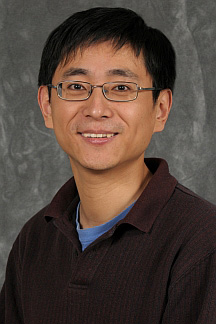 Jianhang Jia合作论文数Department of Physics and Astronomy, Stony Brook University20
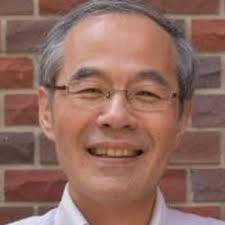 Kazuyoshi Kurita (栗田和好)合作论文数Department of Physics, College of Science, Rikkyo University;Center for Development and Support of Higher Education, Rikkyo University20Vv Baublis合作论文数20
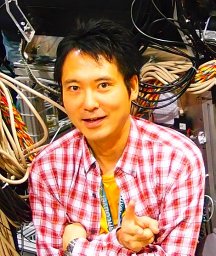 Jiro Murata (村田次郎)合作论文数Fundamental Physics Lab, Department of Physics, Rikkyo University20
 Alexei Denisov合作论文数Department of Experimental Physics, Institute for High Energy Physics20A. Taketani合作论文数19




