The nature of low-lying scalar and axial-vector charmed mesons has long been debated, specifically whether they are best explained as hadronic molecules or compact tetraquark systems. These two scenarios exhibit quite different features for the accessible SU(3) multiplets in the scalar and axial-vector sectors. To resolve this debate, we performed N_f=3+1 lattice simulations and calculated the energy levels of the SU(3) [6] and [15] multiplets for both the scalar and axial-vector mesons in an SU(3) flavor-symmetric setting. In both sectors we find attractive states for the [6] and repulsive interactions for the [15]. This is consistent with the hadronic molecule picture, but not the compact tetraquark picture which predicts a low-lying [15] states in the axial-vector sector but not in the scalar sector.
The nature of low-lying scalar and axial-vector charmed mesons has been debated for decades, with hadronic molecular and compact tetraquark models being prominent candidates. These two models predict quite different features for the accessible SU(3) multiplets in the scalar and axial-vector sectors, which can be tested through lattice calculations at SU(3) symmetric points. In this work, we perform lattice calculations for both scalar and axial-vector charmed mesons with an SU(3) symmetric pion mass about 613 MeV for the SU(3) [6] and [15] multiplets. We find that the [6] multiplet exhibits attractive interactions in both scalar and axial-vector sectors, while the [15] multiplet shows repulsive interactions in both sectors. The energy shifts in the scalar and axial-vector sectors are compatible with each other within uncertainties. These results are fully consistent with the hadronic molecular picture, while challenging the compact tetraquark model, which predicts the existence of low-lying [15] states in the axial-vector sector but not in the scalar sector.
In this proceedings we consider several states, namely the $D^*_{s0}(2317)$, $D_{s1}(2460)$, $D^*_{0}(2300)$ and $D_{1}(2430)$, which appear to defy description as simple quark-antiquark pairs. Theoretical input from unitarized chiral perturbation theory suggests they can be understood as emerging from Goldstone-Boson--$D$-meson scattering. We present results from an $SU(3)$ flavor-symmetric lattice QCD simulation at large pion masses suggesting that there exists a $\pi D$ bound state in the flavor-sextet representation that cannot emerge for quark-antiquark states, but that appears naturally from the multiquark states. Moreover, we find repulsion in the [15] representation, which establishes the pattern predicted for the interactions of Goldstone bosons with $D$ mesons. This suggests these states may have the structure of hadronic molecules.
In recent years many candidates for states beyond the most simple realization of the quark model were found in various experiments around the world. However, so far no consensus exists on their structure, although there is strong evidence that at least some of those are dynamically generated from meson-meson interactions. In this Letter we provide an important missing piece from the theoretical side to prove that the lightest open charm strange and non-strange scalars D_s0^*(2317) and D_0^* as well as their axial-vector partner states can all be understood as emerging from the interactions between Goldstone bosons stemming from the spontaneous breaking of chiral symmetry and the ground state charmed mesons. For that purpose we exploit the flavor multiplet structure of the lightest open-charm positive-parity scalar states in an SU(3) symmetric lattice QCD simulation at large pion masses to establish that there exists a bound state in the flavor-sextet representation, which cannot emerge for quark-antiquark states but appears naturally for four-quark configurations. Moreover, we find repulsion in the [15] representation and thus no single-particle state in this representation exists, falsifying the expectation for tetraquark models. The findings establish the pattern predicted for the interactions of Goldstone bosons with D mesons from chiral symmetry and the paradigm of the lowest-lying positive-parity charmed mesons as dynamically generated states.
In this proceedings we consider several states, namely the $D^*_{s0}(2317)$, $D_{s1}(2460)$, $D^*_{0}(2300)$ and $D_{1}(2430)$, which appear to defy description as simple quark-antiquark pairs. Theoretical input from unitarized chiral perturbation theory suggests they can be understood as emerging from Goldstone-Boson--$D$-meson scattering. We present results from an $SU(3)$ flavor-symmetric lattice QCD simulation at large pion masses suggesting that there exists a $\pi D$ bound state in the flavor-sextet representation that cannot emerge for quark-antiquark states, but that appears naturally from the multiquark states. Moreover, we find repulsion in the [15] representation, which establishes the pattern predicted for the interactions of Goldstone bosons with $D$ mesons. This suggests these states may have the structure of hadronic molecules.
Modular supercomputers contain heterogeneous computing resources on which the user can allocate a hardware mix meeting the demands of the calculation. I discuss motivations for generalizing QCD simulations for use on modular supercomputers, and identify possible models of LQCD simulations suitable for such an environment. I introduce QMOD, a system of libraries in development to enable task-parallelization of existing lattice QCD simulation codes for modular systems. The Jureca cluster at the J\"ulich Supercomputing Centre serves as a test bed for modular supercomputing strategies.
We describe a lattice approach to calculating the leading-order hadronic contribution to the anomalous magnetic moment of the muon. We employ lattice momentum derivatives, in both the spatial and temporal directions, to determine the hadronic vacuum polarization scalar at low momenta and construct a smooth, intregrable function in this momentum region. The method is tested on one hex-smeared Wilson-quark lattice ensemble with physical pion masses.
MILC asqtad QCD SU(3) gauge ensemble; series=a; a=0.11fm; Ls=2.2fm; Nf=2+1; u0.m0=(0.020,0.050)
MILC asqtad QCD SU(3) gauge ensemble; series=a; a=0.083fm; Ls=5.3fm; Nf=2+1; u0.m0=(0.00155,0.031)
MILC asqtad QCD SU(3) gauge ensemble; series=a; a=0.083fm; Ls=2.3fm; Nf=2+1; u0.m0=(0.0124,0.031)
MILC asqtad QCD SU(3) gauge ensemble; series=a; a=0.058fm; Ls=2.8fm; Nf=2+1; u0.m0=(0.0036,0.018)
MILC asqtad QCD SU(3) gauge ensemble; series=a; a=0.11fm; Ls=2.2fm; Nf=2+1; u0.m0=(0.040,0.050)
MILC asqtad QCD SU(3) gauge ensemble; series=a; a=0.058fm; Ls=2.8fm; Nf=2+1; u0.m0=(0.0072,0.018)
MILC asqtad QCD SU(3) gauge ensemble; series=a; a=0.11fm; Ls=2.2fm; Nf=2+1; u0.m0=(0.030,0.050)
MILC asqtad QCD SU(3) gauge ensemble; series=a; a=0.083fm; Ls=2.7fm; Nf=2+1; u0.m0=(0.00465,0.031)
MILC asqtad QCD SU(3) gauge ensemble; series=a; a=0.083fm; Ls=2.3fm; Nf=2+1; u0.m0=(0.0062,0.031)
MILC asqtad QCD SU(3) gauge ensemble; series=a; a=0.14fm; Ls=2.2fm; Nf=2+1; u0.m0=(0.0484,0.0484)
MILC asqtad QCD SU(3) gauge ensemble; series=b; a=0.11fm minus 0.0022fm; Ls=2.16fm; Nf=2+1; u0.m0=(0.010,0.050)
 Steven A. Gottlieb合作论文数Department of Physics, College of Arts and Sciences, University Graduate School, Indiana University Bloomington50
 Carleton Detar合作论文数Department of Physics and Astronomy, The University of Utah49
 Doug Toussaint合作论文数Department of Physics, College of Science, University of Arizona49
 Urs M. Heller合作论文数American Physical Society48
 Robert Sugar合作论文数Department of Physics, University of California, Santa Barbara40
 J. E. Hetrick合作论文数University of the Pacific39C. Aubin合作论文数Department of Physics;Washington University;Department of Physics, Washington University38
 Claude Bernard合作论文数Department of Physics, Arts & Sciences at Washington University in St.Louis31J. Osborn合作论文数The MILC Collaboration26
 Tom DeGrand合作论文数Department of Physics, College of Arts And Sciences, University of Colorado at Boulder25James Osborn合作论文数23
 Konstantinos Orginos合作论文数Department of Physics, College of Arts and Sciences, College of William & Mary;Theory Center, Jefferson Lab, Thomas Jefferson National Accelerator Facility23
 Craig Mcneile合作论文数School of Engineering, Computing and Mathematics, Faculty of Science and Engineering, University of Plymouth23
 Christine Davies合作论文数School of Physics & Astronomy, University of Glasgow14
 Xiangqian Luo (罗向前)合作论文数School of Physics, Sun Yat-sen University13Alan C. Irving合作论文数12
 Peter Lepage合作论文数Department of Physics, College of Arts and Sciences, Cornell University11Tommy Burch合作论文数11Eduardo Follana合作论文数10H. D. Trottier合作论文数9J. Shigemitsu合作论文数8
 Christopher Richards合作论文数United States Department of Agriculture;Agricultural Research Service;National Center for Genetic Resources Preservation;United States Department of Agriculture, National Center for Genetic Resources Preservation7
 Stefan Krieg合作论文数Bergische Universität Wuppertal7M. Nobes合作论文数6
 Andreas Kronfeld合作论文数Theoretical Physics Department, Technische Universitat Munchen;Fermi National Accelerator Laboratory, Technische Universitat Munchen;Institute for Advanced Study, Technische Universitat Munchen6
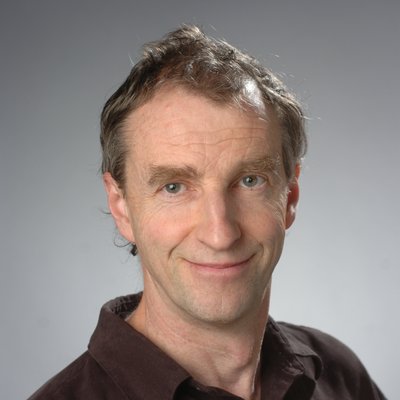 Simon Catterall合作论文数Department of Physics, College of Arts and Sciences, Syracuse University6Paul B. Mackenzie合作论文数6
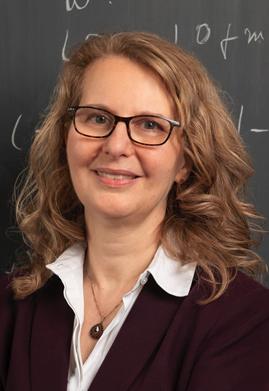 Aida X El-Khadra合作论文数Department of Physics, The Grainger College of Engineering, University of Illinois Urbana-Champaign6
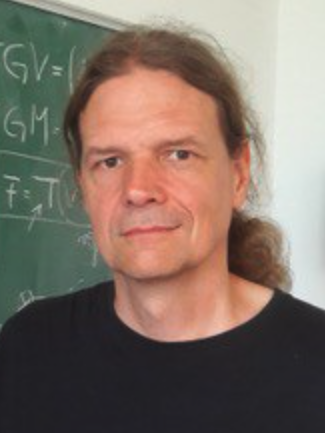 Christoph Hanhart合作论文数Institute for Advanced Simulation, Forschungszentrum Jülich GmbH5E. Gamiz合作论文数Glasgow U.5Mehmet B. Oktay合作论文数5
 Thomas Luu合作论文数Lawrence Livermore National Laboratory5
 Feng-Kun Guo (郭奉坤)合作论文数Institute of Theoretical Physics, Chinese Academy of Sciences;University of Chinese Academy of Sciences5
 Massimo Di Pierro合作论文数5Yu-Li Wang合作论文数4
 Alan Gray合作论文数NVIDIA4F. Maresca合作论文数4
 John W. Negele合作论文数Center for Theoretical Physics, Department of Physics, Massachusetts Institute of Technology4
 Ludmila Levkova合作论文数The MILC Collaboration4Steven Miller合作论文数4
 Antonios Tsapalis合作论文数Univ. of Cyprus4
 Constantia Alexandrou合作论文数Department of Physics, Faculty of Pure and Applied Sciences, University of Cyprus4I. Kendall合作论文数4Emel Dalgic合作论文数4ZH Mei合作论文数4
 Giannis Koutsou合作论文数Computation-based Science and Technology Research Centre, The Cyprus Institute4
 Damian Menscher合作论文数Google4Heechang Na合作论文数4




