We present lattice-QCD calculations of the hadronic form factors for the semileptonic decays $D\to\pi\ell\nu$, $D\to K\ell\nu$, and $D_s\to K\ell\nu$. Our calculation uses the highly improved staggered quark (HISQ) action for all valence and sea quarks and includes $N_f=2+1+1$ MILC ensembles with lattice spacings ranging from $a\approx0.12$ fm down to $0.042$ fm. At most lattice spacings, an ensemble with physical-mass light quarks is included. The HISQ action allows all the quarks to be treated with the same relativistic light-quark action, allowing for nonperturbative renormalization using partial conservation of the vector current. We combine our results with experimental measurements of the differential decay rates to determine $|V_{cd}|^{D\to\pi}=0.2238(11)^{\rm Expt}(15)^{\rm QCD}(04)^{\rm EW}(02)^{\rm SIB}[22]^{\rm QED}$ and $|V_{cs}|^{D\to K}=0.9589(23)^{\rm Expt}(40)^{\rm QCD}(15)^{\rm EW}(05)^{\rm SIB}[95]^{\rm QED}$ This result for $|V_{cd}|$ is the most precise to date, with a lattice-QCD error that is, for the first time for the semileptonic extraction, at the same level as the experimental error. Using recent measurements from BES III, we also give the first-ever determination of $|V_{cd}|^{D_s\to K}=0.258(15)^{\rm Expt}(01)^{\rm QCD}[03]^{\rm QED}$ from $D_s\to K \ell\nu$. Our results also furnish new Standard Model calculations of the lepton flavor universality ratios $R^{D\to\pi}=0.98671(17)^{\rm QCD}[500]^{\rm QED}$, $R^{D\to K}=0.97606(16)^{\rm QCD}[500]^{\rm QED}$, and $R^{D_s\to K}=0.98099(10)^{\rm QCD}[500]^{\rm QED}$, which are consistent within $2\sigma$ with experimental measurements. Our extractions of $|V_{cd}|$ and $|V_{cs}|$, when combined with a value for $|V_{cb}|$, provide the most precise test of second-row CKM unitarity, finding agreement with unitarity at the level of one standard deviation.
We discuss the prospects for improving the precision on the hadronic corrections to the anomalous magnetic moment of the muon, and the plans of the Muon g-2 Theory Initiative to update the Standard Model prediction.
We use lattice QCD to calculate the form factors f(+) (q(2)) and f(0) (q(2)) for the semileptonic decay B-s -> Kl nu. Our calculation uses six MILC asqtad 2 + 1 flavor gauge-field ensembles with three lattice spacings. At the smallest and largest lattice spacing the light-quark sea mass is set to 1/10 the strange-quark mass. At the intermediate lattice spacing, we use four values for the light-quark sea mass ranging from 1/5 to 1/20 of the strange-quark mass. We use the asqtad improved staggered action for the light valence quarks, and the clover action with the Fermilab interpolation for the heavy valence bottom quark. We use SU(2) hard-kaon heavy-meson rooted staggered chiral perturbation theory to take the chiral-continuum limit. A functional z expansion is used to extend the form factors to the full kinematic range. We present predictions for the differential decay rate for both Bs -> K mu nu and B-s -> K tau nu. We also present results for the forward-backward asymmetry, the lepton polarization asymmetry, ratios of the scalar and vector form factors for the decays B-s -> Kl nu and B-s -> D(s)l nu. Our results, together with future experimental measurements, can be used to determine the magnitude of the Cabibbo-Kobayashi-Maskawa matrix element vertical bar V-ub vertical bar.
Using HISQ N_f=2+1+1 MILC ensembles with five different values of the lattice spacing, including four ensembles with physical quark masses, we have performed the most precise computation to date of the K→πℓν vector form factor at zero momentum transfer, f_+^K^0π^-(0)=0.9696(15)_stat(12)_syst. This is the first calculation that includes the dominant finite-volume effects, as calculated in chiral perturbation theory at next-to-leading order. Our result for the form factor provides a direct determination of the Cabibbo-Kobayashi-Maskawa matrix element |V_us|=0.22333(44)_f_+(0)(42)_exp, with a theory error that is, for the first time, at the same level as the experimental error. The uncertainty of the semileptonic determination is now similar to that from leptonic decays and the ratio f_K^+/f_π^+, which uses |V_ud| as input. Our value of |V_us| is in tension at the 2–2.6σ level both with the determinations from leptonic decays and with the unitarity of the CKM matrix. In the test of CKM unitarity in the first row, the current limiting factor is the error in |V_ud|, although a recent determination of the nucleus-independent radiative corrections to superallowed nuclear β decays could reduce the |V_ud|^2 uncertainty nearly to that of |V_us|^2. Alternative unitarity tests using only kaon decays, for which improvements in the theory and experimental inputs are likely in the next few years, reveal similar tensions. As part of our analysis, we calculated the correction to f_+^Kπ(0) due to nonequilibrated topological charge at leading order in chiral perturbation theory, for both the full-QCD and the partially-quenched cases. We also obtain the combination of low-energy constants in the chiral effective Lagrangian [C_12^r+C_34^r-(L_5^r)^2](M_ρ)=(2.92±0.31)·10^-6.
Using highly improved staggered quark (HISQ) N f ¼ 2 þ 1 þ 1 MILC ensembles with five different values of the lattice spacing, including four ensembles with physical quark masses, we perform the most precise computation to date of the K → π l ν vector form factor at zero momentum transfer, f K 0 π − þ ð 0 Þ ¼ 0 . 9696 ð 15 Þ stat ð 12 Þ syst . This is the first calculation that includes the dominant finite-volume effects, as calculated in chiral perturbation theory at next-to-leading order. Our result for the form factor provides a direct determination of the Cabibbo-Kobayashi-Maskawa (CKM) matrix element j V us j ¼ 0 . 22333 ð 44 Þ f þ ð 0 Þ ð 42 Þ exp , with a theory error that is, for the first time, at the same level as the experimental error. The uncertainty of the semileptonic determination is now similar to that from leptonic decays and the ratio f K þ =f π þ , which uses j V ud j as input. Our value of j V us j is in tension at the 2 – 2 . 6 σ level both with the determinations from leptonic decays and with the unitarity of the CKM matrix. In the test of CKM unitarity in the first row, the current limiting factor is the error in j V ud j , although a recent determination of the nucleus-independent radiative corrections to superallowed nuclear β decays could reduce the j V ud j 2 uncertaintynearlytothatof j V us j 2 .Alternativeunitaritytestsusingonlykaondecays,forwhichimprovements in the theory and experimental inputs are likely in the next few years, reveal similar tensions and could be further improved by taking correlations between the theory inputs. As part of our analysis, we calculated the correction to f K π þ ð 0 Þ due to nonequilibrated topological charge at leading order in chiral perturbation theory, for both the full-QCD and the partially quenched cases. We also obtain the combination of low-energy constants in the chiral
We present a lattice calculation of the electromagnetic (EM) effects on the masses of light pseudoscalar mesons. The simulations employ 2 + 1 dynamical flavors of asqtad QCD quarks and quenched photons. Lattice spacings vary from approximate to 0.12 fm to approximate to 0.045 fm. We compute the quantity epsilon, which parametrizes the corrections to Dashen's theorem for the K+-K-0 EM mass splitting, as well as epsilon(K0), which parametrizes the EM contribution to the mass of the K-0 itself. An extension of the nonperturbative EM renormalization scheme introduced by the BMW group is used in separating EM effects from isospin-violating quark mass effects. We correct for leading finite-volume effects in our realization of lattice electrodynamics in chiral perturbation theory, and remaining finite-volume errors are relatively small. While electroquenched effects are under control for epsilon, they are estimated only qualitatively for epsilon(K0) and constitute one of the largest sources of uncertainty for that quantity. We find epsilon = 0.78(1)(stat)((+8)(-11))(syst) and epsilon(K0) = 0.035(3)(stat)(20)(syst). We then use these results on 2 + 1 + 1 flavor pure QCD highly improved staggered quark (HISQ) ensembles and find m(u)/m(d) = 0.4529(48)(stat)((+150)(-67))(syst).
Using highly improved staggered quark (HISQ) N-f = 2 + 1 + 1 MILC ensembles with five different values of the lattice spacing, including four ensembles with physical quark masses, we perform the most precise computation to date of the K -> pi l nu vector form factor at zero momentum transfer, f(+)(K0 pi-)(0) = 0.9696(15)(stat)(12)(syst),. This is the first calculation that includes the dominant finite-volume effects, as calculated in chiral perturbation theory at next-to-leading order. Our result for the form factor provides a direct determination of the Cabibbo-Kobayashi-Maskawa (CKM) matrix element vertical bar V-us vertical bar = 0.22333(44)(f+(0))(42)(exp), with a theory error that is, for the first time, at the same level as the experimental error. The uncertainty of the semileptonic determination is now similar to that from leptonic decays and the ratio f(K+)/f(pi+), which uses vertical bar V-ud vertical bar as input. Our value of vertical bar V-us vertical bar is in tension at the 2-2.6 sigma level both with the determinations from leptonic decays and with the unitarity of the CKM matrix. In the test of CKM unitarity in the first row, the current limiting factor is the error in vertical bar V-ud vertical bar, although a recent determination of the nucleus-independent radiative corrections to superallowed nuclear beta decays could reduce the vertical bar V-ud vertical bar(2) uncertainty nearly to that of vertical bar V-us vertical bar(2). Alternative unitarity tests using only kaon decays, for which improvements in the theory and experimental inputs are likely in the next few years, reveal similar tensions and could be further improved by taking correlations between the theory inputs. As part of our analysis, we calculated the correction to f(+)(K pi)(0) due to nonequilibrated topological charge at leading order in chiral perturbation theory, for both the full-QCD and the partially quenched cases. We also obtain the combination of low-energy constants in the chiral effective Lagrangian [C-12(r) + C-34(r) - (L-5(r))(2)](M-rho) = (2.92 +/- 0.31) x 10(-6).
We discuss preliminary results for the vector form factors $f_+^{\{\pi,K\}}$ at zero-momentum transfer for the decays $D\to\pi\ell\nu$ and $D\to K \ell\nu$ using MILC's $N_f = 2+1+1$ HISQ ensembles at four lattice spacings, $a \approx 0.042, 0.06, 0.09$, and 0.12 fm, and various HISQ quark masses down to the (degenerate) physical light quark mass. We use the kinematic constraint $f_+(q^2)= f_0(q^2)$ at $q^2 = 0$ to determine the vector form factor from our study of the scalar current, which yields $f_0(0)$. Results are extrapolated to the continuum physical point in the framework of hard pion/kaon SU(3) heavy-meson-staggered $\chi$PT and Symanzik effective theory. Our calculation improves upon the precision achieved in existing lattice-QCD calculations of the vector form factors at $q^2=0$. We show the values of the CKM matrix elements $|V_{cs}|$ and $|V_{cd}|$ that we would obtain using our preliminary results for the form factors together with recent experimental results, and discuss the implications of these values for the second row CKM unitarity.
We calculate in three-flavor lattice QCD the short-distance hadronic matrix elements of all five Delta C = 2 four-fermion operators that contribute to neutral D-meson mixing both in and beyond the Standard Model. We use the MILC Collaboration's N-f = 2 + 1 lattice gauge-field configurations generated with asqtad-improved staggered sea quarks. We also employ the asqtad action for the valence light quarks and use the clover action with the Fermilab interpretation for the charm quark. We analyze a large set of ensembles with pions as light as M-pi approximate to 180 MeV and lattice spacings as fine as a approximate to 0.045 fm, thereby enabling good control over the extrapolation to the physical pion mass and continuum limit. We obtain for the matrix elements in the MS-NDR scheme using the choice of evanescent operators proposed by Beneke et al., evaluated at 3 GeV, < D-0 vertical bar O-i vertical bar(D) over bar (0)> = {0.0805(55)(16), -0.1561(70)(31), 0.0464(31)(9), 0.2747(129)(55), 0.1035(71)(21)} GeV4 (i = 1-5). The errors shown are from statistics and lattice systematics, and the omission of charmed sea quarks, respectively. To illustrate the utility of our matrix-element results, we place bounds on the scale of CP-violating new physics in D-0 mixing, finding lower limits of about 10-50 x 10(3) TeV for couplings of O(1). To enable our results to be employed in more sophisticated or model-specific phenomenological studies, we provide the correlations among our matrix-element results. For convenience, we also present numerical results in the other commonly used scheme of Buras, Misiak, and Urban.
We calculate the up-, down-, strange-, charm-, and bottom-quark masses using the MILC highly improved staggered-quark ensembles with four flavors of dynamical quarks. We use ensembles at six lattice spacings ranging from a approximate to 0.15 to 0.03 fm and with both physical and unphysical values of the two light and the strange sea-quark masses. We use a new method based on heavy-quark effective theory (HQET) to extract quark masses from heavy-light pseudoscalar meson masses. Combining our analysis with our separate determination of ratios of light-quark masses we present masses of the up, down, strange, charm, and bottom quarks. Our results for the (MS) over bar -renormalized masses are m(u)(2 GeV) = 2.130(41) MeV, m(d)(2 GeV) = 4.675(56) MeV, m(s)(2 GeV) = 92.47(69) MeV, m(c)(3 GeV) = 983.7(5.6) MeV, and m(c)(m(c)) = 1273(10) MeV, with four active flavors; and m(b)(m(b)) = 4195(14) MeV with five active flavors. We also obtain ratios of quark masses m(c)/m(s) = 11.783(25), m(b)/m(s) = 53.94(12), and m(b)/m(c) = 4.578(8). The result for mc matches the precision of the most precise calculation to date, and the other masses and all quoted ratios are the most precise to date. Moreover, these results are the first with a perturbative accuracy of alpha(4)(s). As byproducts of our method, we obtain the matrix elements of HQET operators with dimension 4 and 5: (Lambda) over bar (MRS) = 555(31) MeV in the minimal renormalon-subtracted (MRS) scheme, mu(2)(pi) = 0.05(22) GeV2, and mu(2)(G) (m(b)) 0.38(2) GeV2. The MRS scheme [Phys. Rev. D 97, 034503 2018)] is the key new aspect of our method.
Jon A. Bailey ∗a†, A. Bazavov b, C. Bernard c, C. Bouchard e, C. DeTard, A.X. El-Khadra e, E.D. Freeland c, W. Freeman b, E. Gamiza,e, Steven Gottlieb e, f ,g, U.M. Heller h, J.E. Hetrick i, A.S. Kronfeld a, J. Laiho c, L. Levkova d, P.B. Mackenzie a, M.B. Oktay d, M. Di Pierro j , J.N. Simone a, R. Sugar k, D. Toussaint b, and R.S. Van de Water l aTheoretical Physics Department, Fermilab, Batavia, IL 605 1 , USA bDepartment of Physics, University of Arizona, Tucson, AZ 85 721, USA cDepartment of Physics, Washington University, St. Louis, M O 63130, USA dPhysics Department, University of Utah, Salt Lake City, UT 8 4112, USA ePhysics Department, University of Illinois, Urbana, IL 618 01, USA f Department of Physics, Indiana University, Bloomington, I N 47405, USA gNational Center for Supercomputing Applications, Univers ity of Illinois, Urbana, IL 61801, USA hAmerican Physical Society, One Research Road, Ridge, NY 119 61, USA iPhysics Department, University of the Pacific, Stockton, CA 95211, USA jSchool of Computing, DePaul University, Chicago, IL 60604, USA kDepartment of Physics, University of California, Santa Bar bara, CA 93106, USA l Department of Physics, Brookhaven National Laboratory, Up ton, NY 11973, USA
We describe a recent lattice-QCD calculation of the leptonic decay constants of heavy-light pseudoscalar mesons containing charm and bottom quarks and of the masses of the up, down, strange, charm, and bottom quarks. Results for these quantities are of the highest precision to date. Calculations use 24 isospin-symmetric ensembles of gauge-field configurations with six different lattice spacings as small as approximately 0.03 fm and several values of the light quark masses down to physical values of the average up- and down-sea-quark masses. We use the highly-improved staggered quark (HISQ) formulation for valence and sea quarks, including the bottom quark. The analysis employs heavy-quark effective theory (HQET). A novel HQET method is used in the determination of the quark masses.
We present a calculation of the form factors of the D $\rightarrow$ Klν and D $\rightarrow$ $\pi$lν semileptonic decays at zero momentum transfer, ultimately for the purpose of determining the Cabibbo-KobayashiMaskawa (CKM) matrix elements |Vcs| and |Vcd|. This work uses MILC Nf = 2+1+1 configurations with the HISQ action for both sea quarks and valence quarks, including several physical mass ensembles and lattice spacings down to 0.042 fm. The calculation is done directly at q 2 = 0 by employing twisted boundary conditions to tune the child particle momenta. Results at the physical point and in the continuum limit will be achieved in the final analysis through the use of Heavy-Meson Staggered $\chi$PT. Here we present our expected error budget and compare with the error of prior calculations
Jon A. Bailey, A. Bazavov, C. Bernard, C. M. Bouchard, C. DeTar, Daping Du, A. X. El-Khadra, J. Foley, E. D. Freeland, E. Gámiz, Steven Gottlieb, U. M. Heller, R. D. Jain, J. Komijani, A. S. Kronfeld, J. Laiho, L. Levkova, Yuzhi Liu, P. B. Mackenzie, Y. Meurice, E. T. Neil, Si-Wei Qiu, J. N. Simone, R. Sugar, D. Toussaint, R. S. Van de Water, and Ran Zhou (Fermilab Lattice and MILC Collaborations)
The MILC Collaboration has completed production running of electromagnetic effects on light mesons using asqtad improved staggered quarks. In these calculations, we use quenched photons in the noncompact formalism. We study four lattice spacings from ≈0.12fm to ≈0.045fm. To study finite-volume effects, we used six spatial lattice sizes L/a=12, 16, 20, 28, 40, and 48, at a≈0.12fm. We update our preliminary values for the correction to Dashen's theorem (ϵ) and the quark-mass ratio m_u/m_d.
Walter Kohn, who died on April 19, 2016, once said “Physics isn’t what I do; it is what I am.” Indeed, Walter was a world-renowned physicist, winner of the 1960 Oliver E. Buckley Prize for his prediction of anomalies in the phonon spectrum in metals, the 1977 Davisson–Germer Prize with Nortan Lang for their studies of the inhomogeneous interacting electron gas at surfaces, and the 1991 Eugene Feenberg Medal for the development of density-functional theory. However, it was in Chemistry that Walter received the ultimate scientific recognition. The 1998 Nobel Prize in Chemistry was shared by Walter Kohn, “for his development of the density-functional theory,” and John A. Pople, “for his development of computational methods in quantum chemistry.” The Nobel Committee recognized Walter’s work in the 1960s with postdoctorates Pierre Hohenberg (Bell Labs) and Lu Sham (University of California, San Diego) in the development of the density-functional theory in which the properties of a many-electron system can be determined by using functionals of the spatially …
We give a progress report on a project aimed at a high-precision calculation of the decay constants f_B and f_B_s from simulations with HISQ heavy and light valence and sea quarks. Calculations are carried out with several heavy valence-quark masses on ensembles with 2+1+1 flavors of HISQ sea quarks at five lattice spacings and several light sea-quark mass ratios m_ud/m_s, including approximately physical sea-quark masses. This range of parameters provides excellent control of the continuum limit and of heavy-quark discretization errors. We present a preliminary error budget with projected uncertainties of 2.2 MeV and 1.5 MeV for f_B and f_B_s, respectively.
We compute the form factors for the B --> Kl(+)l(-) semileptonic decay process in lattice QCD using gauge-field ensembles with 2 + 1 flavors of sea quark, generated by the MILC Collaboration. The ensembles span lattice spacings from 0.12 to 0.045 fm and have multiple sea-quark masses to help control the chiral extrapolation. The asqtad improved staggered action is used for the light valence and sea quarks, and the clover action with the Fermilab interpretation is used for the heavy b quark. We present results for the form factors f(+)(q(2)), f(0)(q2), and f(T)(q2), where q(2) is the momentum transfer, together with a comprehensive examination of systematic errors. Lattice QCD determines the form factors for a limited range of q(2), and we use the model-independent z expansion to cover the whole kinematically allowed range. We present our final form-factor results as coefficients of the z expansion and the correlations between them, where the errors on the coefficients include statistical and all systematic uncertainties. We use this complete description of the form factors to test QCD predictions of the form factors at high and low q(2).
 Doug Toussaint合作论文数Department of Physics, College of Science, University of Arizona198
 Steven A. Gottlieb合作论文数Department of Physics, College of Arts and Sciences, University Graduate School, Indiana University Bloomington184
 Carleton Detar合作论文数Department of Physics and Astronomy, The University of Utah176
 Urs M. Heller合作论文数American Physical Society175
 Claude Bernard合作论文数Department of Physics, Arts & Sciences at Washington University in St.Louis128
 Ludmila Levkova合作论文数The MILC Collaboration99
 J. E. Hetrick合作论文数University of the Pacific92
 Alexei Bazavov合作论文数81J. Laiho合作论文数80
 Andreas Kronfeld合作论文数Theoretical Physics Department, Technische Universitat Munchen;Fermi National Accelerator Laboratory, Technische Universitat Munchen;Institute for Advanced Study, Technische Universitat Munchen70R. S. Van de Water合作论文数68E. D. Freeland合作论文数68Paul B. Mackenzie合作论文数62
 Aida X El-Khadra合作论文数Department of Physics, The Grainger College of Engineering, University of Illinois Urbana-Champaign59E. Gamiz合作论文数Glasgow U.57Ran Zhou合作论文数RBC and UKQCD Collaborations53
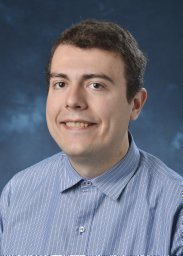 Ethan T. Neil合作论文数Department of Physics;Sloane Laboratory;Yale University;Sloane Laboratory, Yale University50
 Tom DeGrand合作论文数Department of Physics, College of Arts And Sciences, University of Colorado at Boulder47Jn Simone合作论文数45Eric B. Gregory合作论文数Department of Physics;Zhongshan University;Department of Physics, Zhongshan University40J. Osborn合作论文数The MILC Collaboration40Mehmet B. Oktay合作论文数38
 Si-Wei Qiu合作论文数34
 Jon Bailey合作论文数34C. Aubin合作论文数Department of Physics;Washington University;Department of Physics, Washington University33Daping Du合作论文数33J. Foley合作论文数32
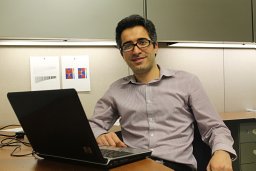 Javad Komijani合作论文数31
 Konstantinos Orginos合作论文数Department of Physics, College of Arts and Sciences, College of William & Mary;Theory Center, Jefferson Lab, Thomas Jefferson National Accelerator Facility29James Osborn合作论文数27
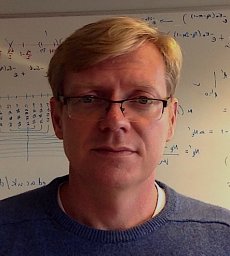 Chris Bouchard合作论文数School of Physics & Astronomy, University of Glasgow23
 Yannick Meurice合作论文数Department of Physics and Astronomy;University of Iowa;Department of Physics and Astronomy, University of Iowa20
 Douglas Scalapino合作论文数Department of Physics, University of California, Santa Barbara18R. L. Renken合作论文数17W. Liu合作论文数17Tommy Burch合作论文数14J. Simone合作论文数13D. Du合作论文数13
 Richard Blankenbecler合作论文数Stanford Linear Accelerator Center, Stanford University;BioGenome Therapeutics13
 Massimo Di Pierro合作论文数13Justin Foley合作论文数13carole bouchard合作论文数12
 Yuzhi Liu合作论文数Demandbase12W. Freeman合作论文数Fermi National Accelerator Laboratory11
 Tony Kennedy合作论文数School of Physics and Astronomy, The University of Edinburgh11D. K. Sinclair合作论文数11Alexander Krasnitz合作论文数11James N. Simone合作论文数Fermi National Accelerator Laboratory11




