Substantial progress in glial electrophysiology has revealed that astrocytes, which account for half of the cells in the human brain, exhibit membrane potentials that often reflect changes in the extracellular environment. Such responses are mediated by a variety of biochemicals, including potassium and neurotransmitters. Recent advances in voltage imaging have provided new insights into voltage activity in astrocyte peripheries, revealing highly localized depolarization that depends on local presynaptic activity. However, the electrophysiological properties of these isolated peripherals have not been explored due to limitations of spatial and temporal resolution. In this study, we aimed to explore differences in the electrophysiological response between whole-cell stimulation and isolated stimuli at different locations in the cell. Therefore, we constructed an empirical conductance-based NEURON model using a realistic morphology to simultaneously capture both astrocyte processes and soma electrophysiological dynamics. Our results predict a breakdown of the Nernstian behavior of astrocytes when potassium stimuli are localized. Instead, local responses are governed by their conductance ratios. Furthermore, we observe strong capabilities for isolating neurotransmitter responses to specific synaptic inputs, with minimal effect on the astrocyte soma. Our study highlights asymmetrical responses of astrocytic electrophysiology that depend on the spatial scale of stimulation.
Tonic inhibition in cerebellar granule cells is crucial for maintaining information coding fidelity during motor coordination. It arises through both activity-dependent and activity-independent mechanisms, and the interplay between these mechanisms changes with age. However, specific molecular and cellular mechanisms and how their change affects network-level computation and motor behavior remain unclear. Here we show that, while net tonic inhibitory current remains unchanged, the main source of tonic γ-aminobutyric acid switches from synaptic spillover (neuronal activity dependent) to astrocytic Best1 (activity independent) throughout adolescence (4-8 weeks) in mice. Computational modeling based on experimental data demonstrated that this switch downregulates the internally generated network activity mediating mutual inhibition between granule cell clusters receiving different inputs, thereby enhancing their independence. Consistent with simulations, three-dimensional posture analysis revealed an age-dependent increase in independent limb movements during spontaneous motion, which was impaired in Best1-knockout mice. Our findings highlight the late-stage development of complex motor coordination driven by the emergence of astrocyte-mediated tonic inhibition.
The large conductance calcium-activated potassium channel, known as the BK channel, play an essential role in neuronal firing and is characterized by a very large ∼250pS unitary conductance in mammals. However, this high unitary conductance is not consistent across all species with invertebrates demonstrating a much lower unitary conductance. We explored the calcium activation properties of BK channels of different unitary conductance in computational models and found that mammalian channels are more efficiently activated by calcium and produce a stronger potassium current compared to the channels of lower unitary conductance found in invertebrates. The lower unitary conductance channels display fierce competition for the available calcium, which results in low activation and weaker current. Due to these properties, mammalian BK channels are more suitable to repolarize sodium action potentials, which enables more precise spike timing, and may explain why evolution appears to have favored a trend towards very high unitary conductance in mammalian BK channels. This may be an essential component of the more advanced brain functions achieved by these species compared to invertebrates. ### Competing Interest Statement The authors have declared no competing interest. Okinawa Institute of Science and Technology Graduate University, https://ror.org/02qg15b79
Astrocytes are now widely accepted as key regulators of brain function and behavior. Calcium (Ca2+) signals in perisynaptic astrocytic processes (PAPs) enable astrocytes to fine-tune neurotransmission at tripartite synapses. As most PAPs are below the diffraction limit, their content in Ca2+ stores and the contribution of the latter to astrocytic Ca2+ activity is unclear. Here, we reconstruct hippocampal tripartite synapses in 3D from a high-resolution electron microscopy (EM) dataset and find that 75% of PAPs contain some endoplasmic reticulum (ER), a major calcium store in astrocytes. The ER in PAPs displays strikingly diverse shapes and intracellular spatial distributions. To investigate the causal relationship between each of these geometrical properties and the spatiotemporal characteristics of Ca2+ signals, we implemented an algorithm that generates 3D PAP meshes by altering the distribution of the ER independently from ER and cell shape. Reaction-diffusion simulations in these meshes reveal that astrocyte activity is governed by a complex interplay between the location of Ca2+ channels, ER surface-volume ratio, and spatial distribution. In particular, our results suggest that ER-PM contact sites can act as local signal amplifiers if equipped with IP3R clusters but attenuate PAP Ca2+ activity in the absence of clustering. This study sheds new light on the ultrastructural basis of the diverse astrocytic Ca2+ microdomain signals and on the mechanisms that regulate neuron-astrocyte signal transmission at tripartite synapses.
Characterized by a highly complex branching of their dendrites, Purkinje cells (PCs) have a unique architecture that enables them to receive impressive amounts of sensorimotor information through their parallel fiber (PF) input. They are tasked to encode this information with high accuracy. In this work, we discuss the mechanisms through which PCs encode this information, and we show how they multiplex between linear-rate and burst-pause coding. Particularly, somatic pauses are of utmost importance due to their involvement in learning. Using a novel heterogeneous model, we show that all branches can achieve a burst-pause response in response to branch-specific PF clustered input. We quantify the somatic pauses obtained and propose various mechanisms to alter the pause duration. Firstly, our results show that increasing local SK2 channel conductance density systematically increases pause duration. In four branches somatic pauses occurred only when SK2 conductance was increased. Interestingly, when adding feed-forward inhibition via stellate cells, our results show either an increase or a decrease in somatic pauses, highlighting the important role of branch morphology and branch location within the PC. Significance statement Purkinje cells are characterized by highly intricate dendritic branches, which enables them to encode sensorimotor information with great accuracy. Their somatic pauses following excitatory input have been shown to have a strong impact in learning. However, little is known about the impact of morphology and inhibitory input on somatic pauses and implicitly on the learning capacity. In this study, we propose a heterogeneous Purkinje cell model which highlights the importance of branch-specific dendritic morphology on somatic responses. We uncover two different mechanisms for modulating the length of the somatic pauses: density of SK2 channels and feed-forward inhibition via stellate cells. ### Competing Interest Statement The authors have declared no competing interest.
Synaptic transmission is driven by a complex cycle of vesicle docking, release, and recycling, maintained by distinct vesicle pools. However, the partitioning of vesicle pools and reserve pool recruitment remain poorly understood. We use a novel vesicle modeling technology to model the synaptic vesicle cycle in unprecedented molecular and spatial detail at a hippocampal synapse. Our model demonstrates robust recycling of synaptic vesicles that maintains consistent synaptic release, even during sustained high-frequency firing. We also show how the cytosolic proteins synapsin-1 and tomosyn-1 cooperate to regulate recruitment of reserve pool vesicles during sustained firing to maintain transmission, as well as the potential of selective vesicle active zone tethering to ensure rapid vesicle replenishment while minimizing reserve pool recruitment. We also monitored vesicle usage in isolated hippocampal neurons using pH-sensitive pHluorin, demonstrating that reserve vesicle recruitment depends on firing frequency, even at nonphysiologically high firing frequencies, as predicted by the model.
Experimental evidence showed that an increase in intracellular chloride concentration ([Cl-]i) caused by gamma-aminobutyric acid (GABA) input can promote epileptic firing activity, but the actual mechanisms remain elusive. Here in this theoretical work, we show that influx of chloride and concomitant bicarbonate ion (HCO-3 ) efflux upon GABA receptor activation can induce epileptic firing activity by transition of GABA from inhibition to excitation. We analyzed the intrinsic property of neuron firing states as a function of [Cl-]i. We found that as [Cl-]iincreases, the system exhibits a saddle-node bifurcation, above which the neuron exhibits a spectrum of intensive firing, periodic bursting interrupted by depolarization block (DB) state, and eventually a stable DB through a Hopf bifurcation. We demonstrate that only GABA stimuli together with HCO-3 efflux can switch GABA's effect to excitation which leads to a series of seizure-like events (SLEs). Exposure to a low [K+]bath can drive neurons with high concentrations of [Cl-]idownward to lower levels of [Cl-]i, during which it could also trigger SLEs depending on the exchange rate with the bath. Our analysis and simulation results show how the competition between GABA stimuli-induced accumulation of [Cl-]iand [K+]bath application-induced decrease of [Cl-]iregulates the neuron firing activity, which helps to understand the fundamental ionic dynamics of SLE.
Most central neurons have intricately branched dendritic trees that integrate massive numbers of synaptic inputs. Intrinsic active mechanisms in dendrites can be heterogeneous and be modulated in a branch-specific way. However, it remains poorly understood how heterogeneous intrinsic properties contribute to processing of synaptic input. We propose the first computational model of the cerebellar Purkinje cell with dendritic heterogeneity, in which each branch is an individual unit and is characterized by its own set of ion channel conductance densities. When simultaneously activating a cluster of parallel fiber synapses, we measure the peak amplitude of a response and observe how changes in P-type calcium channel conductance density shift the dendritic responses from a linear one to a bimodal one including dendritic calcium spikes and vice-versa. These changes relate to the morphology of each branch. We show how dendritic calcium spikes propagate and how Kv4.3 channels block spreading depolarization to nearby branches.
Electrophysiological properties underlie the fundamental mechanisms of the brain. Although astrocytes have typically been considered not electrically excitable, recent studies have shown depolarization of astrocytes induced by local extracellular potassium changes caused by neuronal activity. Interestingly, astro-cytic depolarization is only induced within the periphery of the astrocyte, where astrocytes contact neurons. This depolarization affects the brain’s information processing, as depolarization alters astrocyte functionality and neurotransmit-ter dynamics. However, specific mechanisms causing astrocytic depolarization have remained unknown due to the limitations of experimental techniques. Here, we construct a computational whole-cell astrocyte model containing experimen-tally verified astrocytic channels relevant to depolarization. Using our model, we suggest that previously reported potassium channels alone are insufficient for astrocyte depolarization and additional mechanisms are required. Our sim-ulations show that NMDARs contribute to this depolarization by cooperating with Kir 4.1 to actively enhance extracellular potassium concentration and, thus, sustain depolarization. ### Competing Interest Statement The authors have declared no competing interest.
Vesicles carry out many essential functions within cells through the processes of endocytosis, exocytosis, and passive and active transport. This includes transporting and delivering molecules between different parts of the cell, and storing and releasing neurotransmitters in neurons. To date, computational simulation of these key biological players has been rather limited and has not advanced at the same pace as other aspects of cell modeling, restricting the realism of computational models. We describe a general vesicle modeling tool that has been designed for wide application to a variety of cell models, implemented within our software STochastic Engine for Pathway Simulation (STEPS), a stochastic reaction-diffusion simulator that supports realistic reconstructions of cell tissue in tetrahedral meshes. The implementation is validated in an extensive test suite, parallel performance is demonstrated in a realistic synaptic bouton model, and example models are visualized in a Blender extension module. A computational study describing a parallel extension to software "STochastic Engine for Pathway Simulation" that simulates vesicles and their interactions with the cellular environment, including endocytosis, docking, fusion and active transport.
The Neural Development Simulator, NeuroDevSim, is a Python module that simulates the most important aspects of brain development: morphological growth, migration, and pruning. It uses an agent-based modeling approach inherited from the NeuroMaC software. Each cycle has agents called fronts execute model-specific code. In the case of a growing dendritic or axonal front, this will be a choice between extension, branching, or growth termination. Somatic fronts can migrate to new positions and any front can be retracted to prune parts of neurons. Collision detection prevents new or migrating fronts from overlapping with existing ones. NeuroDevSim is a multi-core program that uses an innovative shared memory approach to achieve parallel processing without messaging. We demonstrate linear strong parallel scaling up to 96 cores for large models and have run these successfully on 128 cores. Most of the shared memory parallelism is achieved without memory locking. Instead, cores have only write privileges to private sections of arrays, while being able to read the entire shared array. Memory conflicts are avoided by a coding rule that allows only active fronts to use methods that need writing access. The exception is collision detection, which is needed to avoid the growth of physically overlapping structures. For collision detection, a memory-locking mechanism was necessary to control access to grid points that register the location of nearby fronts. A custom approach using a serialized lock broker was able to manage both read and write locking. NeuroDevSim allows easy modeling of most aspects of neural development for models simulating a few complex or thousands of simple neurons or a mixture of both. Code available at https://github.com/CNS-OIST/NeuroDevSim .
Both the environment and our body keep changing dynamically. Hence, ensuring movement precision requires adaptation to multiple demands occurring simultaneously. Here we show that the cerebellum performs the necessary multi-dimensional computations for the flexible control of different movement parameters depending on the prevailing context. This conclusion is based on the identification of a manifold-like activity in both mossy fibers (MFs, network input) and Purkinje cells (PCs, output), recorded from monkeys performing a saccade task. Unlike MFs, the PC manifolds developed selective representations of individual movement parameters. Error feedback-driven climbing fiber input modulated the PC manifolds to predict specific, error type-dependent changes in subsequent actions. Furthermore, a feed-forward network model that simulated MF-to-PC transformations revealed that amplification and restructuring of the lesser variability in the MF activity is a pivotal circuit mechanism. Therefore, the flexible control of movements by the cerebellum crucially depends on its capacity for multi-dimensional computations.
We investigate the relationship between primary dendrite selection of Purkinje cells and migration of their presynaptic partner granule cells during early cerebellar development. During postnatal development, each Purkinje cell grows more than three dendritic trees, from which a primary tree is selected for development, whereas the others completely retract. Experimental studies suggest that this selection process is coordinated by physical and synaptic interactions with granule cells, which undergo a massive migration at the same time. However, technical limitations hinder continuous experimental observation of multiple cell populations. To explore possible mechanisms underlying this selection process, we constructed a computational model using a new computational framework, NeuroDevSim. The study presents the first computational model that simultaneously simulates Purkinje cell growth and the dynamics of granule cell migrations during the first two postnatal weeks, allowing exploration of the role of physical and synaptic interactions upon dendritic selection. The model suggests that interaction with parallel fibers is important to establish the distinct planar morphology of Purkinje cell dendrites. Specific rules to select which dendritic trees to keep or retract result in larger winner trees with more synaptic contacts than using random selection. A rule based on afferent synaptic activity was less effective than rules based on dendritic size or numbers of synapses.
The cerebellum has been a popular topic for theoretical studies because its structure was thought to be simple. Since David Marr and James Albus related its function to motor skill learning and proposed the Marr-Albus cerebellar learning model, this theory has guided and inspired cerebellar research. In this review, we summarize the theoretical prog-ress that has been made within this framework of error-based supervised learning. We discuss the experimental progress that demonstrates more complicated molecular and cellular mechanisms in the cerebellum as well as new cell types and recurrent connections. We also cover its involvement in diverse non-motor functions and evidence of other forms of learning. Finally, we highlight the need to explain these new experi-mental findings into an integrated cerebellar model that can unify its diverse computational functions.
Much of the Ca2+ activity in astrocytes is spatially restricted to microdomains and occurs in fine processes that form a complex anatomical meshwork, the so-called spongiform domain. A growing body of literature indicates that those astrocytic Ca2+ signals can influence the activity of neuronal synapses and thus tune the flow of information through neuronal circuits. Because of technical difficulties in accessing the small spatial scale involved, the role of astrocyte morphology on Ca2+ microdomain activity remains poorly understood. Here, we use computational tools and idealized 3D geometries of fine processes based on recent super-resolution microscopy data to investigate the mechanistic link between astrocytic nanoscale morphology and local Ca2+ activity. Simulations demonstrate that the nano-morphology of astrocytic processes powerfully shapes the spatio-temporal properties of Ca2+ signals and promotes local Ca2+ activity. The model predicts that this effect is attenuated upon astrocytic swelling, hallmark of brain diseases, which we confirm experimentally in hypo-osmotic conditions. Upon repeated neurotransmitter release events, the model predicts that swelling hinders astrocytic signal propagation. Overall, this study highlights the influence of the complex morphology of astrocytes at the nanoscale and its remodeling in pathological conditions on neuron-astrocyte communication at so-called tripartite synapses, where astrocytic processes come into close contact with pre- and postsynaptic structures.
For decades, neurons have been modeled by methods developed by early pioneers in the field such as Rall, Hodgkin and Huxley, as cable-like morphological structures with voltage changes that are governed by a series of ordinary differential equations describing the conductances of ion channels embedded in the membrane. In recent years, advances in experimental techniques have improved our knowledge of the morphological and molecular makeup of neurons, and this has come alongside ever-increasing computational power and the wider availability of computer hardware to researchers. This has opened up the possibility of more detailed 3D modeling of neuronal morphologies and their molecular makeup, a new, emerging component of the field of computational neuroscience that is expected to play an important role in building our understanding of neurons and their behavior into the future.Many readers may be familiar with 1D models yet unfamiliar with the more detailed 3D description of neurons. As such, this chapter introduces some of the techniques used in detailed 3D, molecular modeling, and shows the steps required for building such models from a foundation of the more familiar 1D description. This broadly falls into two categories; morphology and how to build a 3D computational mesh based on a cable-like description of the neuronal geometry or directly from imaging studies, and biochemically how to define a discrete, stochastic description of the molecular neuronal makeup. We demonstrate this with a full Purkinje cell model, implemented in 3D simulation in software STEPS.
 Sungho Hong (洪聖昊)合作论文数Center for Memory and Glioscience, Institute for Basic Science30
 Reinoud Maex合作论文数23
 Iain Hepburn合作论文数Computational Neuroscience Unit, OIST21
 Weiliang Chen合作论文数20
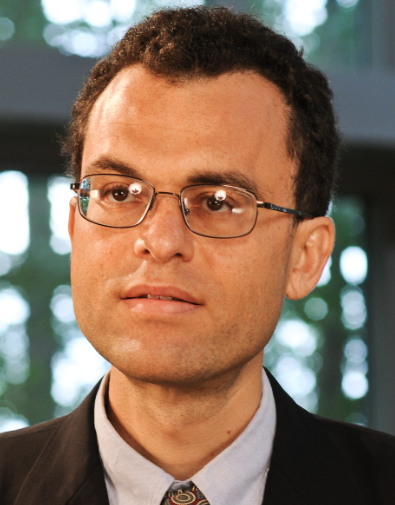 Giorgio Ascoli合作论文数Department of Molecular Neuroscience, George Mason University;Computational Neuroanatomy Group, Center for Neural Informatics, Structures, & Plasticity, Krasnow Institute for Advanced Study, George Mason University;Department of Bioengineering, Krasnow Institute for Advanced Study, George Mason University16
 David N Kennedy合作论文数Department of Psychiatry, T.H. Chan School of Medicine, University of Massachusetts;Department of Radiology, T.H. Chan School of Medicine, University of Massachusetts;NeuroNexus Institute, T.H. Chan School of Medicine, University of Massachusetts;Department of Neuroscience, Morningside Graduate School of Biomedical Sciences, University of Massachusetts15
 Volker Steuber合作论文数Science and Technology Research Institute, University of Hertfordshire13
 Mario Negrello合作论文数Okinawa Institute of Science and Technology12
 Ivan Raikov合作论文数Computational Neuroscience Unit, Okinawa Institute of Science and Technology12Stefan Wils合作论文数11James M. Bower合作论文数10BP Vos合作论文数9
 Orban Guy A合作论文数Department of medicine and Surgery, Universita degli Studi di Parma;Medical School, Katholieke Universiteit te Leuven9
 Haroon Anwar合作论文数Computational Neuroscience Unit, Okinawa Institute of Science and Technology9
 Yunliang Zang (臧蕴亮)合作论文数Computational Neuroscience & NeuroAI Laboratory, Medical School of Tianjin University8Kumar Shyam合作论文数8Pablo Achard合作论文数University of Geneva8
 Benjamin Torben-Nielsen合作论文数Edmond and Lily Safra Center for Brain Sciences, Hebrew University8Peter Thier合作论文数Hertie Institute for Clinical Brain Research, University of Tübingen7Hugo Cornelis合作论文数7
 Nigel H. Goddard合作论文数School of Informatics,University of Edinburgh7
 Audrey Denizot合作论文数Computational Neuroscience Unit, Okinawa Institute of Science and Technology6
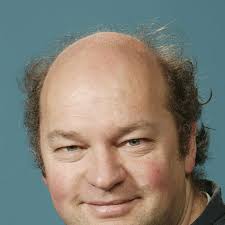 Chris de Zeeuw (CI)合作论文数Department of Neuroscience, Erasmus MC6
 Jan G. Bjaalie合作论文数Institute of Basic Medical Sciences, University of Oslo6
 Padraig Gleeson合作论文数Department of Physiology;University College London;Department of Physiology, University College London6Kristl G. Claeys合作论文数6
 Thomas G Close合作论文数6Mike Wijnants合作论文数5Stéphane Dieudonné合作论文数Ecole Normale Super, Univ PSL5
 Freek Hoebeek合作论文数5
 Angus Silver合作论文数University College London5
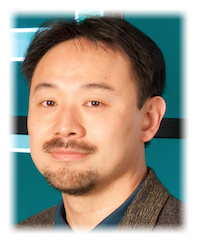 Jason Leigh合作论文数Electronic Visualization Laboratory;University of Illinois at Chicago5Sergio Solinas合作论文数5
 Fidel Santamaria合作论文数Department of Neurobiology, Duke University Medical Center5
 Werner Van Geit合作论文数Foundation for Research on Information Technologies in Society5Robert C. Cannon合作论文数Opus 25Fred W Howell合作论文数5Antonia Volny-Luraghi合作论文数5Koen Tahon合作论文数4Andrew R. Gallimore合作论文数4Sergio Verduzco-Flores合作论文数4
 Corrado Cali合作论文数4
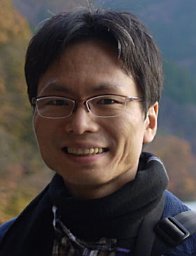 Jihwan Myung合作论文数Brain Sci Inst, RIKEN4Junker Marc合作论文数Hertie Institute for Clinical Brain Research, University of Tübingen Tübingen4
 Hugues Berry合作论文数INRIA Futurs4
 Keiko Tanaka-Yamamoto合作论文数4Toru Takumi合作论文数4Gabriela Antunes合作论文数Psychobiology Sector and Department of Chemistry, Universidade de Sao Paulo4Stefan Sunaert合作论文数4




