A regime of reconnection, called electron-only reconnection since there is insufficient time or space for ions to couple with reconnection structures, provides an opportunity to study electron heating mechanisms more directly than in fully ion-coupled reconnection. Electron-only reconnection is thought to be important for energy dissipation at kinetic scales in Earth’s turbulent magnetosheath, bow shock and the quiet magnetotail. Recent simulations of turbulent near-Sun plasmas suggest that electron-only reconnection with a large guide field plays a key role in the dissipation of turbulent energy at the kinetic scale and results in parallel, i.e. anisotropic, electron heating.
Laser induced fluorescence is used to measure argon ion heating during magnetic reconnection in the PHase Space MApping experiment (PHASMA). Sufficient signal-to-noise ratio (SNR) of the processed signal with pulsed laser injection is a delicate balance between saturation of the absorption line and injecting enough laser power to overcome the spontaneous emission of the plasma at the fluorescence wavelength. Averaging over many laser pulses and integrating over the fluorescence lifetime improves the SNR of the processed signal (processed SNR) when the SNR of the laser pulse time series is small (pulse SNR), but for laser powers small enough to avoid saturation, averaging over hundreds of pulses is needed to obtain an appreciable processed SNR over the entire Doppler-broadened absorption line. Here, we describe a matched filter processing method that significantly improves the SNR of the final measurement with fewer shots averaged. Investigation of simulated measurements validated by experimental results suggests that the matched filter method provides up to a 20% improvement in the processed SNR, resulting in less uncertainty in distribution function fits.
Experiments have demonstrated that ion phenomena, such as the lower hybrid resonance, play an important role in helicon source operation. Damping of the slow branch of the bounded whistler wave at the edge of a helicon source (i.e. the Trivelpiece-Gould mode) has been correlated with the creation of energetic electrons, heating of ions at the plasma edge, and anisotropic ion heating. Here we present ion velocity distribution function measurements, electron density and temperature measurements, and magnetic fluctuation measurements on both sides of an m = | 1 | helical antenna in a helicon source as a function of the driving frequency, magnetic field strength, and magnetic field orientation relative to the antenna helicity. Significant electron and ion heating (up to two times larger) occurs on the side of the antenna consistent with the launch of the m = + 1 mode. The electron and ion heating occurs within one electron skin depth of the plasma edge, where slow wave damping is expected. The source parameters for enhanced particle heating are also consistent with lower hybrid resonance effects, which can only occur for Trivelpiece-Gould wave excitation.
The small signal-to-noise ratio (SNR) of conventional laser induced fluorescence (LIF) measurements using a continuous wave laser, either diode or dye, is typically overcome by amplitude modulating the laser at a specific frequency and then using lock-in amplification to extract the signal from measurement noise. Here, we present LIF measurements of the neutral helium velocity distribution function in an rf plasma using frequency modulated (FM) laser injection. A pulse train of 100% amplitude modulation is generated synthetically with a random sequence of pulse lengths. The FM signal then drives an acoustic optic modulator placed in the path of the injection beam in an LIF measurement. The signal from a fast photomultiplier tube is digitized and cross-correlated with the known modulation signal. The resultant FM-based LIF signal outperforms a conventional lock-in-based LIF measurement on the same plasma in terms of SNR and precision.
Development of new plasma instruments is needed to enable constellation- and small satellite-based missions. Key steps in the development pathway of ultra-compact plasma instruments employing lithographically patterned wafers are the implementation of layer-to-layer electrical interconnects and demonstration of massively parallel measurements, i.e., simultaneous measurements through multiple identical plasma analyzer structures. Here we present energy resolved measurements of electron beams using a 5-layer stack of wafer-based, energy-per-charge, electrostatic analyzers. Each layer has eight distinct analyzer groups that are comprised of multiple micron scale energy-per-charge analyzers. The process of fabricating the electrical interconnects between the layers is described and the measured energy resolution and the angular resolution compared to theoretical predictions. The measurements demonstrate successful operation of 400 micron scale analyzers operating in parallel.
A regime of reconnection, called electron-only reconnection since there is insufficient time or space for ions to couple with reconnection structures, provides an opportunity to study electron heating mechanisms more directly than in fully ion-coupled reconnection. Electron-only reconnection is thought to be important for energy dissipation at kinetic scales in Earth’s turbulent magnetosheath, bow shock and the quiet magnetotail. Recent simulations of turbulent near-Sun plasmas suggest that electron-only reconnection with a large guide field plays a key role in the dissipation of turbulent energy at the kinetic scale and results in parallel, i.e. anisotropic, electron heating.
Here, we present laser-induced fluorescence measurements of an ion beam extraction angle and speed through a plasma-vacuum boundary as a function of plasma source parameters and bias potential applied to a wafer simulacrum outside the plasma. Ion temperature, velocity, and relative density are calculated from the measured ion velocity distribution function and are compared to a particle-in-cell model of the system. The measurements demonstrate that beam steering is feasible by varying plasma source density and extraction bias voltage. The focal point of the extracted beam, resulting from the plasma meniscus at the plasma-vacuum interface, depends on source density and extraction bias in a manner consistent with computational predictions.
Iodine has been an element of recent interest for commercial use as fuel in electrostatic propulsion systems. A lingering problem when investigating ionized iodine using non-perturbative, laser-based techniques is determining the spectral width, i.e., the species temperature, of iodine. To this end, the hyperfine structure must be well understood to develop a spatially resolved diagnostic technique capable of ion flow and temperature measurements. Previous work investigated the lineshape of the transition between the D-5(4)o and P-5(3) states of singly-ionized atomic iodine (I II) with laser induced fluorescence (LIF), but the hyperfine structure of the transition was unresolved in those measurements [Steinberger and Scime, Journal of Propulsion and Power, 34, 2018]. In this work, an intermodulated LIF technique is used to measure an enhanced lineshape of the same I II transition. A linear least squares fitting algorithm is used to fit the transition lineshape, where hyperfine transition locations and theorized relative amplitudes are constrained by theory. A lineshape model that incorporates hyperfine transition amplitude enhancement introduced from an intermodulated laser technique is implemented into the fitting function, as well as a nonlinear laser saturation effect. We report converged hyperfine coupling coefficients for these I II states. (C) 2021 Elsevier Ltd. All rights reserved.
In laboratory plasmas, arrays of probes have typically been used to measure the evolution of the magnetic field topology. Here, we present initial image-based measurements of the magnetic topology in a low-temperature plasma using a purely optical diagnostic. Laser induced fluorescence measurements of neutral velocity distribution functions are made using a fast camera, imaging the Zeeman splitting of σ-peaks in neutral argon. The separation of σ-peaks provides spatially resolved magnetic field magnitude measurements with a detection threshold on the order of 10 G.
In this work, we provide experimental measurements of the E×B flow above a non-magnetic, absorbing boundary in a magnetized plasma. Measurements are taken as a function of the angle between the background magnetic field and the boundary normal. The measurements are compared to computational predictions for oblique magnetic fields based on Chodura's model. Ion flow measurements were obtained with laser induced fluorescence and the presheath potential structure was measured with an emissive probe. The ions were found to accelerate to nearly 30% of the sound speed parallel to the boundary at oblique angles of the magnetic field (∼80°) and the ion speed at the electrostatic sheath edge was found to decrease with angle. The edge of the magnetic presheath has been experimentally determined based on the appearance of the E×B drift and is found to be independent of the angle of the magnetic field. We also demonstrate that laser induced fluorescence is suitable as a non-perturbative diagnostic to measure the electric field in a magnetized sheath.
Here, we report on modifications to the electron energy distribution function during X-mode microwave injection in argon and helium helicon plasmas. No electron heating is observed in argon helicon plasmas. Significant electron heating, ΔTe∼1 eV, is observed in helium plasmas. The heating is spatially localized to the upper hybrid resonance layer. Previously absent helium ion emission lines, from states over 50 eV above the helium ion ground state, are observed with the injection of X-mode microwaves.
Mesoscale structures in Earth's magnetotail are a primary feature of particle transport to the inner magnetosphere during storms and substorms. We demonstrate that such structures can be observed in energetic neutral atom (ENA) data which can provide remote, global images of the magnetosphere. In particular, we present localized regions of increased ion temperatures that appear in equatorial ion temperature maps calculated from Two Wide-angle Imaging Neutral-atom Spectrometers (TWINS) ENA data. These regions are associated with a dipolarization front with bursty ion flows measured by Magnetospheric MultiScale (MMS) and are concurrent with substorm features observed in field aligned currents (FAC) from Active Magnetosphere and Planetary Electrodynamics Response Experiment measurements. We conduct a magnetohydrodynamics simulation of the same event and show simulated ion temperatures, ion flows, and FACs that agree with the measurements. However, the observed plasma heating is less intense in the simulated results than in the TWINS and MMS data, indicating that some heating processes may be missing from the model.
Ion temperature anisotropy in an expanding magnetized plasma is investigated using laser induced fluorescence. Parallel and perpendicular ion velocity distribution functions (IVDFs) were measured simultaneously with high spatial resolution in the expanding plasma. Large ion temperature anisotropies (T⊥i/T∥i∼10) are observed in a conical region at the periphery of the expanding plasma plume. A simple 2D Boris stepper model that incorporates the measured electric field structure is able to reproduce the gross features of the measured perpendicular IVDFs. A Nyquist stability analysis of the measured IVDFs suggests that multiple instabilities with k⊥ρi∼1 and k||ρi∼0.2 are likely to be excited in these plasmas.
Ion temperature is a key parameter that influences dynamics in the magnetosphere, such as particle transport and wave‐particle interactions. Measurements of ion heating and energization yield information about phenomena such as magnetic reconnection, bursty bulk flows, and ion injections. Taking advantage of the global view provided by energetic neutral atom imaging, a database of ion temperature maps during geomagnetic storms occurring throughout the National Aeronautics and Space Administration (NASA) Two Wide‐angle Imaging Neutral atom Spectrometers (TWINS) mission has been created. These ion temperature maps and relevant metadata are publicly available on CDAWeb to facilitate comparison to in situ measurements and model output, for use as boundary conditions for simulations, and for other relevant studies. A preliminary study of average plasma sheet ion temperatures calculated from these maps has revealed a common occurrence of decreasing ion temperature, and a case study for one storm is presented.
We report experiments conducted in an expanding argon plasma generated in the inductive mode of a helicon source in the Hot hELIcon eXperiment–Large Experiment on Instabilities and Anisotropies facility. As the neutral gas pressure increases, the supersonic ion acceleration weakens. Increasing neutral pressure also alters the radial profile of electron temperature, density, and plasma potential upstream of the plasma expansion region. Langmuir probe measurements of the electron energy probability function (EEPF) show that heating of electrons at the plasma edge by RF fields diminishes with increasing gas pressure, yielding a plasma with a centrally peaked electron temperature, and flat potential profiles at higher neutral pressures. For neutral pressures at which ion acceleration regions develop in the expanding plasma plume, EEPFs reveal electrons with two temperature components.
Argon and xenon ion velocity distribution functions are measured in Ar-He, Ar-Xe, and Xe-He expanding helicon plasmas to determine if ion beam velocity is enhanced by the presence of lighter ions. Contrary to observations in mixed gas sheath experiments, we find that adding a lighter ion does not increase the ion beam speed. The predominant effect is a reduction of ion beam velocity consistent with increased drag arising from increased gas pressure under all conditions: constant total gas pressure, equal plasma densities of different ions, and very different plasma densities of different ions. These results suggest that the physics responsible for the acceleration of multiple ion species in simple sheaths is not responsible for the ion acceleration observed in expanding helicon plasmas.
In situ probes are being developed to make direct, spatially resolved measurements of the ion energy spectra in the edge of tokamak plasmas while being easily replaced and requiring minimal resources. The ion spectrometers will consist of a combined collimator and energy analyzer fabricated from silicon and mated to a detector to yield a form factor of approximately 2.0 cm × 1.5 cm × 0.2 cm. Results of fabrication and testing of the combined collimator and energy analyzer element are presented.
We compare three laser induced fluorescence schemes for measuring velocity distributions of Ar-I 1s5 metastables in the presence of a magnetic field. In these three-level schemes, the 1s5 state is optically pumped to 2p2, 2p3, or 2p4 by sweeping the frequency of a tuneable CW laser over transitions in the visible range at 696.7352 nm, 706.9167 nm, and 714.9012 nm, respectively. Broadening in the fluorescence spectra is attributed to Zeeman splitting and saturation effects. We present measurements of spectral broadening dependence on injected laser intensity and describe spectral reconstructions that account for Zeeman splitting. For laser injection parallel to a background magnetic field, the separation of the Zeeman-split σ± clusters is an effective, non-perturbative localized magnetic field diagnostic. We discuss the advantages of the three transition schemes and present the optimal transition for several applications.
Comparisons of the plasma ion flow speed measurements from Mach probes and laser induced fluorescence were performed in the Controlled Shear Decorrelation Experiment. We show the presence of the probe causes a low density geometric shadow downstream of the probe that affects the current density collected by the probe in collisional plasmas if the ion-neutral mean free path is shorter than the probe shadow length, Lg = w2 Vdrift/D⊥, resulting in erroneous Mach numbers. We then present a simple correction term that provides the corrected Mach number from probe data when the sound speed, ion-neutral mean free path, and perpendicular diffusion coefficient of the plasma are known. The probe shadow effect must be taken into account whenever the ion-neutral mean free path is on the order of the probe shadow length in linear devices and the open-field line region of fusion devices.
 Amy Keesee合作论文数Dept Phys, W Virginia Univ31
 John L. Kline合作论文数Los Alamos National Laboratory15
 Robert F. Boivin合作论文数14Dustin Mccarren合作论文数11Andre Balogh合作论文数Department of Physics, Faculty of Natural Sciences, Imperial College London11
 David J. McComas合作论文数Department of Astrophysical Sciences, Princeton University11Matthew M Balkey合作论文数11J. L. Phillips合作论文数10
 Thomas Steinberger合作论文数9Paul Keiter合作论文数Michigan Institute for Research in Astrophysics, College of Literature, Science, and the Arts, University of Michigan-Ann Arbor9
 Robert J Forsyth合作论文数9
 Chakraborty Thakur Saikat合作论文数Department of Physics, West Virginia University8Richard Magee合作论文数8
 Xuan Sun (孙玄)合作论文数University of Science and Technology of China8Robert Aaron Hardin合作论文数8
 Costel Biloiu合作论文数Department of Physics;West Virginia University;Department of Physics, West Virginia University8HO Funsten合作论文数7
 Ioana Biloiu合作论文数7M E Galante合作论文数6Matthew Galante合作论文数6Jerry Carr Jr.合作论文数6
 Saeid Houshmandyar合作论文数Dept. of Phys., Gonzaga Univ.;c;Dept. of Phys., Gonzaga Univ.6S. Peter Gary合作论文数6
 Stephanie Sears合作论文数5Tyler Gilbert合作论文数5SJ BAME合作论文数5
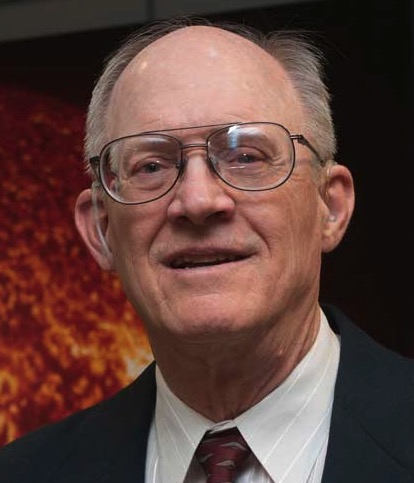 J T Gosling合作论文数Laboratory for Atmospheric and Space Physics, University of Colorado, Boulder5
 Samuel A. Cohen合作论文数Princeton Program in Plasma Physics, Princeton University5K. R. Moore合作论文数5T. N. Good合作论文数5Hansen A合作论文数4
 P. Canu合作论文数4J. Solomon合作论文数4J. E. Littleton合作论文数4
 Mahmood Miah合作论文数4R. John合作论文数3
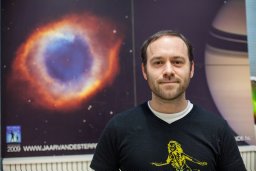 J. G. Elfritz合作论文数Anton Pannekoek Inst, Univ Amsterdam3Evan Aguirre合作论文数Department of Physics, Auburn University3S Ellison合作论文数3X. Sun合作论文数3
 Roderick Boswell合作论文数Department of Nuclear Physics & Accelerator Applications, Research School of Physics, College of Science, Australian National University;Space Plasma, Power and Propulsion Group, Plasma Research Laboratory, The Australian National University3
 Michelle F. Thomsen合作论文数Planetary Science Institute3John Mckee合作论文数3Harvey Z合作论文数3
 C. J. Pollock合作论文数3
 Mei-Ching Fok合作论文数3N. Cornilleau-Wehrlin合作论文数3
 Robert MacDowall合作论文数NASA Goddard Space Flight Center;Jet Propulsion Laboratory, California Institute of Technology;College of Arts and Sciences, University of Colorado Boulder3
 Herbert Funsten合作论文数Los Alamos National Laboratory3




