Co-production practices are increasingly being adopted in research conducted for the purpose of societal impact. However, the ways in which co-production is conducted can perpetuate long-standing inequity and inequality. This study investigates which principles of co-production design are perceived to advance more equitable processes and outcomes based on the experiences of participants in three projects funded by U.S. federal programs that support decision-relevant climate science, along with others engaged in co-production efforts. We found three distinct perspectives: (a) Ways of Knowing and Power; (b) Participants and Interactions; and (c) Science as Capacity Building. Each viewpoint differentially weights the salience of statements associated with five dimensions of co-production practices: (a) outcomes; (b) power; (c) place-based, community rights and respect; (d) audiences and participation; and (e) interactions. In the final stage of the study, we hosted a workshop of participants representing various roles in co-production efforts to vet and discuss each perspective. We found that the perspectives remained distinct after each of the groups selected core statements that reflect their views. The degree of variation across the three perspectives suggests that co-production processes would benefit from an initial discussion of, and decisions about, rules of engagement to ensure that participants view the process as equitable.
Background: Elected members of the US Congress rely on staff, including fellows with scientific and engineering expertise, to find and interpret information for use in policymaking. Factors that impede, or facilitate, the communication of scientific information within the institution thus can play a critical role in legislative capacity, but there is a limited understanding of these dynamics in the hyper-partisan body.Aims and objectives: This study presents and tests a four-dimensional model describing how the obstacles to science communication in Congress change depending on whether information is sought for use in support of established policy positions ('strategic use') or to inform decision making ('substantive use').Methods: Data were collected between November 2017 and February 2019 through interviews with 58 congressional staff members in personal offices assigned to energy, natural resources, and science issue portfolios, and through surveys with 68 science and engineering fellows who completed their year in Congress between 2015 and 2019.Findings: Placing scientists and engineers in Congress as fellows augments staffing and institutional expertise. Yet we find that both staff and fellows experience communication-related impediments in using scientific information. Staff report more challenges in using science to substantively make policy decisions, due not only to lack of time, but also factors such as contacts, access, and information presentation. Fellows report fewer barriers and use science for policy in largely identical ways to staff.Discussion and conclusion: These findings support the proposed model and highlight the importance of staff scientific fluency and the decision-making context for science communication in Congress.
In transdisciplinary fields such as science policy, research agendas do not evolve organically from within disciplines but instead require stakeholders to engage in active co-creation. 'Big questions' exercises fulfill this need but simultaneously introduce new challenges in their subjectivity and potential bias. By applying Q methodology to an exercise in developing an international collaborative research agenda for legislative science advice (LSA), we demonstrate a technique to illustrate stakeholder perspectives. While the LSA international respondents-academics, practitioners, and policymakers-demonstrated no difference in their research priorities across advisory system roles, the analysis by developing and developed nation status revealed both common interests in institutional- and systems-level research and distinct preferences. Stakeholders in developing nations prioritized the design of advisory systems, especially in low- and middle-income countries, while those in developed countries emphasized policymaker evidence use. These differences illustrate unique regional research needs that should be met through an international agenda for LSA.
The quantity and complexity of scientific and technological information provided to policymakers have been on the rise for decades. Yet little is known about how to provide science advice to legislatures, even though scientific information is widely acknowledged as valuable for decision-making in many policy domains. We asked academics, science advisers, and policymakers from both developed and developing nations to identify, review and refine, and then rank the most pressing research questions on legislative science advice (LSA). Experts generally agree that the state of evidence is poor, especially regarding developing and lower-middle income countries. Many fundamental questions about science advice processes remain unanswered and are of great interest: whether legislative use of scientific evidence improves the implementation and outcome of social programs and policies; under what conditions legislators and staff seek out scientific information or use what is presented to them; and how different communication channels affect informational trust and use. Environment and health are the highest priority policy domains for the field. The context-specific nature of many of the submitted questions-whether to policy issues, institutions, or locations-suggests one of the significant challenges is aggregating generalizable evidence on LSA practices. Understanding these research needs represents a first step in advancing a global agenda for LSA research.
: Identifying the determinants of success in communicating scientific information for use in policymaking has been a topic of longstanding interest for many fields. Perceptions of message and messenger credibility are recognized in many disciplines as key to information receptivity, and subsequent changes in attitudes, by decision-makers. Bias also appears as a component of credibility, but is not theoretically well-defined, and its effects can appear inconsistent. This study—comprised of interviews with congressional staff members with energy, environment, and science portfolios (n=16)—finds that perceptions of bias and expertise play a critical role in the way in which policymakers evaluate scientific information sources, building on early research on credibility and opinion change.
 Emily Cloyd合作论文数6
 K. L. Akerlof合作论文数Department of Environmental Science and Policy, College of Science, George Mason University6
 Maria Carmen Lemos合作论文数School of Natural Resources and Environment, University of Michigan;Udall Center for Studies in Public Policy, The University of Arizona3Selena Nelson合作论文数2
 Alessandro Allegra合作论文数2
 Kristin Timm合作论文数George Mason Univ2
 Carla Washbourne合作论文数Department of Science, Technology, Engineering and Public Policy, University College London;University of East London;Global Social Challenges Journal;Gauteng City-Region Observatory2
 Chris P Tyler合作论文数Department of Science, Technology, Engineering and Public Policy, Faculty of Engineering Sciences, University College London2R. Toohey合作论文数1Robert Cook-Deegan合作论文数1
 J. Tochukwu Omenma合作论文数1Cameryn J. Gonnella合作论文数1Zach Graves合作论文数1Julia Robertson Hathaway合作论文数1
 Laura Boeira合作论文数1
 Liam A. Berigan合作论文数1
 Olusegun M. Ogundele合作论文数Nigeria Sci Policy Platform Biodivers & Ecosyst S, Ibadan, Nigeria1
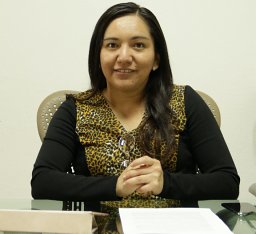 Alma Cristal Hernández-Mondragón合作论文数Center for Research and Advanced Studies, the National Polytechnic Institute1Donatus Dube合作论文数Natl Univ Sci & Technol1
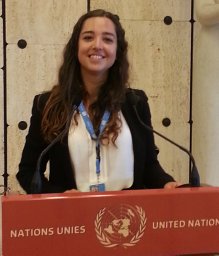 Marga Gual Soler合作论文数SciDipGLOBAL1
 Sisay Derso Mengesha合作论文数Ethiopian Public Health Institute1
 Aparna Bamzai-Dodson合作论文数US Geol Survey, North Cent Climate Adaptat Sci Ctr1Tomas Michalek合作论文数1
 Peter Dithan Ntale合作论文数Business School, Makerere University1
 Julian Reyes合作论文数USDA Climate Hubs1Ali Nouri合作论文数Federat Amer Scientists, Washington, DC 20036 USA1
 Michael Nentwich合作论文数Institut für Technikfolgen-Abschätzung, Österreichische Akademie der Wissenschaften1
 Jegede Ayodele S合作论文数Department of Sociology, University of Ibadan1
 Meghnath Dhimal合作论文数Ministry of Health and Population Complex, Nepal Health Research Council (NHRC),1
 Edmond Sanganyado合作论文数Department of Environmental Sciences, University of California1
 Paul Cairney合作论文数Faculty of Arts and Humanities, University of Stirling;Division of History, Heritage, and Politics, University of Stirling1Hobbs Abbi合作论文数1
 Jylana L Sheats合作论文数Stanford Prevention Research Center1Carlos R. Abeledo合作论文数1
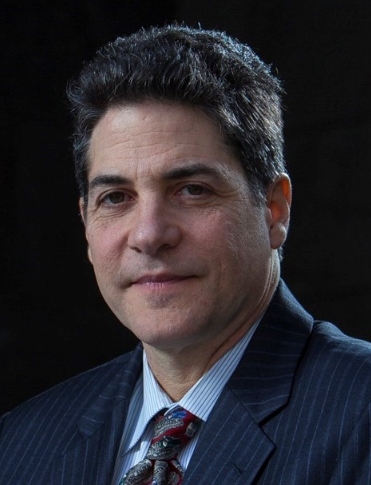 Jon M. Peha合作论文数Department of Engineering and Public Policy, College of Engineering, Carnegie Mellon University;Department of Electrical and Computer Engineering, College of Engineering, Carnegie Mellon University;Peha Consulting1
 Maruf Sanni合作论文数National Centre for Technology Management, Obafemi Awolowo University1
 Peter Tangney合作论文数Centre for Environmental Policy, Imperial College London1
 John A. Hird合作论文数Department of Political Science, Thompson Hall University of Massachusetts at Amherst1
 Thomas Webler合作论文数Public Participation in Western Democracies1
 Jauad El Kharraz合作论文数Dept;Universidad de Valencia;Universidad de Valencia1
 Nathan P. Kettle合作论文数Department of Geography, University of South Carolina1
 Abiodun A. Egbetokun合作论文数1Louis Francois Pau合作论文数Upgötva AB;Gordon Institute of Business, University of Pretoria;Erasmus Universiteit Rotterdam;Copenhagen Business School1
 Irene Ramos Vielba合作论文数1
 Paul A. Sandifer合作论文数Virginia Institute of Marine Science1
 Marc Saner合作论文数Carleton University1
 Elizabeth M. P. Madin合作论文数Department of Ecology, Evolution and Marine Biology, University of California1
 J. S. Littell合作论文数JISAO/CSES Climate Impacts Group, University of Washington1
 Carel Ijsselmuiden合作论文数Council on Health Research for Development, Geneva, Switzerland1




