Millimeter-wave massive multiple-input multiple-output (MIMO) orthogonal frequency-division multiplexing (OFDM) systems require accurate channel estimation under sparse propagation, pilot constraints, mobility-induced degradation, spatial correlation, and reconfigurable intelligent surface (RIS)-assisted propagation. This paper presents an experimental AI-native simulation framework for sparse MIMO-OFDM channel estimation using a configurable 3GPP-inspired synthetic environment. The framework compares classical estimators, compressed sensing methods, and lightweight experimental surrogate modules, including Residual-CNN-exp, Transformer-lite-exp, DUAMP-exp, FTL-exp, and PIH-exp. The evaluation jointly considers normalized mean square error, spectral efficiency, bit error rate, sparse support recovery, computational cost, energy efficiency, outage probability, latency, robustness, confidence, domain-shift generalization, and a channel estimation intelligence index. The reported results correspond to controlled simulation-driven benchmarking and should not be interpreted as measured RF validation or industrial deployment evidence. The framework provides publication-ready outputs and a reproducible basis for comparing estimator behavior under high-mobility mmWave massive MIMO-OFDM assumptions.
Advanced metering infrastructure (AMI) is the sensing backbone of the smart grid, and its reliability underpins urban energy services such as state estimation, demand response, and distributed-energy integration. When AMI uses cellular spectrum leased through a cognitive mobile virtual network operator (C-MVNO), allocating channels to data aggregation points (DAPs) each frame is difficult because three uncertainties interact: imperfect spectrum sensing, time-varying and cross-channel-correlated primary-user activity, and stochastic urban propagation. Classical Hungarian assignment is optimal per frame but blind to primary-user dynamics, while cognitive-radio heuristics ignore queue state and cross-channel structure. We propose a two-timescale hierarchy that couples these established tools in a new way: a Proximal Policy Optimization (PPO) agent decides, once per epoch, which opportunistic channels to expose, and an exact Hungarian solver performs the per-frame DAP-to-channel assignment. To our knowledge this is the first coupling of a learned cognitive layer with exact Hungarian assignment for cognitive-radio resource allocation. On a 3GPP TR 38.901-compliant simulator, PPO significantly outperforms a Bayesian-belief baseline and the Hungarian-only configuration in delivery ratio, latency, and a strict per-meter satisfaction metric, and is robust across independent seeds and sensitivity sweeps. An architectural ablation shows the DAP tier is a precondition for viability, not merely an optimization.
Advanced Metering Infrastructure (AMI) over 5G New Radio (NR) massive machine-type communication (mMTC) networks require efficient and adaptive communication mechanisms to support reliable data delivery for large numbers of smart meters under dynamic traffic and channel conditions. In this work, we propose a framework in which each smart meter chooses, at runtime, whether to transmit directly to the base station (BS) or via a nearby Data Aggregation Point (DAP). The optimal choice is dynamic and depends on DAP buffer occupancy, periodic congestion, channel quality, and packet deadline pressure. Formulating this as a per-meter binary decision yields an action space of size 2N for N meters, which is intractable for reinforcement learning (RL). We reformulate the problem as regional strategy composition: the RL agent selects one parameterized association strategy for each DAP region from a small library of interpretable rules, and a deterministic mapping expands the regional choice into per-meter modes. It reduces the policy action space from 2N to KD, where D is the number of DAPs and K the number of strategies, while preserving meter-level control granularity. We evaluate Proximal Policy Optimization (PPO) and Deep Q-Network (DQN) controllers against eight meter-level baselines on a 5G NR-calibrated simulator with 1500 m, six DAPs, deadline-bounded delivery, stale channel-state information, and phase-offset congestion cycles. Across three traffic regimes and five random seeds, PPO improves packet delivery ratio (PDR) over the strongest heuristic by +0.63, +2.41, and +2.66 percentage points under baseline, high-load, and bursty-cycle conditions, respectively; all gains are statistically significant (paired t-test, p<0.001; Cohen’s d up to 5.12), and the advantage grows with traffic stress. The results show that learned regional composition of classical heuristics outperforms any single fixed heuristic precisely when no individual rule is globally optimal.
This paper presents an optimization model for wireless channel allocation in cellular networks, specifically designed for the transmission of smart meter (SM) data through a mobile virtual network operator (MVNO). The model efficiently allocates transmission channels, minimizing smart grid (SG) costs. The MVNO manages fixed and random channels through a shared access scheme, optimizing meter connectivity. Channel allocation is based on a Markovian approach and optimized through the Hungarian algorithm that minimizes the weight in a bipartite network between meters and channels. In addition, cumulative tokens are introduced that weight transmissions according to channel availability and network congestion. Simulations show that dynamic allocation in virtual networks improves transmission performance, contributing to sustainability and cost reduction in cellular networks. This study highlights the importance of inefficient resource management by cognitive mobile virtual network and cognitive radio virtual network operators (C-MVNOs), laying a solid foundation for future applications in intelligent networks. This work is motivated by the increasing demand for efficient and scalable data transmission in smart metering systems. The novelty lies in integrating cumulative tokens and a Markovian-based bipartite graph matching algorithm, which jointly optimize channel allocation and transmission reliability under heterogeneous wireless conditions.
This paper explores the application of transform-domain sparsification and compressed sensing (CS) techniques to improve the efficiency and quality of magnetic resonance imaging (MRI). We implement and evaluate three sparsifying methods—discrete wavelet transform (DWT), fast Fourier transform (FFT), and discrete cosine transform (DCT)—which are used to simulate subsampled reconstruction via inverse transforms. Additionally, one accurate CS reconstruction algorithm, basis pursuit (BP), using the L1-MAGIC toolbox, is implemented as a benchmark based on convex optimization with L1-norm minimization. Emphasis is placed on basis pursuit (BP), which satisfies the formal requirements of CS theory, including incoherent sampling and sparse recovery via nonlinear reconstruction. Each method is assessed in MATLAB R2024b using standardized DICOM images and varying sampling rates. The evaluation metrics include peak signal-to-noise ratio (PSNR), root mean square error (RMSE), structural similarity index measure (SSIM), execution time, memory usage, and compression efficiency. The results show that although discrete cosine transform (DCT) outperforms the others under simulation in terms of PSNR and SSIM, it is inconsistent with the physics of MRI acquisition. Conversely, basis pursuit (BP) offers a theoretically grounded reconstruction approach with acceptable accuracy and clinical relevance. Despite the limitations of a controlled experimental setup, this study establishes a reproducible benchmarking framework and highlights the trade-offs between the quality of transform-based reconstruction and computational complexity. Future work will extend this study by incorporating clinically validated CS algorithms with L0 and nonconvex Lp (0 < p < 1) regularization to align with state-of-the-art MRI reconstruction practices.
The growing need for efficient and sustainable urban water management has accelerated the adoption of smart monitoring infrastructures based on wireless sensor networks (WSNs). This study proposes a connectivity-aware methodology for the optimal deployment of wireless sensor networks (WSNs) in smart water metering systems. The approach models the wireless sensors as nodes embedded in household water meters and determines the minimal yet sufficient set of Data Aggregation Points required to ensure complete network coverage and transmission reliability. A scalable and hierarchical topology is generated by integrating an enhanced minimum spanning tree algorithm with set covering techniques and geographic constraints, leading to a robust intermediate layer of aggregation nodes. These nodes are wirelessly linked to a single cellular base station, minimizing infrastructure costs while preserving communication quality. Simulation results on realistic urban layouts demonstrate that the proposed strategy reduces network fragmentation, improves energy efficiency, and simplifies routing paths compared to traditional ad hoc designs. The results offer a practical framework for deploying resilient and cost-effective smart water metering solutions in densely populated urban environments.
This article aims to examine the effectiveness of Flipped Learning (FL) as a methodology for teaching English subjects to seventh-grade students. The study suggests that FL fosters an active and engaging learning environment by encouraging students to take control of their learning process. While the teacher remains the primary facilitator, they guide students and provide continuous, hands-on assessment. Research shows that applying the FL model promotes student participation and interaction with the teacher, thus improving student engagement. The methodology section of this article describes the processes followed to collect data, starting with a bibliometric analysis to build the state of the art, followed by an experimental approach to evaluate the method. A Likert-scale survey was used to measure student perceptions and opinions, proving an effective data collection method. A quantitative approach was used to assess students' perceptions of LF. The results reveal that FL is an effective methodology that improves student engagement, motivation, and learning outcomes. Consequently, the analysis suggests that FL is an innovative didactic approach that can improve student motivation and learning outcomes by designing and implementing innovative pedagogical strategies.
The Smart Grids research group (GIREI) develops, designs, evaluates, and recommends methodologies and technologies to facilitate communication between the different stages of the electrical system to facilitate the optimal roadmap to achieve a "Smart Grid" focused on the reliability and efficiency of the system. It develops and implements applications directed to alternative energies through generic methodologies of climate analysis and specialized technologies for electricity generation, microgeneration, and distributed generation. One of its objectives is to transfer in a timely and innovative manner the results of research that generate an impact on the decisions of the Ecuadorian electricity sector according to the regional, national, and international context. The GIREI group is currently working on processes that seek solutions for the optimal location of electric vehicle charging centers, certification of high voltage equipment, algorithms for efficiency and reliability of the electric distribution network, deployment of microgrids, and distributed generation, considering the massive inclusion of electric vehicles.
This paper presents a novel eight-step iterative algorithm for optimizing the layout of a neighborhood, focusing on the efficient allocation of houses to strategically placed facilities, herein referred to as ’points of interest’. The methodology integrates a mixed integer linear programming (MILP) approach with a heuristic algorithm to address a variant of the facility location problem combined with network design considerations. The algorithm begins by defining a set of geographic coordinates to represent houses within a predefined area. It then identifies key points of interest, forming the basis for subsequent connectivity and allocation analyses. The methodology’s core involves applying the Greedy algorithm to assign houses to the nearest points of interest, subject to capacity constraints. The method is followed by computing a Minimum Spanning Tree (MST) among these points to ensure efficient overall connectivity. The proposed algorithm’s iterative design is a key attribute. The most promising result of this approach is its ability to minimize the distance between houses and points of interest while optimizing the network’s total length. This dual optimization ensures a balanced distribution of houses and an efficient layout, making it particularly suitable for urban planning and infrastructure development. The paper’s findings demonstrate the algorithm’s effectiveness in creating a practical and efficient neighborhood layout, highlighting its potential application in large-scale urban planning and development projects.
Massively deploying wireless sensors in a geo-referenced area to provide a service for smart cities, such as smart metering, will require extensive study to minimize investment costs. The current work proposes a heuristic technique for the optimal location of data aggregation points (DAP) or concentrators from a set of candidate sites and the fiber optic network to achieve DAP connectivity. The study considers the capacity constraints of each DAP and the maximum distance in the minimum spanning tree. DAP occupancy ranges between 70% and 98% for effective monitoring and maintenance.
This research is carried out with the purpose of demonstrating the development of educational inclusion of children with cerebral palsy, since the inclusive environment must enhance the student's abilities to promote access to information. In this context, a roadmap of socio-educational inclusion practices in children with cerebral palsy is proposed considering intellectual and physical disability. A descriptive research is developed, scientific articles are evaluated with a global, regional and national focus; Additionally, a bibliometric analysis will be carried out through VosViewer to identify the countries with the greatest scientific contribution in the field of multiple disabilities, the universities that present research and the most relevant researchers in relation to the number of citations. The verification database will come from Web of Science and Scopus, the results obtained will be evaluated through the analyti-cal-synthetic method that will allow contrasting the objectives set with the results found in the investigation. The investigative procedure finds that, worldwide, the countries with the greatest scientific impact are the US, Australia and England, highlighting the one that stands out around inclusion, surveys were applied through Microsoft Forms to parents and teachers of children with cerebral palsy. Finally, the work considered the bibliometric analysis, which is evidenced in the, which supports functional and sustainable results, promulgating the scientific impact on education.
This research proposed an optimal control approach for a smart grid electrical system with photovoltaic generation, where the control variables are voltage and frequency, which aims to improve the performance through addressing the need for a balance between the minimization of error and the operational cost. The proposed control scheme incorporates the latest advancements in heuristics and hierarchical control strategies to provide an efficient and effective solution for the smart grid electrical system control. Implementing the optimal control scheme in a smart power grid is expected to bring significant benefits, such as the reduced impact of renewable energy sources, improved stability, reliability and efficiency of the power grid, and enhanced overall performance. The optimal coefficient values are found by minimizing the cost functions, which leads to a more efficient system performance. The voltage output response of the system in a steady state is over-damped, with no overshoot, but with a 5% oscillation around the target voltage level that remains consistent. Despite the complexity of nonlinear elements’ behavior and multiple system interactions, the response time is fast and the settling time is less than 0.4 s. This means that even with an increase in load, the system output still meets the power and voltage requirements of the system, ensuring efficient and effective performance of the smart grid electrical systems.
This article is based on enhancing online interaction while integrating it with face-to-face interaction and promoting access to and development of information and communication technologies (ICT). The aim was to implement digital tools for researching and developing school assignments. The study employed a mixed method approach, incorporating qualitative–quantitative techniques—such as surveys and observations—to analyze documents related to the investigation. The article elucidates the conceptual and theoretical framework, methodological criteria, and interdisciplinary approach that aligns with the investigated group’s profile. The applicability of the proposed methodology was demonstrated in practice, indicating its effectiveness in reaching a superior level of understanding, competence, and behavior. The outcomes substantiate that applying active tools and methodologies grounded in the knowledge of society can reinforce the notion that education is the cornerstone of social development, including ICT.
The approach introduced in this study is an innovative framework that merges heuristic methods and graph theory techniques to optimize network routing within a geographical region. It aims to efficiently connect all users in the network, offering near-optimal solutions. The model’s effectiveness is demonstrated in finding good solutions for network routing through implementation in a random scenario. This approach is precious for planners and designers grappling with network routing challenges, providing an efficient and effective solution. With its potential to assist in the design process across diverse contexts, this model holds promise for facilitating network planning and enhancing the overall efficiency of network systems.
This paper proposes a secondary and tertiary optimal methodology to control an electrical distribution system with photovoltaic generation. The control is hierarchical, and the optimization relies on heuristics; thus, the optimal approach minimizes the error, comparing the output with the reference, but the methodology maintains an acceptable operational cost. The objective function determines the optimal controller’s coefficient to improve system performance. The steady-state response does not have an overshoot, and it is over-damped. Considering the presence of non-linear elements, the response time is sufficiently fast. Moreover, despite the increase in load, the settling time is less than 0.4 seconds, and the system output satisfies the system requirements in terms of power and voltage.
Increased demand in the different electrical power systems (EPS) has a negative impact in voltage sta-bility, reliability and quality of the power supply. Voltage profile is reduced when generation units are not capable of supplying reactive power to the EPS at the times it is required. With the development of power electronics and complex control systems, flexi-ble alternating current transmission system (FACTS) devices have been introduced. In this article, the im-pact of the introduction of a type of FACTS that allows reactive power compensation in the EPS is analyzed in detail. Furthermore, a methodology to decide the capacity of the Static Synchronous Com-pensator (STATCOM) and its optimal location with the execution of continuous power flows (CPF) will be analyzed. Finally, the positive impact of installing a Power System Stabilizer (PSS) control to ensure voltage stability in the EPS will be studied. This ar-ticle is developed using the IEEE 14-bus base system under two mathematical models for power flow cal-culation developed in MATLAB software, which are: which are: i) through the power balance equations and ii ) Newton Raphson with the toolbox PSAT.
El desarrollo de la presente investigación se enfoca en analizar la eficiencia que presenta la gestión académica y administrativa de los educadores, en la inclusión de estudiantes con deficiencias cognitivas a un aula regular, la investigación se desarrolló dentro de un marco metodológico, cuantitativo con un enfoque descriptivo, mediante el cual se pudo analizar las características y comportamientos que presentan los estudiantes con deficiencias de aprendizaje, así como también las acciones que efectúan los docentes para facilitar el proceso de enseñanza, para la obtenciones los datos se determinó como técnica dos encuestas, la una dirigida a los docentes de las diferentes unidades educativas con cargos administrativos y de aula, la segunda dirigida a los padres que tiene estudiantes con deficiencias cognitivas, en la tabulación de los datos se utilizó como herramienta software estadístico, mediante el cual se graficó y se porcentualiza la información, el análisis de los resultados denotó la importancia que tiene la acogida que proporcionan los docentes en la integración de los niños con deficiencias de aprendizaje.
Wireless cellular networks have become increasingly important in providing data access to cellular users via a grid of cells. Many applications are considered to read data from smart meters for potable water, gas, or electricity. This paper proposes a novel algorithm to assign paired channels for intelligent metering through wireless connectivity, which is particularly relevant due to the commercial advantages that a virtual operator currently provides. The algorithm considers the behavior of secondary spectrum channels assigned to smart metering in a cellular network. It explores spectrum reuse in a virtual mobile operator to optimize dynamic channel assignment. The proposed algorithm exploits the white holes in the cognitive radio spectrum and considers the coexistence of different uplink channels, resulting in improved efficiency and reliability for smart metering. The work also defines the average user transmission throughput and total smart meter cell throughput as metrics to measure performance, providing insights into the effects of the chosen values on the overall performance of the proposed algorithm.
Faced with the problem of a need for more student participation and motivation in the teaching–learning process (TLP) due to the persistence of traditional methods, peer instruction (PI) has emerged as an interactive teaching method. It is based on a dynamic of questions and answers to promote student reflection and discussion. Thus, this article shows the applicability of PI, considering a learning engineering approach to innovating the TLP. For this, the historical-descriptive method is used to conduct a literature review and a bibliometric study, evaluating scientific articles in Web of Science (WoS) and Scopus between 2018 and 2022. In addition, in the second stage, the experimental method is used to apply PI in two educational institutions and evaluate its applicability with Likert scales for teachers and students following a quantitative methodology. Consequently, following the analytical-synthetic method, the results indicate that PI the stages, the most relevant aspects, and the conditions to consider in a classroom environment are highly relevant to enhancing its effects. Thus, such applicability is reflected in its positive results in the TLP, considering the learning engineering, and its representation as a flexible and innovative alternative to traditional methods. This is because PI generated benefits for teachers and students, thus encouraging greater satisfaction, motivation, interest, understanding, and student participation.
 Roberto Hincapie合作论文数Universidad Pontifica Bolivariana31
 Miguel Angel Campana合作论文数Postgrad Dept, Giron Campus,Av 12 Octubre 23-52, Quito 170525, Ecuador16
 Juan Inga Ortega合作论文数Sch Telecommun Engn, Univ Politecn Salesiana14
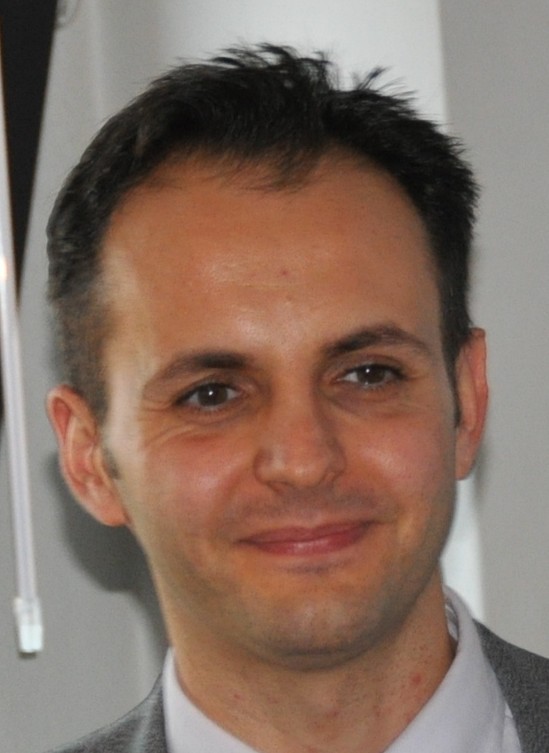 Silvio Simani合作论文数Department of Engineering, University of Ferrara10
 Wilson David Pavon Vallejos合作论文数Engn Dept, Univ Politecn Salesiana9
 Jorge Washington Cardenas Castillo合作论文数Inclus Educ Res Grp, Univ Politecn Salesiana5
 Milton Gonzalo Ruiz合作论文数Bone Marrow Transplant Unit, University Hospital (FUNFARME),5
 Alex Valenzuela合作论文数Universidad Politécnica Salesiana4
 Diego Carrion合作论文数4
 Estuardo Correa合作论文数3
 arturo peraltasevilla合作论文数Electrical Engineering Career, Universidad Politécnica Salesiana3
 Alexander Aguila合作论文数Carrera de Ingenieria Eléctrica, Universidad Politécnica Salesiana3
 Andres Leonardo Ortega Ortega合作论文数Telecommun Engn, Univ Tecnol Ecotec3
 Sandra Cespedes合作论文数Dept Elect Engn, Univ Chile3
 Cristina Gómez合作论文数2
 Victor Orejuela Luna合作论文数2Freddy Cárdenas合作论文数2Jairo Otáñez合作论文数2
 Jorge W. Gonzalez合作论文数2
 c m suarez合作论文数2Francisco Pabon Plaza合作论文数2
 Manuel Dario Jaramillo合作论文数Univ Politecn Salesiana2
 Paul Masache合作论文数2
 Diego A. Arias-Cazco合作论文数Fac Postgrad, Univ Tecnol Ctr Amer UNITEC2
 Oswaldo Moscoso-Zea合作论文数Fac Ciencias Ingn & Ind, Univ Tecnol Equinoccial2
 Matthew Armstrong合作论文数2
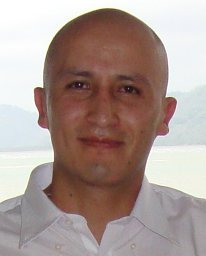 Arevalo, G.合作论文数Telecommun. Res. Group, Univ. Politec. Salesiana;c;Telecommun. Res. Group, Univ. Politec. Salesiana2Amelec Viloria合作论文数1Carlos Eduardo Paida Tenemaza合作论文数1Milton Gonzalo Ruiz Maldonado合作论文数1diego fernando torres riascos合作论文数1
 Santiago Xavier Quel Novillo合作论文数1
 Jessica Rivadeneira合作论文数1Lenin Merino合作论文数1Jefferson Morán合作论文数1
 Rene Marcelo Camacho合作论文数1
 Renato Cumbal合作论文数1
 Cristian Ganan合作论文数1
 Henry Maury合作论文数1
 Carlos Barrera合作论文数Politecnica, Salesiana University1
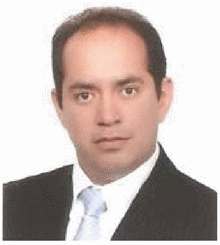 Edwin Marcelo Garcia Torres合作论文数1
 cristina gomez合作论文数Universidad Pontificia Bolivariana1
 Juan Cardenas-Tapia合作论文数Universidad Politécnica Salesiana1
 Carmen Luisa Vásquez Stanescu合作论文数Universidad Nacional Experimental Politécnica Antonio José de Sucre1
 Stanislao Pinzón合作论文数Universidad Politecnica Salesiana1
 William Oswaldo Chamorro合作论文数Univ Tecnol Equinoccial1Iván Montalvo合作论文数1
 Santiago Espinosa合作论文数Univ. Politec. Salesiana1
 Ramon Perez合作论文数Dept Elect & Comp Engn, Laval Univ1




