The National Synchrotron Light Source at BNL was the first dedicated light source facility and it has now operated for more than 20 years. During this time the user community has grown to more than 2400 users annually. To insure that this vibrant user community has access to the highest quality photon beams, the NSLS is pursuing the design of a new ultra-high brightness (∼1021) electron storage ring, tailored to the 0.3-20 KeV photon energy range. We present our preliminary design and review the critical accelerator physics design issues.
Amplitude and phase measurements are conducted on the 266 nm output of the DUVFEL laser at the National Synchrotron Light Source (NSLS) at Brookhaven National Laboratory. With the FEL operating in High Gain Harmonic Generation (HGHG) mode, we have studied narrow-bandwidth HGHG output, and observe pulses near the transform limit. We have also chirped both the electron bunch energy and the seed pulse wavelength, and successfully imposed a linear chirp on the HGHG output. These results demonstrate the potential to generate short harmonic pulses through chirped pulse amplification [1] or coherently shape FEL output.
VISA (Visible to Infrared SASE Amplifier) is a high-gain self-amplified spontaneous emission FEL, which achieved saturation at 840nm within a single-pass 4-m undulator. A gain length shorter than 18cm has been obtained, yielding the gain of 2×10⁸ at saturation. The FEL performance, including spectral, angular, and statistical properties of SASE radiation, has been characterized for different electron beam conditions. The results are compared to 3-D SASE FEL theory and start-to-end numerical simulations of the entire injector, transport, and FEL system. Detailed agreement between simulations and experimental results is obtained over the wide range of the electron beam parameters.
VISA (Visible to Infrared SASE Amplifier) is a high-gain self-amplified spontaneous emission (SASE) free-electron laser (FEL), which achieved saturation at 840 nm within a single-pass 4-m undulator. The experiment was performed at the Accelerator Test Facility at BNL, using a high brightness 70-MeV electron beam. A gain length shorter than 18 cm has been obtained, yielding a total gain of 2 x 10(8) at saturation. The FEL performance, including the spectral, angular, and statistical properties of SASE radiation, has been characterized for different electron beam conditions. Results are compared to the three-dimensional SASE FEL theory and start-to-end numerical simulations of the entire injector, transport, and FEL systems. An agreement between simulations and experimental results has been obtained at an unprecedented level of detail.
To address the growing needs of the NSLS user community we are aggressively pursuing R&D towards a facility upgrade. The present goals are a 3 GeV ultra-low emittance storage ring, tailored to the 5-20 keV photon energy range, that will triple the present NSLS ID capacity, and provide three orders of magnitude increase in brightness over the present brightest NSLS beamlines. To achieve these goals we propose a 24 period TBA lattice, with extensive use of super-conducting small gap undulators. This paper reviews our preliminary design and the key accelerator physics issues.
Visible to Infrared SASE Amplifier is a free electron laser (FEL) designed to saturate at a radiation wavelength of 800 nm within a 4 m long, strong focusing undulator. Large gain is achieved by driving the FEL with 72 MeV, high brightness beam of BNL's accelerator test facility. We present measurements that demonstrate saturation in addition to the frequency spectrum of the FEL radiation. Energy, gain length and spectral characteristics are compared and shown to agree with simulation and theoretical predictions.
We report on an experimental investigation characterizing the output of a high-gain harmonic-generation (HGHG) free-electron laser (FEL) at saturation. A seed CO2 laser at a wavelength of 10.6 microm was used to generate amplified FEL output at 5.3 microm. Measurement of the frequency spectrum, pulse duration, and correlation length of the 5.3 microm output verified that the light is longitudinally coherent. Investigation of the electron energy distribution and output harmonic energies provides evidence for saturated HGHG FEL operation.
The Visible to Infrared SASE Amplifier (VISA) FEL is designed to obtain high gain at a radiation wavelength of 800nm. The FEL uses the high brightness electron beam of the Accelerator Test Facility (ATF), with energy of 72MeV. VISA uses a novel, 4m long, strong focusing undulator with a gap of 6mm and a period of 1.8cm. To obtain large gain the beam and undulator axis have to be aligned to better than 5μm. Results from initial measurements on the alignment, gain, and spectrum will be presented and compared to theoretical calculations and simulations.
We report on the experimental investigation of high-gain harmonic generation carried out at the Accelerator Test Facility at Brookhaven National Laboratory. A seed CO2 laser at a wavelength of 10.6μm was used to generate FEL output at a 5.3-μm wavelength. The duration of the output pulse was measured using a second-harmonic intensity autocorrelator, and the coherence length was measured using an interferometer. We also measured the energy distribution of the electron beam after it exited the second undulator, observing behavior consistent with that is expected at saturation. The intensity of the harmonic components of the output at 2.65 and 1.77μm was determined relative to that of the 5.3-μm fundamental. Finally, using a corrector magnet upstream of the radiator, steering effects on the trajectories of the electron and light beams were studied.
Earlier results have shown that a plasma window can effectively separate vacuum from a pressure of close to 3atm. Present results indicate that a plasma window enhanced by a venturi facilitates a rather effective vacuum separation from a 9atm gas target. Utilization of the plasma arc as the window for gas targets removes all of the limitations on beam current, energy, and energy focusing imposed by solid windows. Various applications and the new results are discussed.
We report on the first lasing of a high-gain harmonic generation (HGHG) free-electron laser (FEL). The experiment was conducted at the Accelerator Test Facility (ATF) at Brookhaven National Laboratory (BNL). This is a BNL experiment in collaboration with the Advanced Photon Source (APS) at Argonne National Laboratory. A preliminary measurement gives a high-gain harmonic generation (HGHG) pulse energy that is 2×10⁷ times larger than the spontaneous radiation. In a purely self-amplified spontaneous emission (SASE) mode of operation, the signal was measured as 10 times larger than the spontaneous radiation in the same distance (∼2 m) through the same wiggler. This means the HGHG signal is 2×10⁶ times larger than the SASE signal. To obtain the same saturated output power by the SASE process, the radiator would have to be 3 times longer (6 m).
We describe a diagnostics system developed, to measure exponential gain properties and the electron beam dynamics inside the strong focusing 4-m long undulator for the VISA (Visible to Infrared SASE Amplifier) FEL. The technical challenges included working inside the small undulator gap, optimizing the electron beam diagnostics in the high background environment of the spontaneous undulator radiation, multiplexing and transporting the photon beam. Initial results are discussed.
We describe the status and initial commissioning of the Visible to Infrared SASE Amplifier (VISA) experiment. VISA uses a strong focusing 4m undulator, the Brookhaven National Laboratory ATF linac with an energy of 72MeV, and a photoinjector electron source. The VISA fundamental radiation wavelength is near 800nm and the power expected at saturation is near 60MW. Power, angular and spectral measurements are planned for the VISA radiation and these results will be analyzed and compared with SASE FEL theory and computer simulation. In addition, the induced electron beam micro-bunching will be measured using coherent transition radiation.
The performance of single crystal YAG:Ce (Y3Al5O12 ) beam profile monitors was studied for transverse measurements on the high brightness ultrarelativistic electron beam at Accelerator Test Facility (ATF) at BNL. The test demonstrated systematic intensity dependent beam image enlargement on YAG monitors, compare to other diagnostics. Possible mechanisms of the effect have been studied. The quantitative examination was performed and compared to the developed phenomenological models. Limitations on the use of YAG:Ce diagnostics are discussed with respect to the high-brightness electron sources.
A high-gain harmonic-generation free-electron laser is demonstrated. Our approach uses a laser-seeded free-electron laser to produce amplified, longitudinally coherent, Fourier transform-limited output at a harmonic of the seed laser. A seed carbon dioxide laser at a wavelength of 10.6 micrometers produced saturated, amplified free-electron laser output at the second-harmonic wavelength, 5.3 micrometers. The experiment verifies the theoretical foundation for the technique and prepares the way for the application of this technique in the vacuum ultraviolet region of the spectrum, with the ultimate goal of extending the approach to provide an intense, highly coherent source of hard x-rays.
Brookhaven National Laboratory (BNL) has shown its determination to remain at the forefront of accelerator based science through its continued investment in long range accelerator R and D. The laboratory has a broad program in accelerator technology development including projects such as high {Tc} magnets at RHIC, Siberian Snakes at the AGS, brightness upgrades on the NSLS storage ring, and spallation source R and D in several departments. This report focuses on a segment of the overall program: the lepton accelerator and coherent radiation source R and D at the laboratory. These efforts are aimed at (1) development of high brightness electron beams, (2) novel acceleration techniques, (3) seeded Free Electron Laser (FEL) development, and (4) R and D for a muon collider. To pursue these objectives, BNL ha over the past decade introduced new organizational arrangements. The BNL Center for Accelerator Physics (CAP) is an interdepartmental unit dedicated to promoting R and D which, cannot be readily conducted within the programs of operating facilities. The Accelerator Test Facility (ATF) is managed by CAP and NSLS as a user facility dedicated to accelerator and beam physics problems of interest to both the High Energy Physics and Basic Energy Sciences programs of the DOE. Capitalizing on these efforts, the Source Development Laboratory (SDL) was established by the NSLS to facilitate coordinated development of sources and experiments to produce and utilize coherent sub-picosecond synchrotron radiation. This White Paper describes the programs being pursued at CAP, ATF and SDL aimed at advancing basic knowledge of lepton accelerators and picosecond radiation sources.
The VISA experiment, conducted at the BNL Accelerator Test Facility (ATF), has studied the properties of SASE FEL process in a saturating system. The experiment utilized a high brightness electron beam and a strong focusing undulator. Saturated gain greater than 108, with a power gain length below 18 cm, was obtained at 840 nm. Measurements of FEL gain, spectral and angular properties of SASE radiation are reported, and the results are compared to theory and to start-to-end simulations of the system. FEL performance was found critically dependent on the compression of the electron beam.
 G. Rakowsky合作论文数13John Skaritka合作论文数12XJ Wang合作论文数11M Babzien合作论文数11R. Malone合作论文数11
 Li Hua Yu (余理华)合作论文数National Synchrotron Light Source II, Brookhaven National Laboratory10
 Vitaly Yakimenko合作论文数SLAC National Accelerator Laboratory, Stanford University10
 i benzvi合作论文数8S. Krinsky合作论文数8
 Murokh Alex合作论文数Department of Physics and Astronomy;University of California , Los Angeles;Department of Physics and Astronomy, University of California , Los Angeles8P. Frigola合作论文数8
 James Rosenzweig合作论文数Department of Physics and Astronomy, University of California, Los Angeles;Particle Beam Physics Laboratory, University of California, Los Angeles;RadiaBeam Technologies;Rayton8M. Cornacchia合作论文数7Roger Carr合作论文数7Robert E Ruland合作论文数SLAC7Heinzdieter Nuhn合作论文数7I. Ben‐Zvi合作论文数6M Libkind合作论文数6A. Doyuran合作论文数6Aaron Tremaine合作论文数6
 Karl Van Bibber合作论文数Department of Nuclear Engineering, University of California Berkeley6J. Jagger合作论文数5L. Bertolini合作论文数5
 Sven Reiche合作论文数Department Large Research Facilities, Paul Scherrer Institut5Angad Singh Toor合作论文数5Timur Shaftan合作论文数Brookhaven National Laboratory5Vadim Sajaev合作论文数Budker Institute of Nuclear Physics5L. Klaisner合作论文数5
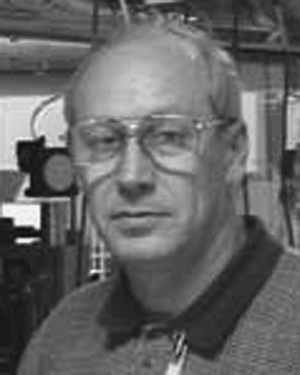 Igor V. Pogorelsky合作论文数Accelerator Test Facil, Brookhaven Natl Lab5
 William W. Graves合作论文数St. Louis5
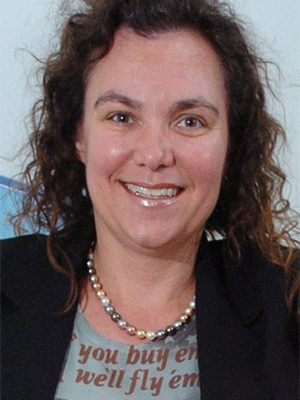 Sandra Gail Biedron合作论文数Department of Electrical and Computer Engineering, College of Engineering, University of New Mexico;Element Aero5Martin C Woodle合作论文数5
 James M. Hill合作论文数School of Medicine, Louisiana State University Health Sciences Center5
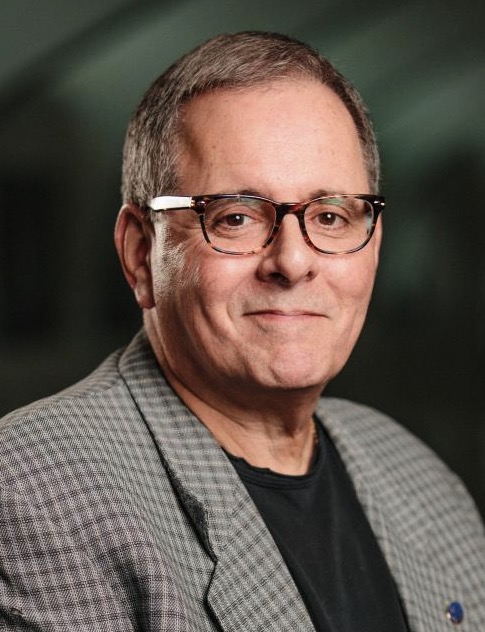 Louis Franklin DiMauro合作论文数Department of Physics, College of Arts and Sciences, The Ohio State University5Gp Le Sage合作论文数4Xingyue WANG (王兴越)合作论文数4
 Claudio Pellegrini合作论文数Physics & Astronomy Department, College of Physical Sciences, University of California at Los Angeles4R. Agustsson合作论文数3I. Vasserman合作论文数3Jm Wang合作论文数2G Le Sage合作论文数2S. Dierker合作论文数2J. Rose合作论文数2r biscardi合作论文数2H. Loos合作论文数2L. Solomon合作论文数2Sal Pjerov合作论文数2
 Dinh Nguyen合作论文数2Boris Vyacheslavovich Podobedov合作论文数2




