The advent of high-intensity, high-polarization electron beams led to significantly improved measurements of the ratio of the proton's charge to electric form factors, GEp/GMp. However, high-Q^2 measurements yielded significant disagreement with extractions based on unpolarized scattering, raising questions about the reliability of the measurements and consistency of the techniques. Jefferson Lab experiment E01-001 was designed to provide a high-precision extraction of GEp/GMp from unpolarized cross section measurements using a modified version of the Rosenbluth technique to allow for a more precise comparison with polarization data. Conventional Rosenbluth separations detect the scattered electron which requires comparisons of measurements with very different detected electron energy and rate for electrons at different angles. Our Super-Rosenbluth measurement detected the struck proton, rather than the scattered electron, to extract the cross section. This yielded a fixed momentum for the detected particle and dramatically reduced cross section variation, reducing rate- and momentum-dependent corrections and uncertainties. We measure the cross section vs angle with high relative precision, allowing for extremely precise extractions of GEp/GMp at Q^2 = 2.64, 3.20, and 4.10 GeV^2. Our results are consistent with traditional extractions but with much smaller corrections and systematic uncertainties, comparable to the uncertainties from polarization measurements. Our data confirm the discrepancy between Rosenbluth and polarization extractions of the proton form factor ratio using an improved Rosenbluth extraction that yields smaller and less-correlated uncertainties than typical of previous Rosenbluth extractions. We compare our results to calculations of two-photon exchange effects and find that the observed discrepancy can be relatively well explained by such effects.
We have measured the flavor dependence of multiplicities for π+ and π− production in semi-inclusive deep-inelastic scattering (SIDIS) on proton and deuteron to explore a possible charge symmetry violation in fragmentation functions. The experiment used an electron beam with energies of 10.2 and 10.6 GeV at Jefferson Lab and the Hall-C spectrometers. The electron kinematics spanned the range 0.3<x<0.6, 2<Q2<5.5 GeV2, and 2.2<W<3.2 GeV. The pion fractional momentum range was 0.3<z<0.7, and the transverse momentum range was 0<pT<0.25 GeV/c. Assuming factorization and allowing for isospin breaking, the results can be described by two “favored” and two “unfavored” effective low pT fragmentation functions that are flavor-dependent. We find each pair converges to a common flavor-independent fragmentation function at the highest W, where factorization is most applicable.
This White Paper presents an overview of the current status and future perspective of QCD research, based on the community inputs and scientific conclusions from the 2022 Hot and Cold QCD Town Meeting. We present the progress made in the last decade toward a deep understanding of both the fundamental structure of the sub-atomic matter of nucleon and nucleus in cold QCD, and the hot QCD matter in heavy ion collisions. We identify key questions of QCD research and plausible paths to obtaining answers to those questions in the near future, hence defining priorities of our research over the coming decades.
We report the $p+p$ and $p+d$ differential cross sections measured in the SeaQuest experiment for $J/\psi$ and $\psi\left(2S\right)$ production at 120 GeV beam energy covering the forward $x$-Feynman ($x_F$) range of $0.5 < x_F <0.9$. The measured cross sections are in good agreement with theoretical calculations based on the nonrelativistic QCD (NRQCD) using the long-distance matrix elements deduced from a recent global analysis of proton- and pion-induced charmonium production data. The $\sigma_{\psi\left(2S\right)} / \sigma_{J/\psi}$ cross section ratios are found to increase as $x_F$ increases, indicating that the $q \bar{q}$ annihilation process has larger contributions in the $\psi\left(2S\right)$ production than the $J/\psi$ production. The $\sigma_{pd}/2\sigma_{pp}$ cross section ratios are observed to be significantly different for the Drell-Yan process and $J/\psi$ production, reflecting their different production mechanisms. We find that the $\sigma_{pd}/2\sigma_{pp}$ ratios for $J/\psi$ production at the forward $x_F$ region are sensitive to the $\bar{d}/ \bar{u}$ flavor asymmetry of the proton sea, analogous to the Drell-Yan process. The transverse momentum ($p_T$) distributions for $J/\psi$ and $\psi\left(2S\right)$ production are also presented and compared with data collected at higher center-of-mass energies.
High-momentum two-particle correlations are a useful tool for studying jet-quenching effects in the quark-gluon plasma. Angular correlations between neutral-pion triggers and charged hadrons with transverse momenta in the range 4–12 GeV/c and 0.5–7 GeV/c, respectively, have been measured by the PHENIX experiment in 2014 for Au+Au collisions at √(s__NN)=200 GeV. Suppression is observed in the yield of high-momentum jet fragments opposite the trigger particle, which indicates jet suppression stemming from in-medium partonic energy loss, while enhancement is observed for low-momentum particles. The ratio and differences between the yield in Au+Au collisions and p+p collisions, I_AA and Δ_AA, as a function of the trigger-hadron azimuthal separation, Δϕ, are measured for the first time at the Relativistic Heavy Ion Collider. These results better quantify how the yield of low-p_T associated hadrons is enhanced at wide angle, which is crucial for studying energy loss as well as medium-response effects.
The PHENIX experiment measured the centrality dependence of two-pion Bose-Einstein correlation functions in root sNN = 200 GeV Au + Au collisions at the Relativistic Heavy Ion Collider at Brookhaven National Laboratory. The data are well represented by Levy-stable source distributions. The extracted source parameters are the correlation-strength parameter lambda, the Levy index of stability a, and the Levy-scale parameter R as a function of transverse mass m(T) and centrality. The lambda(m(T)) parameter is constant at larger values of m(T), but decreases as m(T) decreases. The Levy-scale parameter R(m(T)) decreases with mT and exhibits proportionality to the length scale of the nuclear overlap region. The Levy exponent alpha(m(T)) is independent of m(T) within uncertainties in each investigated centrality bin, but shows a clear centrality dependence. At all centralities, the Levy exponent a is significantly different from that of Gaussian ( alpha= 2) or Cauchy ( alpha = 1) source distributions. Comparisons to the predictions of Monte-Carlo simulations of resonance-decay chains show that, in all but the most peripheral centrality class (50%-60%), the obtained results are inconsistent with the measurements, unless a significant reduction of the in-medium mass of the eta meson is included. In each centrality class, the best value of the in-medium eta mass is compared to the mass of the. meson, as well as to several theoretical predictions that consider restoration of U-A(1) symmetry in hot hadronic matter.
Nucleon structure functions, as measured in lepton-nucleon scattering, have historically provided a critical observable in the study of partonic dynamics within the nucleon. However, at very large parton momenta it is both experimentally and theoretically challenging to extract parton distributions due to the probable onset of non-perturbative contributions and the unavailability of high precision data at critical kinematics. Extraction of the neutron structure and the d-quark distribution have been further challenging due to the necessity of applying nuclear corrections when utilizing scattering data from a deuteron target to extract free neutron structure. However, a program of experiments has been carried out recently at the energy-upgraded Jefferson Lab electron accelerator aimed at significantly reducing the nuclear correction uncertainties on the d-quark distribution function at large partonic momentum. This allows leveraging the vast body of deuterium data covering a large kinematic range to be utilized for d-quark parton distribution function extraction. We present new data from experiment E12-10-002 carried out in Jefferson Lab Hall C on the deuteron to proton cross-section ratio at large BJorken-x. These results significantly improve the precision of existing data, and provide a first look at the expected impact on quark distributions extracted from global parton distribution function fits.
High-momentum two-particle correlations are a useful tool for studying jet-quenching effects in the quarkgluon plasma. Angular correlations between neutral-pion triggers and charged hadrons with transverse momenta in the range 4-12 GeV/c and 0.5-7 GeV/c, respectively, have been measured by the PHENIX experiment in 2014 for Au + Au collisions at root sNN = 200 GeV. Suppression is observed in the yield of high-momentum jet fragments opposite the trigger particle, which indicates jet suppression stemming from in-medium partonic energy loss, while enhancement is observed for low-momentum particles. The ratio and differences between the yield in Au + Au collisions and p + p collisions, I-AA and Delta(AA), as a function of the trigger-hadron azimuthal separation, Delta phi, are measured for the first time at the BNL Relativistic Heavy Ion Collider. These results better quantify how the yield of low-pT associated hadrons is enhanced at wide angle, which is crucial for studying energy loss as well as medium-response effects.
We report the p + p and p + d differential cross sections measured in the SeaQuest experiment for J/psi and psi(2S) production at 120GeV beam energy covering the forward x-Feynman (x(F)) range of 0.5 < x(F) < 0.9. The measured cross sections are in good agreement with theoretical calculations based on the nonrelativistic QCD (NRQCD) using the long-distance matrix elements deduced from a recent global analysis of proton- and pion-induced charmonium production data. The sigma(psi(2S))/sigma(J/psi) cross section ratios are found to increase as x(F) increases, indicating that the q (q) over bar. annihilation process has larger contributions in the psi(2S) production than the J/psi production. The sigma(pd)/2 sigma(pp) cross section ratios are observed to be significantly different for the DrellYan process and J/psi production, reflecting their different production mechanisms. We find that the sigma(pd)/2 sigma(pp) ratios for J/psi production at the forward x(F) region are sensitive to the (d) over bar/(u) over bar flavor asymmetry of the proton sea, analogous to the Drell-Yan process. The transverse momentum (p(T)) distributions for J/psi and psi(2S) production are also presented and compared with data collected at higher center-of-mass energies.
The nuclear dependence of the inclusive inelastic electron scattering cross section (the EMC effect) has been measured for the first time in B10 and B11. Previous measurements of the EMC effect in A≤12 nuclei showed an unexpected nuclear dependence; B10 and B11 were measured to explore the EMC effect in this region in more detail. Results are presented for Be9, B10, B11, and C12 at an incident beam energy of 10.6 GeV. The EMC effect in the boron isotopes was found to be similar to that for Be9 and C12, yielding almost no nuclear dependence in the EMC effect in the range A=4–12. This represents important new data supporting the hypothesis that the EMC effect depends primarily on the local nuclear environment due to the cluster structure of these nuclei.Received 8 July 2022Revised 21 April 2023Accepted 17 July 2023DOI:https://doi.org/10.1103/PhysRevC.108.035201©2023 American Physical SocietyPhysics Subject Headings (PhySH)Research AreasLepton induced nuclear reactionsQCD in nuclear reactionsProperties6 ≤ A ≤ 19TechniquesParticle sources & targetsSpectrometers & spectroscopic techniquesNuclear Physics
A. Adare,12 C. Aidala,39,45 N. N. Ajitanand,63,* Y. Akiba,57,58,† R. Akimoto,11 J. Alexander,63 M. Alfred,24 H. Al-Ta’ani,52 A. Angerami,13 K. Aoki,32,57 N. Apadula,29,64 Y. Aramaki,11,57 H. Asano,35,57 E. C. Aschenauer,7 E. T. Atomssa,64 T. C. Awes,54 B. Azmoun,7 V. Babintsev,25 A. Bagoly,17 M. Bai,6 B. Bannier,64 K. N. Barish,8 B. Bassalleck,51 S. Bathe,5,58 V. Baublis,56 S. Baumgart,57 A. Bazilevsky,7 R. Belmont,12,69 A. Berdnikov,60 Y. Berdnikov,60 D. S. Blau,34,50 M. Boer,39 J. S. Bok,51,52,72 K. Boyle,58 M. L. Brooks,39 J. Bryslawskyj,5,8 H. Buesching,7 V. Bumazhnov,25 S. Butsyk,51 S. Campbell,13,64 V. Canoa Roman,64 P. Castera,64 C.-H. Chen,58,64 C. Y. Chi,13 M. Chiu,7 I. J. Choi,26 J. B. Choi,10,* S. Choi,62 R. K. Choudhury,4 P. Christiansen,41 T. Chujo,68 O. Chvala,8 V. Cianciolo,54 Z. Citron,64,70 B. A. Cole,13 M. Connors,21,58,64 M. Csanád,17 T. Csörgő,18,71 S. Dairaku,35,57 T. W. Danley,53 A. Datta,44 M. S. Daugherity,1 G. David,7,64 K. DeBlasio,51 K. Dehmelt,64 A. Denisov,25 A. Deshpande,58,64 E. J. Desmond,7 K. V. Dharmawardane,52 O. Dietzsch,61 L. Ding,29 A. Dion,29,64 J. H. Do,72 M. Donadelli,61 L. D’Orazio,43 O. Drapier,36 A. Drees,64 K. A. Drees,6 J. M. Durham,39,64 A. Durum,25 S. Edwards,6 Y. V. Efremenko,54 T. Engelmore,13 A. Enokizono,54,57,59 S. Esumi,68 K. O. Eyser,7,8 B. Fadem,46 W. Fan,64 N. Feege,64 D. E. Fields,51 M. Finger,9 M. Finger, Jr.,9 F. Fleuret,36 S. L. Fokin,34 J. E. Frantz,53 A. Franz,7 A. D. Frawley,20 Y. Fukao,57 Y. Fukuda,68 T. Fusayasu,48 K. Gainey,1 C. Gal,64 P. Gallus,14 P. Garg,3,64 A. Garishvili,66 I. Garishvili,38 H. Ge,64 A. Glenn,38 X. Gong,63 M. Gonin,36 Y. Goto,57,58 R. Granier de Cassagnac,36 N. Grau,2 S. V. Greene,69 M. Grosse Perdekamp,26 T. Gunji,11 L. Guo,39 H.-Å. Gustafsson,41,* T. Hachiya,57,58 J. S. Haggerty,7 K. I. Hahn,19 H. Hamagaki,11 S. Y. Han,19 J. Hanks,13,64 S. Hasegawa,30 T. O. S. Haseler,21 K. Hashimoto,57,59 E. Haslum,41 R. Hayano,11 X. He,21 T. K. Hemmick,64 T. Hester,8 J. C. Hill,29 K. Hill,12 A. Hodges,21 R. S. Hollis,8 K. Homma,23 B. Hong,33 T. Horaguchi,68 Y. Hori,11 T. Hoshino,23 N. Hotvedt,29 J. Huang,7 S. Huang,69 T. Ichihara,57,58 H. Iinuma,32 Y. Ikeda,57,68 J. Imrek,16 M. Inaba,68 A. Iordanova,8 D. Isenhower,1 M. Issah,69 D. Ivanishchev,56 B. V. Jacak,64 M. Javani,21 Z. Ji,64 J. Jia,7,63 X. Jiang,39 B. M. Johnson,7,21 K. S. Joo,47 V. Jorjadze,64 D. Jouan,55 D. S. Jumper,26 J. Kamin,64 S. Kaneti,64 B. H. Kang,22 J. H. Kang,72 J. S. Kang,22 J. Kapustinsky,39 K. Karatsu,35,57 S. Karthas,64 M. Kasai,57,59 G. Kasza,17,18 D. Kawall,44,58 A. V. Kazantsev,34 T. Kempel,29 V. Khachatryan,64 A. Khanzadeev,56 K. M. Kijima,23 B. I. Kim,33 C. Kim,8,33 D. J. Kim,31 E.-J. Kim,10 H. J. Kim,72 K.-B. Kim,10 M. Kim,62 M. H. Kim,33 Y.-J. Kim,26 Y. K. Kim,22 D. Kincses,17 E. Kinney,12 Á. Kiss,17 E. Kistenev,7 J. Klatsky,20 D. Kleinjan,8 P. Kline,64 T. Koblesky,12 Y. Komatsu,11,32 B. Komkov,56 J. Koster,26 D. Kotchetkov,53 D. Kotov,56,60 A. Král,14 F. Krizek,31 S. Kudo,68 G. J. Kunde,39 B. Kurgyis,17 K. Kurita,57,59 M. Kurosawa,57,58 Y. Kwon,72 G. S. Kyle,52 R. Lacey,63 Y. S. Lai,13 J. G. Lajoie,29 A. Lebedev,29 B. Lee,22 D. M. Lee,39 J. Lee,19,65 K. B. Lee,33 K. S. Lee,33 S. H. Lee,29,64 S. R. Lee,10 M. J. Leitch,39 M. A. L. Leite,61 M. Leitgab,26 Y. H. Leung,64 B. Lewis,64 N. A. Lewis,45 X. Li,39 S. H. Lim,39,72 L. A. Linden Levy,12 M. X. Liu,39 S. Lökös,17,18 B. Love,69 D. Lynch,7 C. F. Maguire,69 Y. I. Makdisi,6 M. Makek,70,73 A. Manion,64 V. I. Manko,34 E. Mannel,7,13 H. Masuda,59 S. Masumoto,11,32 M. McCumber,12,39 P. L. McGaughey,39 D. McGlinchey,12,20,39 C. McKinney,26 M. Mendoza,8 B. Meredith,26 W. J. Metzger,18 Y. Miake,68 T. Mibe,32 A. C. Mignerey,43 D. E. Mihalik,64 A. Milov,70 D. K. Mishra,4 J. T. Mitchell,7 G. Mitsuka,58 Y. Miyachi,57,67 S. Miyasaka,57,67 A. K. Mohanty,4 S. Mohapatra,63 H. J. Moon,47 T. Moon,72 D. P. Morrison,7 S. I. Morrow,69 S. Motschwiller,46 T. V. Moukhanova,34 T. Murakami,35,57 J. Murata,57,59 A. Mwai,63 T. Nagae,35 K. Nagai,67 S. Nagamiya,32,57 K. Nagashima,23 J. L. Nagle,12 M. I. Nagy,17,71 I. Nakagawa,57,58 H. Nakagomi,57,68 Y. Nakamiya,23 K. R. Nakamura,35,57 T. Nakamura,57 K. Nakano,57,67 C. Nattrass,66 A. Nederlof,46 M. Nihashi,23,57 R. Nouicer,7,58 T. Novák,18,71 N. Novitzky,31,64 A. S. Nyanin,34 E. O’Brien,7 C. A. Ogilvie,29 K. Okada,58 J. D. Orjuela Koop,12 J. D. Osborn,45 A. Oskarsson,41 M. Ouchida,23,57 K. Ozawa,11,32,68 R. Pak,7 V. Pantuev,27 V. Papavassiliou,52 B. H. Park,22 I. H. Park,19,65 J. S. Park,62 S. Park,57,62,64 S. K. Park,33 S. F. Pate,52 L. Patel,21 M. Patel,29 H. Pei,29 J.-C. Peng,26 W. Peng,69 H. Pereira,15 D. V. Perepelitsa,7,12,13 G. D. N. Perera,52 D.Yu. Peressounko,34 C. E. PerezLara,64 R. Petti,7,64 C. Pinkenburg,7 R. P. Pisani,7 M. Proissl,64 A. Pun,53 M. L. Purschke,7 H. Qu,1 P. V. Radzevich,60 J. Rak,31 I. Ravinovich,70 K. F. Read,54,66 D. Reynolds,63 V. Riabov,50,56 Y. Riabov,56,60 E. Richardson,43 D. Richford,5 T. Rinn,29 D. Roach,69 G. Roche,40,* S. D. Rolnick,8 M. Rosati,29 Z. Rowan,5 J. Runchey,29 B. Sahlmueller,64 N. Saito,32 T. Sakaguchi,7 H. Sako,30 V. Samsonov,50,56 M. Sano,68 M. Sarsour,21 K. Sato,68 S. Sato,30 S. Sawada,32 B. K. Schmoll,66 K. Sedgwick,8 R. Seidl,57,58 A. Sen,21,29,66 R. Seto,8 A. Sexton,43 D. Sharma,64,70 I. Shein,25 T.-A. Shibata,57,67 K. Shigaki,23 M. Shimomura,29,49,68 K. Shoji,35,57 P. Shukla,4 A. Sickles,7,26 C. L. Silva,29,39 D. Silvermyr,41,54 K. S. Sim,33 B. K. Singh,3 C. P. Singh,3 V. Singh,3 M. J. Skoby,45 M. Slunečka,9 R. A. Soltz,38 W. E. Sondheim,39 S. P. Sorensen,66 I. V. Sourikova,7 P. W. Stankus,54 E. Stenlund,41 M. Stepanov,44,* A. Ster,71 S. P. Stoll,7 T. Sugitate,23 A. Sukhanov,7 J. Sun,64 J. Sziklai,71 E. M. Takagui,61 A. Takahara,11 A Takeda,49 A. Taketani,57,58 Y. Tanaka,48 S. Taneja,64 K. Tanida,30,58,62 M. J. Tannenbaum,7 S. Tarafdar,3,69 A. Taranenko,50,63 G. Tarnai,16 E. Tennant,52 H. Themann,64 R. Tieulent,42 A. Timilsina,29 T. Todoroki,57,68 L. Tomášek,28 M. Tomášek,14,28 H. Torii,23 C. L. Towell,1 R. S. Towell,1 I. Tserruya,70 Y. Tsuchimoto,11 T. Tsuji,11 Y. Ueda,23 B. Ujvari,16 C. Vale,7 H. W. van Hecke,39 M. Vargyas,17,71 S. Vazquez-Carson,12 E. Vazquez-Zambrano,13 A. Veicht,13 J. Velkovska,69 R. Vértesi,71 M. Virius,14 A. Vossen,26 V. Vrba,14,28 E. Vznuzdaev,56 X. R. Wang,52,58 Z. Wang,5 D. Watanabe,23 K. Watanabe,68 Y. Watanabe,57,58 Y. S. Watanabe,11 F. Wei,29,52 R. Wei,63 S. N. White,7 D. Winter,13 S. Wolin,26 C. L. Woody,7 M. Wysocki,12,54 B. Xia,53 C. Xu,52 Q. Xu,69
Quasi-elastic scattering on $^{12}$C$(e,e'p)$ was measured in Hall C at Jefferson Lab for space-like 4-momentum transfer squared $Q^2$ in the range of 8--14.2\,(GeV/$c$)$^2$ with proton momenta up to 8.3\,GeV/$c$. The experiment was carried out in the upgraded Hall C at Jefferson Lab. It used the existing high momentum spectrometer and the new super high momentum spectrometer to detect the scattered electrons and protons in coincidence. The nuclear transparency was extracted as the ratio of the measured yield to the yield calculated in the plane wave impulse approximation. Additionally, the transparency of the $1s_{1/2}$ and $1p_{3/2}$ shell protons in $^{12}$C was extracted, and the asymmetry of the missing momentum distribution was examined for hints of the quantum chromodynamics prediction of Color Transparency. All of these results were found to be consistent with traditional nuclear physics and inconsistent with the onset of Color Transparency.
Received 2 October 2023DOI:https://doi.org/10.1103/PhysRevC.108.049905©2023 American Physical SocietyPhysics Subject Headings (PhySH)Research AreasParticle correlations & fluctuationsQuark-gluon plasmaRelativistic heavy-ion collisionsPhysical SystemsBose-Einstein condensatesPionsNuclear Physics
Quasielastic scattering on 12C(e, e'p) was measured in Hall C at Jefferson Lab for spacelike four-momentum transfer squared Q2 in the range of 8-14.2 (GeV/c)2 with proton momenta up to 8.3 GeV/c. The experiment was carried out in the upgraded Hall C at Jefferson Lab. It used the existing high-momentum spectrometer and the new super-high-momentum spectrometer to detect the scattered electrons and protons in coincidence. The nuclear transparency was extracted as the ratio of the measured yield to the yield calculated in the plane wave impulse approximation. Additionally, the transparency of the 1s1/2 and 1p3/2 shell protons in 12C was extracted, and the asymmetry of the missing momentum distribution was examined for hints of the quantum chromodynamics prediction of color transparency. All of these results were found to be consistent with traditional nuclear physics and inconsistent with the onset of color transparency.
The measurement of direct photons from Au$+$Au collisions at $\sqrt{s_{_{NN}}}=39$ and 62.4 GeV in the transverse-momentum range $0.4<p_T<3$ Gev/$c$ is presented by the PHENIX collaboration at the Relativistic Heavy Ion Collider. A significant direct-photon yield is observed in both collision systems. A universal scaling is observed when the direct-photon $p_T$ spectra for different center-of-mass energies and for different centrality selections at $\sqrt{s_{_{NN}}}=62.4$ GeV is scaled with $(dN_{\rm ch}/d\eta)^{\alpha}$ for $\alpha=1.21{\pm}0.04$. This scaling also holds true for direct-photon spectra from Au$+$Au collisions at $\sqrt{s_{_{NN}}}=200$ GeV measured earlier by PHENIX, as well as the spectra from Pb$+$Pb at $\sqrt{s_{_{NN}}}=2760$ GeV published by ALICE. The scaling power $\alpha$ seems to be independent of $p_T$, center of mass energy, and collision centrality. The spectra from different collision energies have a similar shape up to $p_T$ of 2 GeV/$c$. The spectra have a local inverse slope $T_{\rm eff}$ increasing with $p_T$ of $0.174\pm0.018$ GeV/$c$ in the range $0.4<p_T<1.3$ GeV/$c$ and increasing to $0.289\pm0.024$ GeV/$c$ for $0.9<p_T<2.1$ GeV/$c$. The observed similarity of low-$p_T$ direct-photon production from $\sqrt{s_{_{NN}}}= 39$ to 2760 GeV suggests a common source of direct photons for the different collision energies and event centrality selections, and suggests a comparable space-time evolution of direct-photon emission.
The nuclear dependence of the inclusive inelastic electron scattering cross section (the EMC effect) has been measured for the first time in 10B and 11B. Previous measurements of the EMC effect in A 12 nuclei showed an unexpected nuclear dependence; 10B and 11B were measured to explore the EMC effect in this region in more detail. Results are presented for 9Be, 10B, 11B, and 12C at an incident beam energy of 10.6 GeV. The EMC effect in the boron isotopes was found to be similar to that for 9Be and 12C, yielding almost no nuclear dependence in the EMC effect in the range A = 4-12. This represents important new data supporting the hypothesis that the EMC effect depends primarily on the local nuclear environment due to the cluster structure of these nuclei.
and GRETINA a 1{pi} detector is under construction. However, the momentum in developing this technology to its full potential must continue towards GRETA, a full 4{pi} calorimeter. GRETA will carry {gamma}-ray spectroscopy into the next generation where it will be needed to fully exploit the science opportunities at radioactive beam facilities and increase the reach of stable beam facilities. In addition, {gamma}-ray tracking technology will have important applications for science, medicine, and homeland security.
We report on a detailed study of longitudinal strength in the nucleon resonance region, presenting new results from inclusive electron-proton cross sections measured at Jefferson Lab Hall C in the four-momentum transfer range 0.2 < Q^2 < 5.5 GeV^2. The data have been used to accurately perform 167 Rosenbluth-type longitudinal / transverse separations. The precision R = sigma_L / sigma_T data are presented here, along with the first separate values of the inelastic structure functions F_1 and F_L in this regime. The resonance longitudinal component is found to be significant, both in magnitude and in the existence of defined mass peaks. Additionally, quark-hadron duality is here observed above Q^2 = 1 GeV^2 in the separated structure functions independently.
The PHENIX collaboration presents a systematic study of $\pi^0$ production from $p$$+$$p$, $p$$+$Al, $p$$+$Au, $d$$+$Au, and $^{3}$He$+$Au collisions at $\sqrt{s_{_{NN}}}=200$ GeV. Measurements were performed with different centrality selections as well as the total inelastic, 0%--100%, selection for all collision systems. For 0%--100% collisions, the nuclear modification factors, $R_{xA}$, are consistent with unity for $p_T$ above 8 GeV/$c$, but exhibit an enhancement in peripheral collisions and a suppression in central collisions. The enhancement and suppression characteristics are similar for all systems for the same centrality class. It is shown that for high-$p_T$-$\pi^0$ production, the nucleons in the $d$ and $^3$He interact mostly independently with the Au nucleus and that the counter intuitive centrality dependence is likely due to a physical correlation between multiplicity and the presence of a hard scattering process. These observations disfavor models where parton energy loss has a significant contribution to nuclear modifications in small systems. Nuclear modifications at lower $p_T$ resemble the Cronin effect -- an increase followed by a peak in central or inelastic collisions and a plateau in peripheral collisions. The peak height has a characteristic ordering by system size as $p$$+$Au $>$ $d$$+$Au $>$ $^{3}$He$+$Au $>$ $p$$+$Al. For collisions with Au ions, current calculations based on initial state cold nuclear matter effects result in the opposite order, suggesting the presence of other contributions to nuclear modifications, in particular at lower $p_T$.
A. Adare, C. Aidala, 41 N.N. Ajitanand, Y. Akiba, 53 R. Akimoto, H. Al-Ta’ani, J. Alexander, A. Angerami, K. Aoki, N. Apadula, Y. Aramaki, 52 H. Asano, 52 E.C. Aschenauer, E.T. Atomssa, T.C. Awes, B. Azmoun, V. Babintsev, M. Bai, B. Bannier, K.N. Barish, B. Bassalleck, S. Bathe, 53 V. Baublis, S. Baumgart, A. Bazilevsky, R. Belmont, A. Berdnikov, Y. Berdnikov, X. Bing, D.S. Blau, J.S. Bok, K. Boyle, M.L. Brooks, H. Buesching, V. Bumazhnov, S. Butsyk, S. Campbell, P. Castera, C.-H. Chen, C.Y. Chi, M. Chiu, I.J. Choi, J.B. Choi, S. Choi, R.K. Choudhury, P. Christiansen, T. Chujo, O. Chvala, V. Cianciolo, Z. Citron, B.A. Cole, M. Connors, M. Csanád, T. Csörgő, S. Dairaku, 52 A. Datta, M.S. Daugherity, G. David, A. Denisov, A. Deshpande, 59 E.J. Desmond, K.V. Dharmawardane, O. Dietzsch, L. Ding, A. Dion, 59 M. Donadelli, O. Drapier, A. Drees, K.A. Drees, J.M. Durham, 59 A. Durum, L. D’Orazio, S. Edwards, Y.V. Efremenko, T. Engelmore, A. Enokizono, S. Esumi, K.O. Eyser, B. Fadem, D.E. Fields, M. Finger, M. Finger, Jr., F. Fleuret, S.L. Fokin, J.E. Frantz, A. Franz, A.D. Frawley, Y. Fukao, T. Fusayasu, K. Gainey, C. Gal, A. Garishvili, I. Garishvili, A. Glenn, X. Gong, M. Gonin, Y. Goto, 53 R. Granier de Cassagnac, N. Grau, S.V. Greene, M. Grosse Perdekamp, T. Gunji, L. Guo, H.-Å. Gustafsson, ∗ T. Hachiya, J.S. Haggerty, K.I. Hahn, H. Hamagaki, J. Hanks, K. Hashimoto, 54 E. Haslum, R. Hayano, X. He, T.K. Hemmick, T. Hester, J.C. Hill, R.S. Hollis, K. Homma, B. Hong, T. Horaguchi, Y. Hori, S. Huang, T. Ichihara, 53 H. Iinuma, Y. Ikeda, 62 J. Imrek, M. Inaba, A. Iordanova, D. Isenhower, M. Issah, D. Ivanishchev, B.V. Jacak, M. Javani, J. Jia, 58 X. Jiang, B.M. Johnson, K.S. Joo, D. Jouan, D.S. Jumper, J. Kamin, S. Kaneti, B.H. Kang, J.H. Kang, J.S. Kang, J. Kapustinsky, K. Karatsu, 52 M. Kasai, 54 D. Kawall, 53 A.V. Kazantsev, T. Kempel, A. Khanzadeev, K.M. Kijima, B.I. Kim, C. Kim, D.J. Kim, E.-J. Kim, H.J. Kim, K.-B. Kim, Y.-J. Kim, Y.K. Kim, E. Kinney, Á. Kiss, E. Kistenev, J. Klatsky, D. Kleinjan, P. Kline, Y. Komatsu, B. Komkov, J. Koster, D. Kotchetkov, D. Kotov, 55 A. Král, F. Krizek, G.J. Kunde, K. Kurita, 54 M. Kurosawa, Y. Kwon, G.S. Kyle, R. Lacey, Y.S. Lai, J.G. Lajoie, A. Lebedev, B. Lee, D.M. Lee, J. Lee, K.B. Lee, K.S. Lee, S.H. Lee, S.R. Lee, M.J. Leitch, M.A.L. Leite, M. Leitgab, B. Lewis, S.H. Lim, L.A. Linden Levy, M.X. Liu, B. Love, C.F. Maguire, Y.I. Makdisi, M. Makek, 67 A. Manion, V.I. Manko, E. Mannel, S. Masumoto, M. McCumber, P.L. McGaughey, D. McGlinchey, 19 C. McKinney, M. Mendoza, B. Meredith, Y. Miake, T. Mibe, A.C. Mignerey, A. Milov, D.K. Mishra, J.T. Mitchell, Y. Miyachi, 61 S. Miyasaka, 61 A.K. Mohanty, H.J. Moon, D.P. Morrison, † S. Motschwiller, T.V. Moukhanova, T. Murakami, 52 J. Murata, 54 T. Nagae, S. Nagamiya, 52 J.L. Nagle, ‡ M.I. Nagy, I. Nakagawa, 53 Y. Nakamiya, K.R. Nakamura, 52 T. Nakamura, K. Nakano, 61 C. Nattrass, A. Nederlof, M. Nihashi, 52 R. Nouicer, 53 N. Novitzky, A.S. Nyanin, E. O’Brien, C.A. Ogilvie, K. Okada, A. Oskarsson, M. Ouchida, 52 K. Ozawa, R. Pak, V. Pantuev, V. Papavassiliou, B.H. Park, I.H. Park, S.K. Park, S.F. Pate, L. Patel, H. Pei, J.-C. Peng, H. Pereira, D.Yu. Peressounko, R. Petti, 59 C. Pinkenburg, R.P. Pisani, M. Proissl, M.L. Purschke, H. Qu, J. Rak, I. Ravinovich, K.F. Read, 60 D. Reynolds, V. Riabov, Y. Riabov, E. Richardson, N. Riveli, D. Roach, G. Roche, ∗ S.D. Rolnick, M. Rosati, B. Sahlmueller, N. Saito, T. Sakaguchi, V. Samsonov, 51 M. Sano, M. Sarsour, S. Sawada, K. Sedgwick, R. Seidl, 53 A. Sen, R. Seto, D. Sharma, I. Shein, T.-A. Shibata, 61 K. Shigaki, M. Shimomura, K. Shoji, 52 P. Shukla, A. Sickles, C.L. Silva, D. Silvermyr, K.S. Sim, B.K. Singh, C.P. Singh, V. Singh, M. Slunečka, R.A. Soltz, W.E. Sondheim, S.P. Sorensen, M. Soumya, I.V. Sourikova, P.W. Stankus, E. Stenlund, M. Stepanov, A. Ster, S.P. Stoll, T. Sugitate, A. Sukhanov, J. Sun, J. Sziklai, E.M. Takagui, A. Takahara, A. Taketani, 53 Y. Tanaka, S. Taneja, K. Tanida, 57 M.J. Tannenbaum, S. Tarafdar, A. Taranenko, 58 E. Tennant, H. Themann, T. Todoroki, 62 L. Tomášek, M. Tomášek, H. Torii, R.S. Towell, I. Tserruya, Y. Tsuchimoto, T. Tsuji, C. Vale, H.W. van Hecke, M. Vargyas, E. Vazquez-Zambrano, A. Veicht, J. Velkovska, R. Vértesi, M. Virius, A. Vossen, V. Vrba, 26 E. Vznuzdaev, X.R. Wang, D. Watanabe, K. Watanabe, Y. Watanabe, 53 Y.S. Watanabe, F. Wei, R. Wei, S. Whitaker, S.N. White, D. Winter, S. Wolin, C.L. Woody, M. Wysocki, Y.L. Yamaguchi, 52 R. Yang, A. Yanovich, J. Ying, S. Yokkaichi, 53 Z. You, I. Younus, 46 I.E. Yushmanov, W.A. Zajc, and A. Zelenski
 S. F. Pate合作论文数287T.-A. Shibata合作论文数271A. Glenn合作论文数269Abhay Deshpande合作论文数Brookhaven National Laboratory269V. Papavassiliou合作论文数269Olivier Drapier合作论文数CNRS267
 Bernd Bassalleck合作论文数Department of Physics and Astronomy, The University of New Mexico267
 Yasuyuki Akiba合作论文数RHIC Physics Research Laboratory, Nishina Center for Accelerator-Based Science, RIKEN267S. Bathe合作论文数266S. Esumi合作论文数266P. L. McGaughey合作论文数Los Alamos National Laboratory266
 Mate Csanad合作论文数Faculty of Natural Sciences, Eötvös Loránd University;Department of Atomic Physics, Eötvös Loránd University266
 Tatsuya Chujo合作论文数Institute of Physics, University of Tsukuba;Division of Physics, Faculty of Pure and Applied Sciences, University of Tsukuba266O. Dietzsch合作论文数266
 Byung-Sik Hong合作论文数Department of Physics, College of Science, Korea University265
 Kazuyoshi Kurita (栗田和好)合作论文数Department of Physics, College of Science, Rikkyo University;Center for Development and Support of Higher Education, Rikkyo University265
 Christine A. Aidala合作论文数Department of Physics, University of Michigan265T. Ichihara合作论文数263A. Bazilevsky合作论文数262Walter Sondheim合作论文数Los Alamos National Laboratory262F. Ellinghaus合作论文数262
 Donald Isenhower合作论文数Department of Engineering and Physics, Abilene Christian University261
 Ryugo Hayano合作论文数University of Tokyo261M. Grosse Perdekamp合作论文数Department of Physics, University of California261
 Achim Franz合作论文数Physics Department, Brookhaven National Laboratory260A. S. Nyanin合作论文数259
 Jen-Chieh Peng合作论文数Department of Physics, The Grainger College of Engineering, University of Illinois Urbana-Champaign259
 Denis Jouan合作论文数French National Centre for Scientific Research, CNRS258
 Yasuo Miake (三明康郎)合作论文数Institute of Physics, University of Tsukuba;Department of Pure and Applied Sciences, University of Tsukuba258Terry Awes合作论文数Oak Ridge National Laboratory258G. Roche合作论文数257
 Hideki Hamagaki (浜垣秀樹)合作论文数Division of Fundamental Science, Institute for Innovative Science and Technology, Nagasaki Institute of Applied Science257Anders Oskarsson合作论文数Division of Particle and Nuclear Physics, Department of Physics, Faculty of Science, Lund University257
 Mickey Chiu合作论文数Physics Department, Brookhaven National Laboratory;NEXO;PHENIX256Shoji Nagamiya合作论文数256
 John Haggerty合作论文数Physics Department, Brookhaven National Laboratory255
 Christopher Pinkenburg合作论文数Physics Department, Brookhaven National Laboratory255H. Pereira合作论文数255
 Melvin L. Brooks合作论文数Los Alamos National Laboratory254
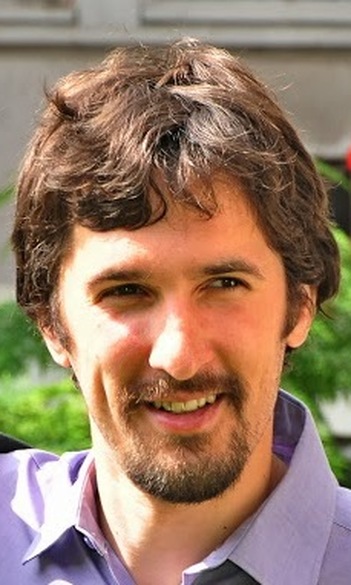 Márton Nagy合作论文数Department of Atomic Physics, ELTE Institute of Physics and Astronomy, Faculty of Natural Sciences, Eötvös Loránd University254
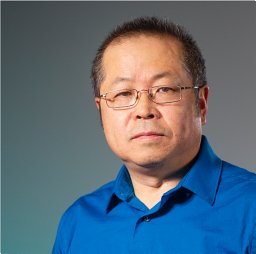 M. X. Liu合作论文数los alamos national laboratory254
 Axel Drees合作论文数Department of Physics and Astronomy, Stony Brook University;College of Arts and Sciences, Stony Brook University254
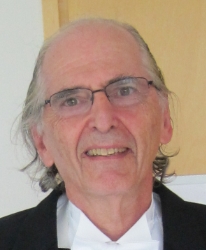 Michael J. Tannenbaum合作论文数Physics Department, Brookhaven National Laboratory253
 Marzia Rosati合作论文数Department of Physics and Astronomy, Iowa State University253V. Bumazhnov合作论文数252
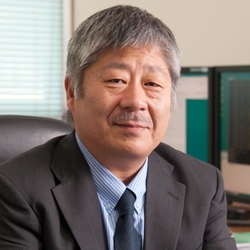 Toru Sugitate (杉立徹)合作论文数Hiroshima University252B. Komkov合作论文数252Vv Baublis合作论文数252Y. Fukao合作论文数251




