Dans un premier temps, nous realisons un comparatif des textes reglementaires relatifs aux epandages de matieres sur les terres agricoles. Puis, nous presentons Sillage et Sillage Teledeclaration, les deux outils informatiques developpes pour les services de police de l’environnement afin de faciliter le suivi et la supervision de ces pratiques lorsqu’elles sont reglementees au titre du Code de l’environnement. Sillage gere les donnees relatives aux plans d’epandage et Sillage Teledeclaration integre les donnees d’azote associees aux epandages de matieres dans une exploitation agricole. Ces outils ont deux vocations distinctes. Sillage aide a la prevention de la pollution des sols agricoles par des elements traces metalliques ou organiques alors que Sillage Teledeclaration est un outil de lutte contre la pollution des eaux par les nitrates. Ces deux outils s’integrent dans le systeme national d’information sur l’eau.
In order for nursing to continue to advance as a profession, a continual development of research is needed. However, many nurses who are required, as part of their professional performance, to be involved in conducting research projects are at a loss regarding how to develop an ongoing program of research. This creates a problem for the continual development of nursing science. Thus, the purpose of this editorial is to provide some basic guidelines that nurse researchers need to consider as they journey along their paths of research interest. A program of research can be defined as an area of concern that addresses an important health issue that is relevant to the public. As one selects and develops a program of research it must be: a topic to which the researcher has passion and commitment; designed to build on prior knowledge; related to the improvement of health care outcomes; grounded in theory; and, linked to appropriate and rigorous research methods. A program of nursing research may be generated from several sources, such as one’s: review of the literature; clinical practice; life experiences; and/or belief system. Any one or a combination of these sources can prove helpful in creating a program of research. However, one needs to examine what is truly of interest, to him/ her, so that interest can and will be sustained over time. Creating a program of research is not a linear process, but one that involves repetition. A researcher may see new knowledge being created in small increments or quantum leaps. Whatever the process, the outcomes of each component of a program of research may be somewhat unpredictable. However, a nurse researcher sustains his/her program of research by building on his/her prior research, as well as generating new knowledge for nursing science. According to Hulley and colleagues,1 there are five aspects of a program of research that must exist, which include: feasibility, interest, innovation, ethics, and relevance. Regarding feasibility, a researcher needs to ask: “Is the research program feasible?” and “Can the research program be accomplished?” Questions to ask, regarding interest and innovation, would be: “Is the program of research of interest to me and others?” and “Is the program of research innovative/novel?” Questions related to ethics and relevance, that a researcher should ask himself/ herself include: “Is the research ethical and do the risks outweigh the benefits for participants?” and ”Is the research program relevant to nursing, health care in general, patient outcomes, cost, and other relevant variables?” If one’s program of research is to be sustainable, the answers to each of these questions need to be a resounding “yes.” Finally, there are general approaches2 that a nurse researcher needs to take into consideration when developing a program of research, including: 1. Having a passion for the area of research interest. In other words, a researcher must understand, in detail, all aspects of the area in which he/she intends to have a program of research, as well as have a passion for the work involved. Otherwise, the program of research will not be sustained and the researcher will find the work unpleasant and laborious. 2 Pacific Rim Int J Nurs Res • January - March 2013 2. Ensuring a high public health significance of the area of interest. This means that a researcher’s area of interest must have significance to the public that will be served by the findings. If the area of interest has little significance to the health of the public, the researcher may find difficulty in obtaining funding. 3. Knowing the literature related to the area of interest. This involves an in-depth, continuous, and up-todate understanding of the literature published on the researcher’s area of interest. A good researcher always will read the most current publications related to his/her program of study. 4. Understanding clinical practice in the area of interest. This means the nurse researcher must be up-to-date on all aspects of health care delivery related to his/her program of research. As new research findings are published, a scholarly researcher will be aware of how these findings may or may not relate to his/her program of research. 5. Understanding the potential outcomes of the program of research. Understanding the potential outcomes of one’s program of research can help to strengthen each study that is developed in the research program. Outcomes can have a direct effect on research funding, as well as how well the research findings are received by other scholars in the area of interest. 6. Building the program of research from study to study. Each study needs to build, in some way, on previous work the researcher has done. Most studies open up new questions and avenues for examination. These questions and avenues can assist in developing a researcher’s next study. 7. Working with interdisciplinary colleagues. Working with colleagues in other fields can assist in strengthening one’s program of research. Using colleagues from other disciplines can help to broaden the various aspects of interest that can be addressed in a single research study. In addition, scholars from various disciplines may look at an area of interest in slightly different ways. 8. Publishing research findings. A researcher always must publish, as soon as possible, the findings of a study. No researcher should wait months or years to begin to prepare a manuscript for submission to a journal. Timeliness is of essence! No one will be interested in old, dated information. In addition, if the research findings are not published, no one will be able to apply the outcomes of the research. Developing a program of research is not an easy task, especially for the novice researcher. However, it is a necessary task for nurses to undertake. A program of research allows for the creation of knowledge that has depth and breadth. In addition, developing a program of research prevents one from continually trying to re-invent him/ herself or an area of research interest.
An author should never underestimate the importance of the title or abstract of his/her scholarly work. Both the title and abstract are the first introduction one has to the purpose and content of an unpublished manuscript or published article. In fact, if a title is not interesting and/or an abstract is not informative, it is likely a reader will not proceed with reviewing the remaining portions of the document. The title and abstract are what one sees when searching for published articles to review. If neither of these adequately or accurately reflects what is contained in the scholarly work, it may not be read by those searching for the content the article contains. The title of one’s scholarly work needs to be professional, brief and clearly stated. One should avoid making a title “cute” or complex. A “cute” title, while possibly enticing, may not adequately reflect the focus of the document’s content. The title of a complicated research project often requires multiple words to represent the content of the manuscript. As a result, scholars may be tempted to write long titles separated by a colon. While there is nothing wrong with this approach, it is highly recommended the author keeps the title as brief as possible without losing the essence of the document’s content. Writing a professional, brief and clear title is difficult, because the title needs to give adequate details about the contents of the scholarly work. If the details of the title are inadequate, the scholarly work may not be detected in a bibliographic search and/or the reader may fail to select the document to read. Thus, it is recommended an author, during preparation of a manuscript, write at least three titles for the manuscript being prepared to submit for consideration for publication and then examine the pros and cons of each title. In addition, prior to selecting the title for one’s scholarly work, the author needs to share the potential titles with his/her colleagues and ask for their opinions. The author should always be aware that after he/she has submitted his/her scholarly work to a nursing journal for consideration for publication, the journal’s editors and reviewers may make recommendations regarding changes to the title or an entirely different title for the scholarly work. In addition, most international nursing journals limit the number of words allowed for the title. The journal’s word limits and restrictions most often can be found in the journal’s Instructions (Guidelines) to Authors. When an author fails to comply with a journal’s stated instructions or guidelines regarding the title or any other component of a submitted manuscript, the manuscript may be rejected and/or fail to be further considered for publication. Authors always need to keep in mind that the editors of the journal, to which the manuscript has been submitted for consideration for publication, make the final decision regarding the title and content of the articles published in the journal. Like preparation of a title, writing an abstract can be a difficult task. Preparation of the abstract most often takes place after the content of the manuscript has been completed. However, some authors find it helpful Pacific Rim International Journal of Nursing Research 172 Pacific Rim Int J Nurs Res • July - September 2011 to prepare the abstract prior to writing the manuscript, so as to help them focus on the flow and sequence of the content they will write in the manuscript. It is up to the author to decide which approach to use. However, regardless of when the abstract is prepared, it must not contain content that is not been presented in the body of the manuscript, nor should it omit important information presented in the body of the scholarly work. In other words, the content of the abstract and the content presented in the manuscript must match. Thus, the author needs to keep in mind that the abstract should be a summarization of the critical content of the manuscript and provide, in a clear, concise and logical manner, the key points regarding the information contained with the body of the paper. In other words, the abstract should be written so as to provide the reader with a quick overview of what the manuscript has to offer. If the abstract fails to provide pertinent information regarding the content of the scholarly work, the manuscript may be overlooked or ignored by potential readers. Like the title, the abstract is not easy to write and often requires several drafts before being acceptable for publication. Again, it is recommended that the author ask his/her colleagues to review the abstract and to provide him/her meaningful feedback as to whether it is clear, concise and provides enough information to entice them to want to read the content of the manuscript. If they cannot understand, from the abstract, exactly what is contained in the body of the manuscript, the abstract needs to be rewritten. When preparing the abstract, the author needs to present the content in the same sequence or order as the content will be or has been presented within the body of the manuscript. For example, the content of a manuscript presenting a completed research study may contain the: nature of the field under study; purpose of the research and its design; study subjects and related ethical considerations; measurements and/or interventions used; and findings and their significance. Thus, the abstract for such a research study also should be arranged and presented in the same order. As with titles, international nursing journals tend to limit the number of words that can be contained within the abstract from 50 to 250 words. Needless to say, the more limited the word count, the more difficult it is to prepare the abstract. Some journals also have requirements regarding the sequence and type of content required within the abstract. The word limit and other requirements regarding the abstract usually can be found in the respective journal’s Instructions (Guidelines) to Authors. Authors need to pay close attention to the journal’s Instructions (Guidelines) to Authors regarding the journals’ title and abstract requirements, as well as the journal’s requirements regarding the other components of submitted manuscripts. Failure to adhere to the requirements of the journal may lead to return or rejection of the manuscript. Keep in mind that a submitted manuscript needs to make the best impression possible on the respective journal’s editors and reviewers. Manuscripts that have been prepared without adherence to the journal’s Instructions (Guidelines) to Authors create a negative impression in the eyes of reviewers and editors and most often are found unacceptable for publication.
In order for a profession to advance and grow, scholarly activities must take place. For the profession of nursing, scholarly activities include, but are not limited to: research, publications and expert practice (i.e. clinical, education and administration). If the scholarly activities of research and expert practice are not published, the outcomes of those activities are of no value to the professional community at large. In a sense, if the findings of a research study and outcomes of expert practice are not published, in the eyes of the professional community, they never took place! While this may seem harsh, it is reality. Why don’t nurse researchers, practitioners, educators and administrators publish? From the experience of the editors, the reasons are varied, but not always logical or justifiable. Although there are a number of reasons nurses do not publish, the one’s the editors have found to occur most often are: a) “not enough time;” b) “manuscript most likely will be rejected by a professional journal;” c) “too much work to publish;” and, d) “have nothing to say that would be of interest to others.” One can always use the excuse there is not enough time to work on a manuscript to submit for consideration for publication. This probably is the most common excuse nurses use. Anything worth working on, or involves creating something of quality, takes time. Think of the hours professional musicians and athletes spend practicing and perfecting their skills. One does not become accomplished at anything without practice. Writing is no exception. Preparing and perfecting a piece of scholarly work takes time. As humans, we always figure out ways to make time for the things we want to do. Thus, when a nurse indicates he/she does not have sufficient time to write what he/she really is saying is, “I do not want to try to write and publish!” Time really is not the factor preventing someone from writing. When nurses indicate they do not write because what they write most likely will be rejected by a professional journal, they are demonstrating a defeatist attitude. When was the last time you did something totally right the first time you tried it? For most of us, the first time we do something we do not do it perfectly. In fact, we may not do it very well a number of times, before we begin to learn, from our experience and the input of others, regarding our performance. Thus, just like most things in life, becoming an accomplished writer takes time, practice and input from others. Experienced authors will tell everyone they have had rejections and have needed to make numerous revisions to their work before being notified their work is acceptable for publication. One does not become a writer by shying away from attempting to write because of fear of rejection. Rejection is part of normal life and we all deal with it on a regular basis. Nurses cannot become published authors if they do not try. When you receive a rejection notice from the editor(s) of the journal to which you have submitted your manuscript, you need to look at the reviewers’ and editors’ comments and then work on improving the work you submitted. Don’t just get angry and feel dejected! Rather, think about what the reviewers and editors have said and how you can adjust and improve what you have written. If your manuscript has been rejected, make the recommended revisions and submit the revised manuscript to another journal. Don’t throw your rejected manuscript away and give up trying to get your work published. Be persistent, and revise and resubmit your work until it is accepted for publication. Always remember to closely follow all journals’ “Guidelines or Instructions to Authors.” When an author submits a manuscript that does not comply with a journal’s guidelines or instructions to authors, the author is telling the journal’s editors he/she “does not care about what has been written or the quality of the work submitted!” More than likely, manuscripts not in compliance with a journal’s guidelines or instructions to authors will be rejected or returned. Nurses who indicate writing is “too much work” really do not want to become authors. Yes, writing is a lot of work, but anything of value takes time and effort. Think about the hours nurses spend acquiring nursing knowledge and practice skills. These acts take a lot of time and effort. Think about professional artists and the laborious amount of time they spend perfecting their skills. Writing is an art form using words. Experienced and accomplished authors did not become this way overnight or in a few weeks. It took years of hard work, and long hours of commitment and practice. Finally, nurses often indicate they “have nothing to say that would be of interest to others.” Generally, this is far from the truth. Often practice issues (i.e. clinical, education or administration), in which nurses engage, may be unique, new or different from what other nurses do. There may be a patient care practice that hospital nurses use in their particular setting that would prove beneficial to nurses in other hospitals. However, others cannot implement the particular type of patient care practice unless they know about it. Publishing in a journal or newsletter is the most widespread and efficient way to disseminate information about patient care practices. Regarding nurse educators, maybe one or a group of educators have tried a new approach to teaching content to nursing students and found the approach to be effective. This information needs to be shared with other nurse educators who may be struggling with how to effectively teach the same or similar content. Unless information about the new teaching approach is shared, through publication, others will not know about it. A nurse administrator also may have found a new approach to orienting newly graduated nurses to his/her health care institution that seems to decrease their stress levels. Again, unless this information is shared with others, through publication, it fails to assist in the advancement of nursing practice and science. In summary, writing for possible publication, although time-consuming and occasionally frustrating, is very rewarding, especially when one receives an editor’s letter indicating his/her manuscript has been accepted. It is through publications that nurses contribute to the greater good of the entire professional community. Nurses often have a lot more to offer, in print, than they realize. Start writing so as to share your thoughts, ideas and knowledge with others!
As editors, we often are asked why some manuscripts are not considered acceptable for publication. Writing a scholarly piece of work is not a skill that people automatically acquire simply by obtaining an advanced academic degree. Being capable of producing a manuscript of publishable quality takes time, effort and, generally, numerous rewrites and revisions. There are a number of reasons manuscripts are not considered acceptable by the editors of the Pacific Rim International Journal of Nursing Research, as well as by other reputable nursing research journals. These reasons include, but are not limited to: • the topic is not suitable for or of interest to the journal; • the content lacks depth and breadth or contains incorrect information; • the content is poorly structured, difficult to follow or makes no sense; • there are numerous grammatical and English language errors; • relevant terms are not defined or explained; • the review of literature fails to present sufficient background for the research; • the description of how the sample was obtained is poorly described or not described; • the sample characteristics are missing or poorly presented; • a weak research design is used; • the research procedure (data gathering process) is either lacking, poorly described or presented in a confusing manner; • information on the research instruments used is inadequate or lacking; • in qualitative research, insufficient data are presented to support the themes or categories identified; • in quantitative research, the statistical analyses are poorly explained or their use is questionable; • the discussion section fails to address all significant study findings and/or fails to relate the findings to prior research; • conclusions are ill-founded and not based upon the actual study’s findings; • the manuscript exceeds the length specified in the journal’s Instructions or Guidelines to Authors; and, • all or part of the manuscript is in non-compliance with the journal’s Instructions or Guidelines to Authors. As editors of the Pacific Rim International Journal of Nursing Research, we have found many of the manuscripts submitted are, initially, not acceptable for publication because of any number of the reasons stated above. Thus, manuscripts deemed to possibly be acceptable for publication are returned to the author(s) for major revisions prior to being further considered for publication. When an author prepares a manuscript, he/she needs to pay close attention to the journal’s Instructions or Guidelines to Authors so as to avoid having their work considered unacceptable for publication. Manuscripts that contain fewer flaws require less time to review and edit, thereby decreasing the cost of editing to the author and deemed acceptable for publication sooner. Thus, it always is advisable for authors to adhere to the journal’s Instructions or Guidelines to Authors, as well as to review articles that recently have been published in the journal to see the editors’ expectations for manuscripts considered acceptable for publication.
Throughout our nursing careers, we have noted a sizable number of nurses complete a research project, but fail to publish their findings. If your findings are not published, no one ever knows what you did, how you did it or what you found. Some nurses seek to publish an abstract regarding their findings, but fail to recognize that publishing just an abstract is not sufficient for the evolving development of the nursing profession. Researchers who have investigated this dilemma found 62.5% of the studies identified, through their published abstracts, never were published in an article.1 This is a travesty! Failure to publish one’s completed research, in a sense, is a form of scientific misconduct.1 If nursing research findings are not published, the time and talents of many people are wasted, knowledge that could benefit patient care is lost, and the nursing profession fails to appropriately advance. This does not mean all completed research should be published. Flawed research, that fails to meet the demands of a peer review system, does not meet the scientific demands of a profession and should not be published! However, good, sound, scholarly research needs to be published and shared with the greater world of nursing. Why are nurses with completed research projects not publishing? As we mentioned in a previous editorial, the reasons tend to be because many nurses believe: a) they “do not have enough time;”b) their “manuscript most likely will be rejected by a professional journal;” c) it is “too much work to publish;”and, d) they “have nothing to say that would be of interest to others.”2 However, none of these reasons are justifiable. Stating you do “not have enough time” suggests you are not willing to set priorities and budget the time you spend involved in professional and “fun” activities (i.e. watching TV, partying, playing sports or visiting family/friends). Please recognize involvement in “fun” activities often provides temporary pleasure, while time devoted to professional activities (i.e. writing the findings of your research and submitting it to a professional journal for consideration for publication) provides a permanent way for you to influence nursing practice, education and administration for decades to come. Believing the scholarly paper you submit to a professional journal will be rejected indicates you do not have confidence regarding your scholarly abilities. Although you may go through a number of rejections, revisions and resubmissions before having your manuscript accepted for publication, the process provides a learning and growth experience for you. “Yes,” trying to get your research published requires a great deal of time and work. However, most everything in life that is of value and has quality involves a degree of commitment and/or work. Publishing one’s completed research is no different. You truly have to believe that what you have done has value and is worth sharing with the greater world of nursing. Believing that you do not have anything to say indicates you do not believe in what you have done. Please recognize that as long as your research is not flawed, it provides information that needs to be shared, as a published article, with other nurses. The following list of actions can help stimulate publication of completed research: 1. Encourage a potential author to set priorities and goals regarding the writing endeavor to which he/she needs to devote time. 2. Encourage institutions of higher learning to require doctoral students to devote time to writing and submitting one or more manuscript from their dissertation research, rather than spending time preparing a 100+ page dissertation that only will sit on the shelf of a library for only a few people to read. 3. Encourage nursing students to review and read recently published articles in scholarly nursing journals to see the importance and value of publishing research findings in a timely manner. 4. Recognize individuals who are internally motivated to write and publish are more likely to look for time and ways to publish to meet their needs to share what they have done with others. 5. Encourage individuals who are not necessarily driven to write and publish to team up with those who are driven to publish. 6. Encourage researchers, who have poor writing skills, to seek assistance from experienced professionals who have strong publication track records. 7. Encourage institutions of higher learning to base a portion of one’s professional promotion, tenure and yearly salary increase on the number of scholarly articles published. 8. Encourage institutions of higher learning to reward faculty members with money and/or travel to professional research conferences when they successfully publish their research in a scholarly journal. 9. Encourage institutions of higher learning to lighten the clinical and/or teaching loads of faculty members, for a specific time frame, to allow for sufficient time to conduct research, write and submit scholarly works for consideration for publication. A recent examination of incentives to publish revealed the implementation of incentives was associated with an increase in manuscript submissions. However, it was found, based upon the type of incentive, that: a) career incentives (i.e. promotion, tenure and salary increases) were positively correlated with manuscript submissions, as well as with publications; and, b) cash incentives encouraged an increase in submission of research manuscripts, but were correlated with a low manuscript acceptance rate.3 If nurse researchers are to improve the quality of practice, education and administration, they have a moral obligation to publish their research findings. Because it is unlikely to have a significant impact on the nursing profession, research that has not been published is not only unfinished, but is meaningless.
A literature review is a systematic, topic focused, reproducible method of identifying, evaluating and interpreting existing literature (a body of recorded work) that has been produced by scholars, researchers and practitioners. Producing a scholarly literature review is not easy and often new scholars do not know where to start. It is the purposes of this article to: (a) identify the reasons for a literature review; (b) delineate how to go about accessing relevant literature; (c) present important issues to consider when reading and critiquing literature relevant to the review; and, (d) discuss important factors to address when summarizing and writing the results of a literature review.
 Vickie A. Lambert合作论文数48
 John Daly合作论文数Faculty of Health, University of Technology Sydney6Masato Tsukahara合作论文数4
 Patricia M Davidson合作论文数School of Nursing, Johns Hopkins University;Australia’s University of Wollongong;World Health Organization;Faculty of Health, University of Technology Sydney3
 Esther M L Chang合作论文数3John Bidewell合作论文数3Hiroaki YAMASE合作论文数2Marcia Petrini合作论文数2yijin zhang (张贻瑾)合作论文数2
 Somchit Hanucharurnkul合作论文数2
 Wipada Kunaviktikul合作论文数Nursing Policy and Outcome Center, Faculty of Nursing, Chiang Mai University2Annette Huntington合作论文数2V. Ferstler合作论文数1sandra speedy合作论文数1Masashi Kawano合作论文数1Kumiko Tsujino合作论文数1Amanda Johnson合作论文数1s reid minot合作论文数1
 Louise M. O'Brien合作论文数Department of Neurology, Medical School, University of Michigan1
 Thomas Kwok Shing Wong (汪国成)合作论文数School of Nursing, Guangzhou Medical University1Lambert Vicki A合作论文数1Wilson Helen合作论文数1Kyoko Murakami合作论文数1
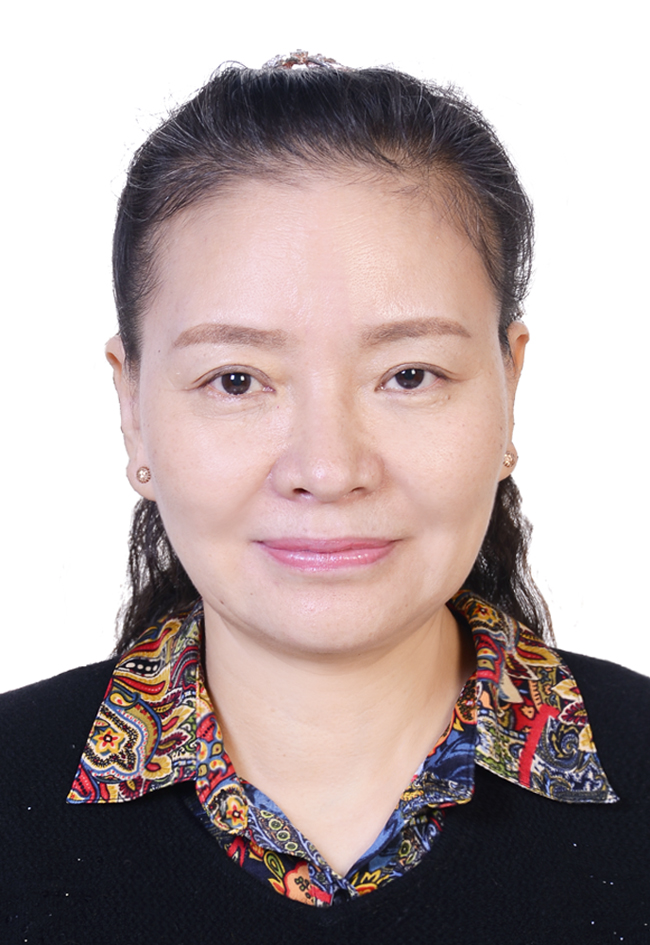 Xiaomei Li (李小妹)合作论文数School of Nursing, Health Science Center, Xi'an Jiaotong University1
 Ailing Wang (王爱玲)合作论文数School of Health Sciences, Wuhan University1
 Debra Jackson合作论文数Susan Wakil School of Nursing, Faculty of Medicine and Health, University of Sydney1Misae Ito合作论文数1Edward W. Mccranie合作论文数1Mengdan Liu合作论文数1Vincent Soulignac合作论文数Cemagref, Clermont Ferrand, 24 avenue des Landais, 63172 Aubière Cedex, France1Manee Arpanantikul合作论文数1
 Karen Hancock合作论文数1Siriporn Chirawatkul合作论文数1
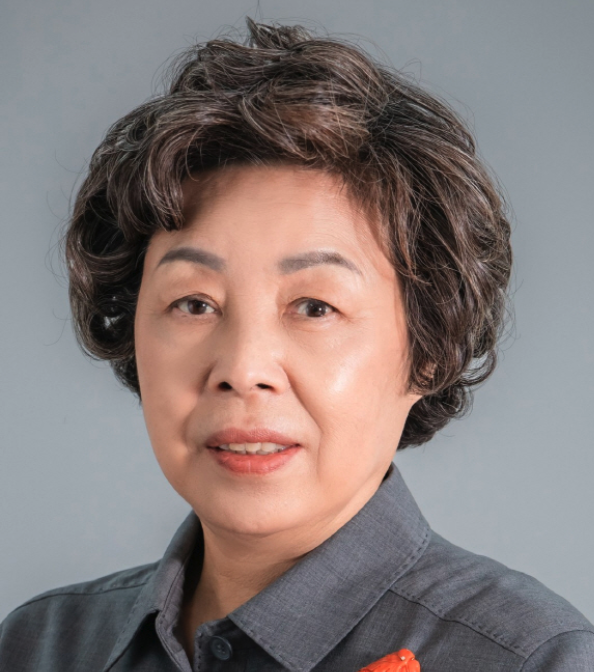 Kyung Rim Shin合作论文数College of Health Science, Ewha Womans University;Division of Nursing Science, Ewha Womans University1Deoisres, Wannee合作论文数Faculty of Nursing, Rambhai Barni Rajabhat University1
 Jintana Yunibhand合作论文数1
 Jean Alison Gilmour合作论文数1Hidechika Iino合作论文数1




