The Regolith and Ice Drill for Exploration of New Terrains (TRIDENT) is a 1 m class drill developed for capturing regolith and ice during the Volatiles Investigating Polar Exploration Rover (VIPER) and the Polar Resources Ice Mining Experiment (PRIME-1) lander missions to the south pole of the Moon. The drill employs decoupled rotation and percussion mechanisms to allow for three modes: rotation, percussion, and rotation–percussion, depending on operational goals and the material strength. TRIDENT can be operated in such a way that it can characterize subsurface material and deliver cuttings to the surface for characterization by other instruments. TRIDENT includes a drill-bit-integrated temperature sensor and an auger-integrated heater with a colocated temperature sensor 35 cm above the bit for thermal conductivity measurement. The heater can also be used in cases of ice adherence (freezing in) and to enhance the sublimation of ice from the cuttings pile. TRIDENT collects and delivers subsurface regolith onto the surface using a “bite” sampling approach: cuttings are captured in the auger flutes, the auger is retracted after drilling a 10 cm bite, and then 10 cm worth of cuttings are deposited onto the surface, forming a cuttings cone. This regolith cone is then analyzed by instruments Mass Spectrometer Observing Lunar Operations (MSOLO) and NIRVSS on the VIPER and MSOLO on the PRIME-1 missions. The drilling activity creates a seismic signal that can be detected on any associated inertial measurement unit that is turned on during the activity, which enables seismic science. TRIDENT represents two decades of technology development for planetary applications and could be deployed on any future missions to other solar system bodies. TRIDENT on the PRIME-1 mission has been successfully deployed in horizontal orientation (this orientation was due to the lander being in an off nominal landing orientation). All actuators, sensors, and heaters worked as designed. Even though the drill did not penetrate regolith, it was covered in regolith that fell onto the drill during the landing operation. VIPER is scheduled to launch to the Moon at the end of 2027 on Blue Origin’s Mk1 lander.
A desire to prospect for resources on the Moon, namely water, has led to the development of The Regolith and Ice Drill for Exploration of New Terrains (TRIDENT) drilling system. TRIDENT is a 16-kg rotary percussive drill and deployment system that was designed to be deployed from a roving platform and drill to a depth of 1 meter. Designs and testing supported by the Resource Prospector (RP) mission have enabled the TRIDENT system to reach a NASA TRL of 6. Through the development of this system, many lessons were learned. These include lessons learned for cable/pulley and capstan mechanisms, custom slip-ring designs, instrumentation of temperature sensors for measuring subsurface temperatures, sample transfer mechanisms, brazing tungsten carbide to titanium, and the replacement of the drill’s cable harness with flexible printed circuits. This summary highlights some of the major lessons learned along with recommended designs and tests to improve the design of the TRIDENT.
Venera 13 was the first Venus surface mission with sampling capabilities. Its rotary drill successfully penetrated the surface and pneumatically transferred material to the science instrument within the insulated interior of the spacecraft. Follow-on missions in the Venera and Vega program repeated that feat. These missions demonstrated that it is possible for an electric motor to function at Venus conditions and that it is possible to drill Venus surface material and pneumatically transfer captured sample under Venus conditions. Unfortunately, design details for the sampling system do not exist or cannot be located. Hence for any future Venus surface missions, the sampling technology has to be designed without any prior knowledge of materials or methods. To help advance Venus sampling technology, Honeybee Robotics in partnership with NASA JPL has been developing critical components that would make Venus sampling possible. To date, three types of motors (Switched Reluctance, Brushless DC, and Stepper), a Pulsed Injection Position Sensor (PIPS) for commutation and position control, and planetary gearboxes have been fabricated and tested at Venus Temperature and/or Venus Temperature and Pressure. This paper summarizes past work and presents the current state-of-art technology related to Venus sampling drill for the New Frontiers Venus lander proposal called In-situ Surface and Atmospheric Geochemical Explorer (VISAGE).
During development of a new slip ring design, our panel of subject matter experts was unable to find examples of how slip rings perform at very low current levels. This paper discusses the performance of Gold-on-Gold Slip Rings for micro-amp scale signals. We offer a concise overview of slip ring technologies and common applications and discuss the challenges associated with low current transfers in slip rings. We discuss the testing that Honeybee Robotics has completed, including a description of the test hardware, the test conditions (electrical signals, rotation rate, and lubrication scheme) and the resulting performance under flight-like conditions.
Honeybee Robotics Spacecraft Mechanisms Corporation has developed a Control Moment Gyroscope product suitable for small spacecraft. Each individual CMG exhibits a nominal angular momentum of 56 mNm-s with a peak of 86 mNm-s, and corresponding output torques of 112 mNm and 172 mNm respectively. Each unit measures 48 × 48 × 91 mm and weighs 600 grams. The control electronics are capable of driving 4 CMGs and executing a steering law to synthesize individual actuator commands from a torque triple or torque quaternion command. The industry will see an increasing role in the near future for small satellites in the 20-100 kg size range. We frame the CMG array capability by presenting a baseline application - using the Coral Reef Ecosystem Spectro-Photometric Observatory (CRESPO) mission concept (100 kg satellite) combined with requirements for the Hyperspectral Imager for the Coastal Ocean (HICO) on the International Space Station. We show how a small CMG array is capable of the representative slew maneuvers by exceeding the necessary slew rates of 0.75 deg/s for a “Soak and Shoot” flight plan, with maximum slew rates in excess of 1.5 deg/s. This paper will discuss the demonstrated performance of the system, including environmental test results, and the baseline application.
The extraction and identification of volatile resources that could be utilized by humans including water, oxygen, noble gases, and hydrocarbons on the Moon, Mars, and small planetary bodies will be critical for future long-term human exploration of these objects. Vacuum pyrolysis at elevated temperatures has been shown to be an efficient way to release volatiles trapped inside solid samples. In order to maximize the extraction of volatiles, including oxygen and noble gases from the breakdown of minerals, a pyrolysis temperature of 1400°C or higher is required, which greatly exceeds the maximum temperatures of current state-of-the-art flight pyrolysis instruments. Here we report on the recent optimization and field testing results of a high temperature pyrolysis oven and sample manipulation system coupled to a mass spectrometer instrument called Volatile Analysis by Pyrolysis of Regolith (VAPoR). VAPoR is capable of heating solid samples under vacuum to temperatures above 1300°C and determining the composition of volatiles released as a function of temperature.
The Sample Analysis at Mars (SAM) investigation of the Mars Science Laboratory (MSL) addresses the chemical and isotopic composition of the atmosphere and volatiles extracted from solid samples. The SAM investigation is designed to contribute substantially to the mission goal of quantitatively assessing the habitability of Mars as an essential step in the search for past or present life on Mars. SAM is a 40 kg instrument suite located in the interior of MSL’s Curiosity rover. The SAM instruments are a quadrupole mass spectrometer, a tunable laser spectrometer, and a 6-column gas chromatograph all coupled through solid and gas processing systems to provide complementary information on the same samples. The SAM suite is able to measure a suite of light isotopes and to analyze volatiles directly from the atmosphere or thermally released from solid samples. In addition to measurements of simple inorganic compounds and noble gases SAM will conduct a sensitive search for organic compounds with either thermal or chemical extraction from sieved samples delivered by the sample processing system on the Curiosity rover’s robotic arm.
Low power, robust technologies are appealing for in situ planetary science throughout the Solar System. The VAPoR (Volatile Analysis by Pyrolysis of Regolith) instrument is under development toward studying soil composition, volatiles, and trapped noble gases in the polar regions of the Moon and on the surface of other airless bodies. VAPoR will ingest a soil sample and conduct analysis by pyrolysis and time-of-flight mass spectrometry (ToF-MS). Two components of the system have been characterized in parallel development: a field-tested sample heater design and a laboratory-based time-of-flight mass spectrometer that emphasizes reduced mass and power through the use of micro- and nanotechnology. The pyrolysis field unit, vacuum-coupled to a commercial residual gas analyzer, has been used in Hawaii to analyze Mauna Kea soils. Water was detected, as were key inorganic pyrolysis products, including CO(2) and SO(2), and organic volatiles, including methane, benzene, toluene, and various hydrocarbon fragments. In parallel development, a laboratory reflectron time-of-flight mass spectrometer has been designed, assembled, and tested using electron impact ionization from a carbon nanotube electron gun. Preliminary testing reveals a mass resolution of 270. Published by Elsevier B.V.
Introduction: Measuring internal heat flow (i.e., heat flow that originates deep within the interior of the Moon) tells us about the origin of the Moon and its composition. If we know the age of the Moon, then the heat flow will reveal if it had a hot or cold origin. In addition, heat flow will reveal information on the bulk structure and composition of the Moon relative to heat producing elements (radioactive 40K, 232Th, 235U and 238U) and the extent of crystal differentiation.
The Sample Manipulation System (SMS) is a robotic system integral to the Sample Analysis at Mars (SAM) instrument suite. SAM is a critical instrument in NASA's Mars Science Laboratory (MSL) Payload. The SMS is an under-actuated 3 degree-of-freedom system. Its function is to receive and transport Martian solid samples from an inlet funnel and seal them in pyrolysis cells for spectroscopic analysis. This paper discusses the command and control architecture designed to achieve flexible command scripts while maintaining a high degree of fault detection and correction. A discussion of the Command and Data Handling System, Motor Control Electronics, and mechanisms describe how fault detection and redundant operating modes were employed.
This chapter contains sections titled: Introduction Comminution Classification of Comminution Equipment Nipping (Compression) Machines Impact Machines Tumbling Mills Cutting Machines Attrition Machines Other Methods of Comminution Selection of Comminution Equipment for Planetary Sampling Review of Recent and Current Work on Comminution for Planetary Sampling Operational Platforms Appendages Sample Acquisition from Surface Platforms Sample Acquisition from Aerial Platforms Conclusion References
The Sample Analysis at Mars (SAM) instrument will analyze Martian samples collected by the Mars Science Laboratory Rover with a suite of spectrometers. This paper discusses the driving requirements, design, and lessons learned in the development of the Sample Manipulation System (SMS) within SAM. The SMS stores and manipulates 74 sample cups to be used for solid sample pyrolysis experiments. Focus is given to the unique mechanism architecture developed to deliver a high packing density of sample cups in a reliable, fault tolerant manner while minimizing system mass and control complexity. Lessons learned are presented on contamination control, launch restraint mechanisms for fragile sample cups, and mechanism test data.
 Kris Zacny合作论文数Honeybee Robotics Spacecraft Mechanisms Corporation15
 Gale Paulsen合作论文数12
 Kiel Davis合作论文数9
 vincent e holmes合作论文数3nirbhay kumar合作论文数3
 Magnus Hedlund合作论文数3Michael Maksymuk合作论文数3Stephen Gorevan合作论文数3
 Steven Feng合作论文数3
 Phil Chu合作论文数3Chris Leger合作论文数Jet Propulsion Laboratory
M;S T1722
4800 Oak Grove Drive
Pasadena, CA 911093
Phil Chu合作论文数3Chris Leger合作论文数Jet Propulsion Laboratory
M;S T1722
4800 Oak Grove Drive
Pasadena, CA 911093 Paul R Mahaffy合作论文数Solar System Exploration Division, NASA Goddard Space Flight Center3
 Daniel P Glavin合作论文数NASA Goddard Space Flight Center3
 Brian Glass合作论文数NASA Ames Research Center3
 Jeffrey Shasho合作论文数2Cody Hyman合作论文数2
 Paul Chow合作论文数2jerri ji合作论文数2michael rutberg合作论文数2peter e d morgan合作论文数2
 stephanie a getty合作论文数2Heather B. Franz合作论文数2
 Yoseph Bar Cohen合作论文数Advanced Technologies Group, Jet Propulsion Laboratory, California Institute of Technology;Nondestructive Evaluation and Advanced Actuators Technologies Lab, Jet Propulsion Laboratory, California Institute of Technology2
 Charles A Malespin合作论文数Planetary Environments Lab, NASA Goddard Space Flight Center2Paul Bartlett合作论文数2
 Richard V. Morris合作论文数NASA Johnson Space Center2
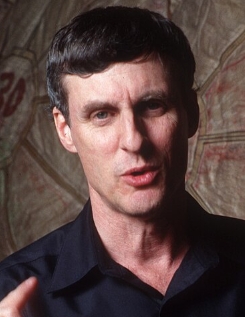 Steven W Squyres合作论文数Blue Origin2
 Douglas Ming合作论文数Johnson Space Center, National Aeronautics and Space Administration2
 Paolo Pirjanian合作论文数Embodied, Inc2
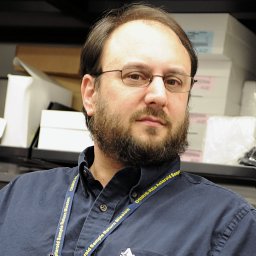 Jason P. Dworkin合作论文数NASA Ames Research Center;SETI Institute;NASA Ames Research Center, SETI Institute2Seiichi Nagihara合作论文数2
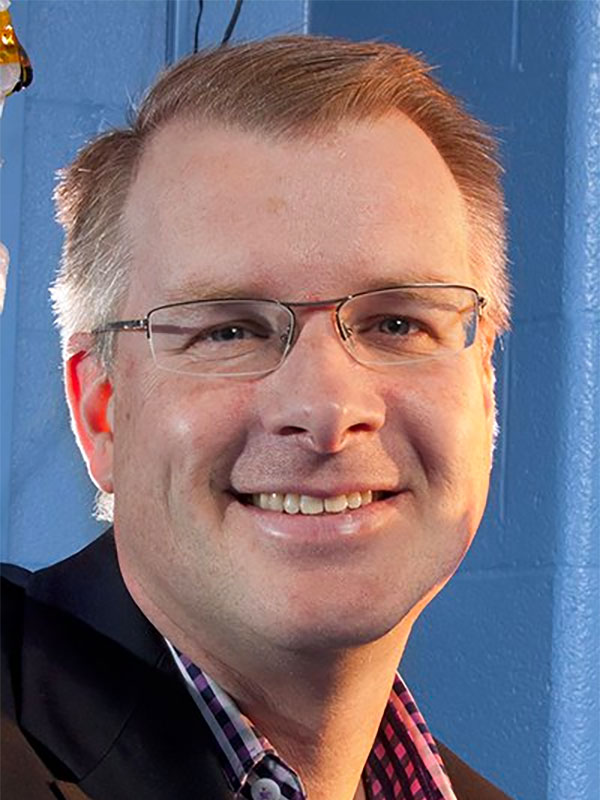 Shane Farritor合作论文数College of Engineering, University of Nebraska–Lincoln2H. Cannon合作论文数2
 Inge Loes ten Kate合作论文数Atmospheric Experiment Laboratory, NASA/Goddard Space Flight Center2
 Jack Craft合作论文数2
 William B Brinckerhoff合作论文数NASA Goddard Space Flight Center2
 Paul S. Schenker合作论文数TTG Imaging Solutions2b milam合作论文数1heidi manning合作论文数1mark bradley milam合作论文数1eric raaen合作论文数1Douglas McLennan合作论文数1florence tan合作论文数1John Maurer合作论文数1Lora Bleacher合作论文数1Ken Arnett合作论文数1Robert Arvey合作论文数1Therese Errigo合作论文数1
 jason feldman合作论文数1




