Are women underrepresented in landscape architecture? Two panel discussions at the 2022 and 2023 Council of Educators in Landscape Architecture (CELA) annual conferences reported findings on women 's representation within landscape architecture education and on their inclusion and recognition in the profession. While recent data collected by the Landscape Architectural Accreditation Board (LAAB) reveals a signi ficant female presence in landscape architecture education programs across the United States, women lag behind in career achievements such as awards, fellowships, and leadership positions. To address this disparity, the authors, who previously served on CELA 's Executive Board, surveyed CELA members to gauge perceptions of male and female representation across different realms of professional success. The survey findings, combined with historical data obtained from CELA, LAAB, the Council of Landscape Architecture Registration Board (CLARB), and the American Society of Landscape Architects (ASLA), shed light on women 's journeys from education to working in the profession. By analyzing the survey responses and collected data, the authors gained valuable perspectives on women 's challenges and opportunities in achieving equal representation and advancing their careers in landscape architecture. The findings also delved into participants ' perceptions of barriers and prospects affecting women 's representation in professional leadership and landscape architecture education. This article aims to stimulate discussions and support women 's career success and leadership in landscape architecture by addressing the perceptions of women in the field and examining advanced career metrics. Through these efforts, it strives to foster a more inclusive and equitable landscape architecture community.
Climate stressors and their implications for stormwater management require evaluating climate-related threats and opportunities and implementing effective green stormwater infrastructure (GSI) systems to improve the resiliency and climate adaptation of communities, especially in urban areas. This study provides an evaluation of appropriate GSI systems that are aligned with specific climate conditions to analyze the relationship between climate types and the existing GSI practices; classify GSI implementation impediments; and identify appropriate GSI practices for different climate conditions. The existing GSI practices were critically analyzed as case studies in four different Köppen–Geiger climate regions, in view of their climate-specific GSI attributes. Our findings indicate that: (1) climate is an important factor in the design and implementation of GSI practices, and therefore, climate-specific factors need to be considered when designing effective GSI systems; (2) the implementation of climate-appropriate GSI practices can reduce climate-related stresses in communities; (3) utilizing combinations of different GSI systems improves their ability to function effectively across a wide range of climate conditions (i.e., climate events ranging from droughts to flooding); and (4) effective GSI practices can provide multiple benefits to communities (i.e., improved climate resiliency and adaptation to climate change, effective water and stormwater management practices).
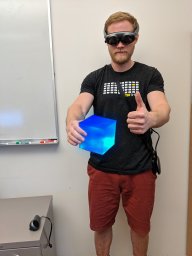
Sedentary behavior is prevalent in older adults. Older adults often underutilize public parks for exercising because the parks do not support their needs and preferences. Engaging older adults on the redesign of parks may help promote active lifestyles. The objectives of this pilot study were to evaluate (1) the effects of wearing augmented reality (AR) and virtual reality (VR) glasses on balance; (2) the effects of different virtual walls separating the walking trail from the roadway on older adults' gait, and (3) the preferences of the participants regarding wall design and other features. The participants were ten older adults (68 ± 5 years) who lived within two miles from the park. Balance and gait were assessed using a force plate and an instrumented mat. It was feasible to use AR with older adults in the park to evaluate features for redesign. Motion sickness was not an issue when using AR glasses, but balance was affected when wearing VR goggles. The area of postural sway increased approximately 25% when wearing AR glasses, and it increased by close to 70% when wearing VR goggles compared to no glasses. This difference is clinically relevant; however, we did not have enough power to identify the differences as statistically significant because of the small sample size and large variability. Different walls did not significantly affect the participants' gait either because they did not alter the way they walked or because the holograms were insufficiently realistic to cause changes. The participants preferred a transparent wall rather than tall or short solid walls to separate the park from the roadway.
We present an early study designed to analyze how city planning and the health of senior citizens can benefit from the use of augmented reality (AR) with assistance of virtual reality (VR), using Microsoft’s HoloLens and HTC’s Vive headsets. We also explore whether AR and VR can be used to help city planners receive real-time feedback from citizens, such as the elderly, on virtual plans, allowing for informed decisions to be made before any construction begins. In doing so, city planners can more clearly understand what design features would motivate senior citizens to visit or exercise in future parks, for example. The study was conducted on 10 participants 60 years and older who live within 2 miles from the site. They were presented with multiple virtual options for a prospective park, such as different walls for cancelling highway noise, as well as benches, lampposts, bathroom pods, walking and biking lanes, and other street furniture. The headsets allowed the participants to clearly visualize the options and make choices on them. Throughout the study the participants were enthusiastic about using the AR and VR devices, which is noteworthy for a future where city planning is done with these technologies.
Abstract Virtual-reality (VR) testing can cause motion sickness and impair safety, especially for older adults, but augmented-reality (AR) may allow the testing of holograms embedded into a mixed-reality environment without the VR impediments. However, wearing AR googles may affect the way people walk, but this possibility has not being tested. The objective of this study was to evaluate if wearing AR googles during gait would affect the kinematics of older adults. Ten older adults (68±5 years), who could walk without assistive devices, participated in this study. The participants walked outdoors in a public park with and without the AR googles. The participants were instrumented inertial movement units to track their kinematics (MTw Awinda trackers, Xsens Technologies B.V., Enschede, the Netherlands). The goal of the study was to assess if simply wearing the googles would affect gait, therefore no holograms were displayed. Ten gait cycles were analyzed and the mean of each subject was used to compare the joint kinematics between the conditions (with vs without googles) using T-tests in SPSS 18. The foot, ankle, knee and hip angles were not different between the conditions (p>0.05), but there were significantly less trunk flexion at 44% of the gait cycle (p=0.035) and less forward head flexion throughout the gait cycle (p=0.023) when the participants were wearing the googles vs. when they were not. The findings indicate that wearing AR goggles changed the trunk and head posture cycle, but did not affect the lower limb kinematics during gait.
For three consecutive years, the Age-Friendly Design Committee (AFDC) of the Academy for Gerontology in Higher Education (AGHE) used AGHE's annual meeting as a platform to conduct community-based service-learning workshops focusing on age-friendly design. These workshops assembled local stakeholders, conference attendees from multiple disciplines, and landscape and architectural designers to discuss age-friendly design issues and solutions for local environments. Each workshop provided hands-on design experience and the opportunity for AGHE participants to contribute to conference host communities by using their gerontological expertise to translate knowledge into practice. Local stakeholders learned the value of gerontological input when considering design issues. We describe the process of incorporating service-learning into the conference experience through age-friendly design workshops and how these bring together students, faculty, and design professionals from different backgrounds and disciplines to address local age-friendly design issues.
The quest for sustainability in the design and development of buildings and cities has expressed itself predominantly as a pursuit of ever-greater efficiency. Urban systems have been developed to achieve energy and resource savings in an attempt to eliminate their environmentally negative impacts. The end goal would seem to be to make buildings and cities virtually invisible within the context of the natural environment and to extract humanity from that which is natural. This approach could be termed as a hyper-efficiency sustainability model. In this approach, the impacts of human beings and their functional systems are seen as contaminants that need reduction or removal. Although driven by a desire to preserve the Earth's natural systems, such an approach ultimately creates greater division between humanity and nature and may not bring sustainability. As an alternative to a hyper-efficiency model of sustainability, a model should be pursued that focuses more on developing an integrative relationship between civilization and environment akin to mutualism in biology. Such an approach, which could be termed as a mutualistic sustainability model, incorporates natural systems and elements into the structures and functions of buildings and cities, with the goal of achieving cooperative and positive interaction between humanity and nature. Such integration can create opportunities to support living organisms and biological systems in an ecologically contributive manner, while fulfilling human infrastructural needs. It offers a more positive alternative to efficiency based strategies and has the potential to establish a healthier and more productive relationship between humanity and the Earth's natural systems. This paper elaborates on these two distinct approaches to sustainability and presents an examination of recent green building projects and green infrastructure projects. It analyses specific strategies and methods to contrast and compare manifestations of both approaches, providing valuable lessons and insights for designing sustainable buildings and cities.
 Newton D'Souza合作论文数Florida Int Univ, Miami, FL 33199 USA3
 Edgar Ramos Vieira合作论文数3
 Francisco Ortega合作论文数The Natural User Interaction Lab, Department of Computer Science, Colorado State University3
 Jorge Carreno合作论文数2
 Fernanda Civitella合作论文数2
 Charlene LeBleu合作论文数Program Landscape Architecture, Auburn Univ2
 Estrázulas Jansen Atier合作论文数2Angelini Catherine合作论文数1W Mark Sweatman合作论文数1
 Adam S. Williams合作论文数Colorado State Univ, Ft Collins, CO 80523 USA1Mathew Kress合作论文数Florida Int Univ, Miami, FL 33199 USA1
 Melissa Cannon合作论文数1
 Naphtali David Rishe合作论文数Knight Foundation School of Computing and Information Sciences, Florida International University1
 Maria Claver合作论文数California State University1
 Berrin Tansel合作论文数Department of Civil and Environmental Engineering, College of Engineering and Computing, Florida International University1Margaret A. Perkinson合作论文数Saint Louis University1
 Iveris L Martinez合作论文数1
 Cesar Ferreira Amorim合作论文数Department of Mechanical Engineering, São Paulo State University – UNESP-FEG1




