Over the past decade as data science has become integral to the research workflow, we, like many others, have learned that good data science requires high-quality software engineering. Unfortunately, our experience is that many data science projects can be limited by the absence of software engineering processes. We advocate that data science projects should incorporate what we call the 3Rs of software engineering: readability (human understandable codes), resilience (fails rarely/gracefully), and reuse (can easily be used by others and can be embedded in other software). This article discusses engineering practices that promote 3R software in academia. We emphasize that best practices in academia may differ from those in industry because of substantial differences in project scope (most academic projects have a single developer who is the sole user) and the reward systems in place in academia. We provide a framework for selecting a level of software engineering rigor that aligns well with the project scope, something that may change over time. We further discuss how to improve training in software engineering skills in an academic environment and how to build communities of practice that span across disciplines.
CloudBank is a cloud access entity founded to enable the computer science research and education communities to harness the profound computational potential of public clouds. By delivering a set of managed services designed to alleviate common points of friction associated with cloud adoption, Cloudbank serves as an integrated service provider to the research and education community. These services include front-line help desk support, cloud solution consulting, training, account management, cost monitoring and optimization support, and automated billing. CloudBank has a multi-cloud pay-per-use billing model and aims to serve the spectrum of cloud users from novice to advanced.
Five institutions awarded grants by the Hopper-Dean foundation to develop interventions that would advance diversity in computer science will present their initiatives and results. This panel will allow them to share what was successful, what was challenging or did not work, and how the lessons they learned are applicable to all institutions, small and large.
THE ENGINEERING COMMUNITY HAS BEEN WORKING FOR decades to increase the representation of women in universities and in the profession, but progress has been slow. In the United States, just 21 percent of engineering bachelor's degrees go to women, and only 11 percent of practicing engineers are women. While the problem is complex, we must recognize that one significant factor is sexual harassment, ...
WE APPLAUD THE recommendations of V. Stodden et al. for “Enhancing reproducibility for computational methods” (Policy Forum, 9 December 2016, p. [1240][1]). Many of their recommendations could be fulfilled if researchers embraced modern statistical and computational (“data science”)
We analyze the workload from a multi-year deployment of a database-as-a-service platform targeting scientists and data scientists with minimal database experience. Our hypothesis was that relatively minor changes to the way databases are delivered can increase their use in ad hoc analysis environments. The web-based SQLShare system emphasizes easy dataset-at-a-time ingest, relaxed schemas and schema inference, easy view creation and sharing, and full SQL support. We find that these features have helped attract workloads typically associated with scripts and files rather than relational databases: complex analytics, routine processing pipelines, data publishing, and collaborative analysis. Quantitatively, these workloads are characterized by shorter dataset "lifetimes", higher query complexity, and higher data complexity. We report on usage scenarios that suggest SQL is being used in place of scripts for one-off data analysis and ad hoc data sharing. The workload suggests that a new class of relational systems emphasizing short-term, ad hoc analytics over engineered schemas may improve uptake of database technology in data science contexts. Our contributions include a system design for delivering databases into these contexts, a description of a public research query workload dataset released to advance research in analytic data systems, and an initial analysis of the workload that provides evidence of new use cases under-supported in existing systems.
During the Summer of 2015, the University of Washington eScience Institute ran an interdisciplinary summer internship program focused on urban informatics, civic engagement, and data-intensive social science. Borrowing elements from the successful Data Science for Social Good (DSSG) programs at the University of Chicago and Georgia Tech, and building on our own previous consulting and “incubation” programs for data-intensive projects in physical, life, and social sciences, we brought together teams of students (graduate, undergraduate, and high school), data scientists, project leads and stakeholders from the University of Washington and local NGOs to design, develop, and deploy new solutions to high-impact problems in the Seattle Metro Area. In this paper, we describe the inaugural offering of the eScience DSSG and reflect on the process of organizing and structuring the program. The DSSG attracted 144 graduate and undergraduate student applicants from over 10 different fields of study. The final DSSG fellow cohort included 16 students accepted from this pool of applicants. In addition, we included six high school students who joined us from a separate program designed to expose young people to research activities and an undergraduate student who had already started working on one of the projects through another summer research program. We solicited project proposals from research professionals across academic, non-profit, and government institutions. Ultimately, 4 projects were chosen out of 11 submitted proposals: two addressing transportation access for people with limited mobility, one identifying factors affecting whether homeless families find permanent housing, and one deriving new metrics of community wellbeing from social media data and other relevant data sources. All datasets were sourced from Seattle businesses, foundations, and agencies, with the exception of social media. The teams worked in a shared studio space designed in part for this purpose, and participated in tutorials on relevant tools and technologies, such as GitHub, Python, R, Amazon Web Services, and SQL, as well as topical presentations Bloomberg Data for Good Exchange Conference. 28-Sep-2015, New York City, NY, USA. and discussions related to social good and multi-stakeholder collaborations. We found that striking a balance between training and software “flow time” is essential, and that determining the right balance between structured and unstructured activities is delicate. The diversity in software and disciplinary experience among participants was initially challenging for tutorial organization and scoping projects. A mix of advanced and introductory material meant that some participants were either lost or bored at any given time. But in the end, this diversity actually helped to improve the scope of the projects. For example, GIS experts added mapping components, software engineering experts designed APIs, and domain experts sanity-checked findings. Overall, the enormous interest implied by the number and diversity of the applicants to our program suggests that similar programs could be operated in many other cities. We intend this paper to facilitate reuse and optimization of the key components of our program.
Rapid advances in technology are transforming nearly every field from" data-poor" to" data-rich." The ability to extract knowledge from this abundance of data is the cornerstone of 21st century discovery. At the University of Washington eScience Institute, our mission is to engage researchers across disciplines in developing and applying advanced computational methods and tools to real world problems in data-intensive discovery. Our research team consists of individuals with diverse backgrounds in domain sciences such as astronomy, oceanography and geology, with complementary expertise in advanced statistical and computational techniques such as data management, visualization, and machine learning. Two key elements are necessary to foster careers in data science: individuals with cross-disciplinary training in both method and domain sciences, and career paths emphasizing alternative metrics for …
Declan McCullagh misses the boat at least twice in his column concerning the potential impact on computer science research of the Digital Millennium Copyright Act. First, the DMCA has two arms: one that prohibits devices that circumvent copy protection, and one that prohibits acts of circumvention. The research conducted by Professor Felten and his colleagues took place prior to the time when the" acts of circumvention" provisions became effective in October 2000. Thus, these provisions did not apply to that research. However, there is little doubt in the legal community that this research, and similar research, would be illegal under the" acts of circumvention" provisions. Declan McCullagh fails to recognize this arm of the DMCA in his column. Second, the chilling effect of the DMCA cannot be described by the probability of conviction alone. One must also consider the magnitude of the exposure if convicted …
There are many reasons for striving to increase the representation of women in the computing field, but the most compelling one is the enhanced quality of the solutions diverse contributors can achieve. This is one of five articles providing industry perspectives on gender diversity in computing.
 John Zahorjan合作论文数Paul G. Allen School of Computer Science & Engineering, University of Washington39
 Henry M. Levy合作论文数Paul G. Allen School of Computer Science & Engineering, University of Washington25
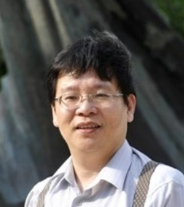 Jason Lin (林一平)合作论文数Tung Hai University;Academia Sinica;Providence University;Chung Hua University;Department of Computer Science, National Yang Ming Chiao Tung University;Miin Wu School of Computing, National Cheng Kung University;College of Artificial Intelligence, National Yang Ming Chiao Tung University17
 Brian Bershad合作论文数Department of Computer Science & Engineering, University of Washington;Appliant, Inc.;Google16
 Kenneth C. Sevcik合作论文数Department of Computer Science, University of Toronto13
 Derek Eager合作论文数Department of Computer Science, University of Saskatchewan10
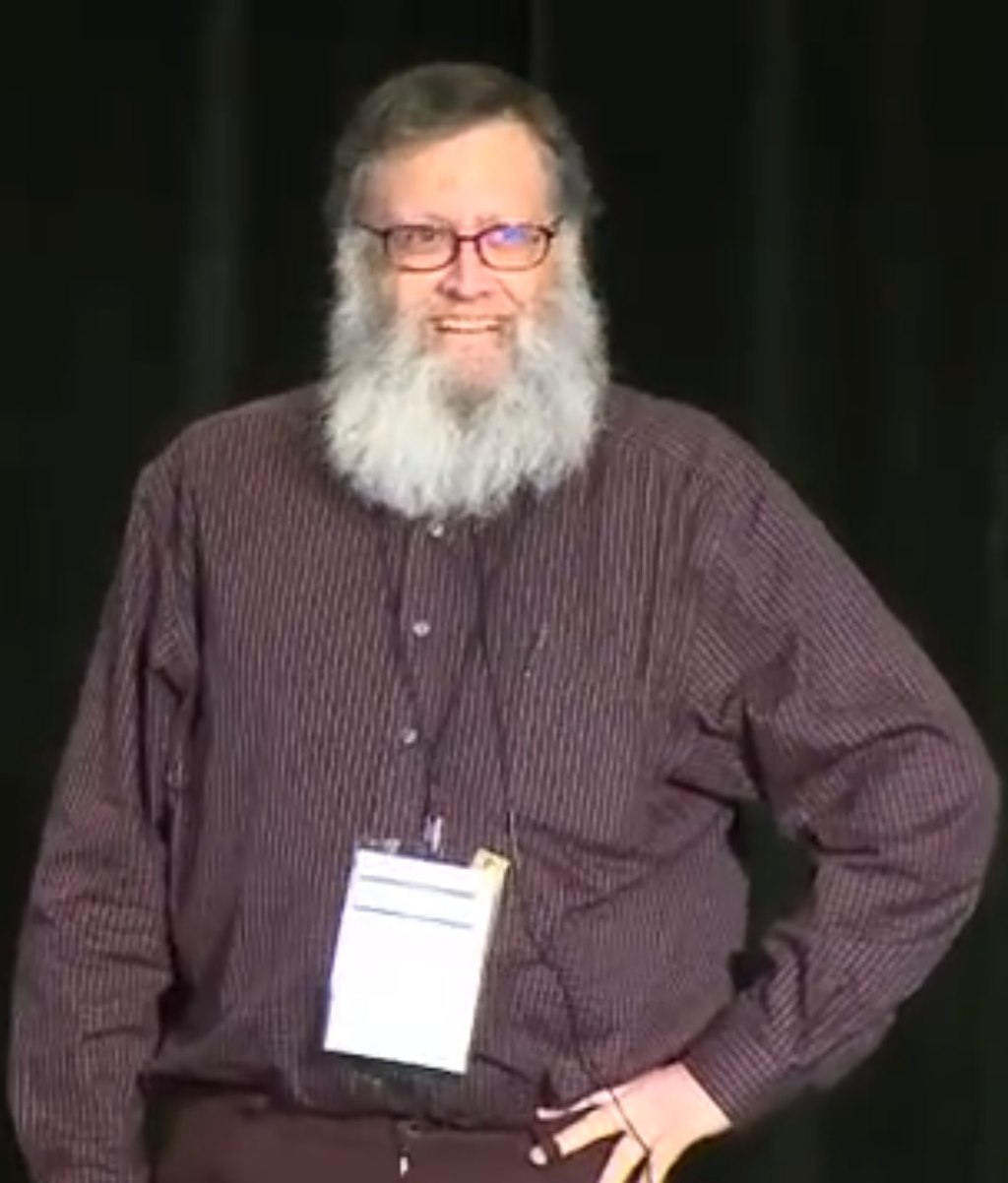 David Notkin合作论文数School of Computer Science & Engineering, University of Washington8
 Sheila Widnall合作论文数Department of Aeronautics and Astronautics, School of Engineering, Massachusetts Institute of Technology8
 Tom Anderson合作论文数Department of Computer Science and Engineering, Paul G. Allen School of Computer Science & Engineering, University of Washington7
 Constance A. Morella合作论文数6Machi Dilworth合作论文数6Valerie Conn合作论文数6Jane E. Henney合作论文数6Roberta Marinelli合作论文数6Melvin Greer合作论文数6Linda Gundersen合作论文数6Billy M. Williams合作论文数6Nancy Andrews合作论文数6Nicholas Arnold合作论文数6Sheldon Weinbaum合作论文数6Elizabeth L. Hillman合作论文数6Valerie Taylor合作论文数6Hilary Lapin-Scott合作论文数6Amy Dodrill合作论文数6Julia M. Phillips合作论文数6
 Jennifer Tour Chayes合作论文数College of Computing, Data Science, and Society, University of California, Berkeley;School of Information, University of California, Berkeley6
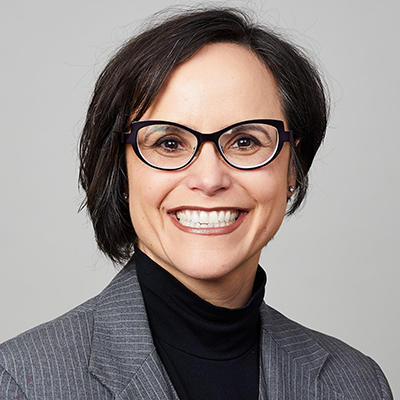 Lisa García Bedolla合作论文数Graduate School of Education, University of California, Berkeley6
 Anna Kirkland合作论文数Department of Political Science, College of Literature, Science, and the Arts, University of Michigan-Ann Arbor6
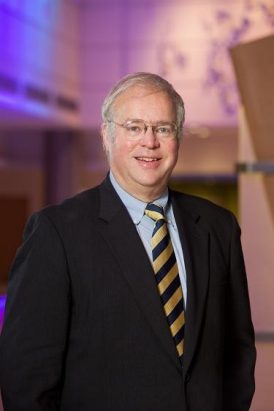 Timothy R.B. Johnson合作论文数African Studies Center, College of Literature, Science, and the Arts, University of Michigan-Ann Arbor6Gold Liza H合作论文数6
 Joan Bennett合作论文数Department of Biochemistry and Microbiology, School of Environmental and Biological Sciences, Rutgers University;Department of Plant Biology and Pathology, School of Environmental and Biological Sciences, Rutgers University6
 Paula T. Hammond合作论文数Department of Chemical Engineering, School of Engineering, Massachusetts Institute of Technology;Koch Institute for Integrative Cancer Research, Massachusetts Institute of Technology6
 Cortina M. Lilia合作论文数Department of Psychology, University of Michigan6
 John B. Pryor合作论文数Department of Psychology, Illinois State University6
 Jean-Loup Baer合作论文数Paul G. Allen School of Computer Science & Engineering, University of Washington6
 Rita R. Colwell合作论文数Institute for Advanced Computer Studies, University of Maryland;Bloomberg School of Public Health, Johns Hopkins University;Canon US Life Sciences, Inc.;CosmosID, Inc.6Ana Mari Cauce合作论文数6
 Evelynn Hammonds合作论文数Department of the History of Science, Harvard University6
 Kate Clancy合作论文数Department of Anthropology, College of Liberal Arts and Sciences, University of Illinois at Urbana-Champaign6
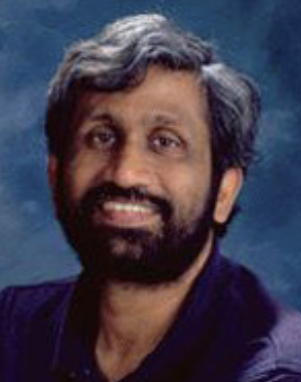 Chandramohan Thekkath合作论文数Thekkath Aviation6
 Vivian W. Pinn合作论文数Fogarty International Center6
 Vicki J. Magley合作论文数University of Illinois at Urbana-Champaign6
 Paula A. Johnson合作论文数Wellesley College6
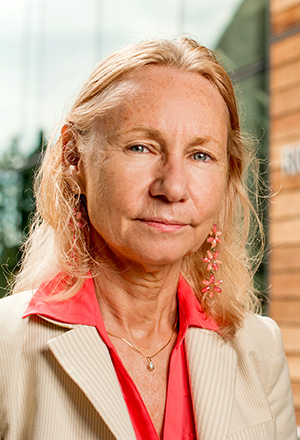 Alice Merner Agogino合作论文数Center for Information Technology in the Interest of Society, University of California, Berkeley6
 Susan R Wessler合作论文数Department of Botany and Plant Sciences, University of California, Riverside;College of Natural and Agricultural Sciences, University of California, Riverside6
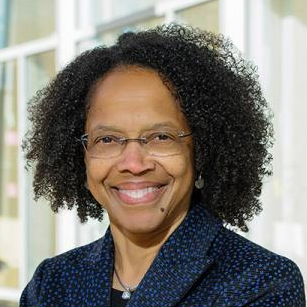 Gilda Barabino合作论文数Franklin W. Olin College of Engineering6
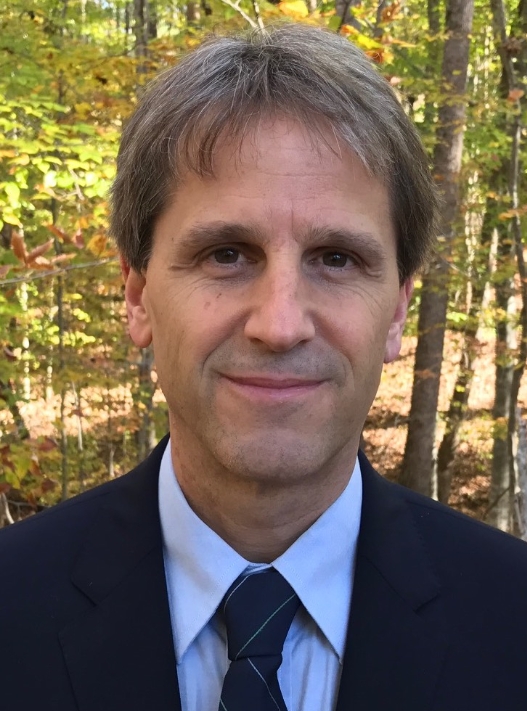 Jeffrey S. Chase合作论文数Department of Computer Science, Trinity College of Arts and Sciences, Duke University6Cristina H. Amon合作论文数5
 Andrew P. Black合作论文数Department of Computer Science,;Portland State University5




