The liver-derived plasma protein fetuin-A forms nano-scale colloids with calcium phosphate called calciprotien particles (CPP) that allow transport and clearance of bulk mineral while mitigating the risk of ectopic deposition [ [1] Jahnen-Dechent W. Smith E.R. Nature's remedy to phosphate woes: calciprotein particles regulate systemic mineral metabolism. Kidney Int. 2020; 97: 648-651 Abstract Full Text Full Text PDF PubMed Scopus (14) Google Scholar ]. Consistent with this chaperone function, genetic deficiencies in mice resulting in an inability to adequately stabilise CPP give rise to one of the most severe models of ectopic soft tissue calcification known [ [2] Herrmann M. Babler A. Moshkova I. et al. Lumenal Calcification and Microvasculopathy in Fetuin-A-Deficient Mice Lead to Multiple Organ Morbidity. PLoS One, 2020 Crossref Scopus (25) Google Scholar ]. However, in chronic states of mineral stress such as chronic kidney disease (CKD), formation of CPP may be enhanced and exceed excretory capacity, potentially aggravating pre-existent cardiovascular injury through pro-inflammatory and pro-calcific pathways [ [3] Holt S.G. Smith E.R. Fetuin-A-containing calciprotein particles in mineral trafficking and vascular disease. Nephrol. Dial. Transplant. 2016; 31: 1583-1587 Crossref PubMed Scopus (48) Google Scholar ]. In other words, CPP may be a remedy and culprit to the sequelae associated with dysregulated mineral homeostasis. Mid-term predictive value of calciprotein particles in maintenance hemodialysis patients based on a gel-filtration assayAtherosclerosisVol. 303PreviewCalciprotein particles (CPPs), nano-aggregates containing fetuin-A-bound calcium-phosphate, are associated with aortic stiffness and coronary calcification in maintenance hemodialysis patients. A novel gel-filtration assay can detect low-density small CPPs, which are actually a major form of circulating CPPs in vivo. We sought to investigate whether circulating CPP levels measured by gel-filtration method would accurately predict hard endpoints in maintenance hemodialysis patients. Full-Text PDF
This work examines the contribution of shape features to subjects' judgments of typicality for visual categories. Shape was found to make a strong contribution to typicality, as evidenced by the strong correlation between results on pictures and those on silhouettes of the same pictures. Also, different measures of the contribution of shape - template overlap, compactness, and number of parts - were shown to capture different aspects of that contribution. As one of the fundamental problems in category research is to determine the features used in categorization (e.g., Medin, 1989), the current work is important because it makes progress on this problem.
...................................................................................................... i Table of
BACKGROUND:The neural correlates of working memory (WM) impairment in schizophrenia remain a key puzzle in understanding the cognitive deficits and dysfunction of dorsolateral prefrontal cortex observed in this disorder. We sought to determine whether patients with schizophrenia exhibit an alteration in the inverted-U relationship between WM load and activation that we recently observed in healthy individuals and whether this could account for WM deficits in this population.METHODS:Medicated (n = 30) and unmedicated (n = 21) patients with schizophrenia and healthy control subjects (n = 45) performed the self-ordered WM task during functional magnetic resonance imaging. We identified regions exhibiting an altered fit to an inverted-U relationship between WM load and activation that were also predictive of WM performance.RESULTS:A blunted inverted-U response was observed in left dorsolateral prefrontal cortex in patients and was associated with behavioral deficits in WM capacity. In addition, suppression of medial prefrontal cortex during WM was reduced in patients and was associated with poorer WM capacity in patients. Finally, activation of visual cortex in the cuneus was elevated in patients and associated with improved WM capacity. Together, these findings explained 55% of the interindividual variance in WM capacity when combined with diagnostic and medication status, which alone accounted for only 22% of the variance in WM capacity.CONCLUSIONS:These findings identify a novel biomarker and putative mechanism of WM deficits in patients with schizophrenia, a reduction or flattening of the inverted-U relationship between activation and WM load observed in healthy individuals in left dorsolateral prefrontal cortex.
Despite significant advances in understanding how brain networks support working memory (WM) and cognitive control, relatively little is known about how these networks respond when cognitive capabilities are overtaxed. We used a fine-grained manipulation of memory load within a single trial to exceed WM capacity during functional magnetic resonance imaging to investigate how these networks respond to support task performance when WM capacity is exceeded. Analyzing correct trials only, we observed a nonmonotonic (inverted-U) response to WM load throughout the classic WM network (including bilateral dorsolateral prefrontal cortex, posterior parietal cortex, and presupplementary motor areas) that peaked later in individuals with greater WM capacity. We also observed a relative increase in activity in medial anterior prefrontal cortex, posterior cingulate/precuneus, and lateral temporal and parietal regions at the highest WM loads, and a set of predominantly subcortical and prefrontal regions whose activation was greatest at the lowest WM loads. At the individual subject level, the inverted-U pattern was associated with poorer performance while expression of the early and late activating patterns was predictive of better performance. In addition, greater activation in bilateral fusiform gyrus and right occipital lobe at the highest WM loads predicted better performance. These results demonstrate dynamic and behaviorally relevant changes in the level of activation of multiple brain networks in response to increasing WM load that are not well accounted for by present models of how the brain subserves the cognitive ability to hold and manipulate information on-line.
Modern cognitive psychology began in the late 1950s, when American and British psychologists rejected behaviorism and adopted a model of the mind based on the computer. The overthrow of behaviorism came not so much from ideas within psychology as from three research approaches external to the field, including: (1) communications research including information theory; (2) the computer modeling approach, particularly the work of Newell and Simon; and (3) the generative linguistics approach, particularly the work of Chomsky. The merging of these approaches with substantive psychology led to the information-processing approach to cognition, which emphasized the representations and processes needed to give rise to mental activities ranging from pattern recognition, attention, categorization, memory, reasoning, decision making, problem solving, and language.
Schizophrenia is characterized by an abnormal dopamine system, and dopamine blockade is the primary mechanism of antipsychotic treatment. Consistent with the known role of dopamine in reward processing, prior research has demonstrated that patients with schizophrenia exhibit impairments in reward-based learning. However, it remains unknown how treatment with antipsychotic medication impacts the behavioral and neural signatures of reinforcement learning in schizophrenia. The goal of this study was to examine whether antipsychotic medication modulates behavioral and neural responses to prediction error coding during reinforcement learning. Patients with schizophrenia completed a reinforcement learning task while undergoing functional magnetic resonance imaging. The task consisted of two separate conditions in which participants accumulated monetary gain or avoided monetary loss. Behavioral results indicated that antipsychotic medication dose was associated with altered behavioral approaches to learning, such that patients taking higher doses of medication showed increased sensitivity to negative reinforcement. Higher doses of antipsychotic medication were also associated with higher learning rates (LRs), suggesting that medication enhanced sensitivity to trial-by-trial feedback. Neuroimaging data demonstrated that antipsychotic dose was related to differences in neural signatures of feedback prediction error during the loss condition. Specifically, patients taking higher doses of medication showed attenuated prediction error responses in the striatum and the medial prefrontal cortex. These findings indicate that antipsychotic medication treatment may influence motivational processes in patients with schizophrenia.
Previous reports indicate that among healthy individuals low aerobic fitness (AF) and high body-mass index (BMI) predict poor neurocognition and daily-functioning. It is unknown whether these associations extend to disorders characterized by poor neurocognition, such as schizophrenia. Therefore, we compared AF and BMI in individuals with schizophrenia and non-clinical controls, and then within the schizophrenia group we examined the links between AF, BMI, neurocognition and daily-functioning. Thirty-two individuals with schizophrenia and 64 gender- and age-matched controls completed assessments of AF (indexed by VO2max) and BMI. The former also completed measures of neurocognition, daily-functioning and physical activity. The schizophrenia group displayed significantly lower AF and higher BMI. In the schizophrenia group, AF was significantly correlated with overall neurocognition (r=0.57), along with executive functioning, working memory, social cognition, and processing speed. A hierarchical regression analysis indicated that AF accounted for 22% of the neurocognition variance. Furthermore, AF was significantly correlated with overall daily-functioning (r=0.46). In contrast, BMI displayed significant inverse correlations with neurocognition, but no associations to daily-functioning. AF was significantly correlated physical activity. The authors discuss the potential use of AF-enhancing interventions to improve neurocognitive and daily-functioning in schizophrenia, along with putative neurobiological mechanisms underlying these links, including Brain-Derived Neurotrophic Factor.
A major difference between humans and other animals is our capacity to maintain information in working memory (WM) while performing secondary tasks, which enables sustained, complex cognition. A common assumption is that the lateral prefrontal cortex (PFC) is critical for WM performance in the presence of distracters, but direct evidence is scarce. We assessed the relationship between fMRI activity and WM performance within subjects, with performance matched across distracter and no-distracter conditions. Activity in the ventrolateral PFC during WM encoding and maintenance positively predicted performance in both conditions, whereas activity in the presupplementary motor area (pre-SMA) predicted performance only under distraction. Other parts of the dorsolateral and ventrolateral PFCs predicted performance only in the no-distracter condition. These findings challenge a lateral-PFC-centered view of distracter resistance, and suggest that the lateral PFC supports a type of WM representation that is efficient for dealing with task-irrelevant input but is, nonetheless, easily disrupted by dual-task demands.
It has been challenging to identify core neurocognitive deficits that are consistent across multiple studies in patients with Obsessive Compulsive Disorder (OCD). In turn, this leads to difficulty in translating findings from human studies into animal models to dissect pathophysiology. In this article, we use primary data from a working memory task in OCD patients to illustrate this issue. Working memory deficiencies have been proposed as an explanatory model for the evolution of checking compulsions in a subset of OCD patients. However, findings have been mixed due to variability in task design, examination of spatial vs. verbal working memory, and heterogeneity in patient populations. Two major questions therefore remain: first, do OCD patients have disturbances in working memory? Second, if there are working memory deficits in OCD, do they cause checking compulsions? In order to investigate these questions, we tested 19 unmedicated OCD patients and 23 matched healthy controls using a verbal working memory task that has increased difficulty/task-load compared to classic digit-span tasks. OCD patients did not significantly differ in their performance on this task compared to healthy controls, regardless of the outcome measure used (i.e. reaction time or accuracy). Exploratory analyses suggest that a subset of patients with predominant doubt/checking symptoms may have decreased memory confidence despite normal performance on trials with the highest working memory load. These results suggest that other etiologic factors for checking compulsions should be considered. In addition, they serve as a touchstone for discussion, and therefore help us to generate a roadmap for increasing consensus in the assessment of neurocognitive function in psychiatric disorders.
56 Marina Bedny and Rebecca Saxe, Insights into the origins of knowledge from the cognitive neuroscience of blindness 85 Elizabeth A. Hirshorn, Nina M. Fernandez, and Daphne Bavelier, Routes to short-term memory indexing: Lessons from deaf native users of American Sign Language 104 Franck Ramus and Merav Ahissar, Developmental dyslexia: The difficulties of interpreting poor performance, and the importance of normal performance 123 Julien Musolino and Barbara Landau, Genes, language, and the nature of scientific explanations: The case of Williams syndrome
We present a functional MRI experiment investigating the neural basis of feature-based attention in humans using the Stroop task. Cortical areas specifically involved in color processing and word reading were first identified in individual participants using independent tests. These areas were then probed during the Stroop task (in which participants must selectively attend to the font color of a word while ignoring the word itself). We found that activation in functionally-defined color areas increased during the task relative to a neutral color-naming task while activation in functionallydefined word areas decreased. These results are consistent with a biased competition model of feature-based attention in which the processing of attended features is enhanced and the processing of ignored features is suppressed.
Symbolic processes in the brain - the case of insect navigation, Charles R. Gallistel The mental representation of time - uncovering a biological clock, Seth Roberts The evolution of cognition - questions we will never answer, Richard C. Lewontin Consciousness and the mind - contributions from philosophy, neuroscience, and psychology, Owen Flanagan, Donald T. Dryden Cognitive algorithms - questions of representation and computation in building a theory, Mark Steedman A gentle introduction to Soar - an architecture for human cognition, Jill Fain Lehman et al Learning arithmetic with a neural network - seven times seven is about 50, James a. anderson Models for reading letters and words, Dominic W. Massaro Inferring mental operations from reaction-time data - how we compare objects, Saul Sternberg Models of visual search - finding a face in the crowd, Barbara Anne Dosher Skill acquisition and plans for actions - learning to write with your other hand, Patricia G. Lindenmann, Charles E. Wright Drawing conclusions from data - statistical methods for coping with uncertainty, Thomas D. Wickens Separating discrimination and decision in detection, recognition, and matters of life and death, John A. Swets Discovering mental processing stages - the method of additive factors, Saul Sternberg Brainwaves and mental processes - electrical evidence of attention, perception, and intention, Allen Osman.
We present a functional MRI experiment investigating the neural basis of feature-based attention in humans using the Stroop task. Cortical areas specifically involved in color processing and word reading were first identified in individual participants using independent tests. These areas were then probed during the Stroop task (in which participants must selectively attend to the font color of a word while ignoring the word itself). We found that activation in functionally defined color areas increased during the task relative to a neutral color-naming task while activation in functionally defined word areas decreased. These results are consistent with a biased competition model of feature-based attention in which the processing of attended features is enhanced and the processing of ignored features is suppressed.
 John Jonides合作论文数Department of Psychology, College of Literature, Science and the Arts, University of Michigan48
 Daniel Osherson合作论文数24
 Murray Grossman合作论文数Department of Neurology, Perelman School of Medicine, University of Pennsylvania;Penn Frontotemporal Degeneration Center, University of Pennsylvania15
 Tor Wager合作论文数Department of Psychological and Brain Sciences, Dartmouth College14Christy Marshuetz合作论文数12Robert A. Koeppe合作论文数University of Michigan12
 Patricia A. Reuter-Lorenz合作论文数Department of Psychology, College of Literature, Science, and the Arts, University of Michigan11Phyllis Koenig合作论文数10
 Edward Awh合作论文数Committee on Neurobiology, The University of Chicago8
 Eldar Shafir合作论文数Department of Psychology, Princeton University8
 Stephen M Kosslyn合作论文数Department of Psychology, Harvard University;Active Learning Sciences, Inc;Minerva Schools, Keck Graduate Institute7
 Douglas Medin合作论文数Institute of Adolescent Mental Health and Well-Being, Department of Psychology, Northwestern University;School of Education and Social Policy, Northwestern University6Antani S合作论文数5
 Lance Rips合作论文数Department of Psychology, Weinberg College of Arts and Sciences, Northwestern University5Guila Glosser合作论文数5
 Eric H. Schumacher (Eric Schumacher)合作论文数School of Psychology, College of Sciences, Georgia Institute of Technology5
 Thomas Nichols合作论文数Big Data Institute, Li Ka Shing Centre for Health Information and Discovery, University of Oxford4
 Jared Van Snellenberg合作论文数Cognitive Neuroscience & Psychosis Lab, Department of Psychiatry and Behavioral Health, Renaissance School ofMedicine, Stony Brook University4
 Allan Collins合作论文数School of Education & Social Policy, Northwestern University4
 Richard J. Davidson合作论文数Center for Healthy Minds, Waisman Center, College of Letters & Science, University of Wisconsin-Madison;Department of Psychology, School of Medicine, University of Wisconsin-Madison;Healthy Minds Innovations, Inc.4
 Alan A Hartley合作论文数4
 Barbara C. Malt合作论文数Language and Thought Lab, Department of Psychology, College of Arts and Sciences, Lehigh University4Edward J. Shoben合作论文数4
 Andrea Patalano合作论文数Department of Psychology;Wesleyan University;Department of Psychology, Wesleyan University4
 Erick Lauber合作论文数3PL Koenig合作论文数3C DeVita合作论文数3Corey T Mcmillan合作论文数Department of Neurology, Perelman School of Medicine, University of Pennsylvania3
 James K. Rilling合作论文数Center for Translational Social Neuroscience, Department of Anthropology, Emory University;Laboratory for Darwinian Neuroscience;Department of Psychiatry and Behavioral Sciences, Emory University3
 Teal S. Eich合作论文数Leonard Davis School of Gerontology, University of Southern California3Sokolik Alex合作论文数3
 Mark D'Esposito合作论文数Department of Psychology, University of California, Berkeley3
 Richard Nisbett合作论文数Department of Psychology, College of Literature, Science, and the Arts, The University of Michigan;Institute for Social Research, The University of Michigan3
 Brad Postle合作论文数Department of Psychology, University of Wisconsin-Madison;Department of Psychiatry, University of Wisconsin-Madison3Ching-Yune C. Sylvester合作论文数Department of Psychology;University of Michigan;Department of Psychology, University of Michigan3
 Daphna Shohamy合作论文数Center for Molecular and Behavioral Neuroscience, Rutgers University-Newark, 197 University Avenue, Newark, NJ 07102, USA3
 Anissa Abi-Dargham合作论文数Department of Psychiatry,Stony Brook University3
 Thomas Chenevert合作论文数Department of Radiology, Medical School, University of Michigan;Michigan Institute for Data & AI in Society, University of Michigan;Rogel Cancer Center, University of Michigan3G. Mccawley合作论文数3Nicole K. Speer合作论文数3
 Douglas C. Noll合作论文数Department of Biomedical Engineering, College of Engineering, University of Michigan;Department of Radiology, Medical School, University of Michigan;Michigan Alzheimer’s Disease Research Center, University of Michigan3Jonathan D Cohen合作论文数2Peachie Moore合作论文数2Rita Atkinson合作论文数2Mason R. Smith合作论文数2Mark Slifstein合作论文数Stony Brook University2
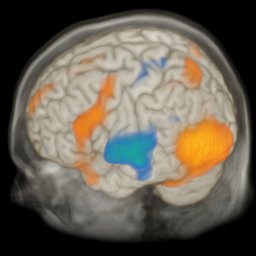 Jochen Weber合作论文数Dermatology Section, Memorial Sloan Kettering Cancer Center2
 Thad Polk合作论文数Department of Psychology, College of Literature, Science, and the Arts, University of Michigan-Ann Arbor2




