We show that the compactness gap between black holes and neutron stars witnessed in general relativity can disappear in Horava-Lifshitz (HL) gravity. Assuming a fermionic equation-of-state and solving the Tolman-Oppenheimer-Volkoff equation within the HL gravity framework, we find that there exists a f (q; y), above which the gap of the compactness between black hole and fermionic compact object vanishes, for a given deformation parameter q of HL and interaction strength y between fermions. Thus, in HL gravity, the mass and radius of an object found in the lower mass gap by LIGO-Virgo-KAGRA observations might not be able to classify it as a black hole or a neutron star. It is interesting to note that a fermion of mass 40 GeV can form a highly compact object of mass 10-4M circle dot and radius 1 m. Such configurations may be regarded as speculative candidates for a subcomponent of cold dark matter. In addition, we find evidence for the existence of another class of compact objects whose compactness approaches that of black holes.
This study presents a comparative evaluation of the seismic detection capabilities between the iGrav superconducting gravimeter (SG) at the Yemi Micro-Gravity Observatory (YeMiGO) and conventional broadband seismometers. We analyzed the initial 587-day observation period following the SG's installation to assess their relative response characteristics across varying epicentral distances.Under a unified analysis framework, the YeMiGO SG identified 398 seismic events, while the regional broadband seismometer network recorded 282 events.The preliminary results reveal a difference in relative sensitivity: whereas the detection threshold of broadband seismometers exhibits a more pronounced degradation as a function of distance, the SG maintains a relatively stable signal-to-noise ratio for far-field events. These findings suggest that the iGrav SG is less susceptible to the sensitivity loss typically associated with increasing epicentral distance. Consequently, the SG provides a more robust and extended detection range, serving as a powerful complementary tool to traditional inertial sensors for global seismic monitoring and deep-earth structure studies.
It is known that there exist theoretical limits on the mass of compact objects in general relativity. One is the Buchdahl limit for an object with an arbitrary equation-of-state, which turns out to be the limit for an object with a uniform density. Another one is the causal limit that is stronger than the Buchdahl limit and is related to the speed of sound inside an object. Similar theoretical limits on the mass of compact objects in deformed Hořava-Lifshitz (HL) gravity are found in this paper. Interestingly, both the uniform density limit and the sound speed limit curves converge with the horizon curve at its minimum, where a black hole becomes extremal, i.e., M=q, considering the Kehagias-Sfetsos vacuum, which is an asymptotically flat solution in the HL gravity.
We present the status of the Yemi micro-gravity observatory (YeMiGO), including the installation, operation, and initial analysis of the gravity data. In October 2022, we installed GWR Instruments Inc,’s iGrav (serial #001) superconducting gravimeter (SG) at Yemi underground laboratory (YemiLab) in South Korea. YemiLab is located approximately 1,008 and 118 meters below the Earth's surface and mean sea level, respectively. The noise characteristics were assessed using one month of raw data collected in September 2023 and compared to those of other seismometer stations. The results show the noise level at the SG station, especially in the seismic band, is significantly low and proves the stability of the Lab. The research findings also indicate that blasting during mining operations at a distance between ~700 and ~900 meters (please confirm this) from the SG impacted the dewar and barometer pressures as well as the tilt balance data. However, no discernible effects were observed in the raw SG data, leading to the hypothesis that the SG tilt system was able to compensate for the resulting vibrations. After 6 months of continuous data recording from 16th November 2022 to 18th May 2023, a calibration factor of -92.17 μGal∙V-1 was estimated using tidal analysis. In November 2023, a new calibration factor of -94.15 μGal∙V-1 was estimated using parallel measurements with FG5-231 provided by the Ministry of Interior, R.O.C. (Taiwan). Having accounted for various environmental effects, including Earth tide, atmospheric pressure, groundwater level, and polar motion, during the initial six months of data, the residual gravity was obtained. Spectral analysis revealed several unidentified residual gravity power spectrum density frequencies, necessitating further investigation. Co-seismic gravity changes resulting from four earthquakes in May 2023 with different magnitudes and within various distances from the SG station were examined. The M6.2 earthquake that occurred 765 km away was linked to the most notable co-seismic gravity alteration, which recorded a value of 0.561 μGal. The mentioned changes decreased gradually and faded away entirely within half an hour after the SG's first arrival.
We propose the establishment of an observational network comprising micro gravitometers across East Asia including, but not limited to Republic of Korea, Japan, Taiwan, and the Chinese mainland. The network will generate a parallel observation belt within the seismogenic zone that connects the Japan Trench, Ryuku Trenches, and Nankai Through, both constituent components of the Ring of Fire, for the detection of slight changes in micro-gravity for analyzing earthquakes of different magnitudes with different sources and depths. We will establish a data hub for sharing data, managing combined data format, and distributing computing resources for conducting collaborative research. In addition, the network measurement of micro-gravity can be used for searching the dark matter candidate inside Earth. The presentation demonstrates various science cases that could be undertaken by implementing a network of GWR Instruments Inc.’s superconducting gravimeters and a data hub within the East Asian region.
Installation, operation, and preliminary analysis of the superconducting gravimeter at the underground Yemi laboratory are presented. In October 2022, a superconducting gravimeter, iGrav#001, was installed at the Yemi laboratory in Korea, located 1008 m below the surface and 118 m below the mean sea level. The ultimate objective of the project is to monitor and analyze earthquake signals to enhance the current early warning systems. The noise analysis revealed that the noise level at YemiLab, particularly within the seismic band, is significantly low and close to the New Low Noise Model. It was found that blasting for mining at least 700 m away from the SG was recorded in the dewar and barometer pressures as well as tilt balance data. However, no effect was recorded in the raw SG data, indicating that the blasting vibration was compensated by the SG tilt system. Through five days of parallel measurements with an FG5 absolute gravimeter, a calibration factor of – 94.38 μGal∙V−1 was estimated. Residual gravity was calculated after removing environmental effects. The spectral analysis reveals several unknown frequencies in the power spectrum density of the residual gravity, which require additional analyses. Co-seismic gravity changes were investigated for an earthquake with 6.2 Mw and 765 km away from the SG station to investigate the sensitivity and capability of the SG for earthquake monitoring. The recorded gravity changes at the arrival time were 0.561 μGal, which gradually decreased and disappeared within half an hour after the first arrival at the SG.
Mid-frequency band gravitational-wave detectors will be complementary to the existing Earth-based detectors (sensitive above 10 Hz or so) and the future space-based detectors such as the Laser Interferometer Space Antenna (LISA), which will be sensitive below around 10 mHz. A ground-based superconducting omnidirectional gravitational radiation observatory (SOGRO) has recently been proposed along with several design variations for the frequency band of 0.1-10 Hz. For two conceptual designs of SOGRO (i.e. SOGRO and advanced SOGRO [aSOGRO]), we examine their multichannel natures, sensitivities, and science cases. One of the key characteristics of the SOGRO concept is its six detection channels. The response functions of each channel are calculated for all possible gravitational wave (GW) polarizations including scalar and vector modes. Combining these response functions, we also confirm the omnidirectional nature of SOGRO. Hence, even a single SOGRO detector will be able to determine the position of a source and polarizations of GWs, if detected. Taking into account SOGRO's sensitivity and technical requirements, two main targets are most plausible: GWs from compact binaries and stochastic backgrounds. Based on assumptions we consider in this work, detection rates for intermediate-mass binary black holes (in the mass range of hundreds up to $10<^>{5}\, M_\odot$) are expected to be 0.0065-8.1 yr-1. In order to detect the stochastic GW background, multiple detectors are required. Two aSOGRO detector networks may be able to put limits on the stochastic background beyond the indirect limit from cosmological observations.
The ground-based gravitational-wave telescopes such as LIGO, Virgo, and KAGRA are very complicated and sensitive compositions of advanced devices. Therefore, they are influenced not only by the mutual interaction among mechanical and electronics systems but also by the surrounding environment. To categorize and reduce noises from many channels interconnected by such instruments and environment for achieving the detection of gravitational waves, it needs to increase a signal-to-noise ratio and reduce false alarm rate from coincident spurious events. Therefore, it is of great importance to identify associations between inter-correlated channels. In this work, we present a novel tool called CAGMon for identifying (non-) linear couplings between inter-correlated channels, which can be applied to the practical cases of the gravitational-wave detector.
<p>We introduce the recent construction and current status of a deep underground microgravity laboratory, YeMiGO (Yemi Micro-Gravity Observatory), in South Korea. On October 2022, YeMiGO was built at the YemiLab in Jeongseon-gun, Gangwon-do Province, eastern mountain region of the Korean Peninsula. YemiLab is the underground experiment laboratory constructed and operated by the Institute of Basic Science (IBS) in South Korea, designed for a dark matter search project. Through a collaboration between the National Institute for Mathematical Sciences (NIMS) of IBS and the University of Calgary in Canada, GWR Instruments Inc.&#8217;s superconducting gravimeter, iGrav<sup>TM</sup> (serial #001) was installed in the joint lab, YeMiGO. YeMiGO&#8216;s surface coordinates are (37.190656N, 128.658326E, and 885m above the mean sea level (MSL)), and the gravimeter was installed at about 1,003m and 118m below the surface and MSL, respectively. In this paper, the construction of the lab, installation, and operation of iGrav<sup>TM</sup>, and its current status are presented. Detailed information on calibration, environmental noise characteristics, and its geophysical application will be also presented.&#160;</p>
Data analysis in modern science using extensive experimental and observational facilities, such as gravitational-wave detectors, is essential in the search for novel scientific discoveries. Accordingly, various techniques and mathematical principles have been designed and developed to date. A recently proposed approximate correlation method based on information theory has been widely adopted in science and engineering. Although the maximal information coefficient (MIC) method remains in the phase of improving its algorithm, it is particularly beneficial in identifying the correlations of multiple noise sources in gravitational-wave detectors including non-linear effects. This study investigates various prospects for determining MIC parameters to improve the reliability of handling multi-channel time-series data, reduce high computing costs, and propose a novel method of determining optimized parameter sets for identifying noise correlations in gravitational-wave data.
The gravitational-wave detector is a complex and sensitive collection of advanced instruments that are impacted not only by mechanical/electronics systems but also by the surrounding environment. Hence, it is of great importance to classify and mitigate noises to detect gravitational-wave signals by using information from many auxiliary channels related to such devices and surroundings. This improves the signal-to-noise ratio and reduces false alarms from coincident loud events. For this reason, it is essential for identifying coherent relationships between complex channels. This study presents a way of identifying (non-) linear couplings between associated channels by using the method of correlation coefficients. And we show that the method can be applied to practical problems in the gravitational-wave detector, such as noises by lightning strokes, air compressors vibrations, and noises caused by wind effects.
We report a deep learning-based emotion recognition method using EEG data collected while applying cosmetic creams. Four creams with different textures were randomly applied, and they were divided into two classes, "like (positive)" and "dislike (negative)", according to the preference score given by the subject. We extracted frequency features using well-known frequency bands, i.e., alpha, beta and low and high gamma bands, and then we created a matrix including frequency and spatial information of the EEG data. We developed seven CNN-based models: (1) inception-like CNN with four-band merged input, (2) stacked CNN with four-band merged input, (3) stacked CNN with four-band parallel input, and stacked CNN with single-band input of (4) alpha, (5) beta, (6) low gamma, and (7) high gamma. The models were evaluated by the Leave-One-Subject-Out Cross-Validation method. In like/dislike two-class classification, the average accuracies of all subjects were 73.2%, 75.4%, 73.9%, 68.8%, 68.0%, 70.7%, and 69.7%, respectively. We found that the classification performance is higher when using multi-band features than when using single-band feature. This is the first study to apply a CNN-based deep learning method based on EEG data to evaluate preference for cosmetic creams.
Advanced LIGO and Advanced Virgo are actively monitoring the sky and collecting gravitational-wave strain data with sufficient sensitivity to detect signals routinely. In this paper we describe the data recorded by these instruments during their first and second observing runs. The main data products are the gravitational-wave strain arrays, released as time series sampled at 16384 Hz. The datasets that include this strain measurement can be freely accessed through the Gravitational Wave Open Science Center at http://gw-openscience.org, together with data-quality information essential for the analysis of LIGO and Virgo data, documentation, tutorials, and supporting software.
The waveform templates of the matched filtering-based gravitational-wave search ought to cover wide range of parameters for the prosperous detection. Numerical relativity (NR) has been widely accepted as the most accurate method for modeling the waveforms. Still, it is well-known that NR typically requires a tremendous amount of computational costs. In this paper, we demonstrate a proof-of-concept of a novel deterministic deep learning (DL) architecture that can generate gravitational waveforms from the merger and ringdown phases of the non-spinning binary black hole coalescence. Our model takes ${\cal O}$(1) seconds for generating approximately $1500$ waveforms with a 99.9\% match on average to one of the state-of-the-art waveform approximants, the effective-one-body. We also perform matched filtering with the DL-waveforms and find that the waveforms can recover the event time of the injected gravitational-wave signals.
We present interesting aspects of neutron stars (NSs) from the standpoint of a modified theory of gravity called Ho.rava-Lifshitz (HL) gravity. A deviation from general relativity (GR) in HL gravity can change typical features of the NS structure. In this study, we investigate the NS structure by deriving the Tolman-Oppenheimer-Volkoff equation in HL gravity. We find that a NS in HL gravity with a larger radius and heavier mass than a NS in GR remains stable without collapsing into a black hole.
We present a new event trigger generator based on the Hilbert–Huang transform, named EtaGen ( $$\eta$$ Gen). It decomposes time-series data into several adaptive modes without imposing a priori bases on the data. The adaptive modes are used to find transients (excesses) in the background noises. A clustering algorithm is used to gather excesses corresponding to a single event and to reconstruct its waveform. The performance of EtaGen is evaluated by how many injections are found in the LIGO simulated data. EtaGen is viable as an event trigger generator when compared directly with the performance of Omicron, which is currently the best event trigger generator used in the LIGO Scientific Collaboration and Virgo Collaboration.
According to the World Health Organization (WHO), epilepsy is a neurological disease that affects about 6.5 million people, and it affects 3.52 out of every 1,000 people in Korea. About 30% of them are difficult to treat with drugs, so surgery must be treated. For this, it is important to accurately estimate the location of the epileptic lesion. Electroencephalography (EEG) plays an important role in monitoring brain activity and diagnosing epilepsy in patients with epilepsy, but detecting epilepsy activity requires a specialist analyzing long-term measured EEG records. However, this method is time consuming and requires a tedious process, and it is expensive to train experts. Therefore, we developed an algorithm aiming at fully automatic detection of seizures in long-term EEG data using the K-means clustering method, an unsupervised learning method. The automatic detection algorithm developed so far requires training data, that is, data labeled by an expert. Although detection is performed by unsupervised learning, there are cases where the false positive rate is very bad. In threshold-based analysis, there is a trade-off between sensitivity and false positives rate. Other studies do not have an automatic artifact removal method. In order to solve these problems, we developed an algorithm for automatically detecting and removing artifacts in the preprocessing stage, extracting features of ictal waves that appear during seizures, applying kmeans classification, and extracting events continuously detected in the post-processing stage. As a characteristic of the ictal wave, the average power spectral density (PSD) of two frequency bands of 1 to 5 Hz and 6 to 13 Hz was used. We have defined three artifacts that interfere with finding the seizure in EEG; Power line noise, slow sleep wave, inter-ictal spikes. Artifacts were detected and removed using the features of each artifact. The ictal wave signal and the background signal were classified using curvature from clear data scattered in 2D. To solve the unbalanced data, oversampling was used and then k-mean clustering was performed. In the post-processing step, only events detected continuously were filtered. In this process, we applied an adjusted threshold and obtained a sensitivity of 84.9% and a 0.093 false positive rate/hour for 21 subjects in the CHB-MIT data set. Our study showed superior results compared to previous actual unsupervised seizure detection studies.
In the dimensionally reduced model of the 2+1 dimensional cosmological massive gravity, we obtain the central charges of the two types of the black hole based on the entropy function method. One is for the BTZ black hole and the other one is actually for the warped AdS3 black hole. PACS numbers: 04.60.Kz
Since the first detection of gravitational-wave (GW), GW150914, September 14th 2015, the multimessenger astronomy added a new way of observing the Universe together with electromagnetic (EM) waves and neutrinos. After two years, GW together with its EM counterpart from binary neutron stars, GW170817 and GRB170817A, has been observed. The detection of GWs opened a new window of astronomy/astrophysics and will be an important messenger to understand the Universe. In this article, we briefly review the gravitational-wave and the astrophysical sources and introduce the basic principle of the laser interferometer as a gravitational-wave detector and its noise sources to understand how the gravitational-waves are detected in the laser interferometer. Finally, we summarize the search algorithms currently used in the gravitational-wave observatories and the detector characterization algorithms used to suppress noises and to monitor data quality in order to improve the reach of the astrophysical searches.
We present a new event trigger generator based on the Hilbert-Huang transform, named EtaGen ($\eta$Gen). It decomposes a time-series data into several adaptive modes without imposing a priori bases on the data. The adaptive modes are used to find transients (excesses) in the background noises. A clustering algorithm is used to gather excesses corresponding to a single event and to reconstruct its waveform. The performance of EtaGen is evaluated by how many injections in the LIGO simulated data are found. EtaGen is viable as an event trigger generator when compared directly with the performance of Omicron, which is currently the best event trigger generator used in the LIGO Scientific Collaboration and Virgo Collaboration.
 Wontae Kim合作论文数Department of Physics, Sogang University32
 Sang Hoon Oh合作论文数14
 John J. Oh合作论文数Division of Industrial Mathematics, National Institute for Mathematical Sciences12Youngmin Kim合作论文数11W Kim合作论文数7
 K. Kim合作论文数Korea Astron & Space Sci Inst6Myungseok Yoon合作论文数6P. Jung合作论文数4
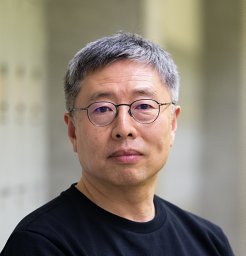 Jeong Woo Kim合作论文数Department of Information and Industrial Engineering, Yonsei University4Myungseok Eune合作论文数4
 Jess McIver合作论文数Department of Physics & Astronomy, The University of British Columbia3Taeyoon Moon合作论文数3
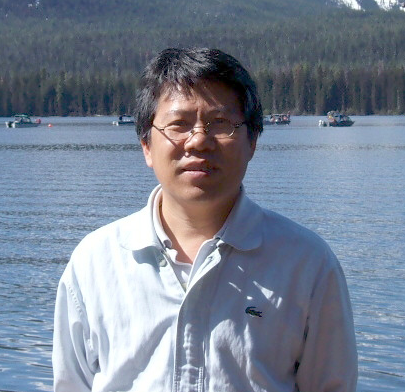 Yun Soo Myung合作论文数School of Computer Aided Science, Inje University/Department of Physics, Graduate School, Inje University3Florent Robinet合作论文数3
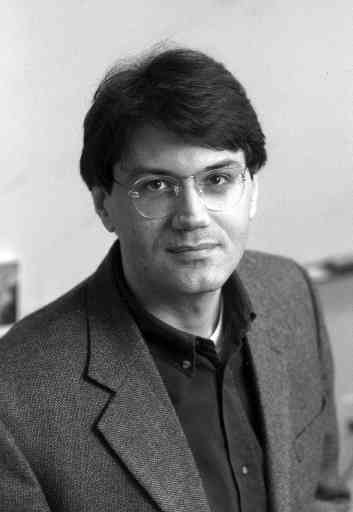 E. C. Katsavounidis合作论文数Department of Physics, Kavli Institute for Astrophysics and Space Research, Massachusetts Institute of Technology;Laser Interferometer Gravitational-wave Observatory, Massachusetts Institute of Technology2Takaaki Yokozawa合作论文数2
 G. Cho合作论文数Seoul Natl Univ2Joongoo Lee合作论文数Northwestern Univ, Dept Chem & Biol Engn, Evanston, IL 60208 USA2
 Chunglee Kim合作论文数2Chan Park合作论文数Natl Inst Math Sci2T. Washimi合作论文数2G. Kang合作论文数2
 Chang-Hwan Lee合作论文数Department of Physics, Pusan National University2
 Hyung Mok Lee合作论文数Department of Physics and Astronomy, Seoul National University;Korea Astronomy and Space Science Institute2K. A. Hodge合作论文数Dept Phys, CALTECH2Junwei Cao (曹军威)合作论文数2Ik Woo合作论文数2
 Ian W. Harry合作论文数Cardiff School of Physics and Astronomy|Cardiff University2
 Dong-Uk Hwang合作论文数McKnight Brain Institute, University of Florida2Dorota Rosinska合作论文数1Rakesh Kumar合作论文数1Zsuzsanna Marka合作论文数1Leonid Prokhorov合作论文数1Peter G. Murray合作论文数1Anna C. Green合作论文数1Shivaraj Kandhasamy合作论文数1Dong Lak Kim合作论文数1Richard L. Savage合作论文数1Akshat Singhal合作论文数1Cinzia Di Giorgio合作论文数1Michal Was合作论文数1Gianluca M. Guidi合作论文数1S. V. Angelova合作论文数1Chad Hanna合作论文数1C. K. Cheong合作论文数1Deirdre M. Shoemaker合作论文数1R. K. Lanza合作论文数1Jeffrey S. Kissel合作论文数1D. J. Vine合作论文数1




