Seven-barrel micropipettes were used to apply drugs microiontophoretically to single units in the dorsal cochlear nucleus (DCN) in chloralose-anaesthetised guinea-pigs. While both agonists and antagonists of putative neurotransmitters in the cochlear nucleus have been investigated in these experiments, the main thrust has been to explore the influence of specific antagonists on cells' spectral and temporal properties, thus elucidating the effects of naturally occurring inhibitory transmitters. At least five types of inhibition appear to be pharmacologically/physiologically separable: (1) Stimulus-evoked tonic ''lateral/sideband'' inhibition: glycinergic; (blocked by strychnine); responsible for the lateral inhibition of dorsal cochlear nucleus (DCN) type III and IV cells. Strychnine has its predominant effect on sustained (lateral) inhibition compared with the more transient forms of inhibition. Subtraction of receptive field maps enables us to visualise the extent of the inhibitory receptive field. It extends virtually throughout the unit's response field for both these classes but is generally, especially in type IV cells, maximal at the characteristic frequency (CF). This type of inhibition will primarily be responsible for enhancing spectral contrasts in the way that, in the visual system, surround inhibition enhances visual contrast. Furthermore, lateral inhibitory sidebands can ''bias'' the ''working point'' of a cell's response so that the dynamic range of effective stimuli and response can be ''tended. (2) ''Background'' tonic inhibition: GABA(A)ergic; (blocked by bicuculline). Blocking this inhibition generally results in an increase in the background (i.e., spontaneous) activity. This inhibition is probably responsible for adjusting excitatory-inhibitory contrasts in both spectral and temporal domains. (3) Stimulus-related off-inhibition appears to be neither glycinergic nor GABA(A)ergic. Blocking these receptors actually enhances off-inhibition. Nicotinic cholinergic blockers may have a small effect on off-inhibition, but so far we have not been able to block it entirely. This off-inhibition is important for enhancing temporal contrast. This inhibition must, therefore, be mediated by other transmitters, yet undetermined, or by a local feedback circuit or, less likely, be a membrane-based after-effect of stimulation. (4) Pre-synaptic inhibition, mediated by GABA(B) receptors presumed to act on primary afferent terminals, thus controlling afferent input to DCN principal cells. (5) Short-latency contralateral inhibition, mediated by glycine.
We have investigated responses of the auditory nerve fibres (ANFS) and anteroventral cochlear nucleus (AVCN) units to narrowband 'single-formant' stimuli (SFSS). We found that low and medium spontaneous rate (SR) ANFS maintain greater amplitude modulation (AM) in their responses at high sound levels than do high SR units when sound level is considered in dB SPL. However, this partitioning of high and low SR units disappears if sound level is considered in dB relative to unit threshold. Stimuli with carrier frequencies away from unit best frequency (BF) were found to generate higher AM in responses at high sound levels than that observed even in most low and medium SR units for stimuli with carrier frequencies near BF. AVCN units were shown to have increased modulation depth in their responses when compared with high SR ANFS with similar BFS and to have increased or comparable modulation depth when compared with low SR ANFS. At sound levels where AM almost completely disappears in high SR ANFS, most AVCN units we studied still show significant AM in their responses. Using a dendritic model, we investigated possible mechanisms of enhanced AM in AVCN units, including the convergence of inputs from different SR groups of ANFS and a postsynaptic threshold mechanism in the soma.
The shape and effective bandwith of the critical band centered around 500 Hz was examined by a tone-in-noise detection experiment in monaural and binaural listening conditions. In the binaural conditions, the interaural phase relation of the noise masker was reversed from π to 0 (or vice versa) above a certain "edge" frequency. The masked threshold of a 500 Hz Sπ probe tone was determined as a function of this edge frequency. In a comparable monaural experiment the spectral density of the noise masker was increased (or decreased, respectively) by 15 dB above the edge frequency. In normal listeners the critical band filter was larger in the binaural than in the monaural condition by an average factor of 1.2. In most of 19 impaired listeners the binaural critical bandwith exceeds the largest individual monaural critical bandwith at both ears which on the average was larger than in normals. In addition, no definite relation was found between the critical bandwith and several parameters of speech intelligibility in a (simulated) spatial environment. These results indicate that impaired subject's deteriorated speech perception in noise can not satisfactorily be explained by increased monaural and binaural critical bands.
Deterioration followed by recovery of behavioural absolute threshold and frequency selectivity has been observed in guinea pigs following kanamycin administration of 200 mg/kg body weight daily for 16 days. Deterioration in function consistently follows a high-to-low frequency pattern and recovery generally occurs at the lowest of the high (8-32 kHz) frequencies affected. The degree of recovery is related to the magnitude of the threshold elevation; where large (40-45 dB) elevations occur initially, the process appears to be partial since threshold recovers only to within 5-12 dB of pre-administration levels. In instances where smaller threshold elevations (5-20 dB) take place initially, recovery can sometimes be complete. However, when threshold elevations of over 50 dB occur, no recovery is apparent. Recovery is relatively slow, taking place over periods of up to 100 days post-kanamycin administration. Hair cell counts have established that the threshold elevation which remains in instances of partial recovery is not related to a reduction in hair cell numbers at the light microscope level.
A complex tone often evokes a pitch sensation associated with its extreme spectral components, besides the holistic pitch associated with its fundamental frequency. We studied the edge pitch created at the upper spectral edge of complexes with a low-pass spectrum by asking subjects to adjust the frequency of a sinusoidal comparison tone to the perceived pitch. Measurements were performed for different values of the fundamental frequency and of the upper frequency of the complex as well as for three different phase relations of the harmonic components. For a wide range of these parameters the subjects could adjust the comparison tone with a high accuracy, measured as the standard deviation of repeated adjustments, to a frequency close to the nominal edge frequency. The detailed dependence of the matching accuracy on temporal parameters of the harmonic complexes suggests that the perception of the edge pitch in harmonic signals is related to the temporal resolution of the hearing system. This resolution depends primarily on the time constants of basilar-membrane filters and on additional limitations due to neuronal processes.
The equivalent rectangular bandwidths of auditory filters have been measured behaviourally in guinea-pigs with comb-filtered and notch-filtered noise masking and compared with physiological measurements on single fibres of the cochlear nerve in the same species. A high degree of correspondence between the physiological and behavioural data suggests that the bandwidth of auditory tuning is already determined at the level of the cochlea.
 Robert V. Harrison合作论文数Department of Physiology, Temerty Faculty of Medicine, University of Toronto;Institute of Medical Science, University of Toronto;Auditory Science Laboratory, SickKids Research Institute7
 Ic Whitfield合作论文数5Palmer Alan R合作论文数5Sr Pratt合作论文数2Pick, G.F.合作论文数2Wilson J P合作论文数2J.P. Wilson合作论文数2Peter M Narins合作论文数2Nigel P. Cooper合作论文数2Carole M Hackney合作论文数2P Divenyi合作论文数1Dn Furness合作论文数1Ajm Houtsma合作论文数1Hf Ross合作论文数1
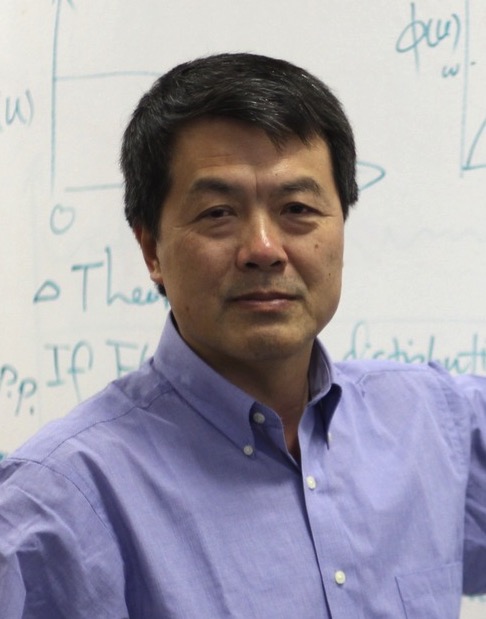 Xiaoqin Wang (王小勤)合作论文数Tsinghua Laboratory of Brain and Intelligence;Laboratory of Auditory Neurophysiology, Department of Biomedical Engineering, Johns Hopkins University1
 Armin Kohlrausch合作论文数Eindhoven University of Technology/Philips Research1
 Birger Kollmeier合作论文数Oldenburg Branch for Hearing, Speech and Audio Technology HSA at Fraunhofer Institute for Digital Media Technology;Department for Medical Physics and Acoustics at Carl von Ossietzky University of Oldenburg1Claus Elberling合作论文数1Bertram Scharf合作论文数1
 Huib Versnel合作论文数Rudolf Magnus Institute of Neuroscience, University Medical Center Utrecht1
 Inga Holube合作论文数Institute of Hearing Technology;University of Applied Science Oldenburg;Institute of Hearing Technology, University of Applied Science Oldenburg1Ruurd Schoonhoven合作论文数1James O. Pickles合作论文数1Carole M. Hackney合作论文数1
 Murray B. Sachs合作论文数Department of Biomedical Engineering, Johns Hopkins University;Center for Hearing Sciences, Johns Hopkins University1SD COMIS合作论文数1




