Dynamical properties are notoriously difficult to compute in numerical treatments of the Fermi-Hubbard model, especially in two spatial dimensions. However, they are essential in providing us with insight into some of the most important and less well-understood phases of the model, such as the pseudogap and strange metal phases at relatively high temperatures, or unconventional superconductivity at lower temperatures, away from the commensurate filling. Here, we use the numerical linked-cluster expansions to compute spin and charge optical conductivities of the model at different temperatures and strong interaction strengths via the exact real-time-dependent correlation functions of the current operators. We mitigate systematic errors associated with having a limited access to the long-time behavior of the correlators by introducing fits and allowing for non-zero Drude weights when appropriate. We compare our results to available data from optical lattice experiments and find that the Drude contributions can account for the theory-experiment gap in the DC spin conductivity of the model at half filling in the strong-coupling region. Our method helps paint a more complete picture of the conductivity in the two-dimensional Hubbard model and opens the door to studying dynamical properties of quantum lattice models in the thermodynamic limit.
Large language models (LLMs) have demonstrated remarkable progress in coding and mathematical problem-solving; however, evaluation on advanced research-level problems in the hard sciences remains scarce. To fill this gap, we present \cmt, a dataset of 50 original problems covering condensed matter theory (CMT) at the level of an expert researcher. The topics cover analytical and computational approaches commonly used in quantum many-body physics as well as classical statistical mechanics. This dataset was designed and verified by a panel of expert researchers from around the world. We built the dataset through a collaborative environment that challenges the panel to write and refine difficult problems that the panel would like their research assistants to be able to solve, with topics including Hartree-Fock mean-field theory, exact diagonalization, quantum Monte Carlo, density matrix renormalization group, quantum statistical mechanics, classical statistical mechanics, and model building. We evaluate different LLMs by programmatically checking LLM-generated solutions against expert-supplied ground truth. For this, we developed machine-grading mechanisms that are suitable for advanced physics research problems. For example, we handle non-commuting operators that are essential for quantum many-body problems by symbolic manipulation and normal ordering. Our evaluations show that frontier models struggle with all of the problems in the dataset, highlighting a gap in the physical reasoning skills of current LLMs. Notably, experts identified strategies for creating increasingly difficult problems by interacting with the LLMs and exploiting common failure modes. While the highest-performing model, GPT5, correctly solves 30\% of the problems, average performance across 17 models (GPT, Gemini, Claude, DeepSeek, and Llama classes) is only 11.4$\pm$2.1\%. Moreover, our benchmark contains 18 problems that {\it not a single one} of the 17 models can correctly solve, and 26 problems that are solved by {\it at most} one model. These currently unsolvable problems span the fields of Quantum Monte Carlo, Variational Monte Carlo, and Density Matrix Renormalization Group. The answers sometimes violate fundamental symmetries or have unphysical scaling dimensions. We believe that this benchmark set provides valuable guidance for the future development of language models, aiming to achieve the goal of AI research assistants and tutors.
Since 2019, eighteen NSF Research Traineeship (NRT) awards in quantum information science and engineering (QISE) and adjacent fields have been funded, constituting the largest NSF-coordinated investment in graduate QISE training in the United States. Synthesizing lessons from our programs, we work through the central tensions that every QISE graduate program must negotiate: between depth in a home discipline and breadth across the field, between structured instruction and open-ended experiential and hands-on learning, and between training individual specialists and cultivating teams that collectively cover all areas of QISE. We describe the structural and pedagogical innovations the NRT programs have developed in response, assess what is working and what remains unresolved, and sketch 12 open problems the community will need to address as QISE graduate education scales beyond the well-resourced research universities where it has up till now been mainly concentrated. Eight concrete recommendations follow: (1) adopt the startup model of team-based training as an organizing philosophy; (2) invest immediately in sensing and communication curriculum development; (3) build student agency into program governance, not just activities; (4) establish structural mechanisms for industrial engagement rather than depending on goodwill; (5) design for sustainability from year one; (6) develop graduate-level textbooks spanning all three QISE pillars: computing, sensing, and communications; (7) establish shared outcome assessment instruments across programs; and (8) develop structured mechanisms for faculty professional development in QISE.
We use determinant quantum Monte Carlo to study the half-filled "bond-Holstein" model on a square lattice. We find that the model exhibits a charge-density-wave (CDW) phase transition with a critical temperature Tcdw considerably higher than that of the canonical "site-Holstein" model. Using a finite-size scaling analysis of the charge structure factor Scdw, we obtain Tcdw to greater than 1% accuracy. At the same time, local observables also show clear signatures consistent with the transition temperatures inferred from our scaling analysis. We attribute the enhanced CDW tendencies to a phonon-mediated nearest-neighbor electron repulsion that is directly proportional to the dimensionless electron-phonon coupling lambda in the atomic (t -* 0) limit. This behavior contrasts with the site-Holstein case, where the same limit yields only an on-site attraction. We supplement our analysis with results from several unsupervised machine learning methods, which not only confirm our estimates of Tcdw but also provide insight into the high-temperature crossover between a metallic and bipolaron liquid regime.
The Kagome lattice Fermi-Hubbard model is one of the most physically rich, and at the same time most challenging, models to study in strongly-correlated physics. Among its special features are geometric frustration and a flat energy band that create conditions favorable to ferromagnetism near the band insulating limit. Here, we utilize two exact finite-temperature methods, the numerical linked-cluster expansion and the determinant quantum Monte Carlo, to study the extent as well as doping and interaction dependence of ferromagnetic correlations and other thermodynamic properties of the model. We find that repulsive interactions enhance ferromagnetic correlations at high electron densities and that increasing the interaction strength, extends the region with strong ferromagnetic correlations towards half filling, smoothly connecting it to Nagaoka ferromagnetism near the Mott insulating region. We also use the charge compressibility to obtain an accurate estimate for the critical interaction strength for the metal-insulator transition at half filling. These results improve our understanding of the magnetic tendencies of the model away from half filling and pave the way for further studies, including with ultracold atoms in optical lattices.
Neural-network quantum states have emerged as a powerful variational framework for quantum many-body systems, with recent progress often driven by massively parallel architectures such as transformers. Recurrent neural network quantum states, however, are frequently regarded as intrinsically sequential and therefore less scalable. Here we revisit this view by showing that modern recurrent architectures can support fast, accurate, and computationally accessible neural quantum state simulations. Using autoregressive recurrent wave functions together with recent advances in parallelizable recurrence, we develop variational ansätze, called parallel scan recurrent neural quantum states (PSR-NQS), which can be trained efficiently within variational Monte Carlo in one and two spatial dimensions. We demonstrate accurate benchmark results and show that, with iterative retraining, our approach reaches two-dimensional spin lattices as large as 52×52 while remaining in agreement with available quantum Monte Carlo data. Our results establish recurrent architectures as a practical and promising route toward scalable neural quantum state simulations with modest computational resources.
We employ the "learning by confusion" technique, an unsupervised machine learning approach for detecting phase transitions, to analyze quantum Monte Carlo simulations of the two-dimensional Holstein model-a fundamental model for electron-phonon interactions on a lattice. Utilizing a convolutional neural network, we conduct a series of binary classification tasks to identify Holstein critical points based on the neural network's learning accuracy. We further evaluate the effectiveness of various training datasets, including snapshots of phonon fields and other measurements resolved in imaginary time, for predicting distinct phase transitions and crossovers. Our results culminate in the construction of the finite-temperature phase diagram of the Holstein model.
The tension between fermion pairing and magnetism affects numerous strongly correlated electron systems, from high-temperature cuprates to twisted bilayer graphene. Exotic forms of fermion pairing and superfluidity are predicted when attraction between fermions competes with spin doping. Here, we follow the evolution of fermion pairing and charge and spin order in a spin-imbalanced attractive Hubbard gas of fermionic ^40K atoms, covering a wide range of densities, magnetizations, and interactions with single-atom resolution. At low spin imbalance and weak interactions, we find a mixture of nonlocal fermion pairs coexisting with itinerant excess fermions. For stronger interactions an effective hard-core Bose-Fermi mixture emerges. Spin doping drives a crossover from charge-density wave correlations to a Fermi liquid of polarons. Beyond a certain spin imbalance and interaction strength, we find evidence for the onset of combined spin- and pair-density wave order, a possible precursor for the existence of magnetized superfluidity in the attractive Hubbard system.
Neural quantum states (NQSs) have emerged as a powerful ansatz for variational quantum Monte Carlo studies of strongly correlated systems. Here, we apply recurrent neural networks (RNNs) and autoregressive transformer neural networks to the Fermi-Hubbard and the (non-Hermitian) Hatano-Nelson-Hubbard models in one and two dimensions. In both cases, we observe that the convergence of the RNN ansatz is challenged when increasing the interaction strength. We present a physically motivated and easy-to-implement strategy for improving the optimization, namely, by ramping of the model parameters. Furthermore, we investigate the advantages and disadvantages of the autoregressive sampling property of both network architectures. For the Hatano-Nelson-Hubbard model, we identify convergence issues that stem from the autoregressive sampling scheme in combination with the non-Hermitian nature of the model. Our findings provide insights into the challenges of the NQS approach and make the first step towards exploring strongly correlated electrons using this ansatz.
While the exact phase diagram of the Fermi-Hubbard model remains poorly understood despite decades of progress, nearly 60 years ago Nagaoka proved that a single dopant in an otherwise half-filled Hubbard system can bring about ferromagnetism through kinetic means. The phenomenon was recently observed with ultracold atoms in triangular optical lattices. Here, we explore the kinetic ferromagnetism within the square lattice Hubbard model and its strong-coupling counterpart, the t - J model, at finite temperatures in the thermodynamic limit via numerical linked-cluster expansions. We find evidence of ferromagnetic Nagaoka polarons at dopings up to similar to 30% away from half filling for a variety of interaction strengths and at temperatures as low as 0.2 of the hopping energy. We map out the boundaries of this phase through analyzing various correlation functions.
Quantum interference can deeply alter the nature of many-body phases of matter. In the paradigmatic case of the Hubbard model, Nagaoka famously proved that introducing a single itinerant charge can transform a paramagnetic insulator into a ferromagnet through path interference. However, a microscopic observation of such kinetic magnetism induced by individually imaged dopants has been so far elusive. Here we demonstrate the emergence of Nagaoka polarons in a Hubbard system realized with strongly interacting fermions in a triangular optical lattice. Using quantum gas microscopy, we reveal these polarons as extended ferromagnetic bubbles around particle dopants arising from the local interplay of coherent dopant motion and spin exchange. In contrast, kinetic frustration due to the triangular geometry promotes antiferromagnetic polarons around hole dopants, as proposed by Haerter and Shastry. Our work augurs the exploration of exotic quantum phases driven by charge motion in strongly correlated systems and over sizes that are challenging for numerical simulation.
The development of quantum gas microscopy for two-dimensional optical lattices has provided an unparalleled tool to study the Fermi-Hubbard model (FHM) with ultracold atoms. Spin-resolved projective measurements, or snapshots, have played a significant role in quantifying correlation functions, theory verification, and thus the uncovering of underlying physical phenomena such as antiferromagnetism at commensurate filling on bipartite lattices and other charge and spin correlations, as well as dynamical properties at various densities. Here we employ a recent concept, the multiscale structural complexity, and show that when computed for the snapshots (of single spin species, local moments, or total density) it can provide a theory-free property, immediately accessible to experiments. Specifically, after benchmarking results for Ising and $XY$ models, we study the structural complexity of snapshots of the repulsive FHM in the two-dimensional square lattice as a function of doping and temperature. We generate projective measurements using determinant quantum Monte Carlo and compare their complexities against those from the experiment. We demonstrate that these complexities are linked to relevant physical observables such as the entropy and double occupancy. Their behaviors capture the development of correlations and relevant length scales in the system. We provide an open-source code in python which can be implemented into data analysis routines in experimental settings for the square lattice.
Quantum gas microscopy has developed into a powerful tool to explore strongly correlated quantum systems. However, discerning phases with topological or off-diagonal long range order requires the ability to extract these correlations from site-resolved measurements. Here, we show that a multi-scale complexity measure can pinpoint the transition to and from the bond ordered wave phase of the one-dimensional extended Hubbard model with an off-diagonal order parameter, sandwiched between diagonal charge and spin density wave phases, using only diagonal descriptors. We study the model directly in the thermodynamic limit using the recently developed variational uniform matrix product states algorithm, and draw our samples from degenerate ground states related by global spin rotations, emulating the projective measurements that are accessible in experiments. Our results will have important implications for the study of exotic phases using optical lattice experiments.
The development of quantum gas microscopy for two-dimensional optical lattices has provided an unparalleled tool to study the Fermi-Hubbard model (FHM) with ultracold atoms. Spin-resolved projective measurements, or snapshots, have played a significant role in quantifying correlation functions which uncover underlying physical phenomena such as antiferromagnetism at commensurate filling on bipartite lattices, and other charge and spin correlations, as well as dynamical properties at various densities. However, in order to interpret these results and to establish temperature scales, comparison against theory is generally needed. Here, we employ a recent concept, the {\em multi-scale structural complexity}, and show that when computed for the snapshots (of either single spin species, local moments, or total density) it can provide a theory-free property, immediately accessible to experiments. Specifically, after benchmarking results for Ising and XY models, we study the structural complexity of snapshots of the repulsive FHM in the two-dimensional square lattice as a function of doping and temperature. We generate projective measurements using determinant quantum Monte Carlo and compare their complexities against those from the experiment. We demonstrate that these complexities are linked to relevant physical observables such as the entropy and double occupancy. Their behaviors capture the development of correlations and relevant length scales in the system. We provide an open-source code in Python which can be implemented into data analysis routines in experimental settings for the square lattice.
Recent proposals have suggested the use of supervised learning with convolutional neural networks to shed light on some of the less well known phases of the Fermi-Hubbard model through the classification of snapshots from the quantum gas microscopy of ultracold atoms in optical lattices. However, there have been challenges in the interpretability of networks with more than one convolutional filter coupled to the input images. Here, we expand on previous work by considering multiple filters in the first convolutional layer and developing a process for analyzing the physical relevance of patterns obtained in the trained filters. We benchmark our approach at half-filling, where strong antiferromagnetic correlations are known to be present, and we find that upon hole doping, previously unknown patterns arise at temperatures below the tunneling amplitude. These patterns may be a signature of interesting arrangements of fermions in the lattice.
We study the SU(3) symmetric Fermi-Hubbard model (FHM) in the square lattice at $1/3$-filling using numerically exact determinant quantum Monte Carlo (DQMC) and numerical linked-cluster expansion (NLCE) techniques. We present the different regimes of the model in the $T-U$ plane, which are characterized by local and short-range correlations, and capture signatures of the metal-insulator transition and magnetic crossovers. These signatures are detected as the temperature scales characterizing the rise of the compressibility, and an interaction-dependent change in the sign of the diagonal spin-spin correlation function. The analysis of the compressibility estimates the location of the metal-insulator quantum critical point at $U_c/t \sim 6$, and provides a temperature scale for observing Mott physics at finite-$T$. Furthermore, from the analysis of the spin-spin correlation function we observe that for $U/t \gtrsim6$ and $T \sim J = 4t^2/U$ there is a development of a short-range two sublattice (2-SL) antiferromagnetic structure, as well as an emerging three sublattice (3-SL) antiferromagnetic structure as the temperature is lowered below $T/J \lesssim 0.57$. This crossover from 2-SL to 3-SL magnetic ordering agrees with Heisenberg limit predictions, and has observable effects on the density of on-site pairs. Finally, we describe how the features of the regimes in the $T$-$U$ plane can be explored with alkaline-earth-like atoms in optical lattices with currently-achieved experimental techniques and temperatures. The results discussed in this manuscript provide a starting point for the exploration of the SU(3) FHM upon doping.
The Hubbard model is an essential tool for understanding many-body physics in condensed matter systems. Artificial lattices of dopants in silicon are a promising method for the analog quantum simulation of extended Fermi-Hubbard Hamiltonians in the strong interaction regime. However, complex atom-based device fabrication requirements have meant emulating a tunable two-dimensional Fermi-Hubbard Hamiltonian in silicon has not been achieved. Here, we fabricate 3 × 3 arrays of single/few-dopant quantum dots with finite disorder and demonstrate tuning of the electron ensemble using gates and probe the many-body states using quantum transport measurements. By controlling the lattice constants, we tune the hopping amplitude and long-range interactions and observe the finite-size analogue of a transition from metallic to Mott insulating behavior. We simulate thermally activated hopping and Hubbard band formation using increased temperatures. As atomically precise fabrication continues to improve, these results enable a new class of engineered artificial lattices to simulate interactive fermionic models.
Acoustic metamaterials are engineered microstructures with special mechanical and acoustic properties enabling exotic effects such as wave steering, focusing and cloaking. In this research, we develop a new machine learning framework for predicting optimal metastructures such as planar configurations of scatterers with specific functionalities. Specifically, we implement this framework by combining probabilistic generative modeling with deep learning and propose two models: a conditional variational autoencoder (CVAE) and a supervised variational autoencoder (SVAE) model. As an application of the method, here we design an acoustic cloak considering a minimization of total scattering cross-section (TSCS) for a set of cylindrical obstacles. We work with the sets of cylindrical objects confined in a region of space and streamline the design of configurations with minimal TSCS, demonstrating broadband cloaking effect at discrete sets of wavenumbers. After establishing the artificial neural networks that are capable of learning the TSCS based on the location of cylinders, we discuss our inverse design algorithms, combining variational autoencoders and the Gaussian process, for predicting optimal arrangements of scatterers given the TSCS. We show results for up to eight cylinders and discuss the efficiency and other advantages of the machine learning approach.
Numerical approaches to the correlated electron problem have achieved considerable success, yet are still constrained by several bottlenecks, including high order polynomial or exponential scaling in system size, long autocorrelation times, challenges in recognizing novel phases, and the Fermion sign problem. Methods in machine learning (ML), artificial intelligence, and data science promise to help address these limitations and open up a new frontier in strongly correlated quantum system simulations. In this paper, we review some of the progress in this area. We begin by examining these approaches in the context of classical models, where their underpinnings and application can be easily illustrated and benchmarked. We then discuss cases where ML methods have enabled scientific discovery. Finally, we will examine their applications in accelerating model solutions in state-of-the-art quantum many-body methods like quantum Monte Carlo and discuss potential future research directions.
 Richard T. Scalettar合作论文数Department of Physics and Astronomy, University of California, Davis33
 Marcos Rigol合作论文数Department of Physics, Eberly College of Science, Pennsylvania State University23
 Mark Jarrell合作论文数Department of Physics & Astronomy, College of Science, Louisiana State University18
 Alexandru Macridin合作论文数University of Cincinnati12
 Thereza Paiva合作论文数UFRJ10
 Martin Zwierlein合作论文数Department of Physics, Center for Ultracold Atoms and Research Laboratory of Electronics, Massachusetts Institute of Technology9Melih Okan合作论文数8
 Lawrence Cheuk合作论文数Department of Physics, Princeton University8Matthew A. Nichols合作论文数Department of Physics, University of California8
 Karlis Mikelsons合作论文数8
 Dimitrios Galanakis合作论文数8Elmer Guardado-Sanchez合作论文数6
 Thomas Hartke合作论文数MIT, MIT Harvard Ctr Ultracold Atoms6Enrique Mendez合作论文数6
 Feruza Amirkulova合作论文数San Jose State Univ, Mech Engn Dept, San Jose, CA 95192 USA6
 Waseem Bakr合作论文数Department of Physics, Princeton University6
 Rajiv Singh合作论文数Department of Physics and Astronomy, University of California, Davis6
 Nandini Trivedi合作论文数Department of Physics, College of Arts and Sciences, The Ohio State University6
 S. Johnston合作论文数Stanford Institute for Materials and Energy Science;National Accelerator Laboratory, SLAC;Stanford University;Stanford Institute for Materials and Energy Science, Stanford University6
 Juan Carrasquilla合作论文数Escuela de Física;Universidad Nacional de Colombia6J. Moreno合作论文数5Thang Tran合作论文数5
 Eduardo Ibarra-García-Padilla合作论文数Dept Phys, Rice Univ5
 Sriram Shastry合作论文数Physical & Biological Sciences Division, Physics Department, University of California, Santa Cruz5Edward Perepelitsky合作论文数5
 Juana Moreno合作论文数Physics Department;University of North Dakota;Physics Department, University of North Dakota5
 Benjamin M. Spar合作论文数Dept Phys, Princeton Univ4
 Natanael C Costa合作论文数Instituto de Física, Universidade Federal do Rio de Janeiro4
 Senthil Todadri合作论文数Department of Physics, Massachusetts Institute of Technology4
 Shaozhi Li (李绍直)合作论文数Department of Physics, College of Sciences, Northeastern University4Tang Baoming合作论文数Department of Physics, Georgetown University4
 Thomas Devereaux合作论文数Stanford University;SLAC National Accelerator Laboratory4Stephanie Striegel合作论文数3Michael Mulanix合作论文数3
 Philip M. Dee合作论文数Dept Phys, Univ Florida3Kelvin Ch'ng合作论文数3
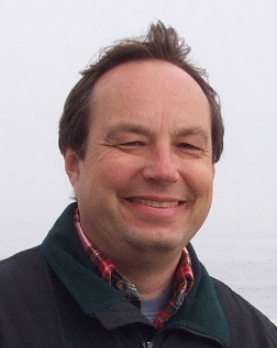 Mark Srednicki合作论文数Department of Physics, University of California, Santa Barbara3
 Stephen Edkins合作论文数Laboratory of Atomic and Solid State Physics, Cornell University;School of Physics and Astronomy, University of St. Andrews;Cornell University, University of St. Andrews3
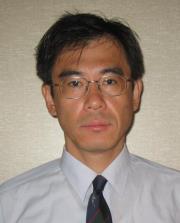 Hiroshi Eisaki (永崎洋)合作论文数Research Institute for Advanced Electronics and Photonics, National Institute of Advanced Industrial Science and Technology3
 David Huse合作论文数Department of Physics, Princeton University3
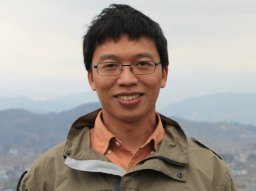 Shuxiang Yang合作论文数3Zhang Hao合作论文数3Hao Zhang (张昊)合作论文数Jiangxi Normal University3
 Randall G. Hulet合作论文数Department of Physics and Astronomy, Wiess School of Natural Sciences, Rice University3
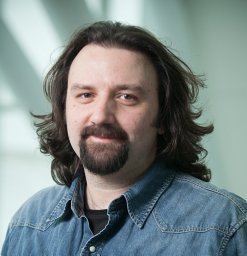 Andrej Mesaros合作论文数Universiteit3
 Che-Rung Lee合作论文数National Tsing Hua University3
 Guido Pupillo合作论文数QPerfect;European Center for Quantum Sciences;Institut de Science et D'Ingénierie Supramoléculaires, University of Strasbourg3Eun-Ah Kim合作论文数2Lev Haldar Kendrick合作论文数2




