We present magneto-optical studies of a self-assembled semiconductor quantum dot in neutral and positively charged states. The diamagnetic shifts and Zeeman splitting of many well-identified optical transitions are precisely measured. Remarkably, a pronounced negative diamagnetic shift is observed for spectral lines resulting from a doubly positively charged excitonic complex. We use the Hartree-Fock approximation for describing the direct Coulomb and exchange interactions between the quantum dot confined carriers in various configurations. A simple harmonic potential model, which we extend to capture the influence of an externally applied magnetic field in Faraday configuration, is then used to quantitatively account for all the measured diamagnetic shifts. We show that the negative shift is due to the change in the hole-hole exchange interaction energy induced by the magnetic field. Using this model and the measured shifts we extract the dielectric constant of the quantum dot material and get a decent estimate of the quantum dot dimensions. Further, the measured Zeeman splitting of the various spectral lines are also explained by a simple model using algebraic sums and differences of the g factors of the confined charge carriers in their respective first and second discrete energy levels. Finally, the obtained values of the electronic g factor and that of the dielectric constant are independently used to determine the effective composition (x) of the ternary InxGa1-xAs quantum dot. Both agree to within the experimental uncertainties.
Nuclear spins of noble gases exhibit exceptionally long coherence times and can potentially serve as a long-lived storage medium for quantum information. We analyze and compare the performance of two mechanisms for mapping the quantum state of light onto the collective spin state of noble gases. The first mechanism utilizes collisional exchange with the electronic spin state of metastable noble-gas atoms, while the second relies on spin-exchange collisions with ground-state alkali-metal atoms. We describe the operation of an optical quantum memory relying on these two mechanisms using a compact model and study strategies that optimize the memory storage efficiency. Through numerical simulations, we identify optimal sequences for storing optical signals with different signal bandwidths and electronic spin relaxation rates. This work highlights the qualitative difference between the two approaches for using noble gases as long-lived quantum memories at non-cryogenic conditions and outlines the regimes in which they are expected to be efficient.
Estimation of the phase delay between interferometer arms is the core of transmission phase microscopy. Such phase estimation may exhibit an error below the standard quantum (shot-noise) limit, if the input is an entangled two-mode state, e.g., a N00N state. We show, by contrast, that such supersensitive phase estimation (SSPE) is achievable by incoherent, e.g., thermal, light that is injected into a Mach-Zehnder interferometer via a Kerr-nonlinear two-mode coupler. Phase error is shown to be reduced below 1/n, n being the mean photon number, by thermal input in such interferometric setups, even for small nonlinear phase shifts per photon pair or for significant photon loss. Remarkably, the phase accuracy achievable in such setups by thermal input surpasses that of coherent light with the same n. Available mode couplers with giant Kerr nonlinearity that stem either from dipole-dipole interactions of Rydberg polaritons in a cold atomic gas, or from cavity-enhanced dispersive atom-field interactions, may exploit such effects to substantially advance interferometric phase microscopy using incoherent, faint light sources.
We propose heat machines that are nonlinear, coherent, and closed systems composed of few field (oscillator) modes. Their thermal-state input is transformed by nonlinear Kerr interactions into nonthermal (non-Gaussian) output with controlled quantum fluctuations and the capacity to deliver work in a chosen mode. These machines can provide an output with strongly reduced phase and amplitude uncertainty that may be useful for sensing or communications in the quantum domain. They are experimentally realizable in optomechanical cavities where photonic and phononic modes are coupled by a Josephson qubit or in cold gases where interactions between photons are transformed into dipole-dipole interacting Rydberg atom polaritons. This proposed approach is a step toward the bridging of quantum and classical coherent and thermodynamic descriptions.
Efficient synchronization of single photons that are compatible with narrow band atomic transitions is an outstanding challenge, which could prove essential for photonic quantum information processing. Here we report on the synchronization of independently generated single photons using a room-temperature atomic quantum memory. The photon source and the memory are interconnected by fibers and employ the same ladder-level atomic scheme. We store and retrieve the heralded single photons with end-to-end efficiency of η_{e2e}=25% and final antibunching of g_{h}^{(2)}=0.023. Our synchronization process results in an over tenfold increase in the photon-pair coincidence rate, reaching a rate of more than 1000 detected synchronized photon pairs per second. The indistinguishability of the synchronized photons is verified by a Hong-Ou-Mandel interference measurement.
Usually, when coupling in a background gauge field, topological zero modes would yield an anomalous current at the interface, culminating in the zero-mode anomaly inflow, which is ultimately conserved by extra contributions from the topological bulk. However, the anomaly inflow mechanism for guiding Floquet steady states is rarely explored in periodically driven systems. Here we synthesize a driven topological-normal insulator heterostructure and propose a Floquet gauge anomaly inflow, associated with the occurrence of arbitrary fractional charge. Through our photonic modeling, we experimentally observed a Floquet gauge anomaly as the system was driven into anomalous topological phases. Prospectively, we believe our findings could pave a novel avenue on exploring Floquet gauge anomalies in driven systems of condensed matter, photonics, and ultracold atoms.
We present general guidelines for finding solid-state systems that could serve as coherent electron spin-photon interfaces even at relatively high temperatures, where phonons are abundant but cooling is easier, and show that transition metal ions in various crystals could comply with these guidelines. As an illustrative example, we focus on divalent nickel ions in magnesium oxide. We perform electron spin resonance spectroscopy and polarization-sensitive magneto-optical fluorescence spectroscopy of a dense ensemble of these ions and find that (i) the ground-state electron spin stays coherent at liquid-helium temperatures for several microseconds, and (ii) there exists energetically well-isolated excited states which can couple to two ground state spin sub-levels via optical transitions of orthogonal polarizations. The latter implies that fast, coherent optical control over the electron spin is possible. We then propose schemes for optical initialization and control of the ground-state electron spin using polarized optical pulses, as well as two schemes for implementing a noise-free, broadband quantum-optical memory at near-telecom wavelengths in this material system.
Experimental data: We use a .csv file format for all data sets. File names follow the figure numbers in the main text, and each figure is associated with separate x-axis and y-axis files. Matlab .fig and .svg files are also included for all figures. fig_2.zip consists of the data for Figure 2A-C and the corresponding x-axis and y-axis vectors in separate files. fig_3.zip consists of the phi^3 data files and the corresponding x-axis and y-axis vectors for figures 3A-D. For fig_3D, the data needs to be reshaped with [length(yaxis_3D), length(xaxis_3D), length(zaxis_3D)]) to get the correct dimensions. fig_4.zip consists of the g^3 data files and the corresponding x-axis and y-axis vectors for figures 4A-F. Simulation: fig_2_full_simulation.nb is a Mathematica code of the simulation generating the results in Fig. 2C-E.
Coherent optical memories will likely play an important role in future quantum communication networks. Among the different platforms, memories based on ladder-type orbital transitions in atomic gasses offer high bandwidth (>100 MHz), continuous (on-demand) readout, and low-noise operation. Here we report on an upgraded setup of our previously-reported fast ladder memory, with improved efficiency and lifetime, and reduced noise. The upgrade employs a stronger control field, wider signal beam, reduced atomic density, higher optical depth, annular optical-pumping beam, and weak dressing of an auxiliary orbital to counteract residual Doppler-broadening. For a 2 ns-long pulse, we demonstrate 53% internal efficiency, 35% end-to-end efficiency, 3 × 10 −5 noise photons per pulse, and a 1/ e lifetime of 108 ns. This combination of performances is a record for continuous-readout memories.
Future optical quantum networks could benefit from single photons that couple well to atoms, for realizing, e.g., quantum memories and deterministic photonic gates. However, the efficient generation of such photons remains a difficult challenge. Recently, we demonstrated a bright multiplexed source of indistinguishable single photons with tunable GHz-bandwidth based on four-wave-mixing in rubidium vapor [Davidson et al. 2021 New J. Phys. 23 073050]. Here we report on an improved implementation of this photon source. The new implementation employs a frequency-detuning regime that is better phase matched, a spatial-alignment procedure using single-mode fibers, a different rubidium isotope, and higher vapor-cell transmission. Characterization of the source is performed using superconducting-nanowire detectors with higher detection efficiency and lower jitter. Our source produces single photons with detected heralding efficiency of over 20%, Hong-Ou-Mandel interference visibility of 88%, generation rate of over 100 kilo-counts per second, and signal-to-noise ratio greater than 100, making it suitable for quantum information processing with photons.
Vortices are topologically nontrivial defects that generally originate from nonlinear field dynamics. All-optical generation of photonic vortices-phase singularities of the electromagnetic field-requires sufficiently strong nonlinearity that is typically achieved in the classical optics regime. We report on the realization of quantum vortices of photons that result from a strong photon-photon interaction in a quantum nonlinear optical medium. The interaction causes faster phase accumulation for copropagating photons, producing a quantum vortex-antivortex pair within the two-photon wave function. For three photons, the formation of vortex lines and a central vortex ring confirms the existence of a genuine three-photon interaction. The wave function topology, governed by two- and three-photon bound states, imposes a conditional phase shift of π per photon, a potential resource for deterministic quantum logic operations.
In recent works, we have put forth and experimentally demonstrated several novel schemes [1]–[5] for the detection of quantum noise signatures by exploiting frequent photonic measurements, allowing us to reach unprecedented, ultrahigh sensitivity to quantum noise.
We fabricate an extremely thin optical fiber that supports a super-extended mode with a diameter as large as 13 times the optical wavelength, residing almost entirely outside the fiber and guided over thousands of wavelengths (5 mm), in order to couple guided light to warm atomic vapor. This unique configuration balances between strong confinement, as evident by saturation powers as low as tens of nW, and long interaction times with the thermal atoms, thereby enabling fast and coherent interactions. We demonstrate narrow coherent resonances (tens of MHz) of electromagnetically induced transparency for signals at the single-photon level and long relaxation times (10 ns) of atoms excited by the guided mode. The dimensions of the guided mode's evanescent field are compatible with the Rydberg blockade mechanism, making this platform particularly suitable for observing quantum non-linear optics phenomena.
Narrowband single photons that couple well to atomic ensembles could prove essential for future quantum networks, but the efficient generation of such photons remains an outstanding challenge. We realize a spatially-multiplexed heralded source of single photons that are inherently compatible with the commonly employed D2 line of rubidium. Our source is based on four-wave mixing in hot rubidium vapor, requiring no laser cooling or optical cavities, and generates single photons with high rate and low noise. We use Hong–Ou–Mandel interference to verify the indistinguishability of the photons generated in two different (multiplexed) channels. We further demonstrate a five-fold tunability of the photons’ temporal width. The experimental results are well reproduced by a theoretical model.
All existing heat machines are dissipative open systems. Hence, they cannot operate fully coherently. We propose to replace this conventional thermodynamic paradigm by a completely different one, whereby heat machines are nonlinear coherent closed systems comprised of few field modes. Their thermal-state input is transformed by nonlinear interactions into non-thermal output with controlled quantum fluctuations and the capacity to deliver work in a chosen mode. This new paradigm allows the bridging of quantum coherent and thermodynamic descriptions.
We introduce and demonstrate a scheme for eliminating the inhomogeneous dephasing of a collective quantum state. The scheme employs off-resonant fields that continuously dress the collective state with an auxiliary sensor state, which has an enhanced and opposite sensitivity to the same source of inhomogeneity. We derive the optimal conditions under which the dressed state is fully protected from dephasing when using either one or two dressing fields. The latter provides better protection, circumvents qubit phase rotation, and suppresses the sensitivity to drive noise. We further derive expressions for all residual, higher-order sensitivities. We experimentally study the scheme by protecting a collective excitation of an atomic ensemble, where inhomogeneous dephasing originates from thermal motion. Using photon storage and retrieval, we demonstrate complete suppression of inhomogeneous dephasing and, consequently, a prolonged memory time. Our scheme may be applied to eliminate motional dephasing in other systems, improving the performance of quantum gates and memories with neutral atoms. It is also generally applicable to various gas, solid, and engineered systems, where sensitivity to variations in time, space, or other domains limits possible scale-up of the system.
Tomáš Opatrný, Šimon Bräuer, Avijit Misra, 3 Nilakantha Meher, Ofer Firstenberg, Eilon Poem, and Gershon Kurizki Department of Optics, Faculty of Science, Palacký University, 17. listopadu 50, 77146 Olomouc, Czech Republic International Center of Quantum Artificial Intelligence for Science and Technology (QuArtist) and Department of Physics, Shanghai University, 200444 Shanghai, China Department of Chemical and Biological Physics, Weizmann Institute of Science, Rehovot 7610001, Israel Physics of Complex Systems, Weizmann Institute of Science, Rehovot 7610001, Israel (Dated: August 24, 2021)
We propose a novel principle of operating heat machines in a fully unitary (coherent) fashion by mixing few hot and cold thermal field modes in nonlinear interferometers. Such devices, specifically, interferometers containing Kerr-nonlinear intermode cross-couplers, are shown to enable autonomous concentration of the energy predominantly in a desired output mode, at the expense of the other modes. Their phase-coherent operation is reversible and it is approximately reversible even if intermode entanglement is neglected. Such few-mode coherent heat machines radically depart from the existing thermodynamic paradigm which treats heat machines as open systems dissipated by heat baths.
We describe a fiber Raman amplifier for nanosecond and sub-nanosecond pulses centered around 1260 nm. The amplification takes place inside a 4.5-m-long polarization-maintaining phosphorus-doped fiber, pumped at 1080 nm by 3-ns-long pulses with a repetition rate of 200 kHz and up to 1.75 kW peak power. The input seed pulses are of sub-mW peak-power and minimal duration of 0.25 ns, carved out of a continuous-wave laser with sub-MHz linewidth. We obtain linearly polarized output pulses with peak powers of up to 1.4 kW, corresponding to peak-power conversion efficiency of over 80%. An ultrahigh small signal gain of 90 dB is achieved, and the signal-to-noise ratio 3 dB below the saturation power is above 20 dB. No significant temporal and spectral broadening is observed for output pulses up to 400 W peak power, and broadening at higher powers can be reduced by phase modulation of the seed pulse. Thus, nearly-transform-limited pulses with peak power up to 1 kW are obtained. Finally, we demonstrate the generation of pulses with controllable frequency chirp, pulses with variable width, and double pulses. This amplifier is thus suitable for coherent control of narrow atomic resonances, especially for the fast and coherent excitation of rubidium atoms to Rydberg states. These abilities open the way towards several important applications in quantum non-linear optics.
 Ofer Firstenberg合作论文数Department of Physics of Complex Systems, Faculty of Physics, Weizmann Institute of Science21
 Ian Walmsley合作论文数Oxford Quantum Institute, University of Oxford;Department of Physics, University of Oxford;Faculty of Natural Sciences, Imperial College London18
 David Gershoni合作论文数Physics Department, Technion - Israel Institute of Technology;Solid State Institute, Technion - Israel Institute of Technology18
 Joshua Nunn合作论文数ORCA Computing Ltd16
 Saunders Dylan J合作论文数Griffith University, University of Oxford15
 Pierre Petroff合作论文数Institute for Energy Efficiency, University of California, Santa Barbara;Materials Department, College of Engineering, University of California, Santa Barbara13
 Patrick Ledingham合作论文数Hybrid Quantum Networks Lab, University of Southampton;Quantum, Light and Matter Group, University of Southampton13
 Y. Kodriano合作论文数11Omri Davidson合作论文数9
 Krzysztof T. Kaczmarek合作论文数9
 Ran Finkelstein合作论文数California Institute of Technology8Munns J H D合作论文数8
 Amir Feizpour合作论文数8
 Benjamin Brecht合作论文数8Yang Benny合作论文数7
 Brian Gerardot合作论文数School of Engineering and Physical Sciences,Heriot-Watt University6
 Jonas Nils Becker合作论文数Department of Physics and Astronomy, Michigan State University;The Quantum Optical Devices Laboratory, Michigan State University6
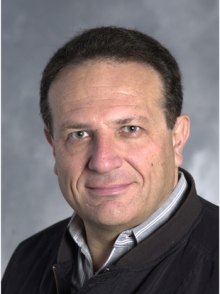 Gershon Kurizki合作论文数Department of Chemical and Biological Physics, Weizmann Institute of Science6Tomáš Opatrný合作论文数6
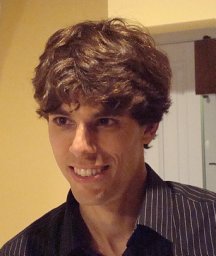 Netanel Lindner合作论文数Physics Department, Technion – Israel Institute of Technology6James Klatzow合作论文数Clarendon Laboratory, University of Oxford5
 Joseph Avron合作论文数Department of Physics, Technion – Israel Institute of Technology5Lahad Ohr合作论文数5
 Nika Akopian合作论文数Department of Physics;Technion - Israel Institute of Technology;Department of Physics, Technion - Israel Institute of Technology5Andreas Eckstein合作论文数Department of Physics, University of Oxford5c qiu合作论文数4
 Nilakantha Meher合作论文数Dept Phys, Indian Inst Technol Kanpur4
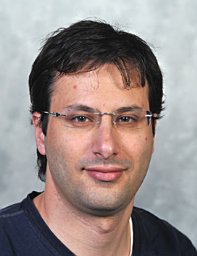 Chene Tradonsky合作论文数Dept Phys Complex Syst, Weizmann Inst Sci4
 Yaron Silberberg合作论文数Department of Physics of Complex Systems, Weizmann Institute of Science Israel;Crown Photonics Centre, Weizmann Institute of Science4Kolthammer W S合作论文数4
 Avijit Misra合作论文数Department of Neuromedicine, Bangur Institute of Neurology and IPGME and R4s khatsevich合作论文数3C. Weinzetl合作论文数3Rony Ruslan Presman合作论文数3D. Galushko合作论文数3Ohad Yogev合作论文数3
 Simon Brauer合作论文数3
 Gal Winer合作论文数Phys Complex Syst, Weizmann Inst Sci3
 Ohad Michel合作论文数Dept Phys, Univ Calif Santa Barbara3Christian Weinzetl合作论文数Univ Oxford, Clarendon Lab, Parks Rd, Oxford OX1 3PU, England3
 William R. Clements合作论文数State Key Laboratory for Mesoscopic Physics and School of Physics, Peking University3
 Peter G. R. Smith合作论文数School of Electronics and Computer Science, Faculty of Engineering and Physical Sciences, University of Southampton;Optoelectronics Research Centre, University of Southampton;Covesion Ltd3
 Peter Humphreys合作论文数Google DeepMind3
 Benjamin J. Metcalf合作论文数University of Oxford, Oxford University3
 Antonio Badolato合作论文数Institute of Quantum Electronics3
 James C. Gates合作论文数Optoelectronics Research Centre;University of Southampton;Optoelectronics Research Centre, University of Southampton3
 Xianmin Jin (金贤敏)合作论文数School of Physics and Astronomy, Shanghai Jiao Tong University3Stefanie Barz合作论文数Fac Phys, Univ Vienna3Raam Uzdin合作论文数Technion — Israel Institute of Technology3




