The conditional sampling model, introduced by Cannone, Ron and Servedio (SODA 2014, SIAM J. Comput. 2015) and independently by Chakraborty, Fischer, Goldhirsh and Matsliah (ITCS 2013, SIAM J. Comput. 2016), is a common framework for a number of studies concerning strengthened models of distribution testing. A core task in these investigations is that of estimating the mass of individual elements. The above mentioned works, and the improvement of Kumar, Meel and Pote (AISTATS 2025), provided polylogarithmic algorithms for this task. In this work we shatter the polylogarithmic barrier, and provide an estimator for the mass of individual elements that uses only O(loglog N) + O(poly(1/ε)) conditional samples. We complement this result with an Ω(loglog N) lower bound. We then show that our mass estimator provides an improvement (and in some cases a unifying framework) for a number of related tasks, such as testing by learning of any label-invariant property, and distance estimation between two (unknown) distribution. By considering some known lower bounds, this also shows that the full power of the conditional model is indeed required for the doubly-logarithmic upper bound. Finally, we exponentially improve the previous lower bound on testing by learning of label-invariant properties from double-logarithmic to Ω(log N) conditional samples, whereas our testing by learning algorithm provides an upper bound of O(poly(1/ε)·log N loglog N).
An integer sequence $(a_n)_{n \in \mathbb{N}}$ is \emph{MC-finite} if for all $m$, the sequence $a_n \bmod m$ is eventually periodic. There are MC-finite sequences $(a_n)_{n \in \mathbb{N}}$ such that the function $F: (m,n) \mapsto a_n \bmod m$ is not computable. In \cite{filmus2023mc} we presented concrete examples of MC-finite sequences taken from the Online Encyclopedia of Integer Sequences (OEIS) without discussing the computability of $F$. In this paper we discuss cases when this $F$ is effectively computable.
The Huge Object model of property testing [Goldreich and Ron, TheoretiCS 23] concerns properties of distributions supported on {0, 1}(n), where.. is so large that even reading a single sampled string is unrealistic. Instead, query access is provided to the samples, and the efficiency of the algorithm is measured by the total number of queries that were made to them. Index-invariant properties under this model were defined in [Chakraborty et al., COLT 23], as a compromise between enduring the full intricacies of string testing when considering unconstrained properties, and giving up completely on the string structure when considering label-invariant properties. Index-invariant properties are those that are invariant through a consistent reordering of the bits of the involved strings. Here we provide an adaptation of Szemeredi's regularity method for this setting, and in particular show that if an index-invariant property admits an epsilon-test with a number of queries depending only on the proximity parameter epsilon, then it also admits a distance estimation algorithm whose number of queries depends only on the approximation parameter.
An integer sequence (a_n)_n ∈ℕ is MC-finite if for all m, the sequence a_n m is eventually periodic. There are MC-finite sequences (a_n)_n ∈ℕ such that the function F: (m,n) ↦ a_n m is not computable. In we presented concrete examples of MC-finite sequences taken from the Online Encyclopedia of Integer Sequences (OEIS) without discussing the computability of F. In this paper we discuss cases when this F is effectively computable.
The framework of distribution testing is currently ubiquitous in the field of property testing. In this model, the input is a probability distribution accessible via independently drawn samples from an oracle. The testing task is to distinguish a distribution that satisfies some property from a distribution that is far from satisfying it in the $\ell_1$ distance. The task of tolerant testing imposes a further restriction, that distributions close to satisfying the property are also accepted. This work focuses on the connection of the sample complexities of non-tolerant ("traditional") testing of distributions and tolerant testing thereof. When limiting our scope to label-invariant (symmetric) properties of distribution, we prove that the gap is at most quadratic. Conversely, the property of being the uniform distribution is indeed known to have an almost-quadratic gap. When moving to general, not necessarily label-invariant properties, the situation is more complicated, and we show some partial results. We show that if a property requires the distributions to be non-concentrated, then it cannot be non-tolerantly tested with $o(\sqrt{n})$ many samples, where $n$ denotes the universe size. Clearly, this implies at most a quadratic gap, because a distribution can be learned (and hence tolerantly tested against any property) using $\mathcal{O}(n)$ many samples. Being non-concentrated is a strong requirement on the property, as we also prove a close to linear lower bound against their tolerant tests. To provide evidence for other general cases (where the properties are not necessarily label-invariant), we show that if an input distribution is very concentrated, in the sense that it is mostly supported on a subset of size $s$ of the universe, then it can be learned using only $\mathcal{O}(s)$ many samples. The learning procedure adapts to the input, and works without knowing $s$ in advance.
We investigate models of relations over a bounded continuous segment of real numbers, along with the natural linear order over the reals being provided as a "hard-coded" relation. This paper presents a generalization of a lemma from [Ben-Eliezer, Fischer, Levi and Yoshida, ITCS 2021], showing that with a small amount of modification (measured in terms of the Lebesgue measure) we can replace such a model with a "pixilated" one that has a finite description. This while preserving all universally quantified statements over the relations, or in other words, without adding any new substructures.
An ϵ-test for any non-trivial property (one for which there are both satisfying inputs and inputs of large distance from the property) should use a number of queries that is at least inversely proportional in ϵ. However, to the best of our knowledge there is no reference proof for this intuition. Such a proof is provided here. It is written so as to not require any prior knowledge of the related literature, and in particular does not use Yao's method.
In this paper we study the number of finite topologies on an $n$-element set subject to various restrictions.
The Huge Object model is a distribution testing model in which we are given access to independent samples from an unknown distribution over the set of strings $\{0,1\}^n$, but are only allowed to query a few bits from the samples. We investigate the problem of testing whether a distribution is supported on $m$ elements in this model. It turns out that the behavior of this property is surprisingly intricate, especially when also considering the question of adaptivity. We prove lower and upper bounds for both adaptive and non-adaptive algorithms in the one-sided and two-sided error regime. Our bounds are tight when $m$ is fixed to a constant (and the distance parameter $\varepsilon$ is the only variable). For the general case, our bounds are at most $O(\log m)$ apart. In particular, our results show a surprising $O(\log \varepsilon^{-1})$ gap between the number of queries required for non-adaptive testing as compared to adaptive testing. For one sided error testing, we also show that an $O(\log m)$ gap between the number of samples and the number of queries is necessary. Our results utilize a wide variety of combinatorial and probabilistic methods.
We study property testing in the subcube conditional model introduced by Bhattacharyya and Chakraborty (2017). We obtain the first equivalence test for n-dimensional distributions that is quasi-linear in n, improving the previously known (O) over tilde (n(2)/epsilon(2)) query complexity bound to (O) over tilde (n/epsilon(2)). We extend this result to general finite alphabets with logarithmic cost in the alphabet size. By exploiting the specific structure of the queries that we use (which are more restrictive than general subcube queries), we obtain a cubic improvement over the best known test for distributions over {1, . . . , N} under the interval querying model of Canonne, Ron and Servedio (2015), attaining a query complexity of (O) over tilde((logN)/epsilon(2)), which for fixed epsilon almost matches the known lower bound of Omega((logN)/log logN). We also derive a product test for n-dimensional distributions with (O)over tilde>(n/epsilon(2)) queries, and provide an Omega(root n/epsilon(2)) lower bound for this property.
The Huge Object model for distribution testing, first defined by Goldreich and Ron in 2022, combines the features of classical string testing and distribution testing. In this model we are given access to independent samples from an unknown distribution $P$ over the set of strings $\{0,1\}^n$, but are only allowed to query a few bits from the samples. The distinction between adaptive and non-adaptive algorithms, which is natural in the realm of string testing (but is not relevant for classical distribution testing), plays a substantial role in the Huge Object model as well. In this work we show that in fact, the full picture in the Huge Object model is much richer than just that of the ``adaptive vs. non-adaptive'' dichotomy. We define and investigate several models of adaptivity that lie between the fully-adaptive and the completely non-adaptive extremes. These models are naturally grounded by viewing the querying process from each sample independently, and considering the ``algorithmic flow'' between them. For example, if we allow no information at all to cross over between samples (up to the final decision), then we obtain the locally bounded adaptive model, arguably the ``least adaptive'' one apart from being completely non-adaptive. A slightly stronger model allows only a ``one-way'' information flow. Even stronger (but still far from being fully adaptive) models follow by taking inspiration from the setting of streaming algorithms. To show that we indeed have a hierarchy, we prove a chain of exponential separations encompassing most of the models that we define.
The original Specker-Blatter Theorem (1983) was formulated for classes of structures $\mathcal{C}$ of one or several binary relations definable in Monadic Second Order Logic MSOL. It states that the number of such structures on the set $[n]$ is modularly C-finite (MC-finite). In previous work we extended this to structures definable in CMSOL, MSOL extended with modular counting quantifiers. The first author also showed that the Specker-Blatter Theorem does not hold for one quaternary relation (2003). If the vocabulary allows a constant symbol $c$, there are $n$ possible interpretations on $[n]$ for $c$. We say that a constant $c$ is {\em hard-wired} if $c$ is always interpreted by the same element $j \in [n]$. In this paper we show: 1. The Specker-Blatter Theorem also holds for CMSOL when hard-wired constants are allowed. The proof method of Specker and Blatter does not work in this case. 2. The Specker-Blatter Theorem does not hold already for $\mathcal{C}$ with one ternary relation definable in First Order Logic FOL. This was left open since 1983. Using hard-wired constants allows us to show MC-finiteness of counting functions of various restricted partition functions which were not known to be MC-finite till now. Among them we have the restricted Bell numbers $B_{r,A}$, restricted Stirling numbers of the second kind $S_{r,A}$ or restricted Lah-numbers $L_{r,A}$. Here $r$ is an non-negative integer and $A$ is an ultimately periodic set of non-negative integers.
A sequence $s(n)$ of integers is MC-finite if for every $m \in \mathbb{N}^+$ the sequence $s^m(n) = s(n) \bmod{m}$ is ultimately periodic. We discuss various ways of proving and disproving MC-finiteness. Our examples are mostly taken from set partition functions, but our methods can be applied to many more integer sequences.
The study of distribution testing has become ubiquitous in the area of property testing, both for its theoretical appeal, as well as for its applications in other fields of Computer Science. The original distribution testing model relies on samples drawn independently from the distribution to be tested. However, when testing distributions over the $n$-dimensional Hamming cube $\left\{0,1\right\}^{n}$ for a large $n$, even reading a few samples is infeasible. To address this, Goldreich and Ron [ITCS 2022] have defined a model called the huge object model, in which the samples may only be queried in a few places. In this work, we initiate a study of a general class of properties in the huge object model, those that are invariant under a permutation of the indices of the vectors in $\left\{0,1\right\}^{n}$, while still not being necessarily fully symmetric as per the definition used in traditional distribution testing. We prove that every index-invariant property satisfying a bounded VC-dimension restriction admits a property tester with a number of queries independent of n. To complement this result, we argue that satisfying only index-invariance or only a VC-dimension bound is insufficient to guarantee a tester whose query complexity is independent of n. Moreover, we prove that the dependency of sample and query complexities of our tester on the VC-dimension is tight. As a second part of this work, we address the question of the number of queries required for non-adaptive testing. We show that it can be at most quadratic in the number of queries required for an adaptive tester of index-invariant properties. This is in contrast with the tight exponential gap for general non-index-invariant properties. Finally, we provide an index-invariant property for which the quadratic gap between adaptive and non-adaptive query complexities for testing is almost tight.
The emerging theory of graph limits exhibits an analytic perspective on graphs, showing that many important concepts and tools in graph theory and its applications can be described more naturally (and sometimes proved more easily) in analytic language. We extend the theory of graph limits to the ordered setting, presenting a limit object for dense vertex-ordered graphs, which we call an orderon. As a special case, this yields limit objects for matrices whose rows and columns are ordered, and for dynamic graphs that expand (via vertex insertions) over time. Along the way, we devise an ordered locality-preserving variant of the cut distance between ordered graphs, showing that two graphs are close with respect to this distance if and only if they are similar in terms of their ordered subgraph frequencies. We show that the space of orderons is compact with respect to this distance notion, which is key to a successful analysis of combinatorial objects through their limits. We derive several applications of the ordered limit theory in extremal combinatorics, sampling, and property testing in ordered graphs. In particular, we prove a new ordered analogue of the well-known result by Alon and Stav [RS\&A'08] on the furthest graph from a hereditary property; this is the first known result of this type in the ordered setting. Unlike the unordered regime, here the random graph model $G(n, p)$ with an ordering over the vertices is not always asymptotically the furthest from the property for some $p$. However, using our ordered limit theory, we show that random graphs generated by a stochastic block model, where the blocks are consecutive in the vertex ordering, are (approximately) the furthest. Additionally, we describe an alternative analytic proof of the ordered graph removal lemma [Alon et al., FOCS'17].
Distribution testing deals with what information can be deduced about an unknown distribution over $$\{1,\ldots ,n\}$$ , where the algorithm is only allowed to obtain a relatively small number of independent samples from the distribution. In the extended conditional sampling model, the algorithm is also allowed to obtain samples from the restriction of the original distribution on subsets of $$\{1,\ldots ,n\}$$ . In 2015, Canonne, Diakonikolas, Gouleakis and Rubinfeld unified several previous results, and showed that for any property of distributions satisfying a “decomposability” criterion, there exists an algorithm (in the basic model) that can distinguish with high probability distributions satisfying the property from distributions that are far from it in the variation distance. We present here a more efficient yet simpler algorithm for the basic model, as well as very efficient algorithms for the conditional model, which until now was not investigated under the umbrella of decomposable properties. Additionally, we provide an algorithm for the conditional model that handles a much larger class of properties. Our core mechanism is an algorithm for efficiently producing an interval-partition of $$\{1,\ldots ,n\}$$ that satisfies a “fine-grain” quality. We show that with such a partition at hand we can avoid the search for the “correct” partition of $$\{1,\ldots ,n\}$$ .
We show that there exist properties that are maximally hard for testing, while still admitting PCPPs with a proof size very close to linear. Specifically, for every fixed $\ell$, we construct a property $\mathcal{P}^{(\ell)}\subseteq\{0,1\}^n$ satisfying the following: Any testing algorithm for $\mathcal{P}^{(\ell)}$ requires $\Omega(n)$ many queries, and yet $\mathcal{P}^{(\ell)}$ has a constant query PCPP whose proof size is $O(n\cdot \log^{(\ell)}n)$, where $\log^{(\ell)}$ denotes the $\ell$ times iterated log function (e.g., $\log^{(2)}n = \log \log n$). The best previously known upper bound on the PCPP proof size for a maximally hard to test property was $O(n \cdot \mathrm{poly}\log{n})$. As an immediate application, we obtain stronger separations between the standard testing model and both the tolerant testing model and the erasure-resilient testing model: for every fixed $\ell$, we construct a property that has a constant-query tester, but requires $\Omega(n/\log^{(\ell)}(n))$ queries for every tolerant or erasure-resilient tester.
The emerging theory of graph limits exhibits an analytic perspective on graphs, showing that many important concepts and tools in graph theory and its applications can be described more naturally (and sometimes proved more easily) in analytic language. We extend the theory of graph limits to the ordered setting, presenting a limit object for dense vertex-ordered graphs, which we call an orderon. As a special case, this yields limit objects for matrices whose rows and columns are ordered, and for dynamic graphs that expand (via vertex insertions) over time. Along the way, we devise an ordered locality-preserving variant of the cut distance between ordered graphs, showing that two graphs are close with respect to this distance if and only if they are similar in terms of their ordered subgraph frequencies. We show that the space of orderons is compact with respect to this distance notion, which is key to a successful analysis of combinatorial objects through their limits. For the proof we combine techniques used in the unordered setting with several new techniques specifically designed to overcome the challenges arising in the ordered setting. We derive several applications of the ordered limit theory in extremal combinatorics, sampling, and property testing in ordered graphs. In particular, we prove a new ordered analogue of the well-known result by Alon and Stav [RS&A’08] on the furthest graph from a hereditary property; this is the first known result of this type in the ordered setting. Unlike the unordered regime, here the ErdősRényi random graph G(n, p) with an ordering over the vertices is not always asymptotically the furthest from the property for some p. However, using our ordered limit theory, we show that random graphs generated by a stochastic block model, where the blocks are consecutive in the vertex ordering, are (approximately) the furthest. Additionally, we describe an alternative analytic proof of the ordered graph removal lemma [Alon et al., FOCS’17]. Tel Aviv University, Israel. Email: omrib@mail.tau.ac.il. Technion Israel Institute of Technology, Israel. Email: eldar@cs.technion.ac.il. University of Waterloo, Canada. Email: amit.levi@uwaterloo.ca. Research supported by the David R. Cheriton Graduate Scholarship. Part of this work was done while the author was visiting the Technion. National Institute of Informatics (NII), Japan. Email: yyoshida@nii.ac.jp. Research supported by JSPS KAKENHI Grant Number JP17H04676.
We initiate a thorough study of distributed property testingproducing algorithms for the approximation problems of property testing in the CONGEST model. In particular, for the so-called dense graph testing model we emulate sequential tests for nearly all graph properties having 1-sided tests, while in the general model we obtain faster tests for triangle-freeness and cycle-freeness, and in the sparse model we obtain a faster test for bipartiteness. In addition, we show a logarithmic lower bound for testing bipartiteness and cycle-freeness, which holds even in the stronger LOCAL model. In most cases, aided by parallelism, the distributed algorithms have a much shorter running time than their counterparts from the sequential querying model of traditional property testing. More importantly, the distributed algorithms we develop for testing graph properties are in many cases much faster than what is known for exactly deciding whether the property holds. The simplest property testing algorithms allow a relatively smooth transition to the distributed model. For the more complex tasks we develop new machinery that may be of independent interest.
We prove almost tight bounds on the length of paths in $2$-edge-connected cubic graphs. Concretely, we show that (i) every $2$-edge-connected cubic graph of size $n$ has a path of length $\Omega\left(\frac{\log^2{n}}{\log{\log{n}}}\right)$, and (ii) there exists a $2$-edge-connected cubic graph, such that every path in the graph has length $O(\log^2{n})$.
 Sourav Chakraborty合作论文数Advanced Computing and Microelectronics Unit, Indian Statistical Institute11
 Noga Alon合作论文数Department of Mathematics, Princeton University;Tel Aviv University11
 Arie Matsliah合作论文数IBM Research11
 Oded Lachish合作论文数University of Warwick, Coventry, United Kingdom.11
 Johann (Janos) A. Makowsky合作论文数Faculty of Computer Science, Technion - Israel Institute of Technology11
 Ilan Newman合作论文数Department of Computer Science, Faculty of Social Sciences, University of Haifa10
 Amit Levi合作论文数9
 Omri Ben-Eliezer合作论文数Faculty of Computer Science, Technion - Israel Institute of Technology7Yonatan Goldhirsh合作论文数5
 Guy Kindler合作论文数School of Computer Science and Engineering, Hebrew University of Jerusalem5Shmuel Safra合作论文数4Alex Samorodnitsky合作论文数4
 Arnab Bhattacharyya合作论文数Department of Computer Science, The University of Warwick3Tomer Adar合作论文数3
 Eyal Rozenberg合作论文数Dept Comp Sci, Technion Israel Inst Technol3
 Yuichi Yoshida (吉田悠一)合作论文数Principles of Informatics Research Division, National Institute of Informatics;Research Promotion Bureau, Ministry of Education, Culture, Sports, Science and Technology;Japan Science and Technology Agency;Preferred Netoworks, Inc;Global Research Center for Big Data Mathematics, National Institute of Informatics3Asaf Shapira合作论文数asafico@tau.ac.il3
 Frédéric Magniez合作论文数Institut de Recherche en Informatique Fondamentale;Centre National De La Recherche Scientifique3
 Michael Krivelevich合作论文数Sackler Faculty of Exact Sciences, Tel Aviv University;Department of Pure Mathematics, School of Mathematical Sciences, Tel Aviv University3
 Dana Ron合作论文数Department of Electrical Engineering - Systems, School of Electrical Engineering, Faculty of Engineering, Tel Aviv University3
 Ronitt Rubinfeld合作论文数Department of Electrical Engineering & Computer Science, Massachusetts Institute of Technology3
 Arijit Ghosh合作论文数University of California3
 Yadu Vasudev合作论文数Department of Computer Science & Engineering, Indian Institute of Technology Madras3
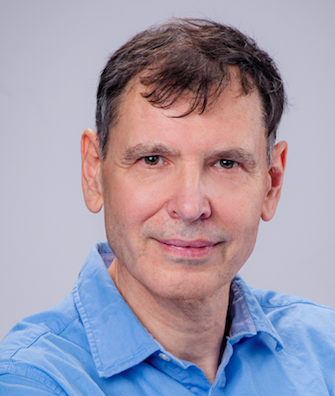 Mario Szegedy合作论文数Department of Computer Science, School of Arts and Sciences, Rutgers University;Von Neumann Lab of Quantum Information, Rutgers University3Sayantan Sen合作论文数2
 Gopinath Mishra合作论文数Indian Statistical Institute2
 Rocco Anthony Servedio合作论文数Department of Computer Science, Columbia University2
 Michel de Rougemont合作论文数2
 Santosh S. Vempala合作论文数School of Computer Science, College of Computing, Georgia Institute of Technology2
 Jayram Thathachar合作论文数IBM Almaden Research2
 Jon Feldman合作论文数Google Research2
 Adam R. Klivans合作论文数Department of Computer Science, College of Natural Sciences, The University of Texas at Austin;Machine Learning Laboratory, The University of Texas at Austin2Gianni Franceschini合作论文数2
 Ronald De Wolf合作论文数University of Amsterdam;Department of Algorithms and Complexity, Centrum Wiskunde & Informatica2
 Ran Raz合作论文数Department of Computer Science, School of Engineering and Applied Science, Princeton University2
 Lance Jeremy Fortnow合作论文数Department of Computer Science, College of Computing, Illinois Institute of Technology2
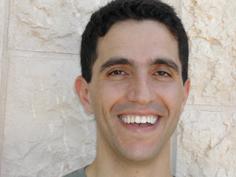 Ziv Bar-Yossef合作论文数Google2
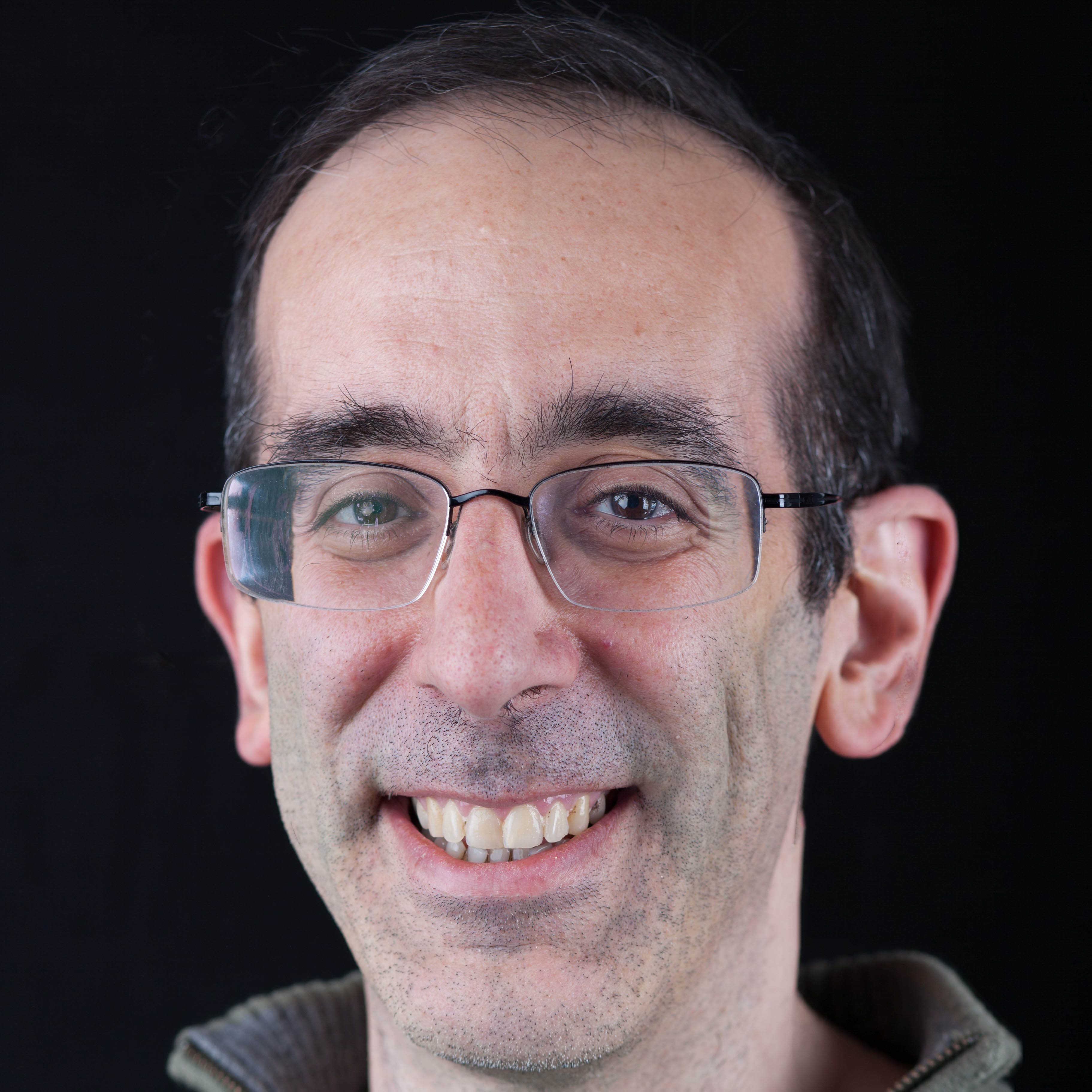 David R. Karger合作论文数Computer Science and Artificial Intelligence Laboratory, Electrical Engineering & Computer Science Department, Schwarzman College of Computing, Massachusetts Institute of Technology2
 Ron Rothblum合作论文数Faculty of Computer Science, Technion Israel Institute of Technology2
 Irit Dinur合作论文数School of Mathematics, Institute for Advanced Study2
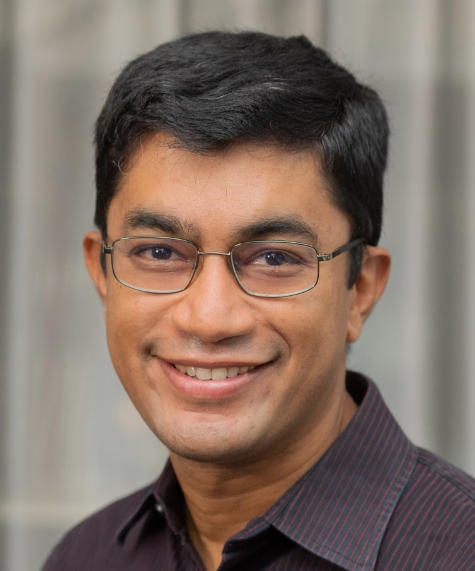 Venkatesan Guruswami合作论文数Department of Electrical Engineering & Computer Sciences, University of California, Berkeley;Department of Mathematics, University of California, Berkeley2Orly Yahalom合作论文数2
 Mani Fischer合作论文数HP Labs2
 Ryan O'Donnell合作论文数Computer Science Department, School of Computer Science, Carnegie Mellon University2
 J. Ian Munro合作论文数Cheriton School of Computer Science, University of Waterloo2
 Raphael Yuster合作论文数Department of Mathematics, University of Haifa2
 Ravi Kumar合作论文数Google Research2
 Shachar Lovett合作论文数Computer Science & Engineering Department, University of California, San Diego;Jacobs School of Engineering, University of California, San Diego;NextSilicon2Grant Wang合作论文数Before coming to MIT, I graduated from Cornell Unversity in 2001, and graduated from Cheshire High School in 19972




