Subgraph counting is a fundamental algorithmic problem with many applications, including in the analysis of social and biological networks. The problem asks for the number of occurrences of a pattern graph H as a subgraph of a host graph G and is known to be computationally challenging: it is #W[1] -hard even when H is restricted to simple structures such as cliques or paths. Curticapean and Marx (FOCS’14) show that if the graph H has vertex cover number τ , subgraph counting has time complexity O(|H|^2^O(τ ) |G|^τ + O(1)) . This raises the question of whether this upper bound can be improved for input graphs G from a restricted family of graphs. Earlier work by Eppstein (IPL’94) shows that this is indeed possible, by proving that when G is a d-degenerate graph and H is a biclique of arbitrary size, subgraph counting has time complexity O(d 3^d/3 |G|) . We show that if the input is restricted to d-degenerate graphs, the upper bound of Curticapean and Marx can be improved for a family of graphs H that includes all bicliques and satisfies a property we call (c, d)-locatable. Importantly, our algorithm’s running time only has a polynomial dependence on the size of H. A key feature of (c, d)-locatable graphs H is that they admit a vertex cover of size at most cd. We further characterize (1, d)-locatable graphs, for which our algorithms achieve a linear running time dependence on |G|, and we establish a lower bound showing that counting graphs which are barely not (1, d)-locatable is already #W[1] -hard. We note that the restriction to d-degenerate graphs has been a fruitful line of research leading to two very general results (FOCS’21, SODA’25) and this creates the impression that we largely understand the complexity of counting substructures in degenerate graphs. However, all aforementioned results have an exponential dependency on the size of the pattern graph H.
The 3-admissibility of a graph is a promising measure to identify real-world networks that have an algorithmically favourable structure. We design an algorithm that decides whether the 3-admissibility of an input graph G is at most p in time O(m p^7) and space O(n p^3) , where m is the number of edges in G and n the number of vertices. To the best of our knowledge, this is the first explicit algorithm to compute the 3-admissibility. The linear dependence on the input size in both time and space complexity, coupled with an ‘optimistic’ design philosophy for the algorithm itself, makes this algorithm practicable, as we demonstrate with an experimental evaluation on a corpus of 217 real-world networks. Our experimental results show, surprisingly, that the 3-admissibility of most real-world networks is not much larger than the 2-admissibility, despite the fact that the former has better algorithmic properties than the latter.
We consider graph property testing in p-degenerate graphs under the random neighbor oracle model (Czumaj and Sohler, FOCS 2019). In this framework, a tester explores a graph by sampling uniform neighbors of vertices, and a property is testable with one-sided error if its query complexity is independent of the graph size. It is known that one-sided error testable properties for minor-closed families are exactly those that can be defined by forbidden subgraphs of bounded size. However, the much broader class of p-degenerate graphs allows for high-degree “hubs" that can structurally hide forbidden subgraphs from local exploration. In this work, we provide a complete structural characterization of all properties testable with one-sided error in p-degenerate graphs. We show that testability is fundamentally determined by the connectivity of the forbidden structures: a property is testable if and only if its violations cannot be fragmented across disjoint high-degree neighborhoods. Our results define the exact structural boundary for testability under these constraints, accounting for both the connectivity of individual forbidden subgraphs and the collective behavior of the properties they define.
Understanding how a vertex relates to a set of vertices is a fundamental task in graph analysis. Given a graph G and a vertex set X ⊆ V(G) , consider the collection of subsets of the form N(u) ∩ X where u ranges over all vertices outside X. These intersections, which we call the traces of X, capture all ways vertices in G connect to X, and in this paper we consider the problem of listing these traces efficiently, and the related problem of recording the multiplicity (frequency) of each trace.For a given query set X, both problems have obvious algorithms with running time O(|N(X)| · |X|) and conditional lower bounds suggest that, on general graphs, one cannot expect better. However, in certain sparse graph classes, more efficient algorithms are possible: Drange et al.(IPEC 2023) used a data structure that answers trace queries in d-degenerate graphs with linear initialisation time and query time that only depends on the query set X and d. However, the query time is exponential in |X|, which makes this approach impractical. By using a stronger parameter than degeneracy, namely the strong 2-colouring number s_2 , we construct a data structure in O(d ·‖ G‖ ) time, which answers subsequent trace frequency queries in time O ((d^2 + s_2^d+2)|X| ) , where ‖ G‖ is the number of edges of G, s_2 is the strong 2-colouring number and d the degeneracy of a suitable ordering of G. We demonstrate that this data structure is indeed practical and that it beats the simple, obvious alternative in almost all tested settings, using a collection of 217 real-world networks with up to 1.1M edges. As part of this effort, we demonstrate that computing an ordering with a small strong 2-colouring number is feasible with a simple heuristic.
We study the property of H-freeness in graphs with known bounded average degree, i.e. the property of a graph not containing some graph H as a subgraph. H-freeness is one of the fundamental graph properties that has been studied in the property testing framework. Levi [10] showed that triangle-freeness is testable in graphs of bounded arboricity, which is a superset of e.g. planar graphs or graphs of bounded degree. Complementing this result is a recent preprint [7] by Eden et al. which shows that, for every r >= 4, C-r-freeness is not testable in graphs of bounded arboricity. We proceed in this line of research by using the r-admissibility measure that originates from the field of structural sparse graph theory. Graphs of bounded 1-admissibility are identical to graphs of bounded arboricity, while graphs of bounded degree, planar graphs, graphs of bounded genus, and even graphs excluding a fixed graph as a (topological) minor have bounded r-admissibility for any value of r [12]. In this work we show that H-freeness is testable in graphs with bounded 2-admissibility for all graphs H of diameter 2. Furthermore, we show the testability of C-4-freeness in bounded 2-admissible graphs directly (with better query complexity) and extend this result to C-5-freeness. Using our techniques it is also possible to show that C-6-freeness and C-7-freeness are testable in graphs with bounded 3-admissibility. The formal proofs will appear in the journal version of this paper. These positive results are supplemented with a lower bound showing that, for every r >= 4, C-r-freeness is not testable for graphs of bounded ([r/2] - 1)-admissibility. This lower bound will appear in the journal version of this paper. This implies that, for every r > 0, there exists a graph H of diameter r+1, such that H-freeness is not testable on graphs with bounded r-admissibility. These results lead us to the conjecture that, for every r > 4, and t <= 2r + 1, C-t-freeness is testable in graphs of bounded r-admissibility, and for every r > 2, H-freeness for graphs H of diameter r is testable in graphs with bounded r-admissibility.
The 2-admissibility of a graph is a promising measure to identify real-world networks which have an algorithmically favourable structure. In contrast to other related measures, like the weak/strong 2-colouring numbers or the maximum density of graphs that appear as 1-subdivisions, the 2-admissibility can be computed in polynomial time. However, so far these results are theoretical only and no practical implementation to compute the 2-admissibility exists. Here we present an algorithm which decides whether the 2-admissibility of an input graph G is at most p in time O(p(4)vertical bar V (G)vertical bar) and space O(vertical bar E(G)vertical bar + p(2)). The simple structure of the algorithm makes it easy to implement. We evaluate our implementation on a corpus of 214 real-world networks and find that the algorithm runs efficiently even on networks with millions of edges, that it has a low memory footprint, and that indeed many networks have a small 2-admissibility.
Minimizers sampling is one of the most widely-used mechanisms for sampling strings. Let S=S[0]… S[n-1] be a string over an alphabet . Further, let w≥ 2 and k≥ 1 be two integers and ρ =( ^k,≤ ) be a total order on ^k . The minimizer of window X=S[i. .i+w+k-2] is the smallest position in [i,i+w-1] where the smallest length-k substring of X based on ρ starts. The set of minimizers for all i∈ [0,n-w-k+1] is the set ℳ_w,k,ρ(S) of the minimizers of S. The set ℳ_w,k,ρ(S) can be computed in 𝒪(n) time. The folklore algorithm computes the minimizer of every window in 𝒪(1) amortized time using 𝒪(w) working space. It is thus natural to pose the following two questions: We answer both questions in the affirmative:
We study property testing in the random neighbor oracle model for graphs, originally introduced by Czumaj and Sohler [STOC 2019]. Specifically, we initiate the study of characterizing the graph families that are H-testable in this model. A graph family ℱ is H-testable if, for every graph H, H-freeness (that is, not having a subgraph isomorphic to H) is testable with one-sided error on all inputs from ℱ. Czumaj and Sohler showed that for any H-testable family of graphs ℱ, the family of testable properties of ℱ has a known characterization, a major goal in the study of property testing. Consequently, characterizing the collection of H-testable graph families will not only result in new characterizations, but will also exhaust this method of characterizing testable properties. We believe that our result is a substantial step towards this goal. Czumaj and Sohler further showed that the family of planar graphs is H-testable, as is any family of minor-free graphs. In this paper, we provide a sufficient and much broader criterion under which a family of graphs is H-testable. As a corollary, we obtain new characterizations for many families of graphs including: families that are closed under taking topological minors or immersions, geometric intersection graphs of low-density objects, euclidean nearest-neighbour graphs with bounded clique number, graphs with bounded crossing number (per edge), graphs with bounded queue- and stack number, and more. The criterion we provide is based on the r-admissibility graph measure from the theory of sparse graph families initiated by Nesetril and Ossona de Mendez. Proving that specific families of graphs satisfy this criterion is an active area of research, consequently, the implications of this paper may be strengthened in the future.
We study C-k-freeness in sparse graphs from a property testing perspective, specifically for graph classes with bounded r-admissibility. Our work is motivated by the large gap between upper and lower bounds in this area: C-k-freeness is known to be testable in planar graphs [4], but not in graphs with bounded arboricity for k > 3 [7]. There are a large number of interesting graph classes that include planar graphs and have bounded arboricity (e.g. classes excluding a minor), calling for a more fine-grained approach to the question of testing C-k-freeness in sparse graph classes. One such approach, inspired by the work of Nesetril and Ossona de Mendez [11], is to consider the graph measure of r-admissibility, which naturally forms a hierarchy of graph families A(1) superset of A(2) superset of ... superset of A(infinity) where A(r) contains all graph classes whose r-admissibility is bounded by some constant. The family A(1) contains classes with bounded arboricity, the class A(infinity) contains classes like planar graphs, graphs of bounded degree, and minor-free graphs. Awofeso et al. [3] recently made progress in this direction. They showed that C-4- and C-5-freeness is testable in A(2). They further showed that C-k-freeness is not testable in A(left perpendiculark/2right perpendicular-1) and conjectured that C-k-freeness is testable in A(left perpendiculark/2right perpendicular). In this work, we prove this conjecture: C-k-freeness is indeed testable in graphs of bounded left perpendiculark/2right perpendicular-admissibility.
Computing shortest directed paths in de Bruijn graphs is well studied and well understood. This is not the case for computing undirected paths, which is much more challenging algorithmically. In this paper, we present a general framework for computing shortest undirected paths in arbitrary de Bruijn graphs, that is, arbitrary subgraphs of the complete de Bruijn graph. We then present an application of our techniques for making any arbitrary order- k de Bruijn graph G(V, E) weakly connected by adding a set of edges of minimum total cost. This improves the running time of the recent (2 - 2/d)-approximation algorithm by Bernardini et al. [CPM 2024] from O( k|V |(2)) to O( k|V| log d) time, where d is the number of weakly connected components of graph G.
Answering connectivity queries is fundamental to fully dynamic graphs where edges and vertices are inserted and deleted frequently. Existing work proposes data structures and algorithms with worst-case guarantees. We propose a new data structure, the dynamic tree (D-tree), together with algorithms to construct and maintain it. The D-tree is the first data structure that scales to fully dynamic graphs with millions of vertices and edges and, on average, answers connectivity queries much faster than data structures with worst case guarantees.
A tournament is an orientation of a complete graph. We say that a vertex $x$ in a tournament $\vec T$ controls another vertex $y$ if there exists a directed path of length at most two from $x$ to $y$. A vertex is called a king if it controls every vertex of the tournament. It is well known that every tournament has a king. We follow Shen, Sheng, and Wu (SIAM J. Comput., 2003) in investigating the query complexity of finding a king, that is, the number of arcs in $\vec T$ one has to know in order to surely identify at least one vertex as a king. The aforementioned authors showed that one always has to query at least $\Omega(n^{4/3})$ arcs and provided a strategy that queries at most $O(n^{3/2})$. While this upper bound has not yet been improved for the original problem, Biswas et al. (Frontiers in Algorithmics, 2017) proved that with $O(n^{4/3})$ queries one can identify a semi-king, meaning a vertex which controls at least half of all vertices. Our contribution is a novel strategy which improves upon the number of controlled vertices: using $O(n^{4/3} \operatorname{polylog} n)$ queries, we can identify a $(\frac{1}{2}+\frac{2}{17})$-king. To achieve this goal we use a novel structural result for tournaments.
We prove a general structural theorem for a wide family of local algorithms, which includes property testers, local decoders, and PCPs of proximity. Namely, we show that the structure of every algorithm that makes $q$ adaptive queries and satisfies a natural robustness condition admits a sample-based algorithm with $n^{1- 1/O(q^2 \log^2 q)}$ sample complexity, following the definition of Goldreich and Ron (TOCT 2016). We prove that this transformation is nearly optimal. Our theorem also admits a scheme for constructing privacy-preserving local algorithms. Using the unified view that our structural theorem provides, we obtain results regarding various types of local algorithms, including the following. - We strengthen the state-of-the-art lower bound for relaxed locally decodable codes, obtaining an exponential improvement on the dependency in query complexity; this resolves an open problem raised by Gur and Lachish (SODA 2020). - We show that any (constant-query) testable property admits a sample-based tester with sublinear sample complexity; this resolves a problem left open in a work of Fischer, Lachish, and Vasudev (FOCS 2015) by extending their main result to adaptive testers. - We prove that the known separation between proofs of proximity and testers is essentially maximal; this resolves a problem left open by Gur and Rothblum (ECCC 2013, Computational Complexity 2018) regarding sublinear-time delegation of computation. Our techniques strongly rely on relaxed sunflower lemmas and the Hajnal-Szemeredi theorem.
A locally decodable code (LDC) C : {0, 1}(k) -> {0, 1}(n) is an error correcting code that admits algorithms for recovering individual bits of the message by only querying a few bits of a noisy codeword. LDCs found a myriad of applications both in theory and in practice, ranging from probabilistically checkable proofs to distributed storage. However, despite nearly two decades of extensive study, the best known constructions of LDCs with O(1)-query decoding algorithms have super-polynomial blocklength. The notion of relaxed LDCs is a natural relaxation of LDCs, which aims to bypass the foregoing barrier by requiring local decoding of nearly all individual message bits, yet allowing decoding failure (but not error) on the rest. State of the art constructions of O(1)-query relaxed LDCs achieve blocklength n = O(k(1+gamma)) for an arbitrarily small constant gamma. Using algorithmic and combinatorial techniques, we prove an impossibility result, showing that codes with blocklength n = k(1+o(1)) cannot be relaxed decoded with O(1)-query algorithms. This resolves an open problem raised by Goldreich in 2004.
Distribution testing deals with what information can be deduced about an unknown distribution over $$\{1,\ldots ,n\}$$ , where the algorithm is only allowed to obtain a relatively small number of independent samples from the distribution. In the extended conditional sampling model, the algorithm is also allowed to obtain samples from the restriction of the original distribution on subsets of $$\{1,\ldots ,n\}$$ . In 2015, Canonne, Diakonikolas, Gouleakis and Rubinfeld unified several previous results, and showed that for any property of distributions satisfying a “decomposability” criterion, there exists an algorithm (in the basic model) that can distinguish with high probability distributions satisfying the property from distributions that are far from it in the variation distance. We present here a more efficient yet simpler algorithm for the basic model, as well as very efficient algorithms for the conditional model, which until now was not investigated under the umbrella of decomposable properties. Additionally, we provide an algorithm for the conditional model that handles a much larger class of properties. Our core mechanism is an algorithm for efficiently producing an interval-partition of $$\{1,\ldots ,n\}$$ that satisfies a “fine-grain” quality. We show that with such a partition at hand we can avoid the search for the “correct” partition of $$\{1,\ldots ,n\}$$ .
We prove almost tight bounds on the length of paths in $2$-edge-connected cubic graphs. Concretely, we show that (i) every $2$-edge-connected cubic graph of size $n$ has a path of length $\Omega\left(\frac{\log^2{n}}{\log{\log{n}}}\right)$, and (ii) there exists a $2$-edge-connected cubic graph, such that every path in the graph has length $O(\log^2{n})$.
A locally decodable code (LDC) C:{0,1}^k -> {0,1}^n is an error correcting code wherein individual bits of the message can be recovered by only querying a few bits of a noisy codeword. LDCs found a myriad of applications both in theory and in practice, ranging from probabilistically checkable proofs to distributed storage. However, despite nearly two decades of extensive study, the best known constructions of O(1)-query LDCs have super-polynomial blocklength. The notion of relaxed LDCs is a natural relaxation of LDCs, which aims to bypass the foregoing barrier by requiring local decoding of nearly all individual message bits, yet allowing decoding failure (but not error) on the rest. State of the art constructions of O(1)-query relaxed LDCs achieve blocklength n = O(k^{1+ \gamma}) for an arbitrarily small constant \gamma. We prove a lower bound which shows that O(1)-query relaxed LDCs cannot achieve blocklength n = k^{1+ o(1)}. This resolves an open problem raised by Goldreich in 2004.
We present ongoing work on a tool that consists of two parts: (i) A raw micro-level abstract world simulator with an interface to (ii) a 3D game engine, translator of raw abstract simulator data to photorealistic graphics. Part (i) implements a dedicated cellular automata (CA) on reconfigurable hardware (FPGA) and part (ii) interfaces with a deep learning framework for training neural networks. The bottleneck of such an architecture usually lies in the fact that transferring the state of the whole CA significantly slows down the simulation. We bypass this by sending only a small subset of the general state, which we call a 'locus of visibility', akin to a torchlight in a darkened 3D space, into the simulation. The torchlight concept exists in many games but these games generally only simulate what is in or near the locus. Our chosen architecture will enable us to simulate on a micro level outside the locus. This will give us the advantage of being able to create a larger and more fine-grained simulation which can be used to train neural networks for use in games.
In this paper we establish an exponential lower bound on the size of syntactic non-deterministic read $d$-times branching programs for $d \leq \log n /10^5$ computing a class of monotone CNFs with a linear number of clauses. This result provides the first separation of classes NP and co-NP for syntactic branching programs with a logarithmic repetition and the first separation of syntactic non-deterministic branching programs with a logarithmic repetition from small monotone CNFs.
We propose an approach to speed up the computation of isochrones, which are maps showing the reachability of locations given a starting point and a time constraint.The core idea of our technique is to materialize large parts of an isochrone, demonstrating how this can be achieved for multi-modal transport networks in a scalable way.We illustrate the effectiveness of our method with the help of an experimental evaluation.
 Eldar Fischer合作论文数Technion Computer Science Faculty11
 Ilan Newman合作论文数Department of Computer Science, Faculty of Social Sciences, University of Haifa10
 Felix Reidl合作论文数Data Management and Data Exploration Group, RWTH Aachen University10
 Yonatan Goldhirsh合作论文数4
 Sourav Chakraborty合作论文数Advanced Computing and Microelectronics Unit, Indian Statistical Institute3
 Haris Aziz合作论文数School of Computer Science and Engineering, University of New South Wales3
 Arie Matsliah合作论文数IBM Research3
 Rahul Savani合作论文数Department of Computer Science, University of Liverpool3
 Tom Gur合作论文数The Blavatnik School of Computer Science, Tel-Aviv University3
 Michael Stewart Paterson合作论文数Department of Computer Science, University of Warwick3
 Avi Ziv合作论文数IBM Haifa Labs2Wiktor Zuba合作论文数Univ Warsaw, Inst Informat, Warsaw, Poland2Asaf Shapira合作论文数asafico@tau.ac.il2
 Ran Raz合作论文数Department of Computer Science, School of Engineering and Applied Science, Princeton University2
 Dekel Tsur合作论文数2
 Solon P. Pissis合作论文数Department of Networks and Optimization, Centrum Wiskunde & Informatica;Department of Computer Science, Faculty of Science, Vrije Universiteit Amsterdam2
 Shirley Halevy合作论文数Computer Science Department, Technion - Israel Institute of Technology2
 Sven Helmer合作论文数Department of Informatics, University of Zurich2Trevor Fenner合作论文数Information Management and Web Technologies Group
Computational Intelligence Group2
Sven Helmer合作论文数Department of Informatics, University of Zurich2Trevor Fenner合作论文数Information Management and Web Technologies Group
Computational Intelligence Group2 Yadu Vasudev合作论文数Department of Computer Science & Engineering, Indian Institute of Technology Madras2
 Arnab Bhattacharyya合作论文数Department of Computer Science, The University of Warwick1
 Eitan Marcus合作论文数1rina panigrahy合作论文数1Patrick Greaves合作论文数1rosemary k apple合作论文数1vera hazelwood合作论文数1marc neustadter合作论文数1
 Alexandru Popa合作论文数1
 Marcel Dall'Agnol合作论文数Universidade de São Paulo1Olivier Van Acker合作论文数1
 Chhaya Trehan合作论文数School of Economics and Political Science, London1Nikola K. Blanchard合作论文数1
 Qing Chen合作论文数1
 Rocco Anthony Servedio合作论文数Department of Computer Science, Columbia University1Paolo Bolzoni合作论文数1
 Yuichi Yoshida (吉田悠一)合作论文数Principles of Informatics Research Division, National Institute of Informatics;Research Promotion Bureau, Ministry of Education, Culture, Sports, Science and Technology;Japan Science and Technology Agency;Preferred Netoworks, Inc;Global Research Center for Big Data Mathematics, National Institute of Informatics1
 Noga Alon合作论文数Department of Mathematics, Princeton University;Tel Aviv University1Tali Kaufman合作论文数Department of Computer Science and Artificial Intelligence, Faculty of Exact Sciences, Bar-Ilan University1
 Artur Czumaj合作论文数Centre for Discrete Mathematics and its Applications, The University of Warwick;Department of Computer Science, The University of Warwick1
 Krzysztof Onak合作论文数Faculty of Computing & Data Sciences, Boston University;Center for Computing & Data Sciences, Boston University1
 Igor Razgon合作论文数Department of Computer Science and Information Systems, Birkbeck, University of London1
 Jayram Thathachar合作论文数IBM Almaden Research1
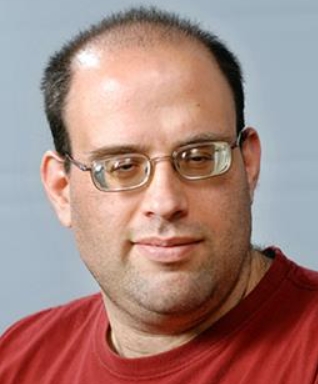 Sariel Har-Peled合作论文数Siebel School of Computing and Data Science, The Grainger College of Engineering, University of Illinois Urbana-Champaign1
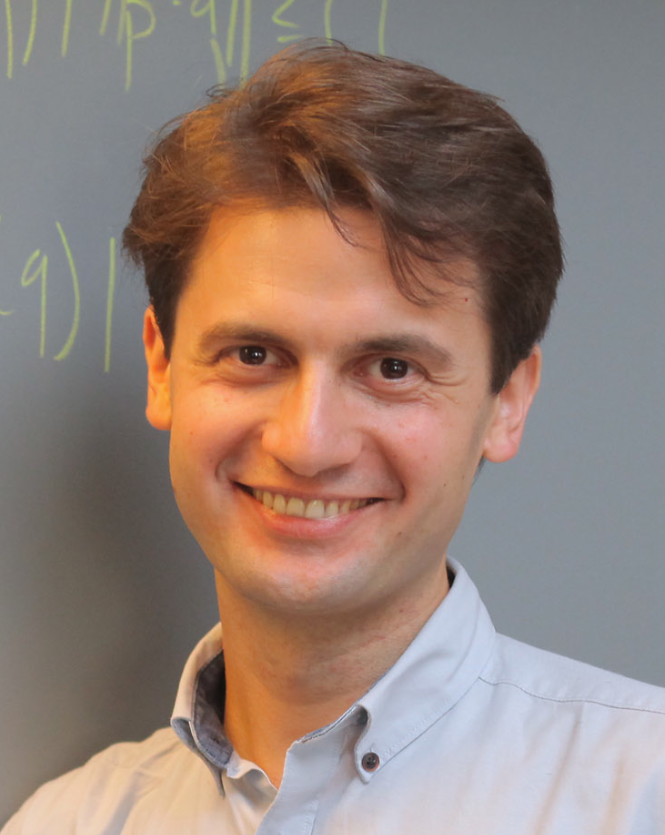 Alexandr Andoni合作论文数Department of Computer Science, The Fu Foundation School of Engineering and Applied Science, Columbia University1
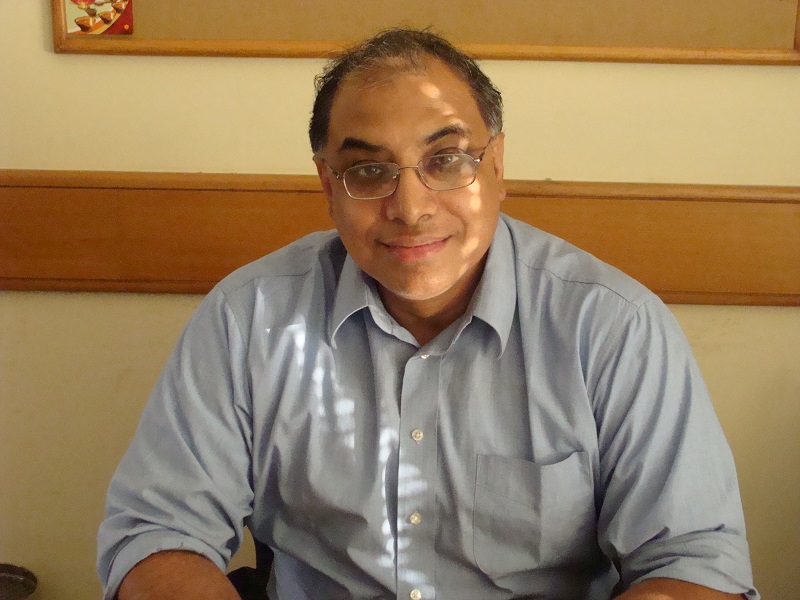 Sumit Ganguly合作论文数DEPARTMENT OF COMPUTER SCIENCE AND ENGINEERING IIT1
 Peter Bro Miltersen合作论文数Department of Computer Science, Aarhus University1
 Sofya Raskhodnikova合作论文数Computer Science,Boston University1
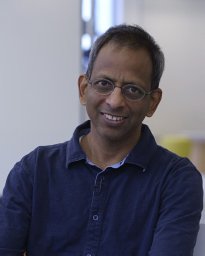 Jaikumar Radhakrishnan合作论文数Tata Inst Fundamental Res1
 Ning Xie合作论文数Amazon1




