We examined the interaction between motion and stereo cues to depth order along object boundaries. Relative depth was conveyed by a change in the speed of image motion across a boundary (motion parallax), the disappearance of features on a surface moving behind an occluding object (motion occlusion), or a difference in the stereo disparity of adjacent surfaces. We compared the perceived depth orders for different combinations of cues, incorporating conditions with conflicting depth orders and conditions with varying reliability of the individual cues. We observed large differences in performance between subjects, ranging from those whose depth order judgments were driven largely by the stereo disparity cues to those whose judgments were dominated by motion occlusion. The relative strength of these cues influenced individual subjects' behavior in conditions of cue conflict and reduced reliability.
This paper describes an introductory CS course, in a liberal arts setting, designed for science students to learn programming using MATLAB. This course differs from many introductory CS classes in that 1) students are not expected to continue taking more CS classes and 2) MATLAB is used in a general computational context rather than in an engineering setting. Students learn to write software to solve problems, visualize and analyze data, perform computer simulations, and implement and test computational models that arise in a wide range of scientific disciplines. The course culminates with an individualized final programming project in which students apply their MATLAB skills in their particular area of scientific interest.
Handbook of Brain Theory and Neural Networks : Table of
Experienced drivers performed simple steering maneuvers in the absence of continuous visual input. Experiments conducted in a driving simulator assessed drivers' performance of lane corrections during brief visual occlusion and examined the visual cues that guide steering. The dependence of steering behavior on heading, speed, and lateral position at the start of the maneuver was measured. Drivers adjusted steering amplitude with heading and performed the maneuver more rapidly at higher speeds. These dependencies were unaffected by a 1.5-s visual occlusion at the start of the maneuver. Longer occlusions resulted in severe performance degradation. Two steering control models were developed to account for these findings. In the 1st, steering actions were coupled to perceptual variables such as lateral position and heading. In the 2nd, drivers pursued a virtual target in the scene. Both models yielded behavior that closely matches that of human drivers.
When a person moves in a straight line through a stationary environment, the images of object surfaces move in a radial pattern away from a single point. This point, known as the focus of expansion (FOE), corresponds to the person's direction of motion. People judge their heading from image motion quite well in this situation. They perform most accurately when they can see the region around the FOE, which contains the most useful information for this task. Furthermore, a large moving object in the scene has no effect on observer heading judgments unless it obscures the FOE. Therefore, observers may obtain the most accurate heading judgments by focusing their attention on the region around the FOE. However, in many situations (e.g., driving), the observer must pay attention to other moving objects in the scene (e.g., cars and pedestrians) to avoid collisions. These objects may be located far from the FOE in the visual field. We tested whether people can accurately judge their heading and the three-dimensional (3-D) motion of objects while paying attention to one or the other task. The results show that differential allocation of attention affects people's ability to judge 3-D object motion much more than it affects their ability to judge heading. This suggests that heading judgments are computed globally, whereas judgments about object motion may require more focused attention.
Object recognition: shape-based recognition what is recognition? why object recognition is difficult. Approaches to object recognition: invariant properties and feature spaces parts and structural descriptions the alignment approach which is the correct approach?. The alignment of pictorial descriptions: using corresponding features the use of multiple models for 3-D objects aligning pictorial descriptions transforming the image or the models? before and after alignment. The alignment of smooth bounding contours: the curvate method accuracy of the curvature method empirical testing. Recognition by the combination of views: modelling objects by view combinations objects with sharp edges using two views only using a single view the use of depth values summary of the basic scheme objects with smooth boundaries recognition by image combinations extensions to the view-combination scheme psychophysical and physiological evidence interim conclusions: recognition by multiple views. Classifications: classification and identification the role of object classification class-based processing using class prototypes pictorial classification evidence from psychology and biology are classes in the world or in our head? the organization of recognition memory. Image and model correspondence: feature correspondence contour matching correspondence-less methods correspondence processes in human vision model construction compensating for illumination changes. Segmentation and saliency: is segmentation feasible? bottom-up and top-down segmentation extracting globally salient structures saliency, selection, and completion what can bottom-up segmentation achieve? Visual cognition and visual routines: perceiving inside and outside spatial analysis by visual routines conclusions and open problems the elemental operations the assembly and storage of routines routines and recognition. Sequence seeking and counter streams - a model for visual cortex: the sequence-seeking scheme biological embodiment summary. Appendices: alignment by feature the curvature method errors of the curvature method locally affine matching definitions.
When moving toward a stationary scene, people judge their heading quite well from visual information alone. Much experimental and modeling work has been presented to analyze how people judge their heading for stationary scenes. However, in everyday life, we often move through scenes that contain moving objects. Most models have difficulty computing heading when moving objects are in the scene, and few studies have examined how well humans perform in the presence of moving objects. In this study, we tested how well people judge their heading in the presence of moving objects. We found that people perform remarkably well under a variety of conditions. The only condition that affects an observer's ability to judge heading accurately consists of a large moving object crossing the observer's path. In this case, the presence of the object causes a small bias in the heading judgments. For objects moving horizontally with respect to the observer, this bias is in the object's direction of motion. These results present a challenge for computational models.
This paper addresses the computational role that the construction of a complete surface representation may play in the recovery of 3-D structure from motion. We first discuss the need to integrate surface reconstruction with the structure-from-motion process, both on computational and perceptual grounds. We then present a model that combines a feature-based structure-from-motion algorithm with a smooth surface interpolation mechanism. This model allows multiple surfaces to be represented in a given viewing direction, incorporates constraints on surface structure from object boundaries, and segregates image features onto multiple surfaces on the basis of their 2-D image motion. We present the results of computer simulations that relate the qualitative behavior of this model to psychophysical observations. In a companion paper, we discuss further perceptual observations regarding the possible role of surface reconstruction in the human recovery of 3-D structure from motion.
Dynamic random-dot displays representing a rotating cylinder were used to investigate surface interpolation in the perception of structure-from-motion (SFM) in humans. Surface interpolation refers to a process in which a complete surface in depth is reconstructed from the object depth values extracted at the stimulus features. Surface interpolation will assign depth values even in parts of the object that contain no features. Such a "fill-in" process should make the detection of featureless stimulus areas ("holes") difficult. Indeed, we demonstrate that such holes in our rotating cylinder can be as wide as one-quarter of the stimulus before subjects can reliably detect their presence. Subjects were presented with a variation on the rotating cylinder in which all dots were oscillating either in synchrony or asynchronously. Subjects perceive a rigidly rotating cylinder even when such a percept is not in agreement with the physical stimulus. To reconcile this discrepancy between actual and perceived stimulus we propose that individual points contribute to a surface based object representation and that in this process the visual system looses access to the identity of the individual features that make up the surface. Finally we are able to explain a variety of previously documented perceptual peculiarities in the perception of structure-from-motion by arguing that the perceptual interpretation of the object's boundaries influences the surface interpolation process. These findings offer strong perceptual evidence for a process of surface interpolation and are also physiologically plausible given results from recordings in awake behaving monkey cortical areas V1 and MT. The companion paper demonstrates how such a surface interpolation process can be incorporated into a structure-from-motion algorithm and how object boundaries can influence the perception of structure-from-motion as has been demonstrated before and in this paper.
 Constance S. Royden合作论文数Department of Computer Science, Wellesley College12
 Norberto Grzywacz合作论文数Laboratory of Neuroeconomics & Neuroaesthetics, Georgetown University;Department of Psychology, College of Arts and Sciences, Georgetown University7
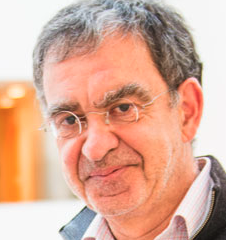 Tomaso A. Poggio合作论文数Department of Brain and Cognitive Sciences, Massachusetts Institute of Technology;McGovern Institute for Brain Research, Massachusetts Institute of Technology;Computer Science and Artificial Intelligence Laboratory, Massachusetts Institute of Technology5Boer, E.R.合作论文数3david c marr合作论文数2
 Edward H. Adelson合作论文数Computer Science & Artificial Intelligence Laboratory, Massachusetts Institute of Technology;Department of Brain and Cognitive Sciences, Massachusetts Institute of Technology2
 John M. Hollerbach合作论文数School of Computing, The University of Utah;College Of Engineering, University of Utah Robotics Center2
 Michael A. Goodrich合作论文数Computer Science Department, Brigham Young University2
 Richard A. Andersen合作论文数Division of Biology and Biological Engineering, California Institute of Technology;Tianqiao and Chrissy Chen Institute for Neuroscience, California Institute of Technology2David Marr合作论文数
Massachusetts Institute of Technology, Cambridge,
2
Richard A. Andersen合作论文数Division of Biology and Biological Engineering, California Institute of Technology;Tianqiao and Chrissy Chen Institute for Neuroscience, California Institute of Technology2David Marr合作论文数
Massachusetts Institute of Technology, Cambridge,
2 Stefan Treue合作论文数Abt. Kognitive Neurowissenschaften, Deutsches Primatenzentrum, Georg-August-Universität Göttingen;Cognitive Neuroscience Laboratory, German Primate Center, Georg-August-Universität Göttingen2
 Wodey Eric合作论文数Massachusetts Institute of Technology2Victor K. Inada合作论文数2Hc Longuethiggins合作论文数1edge detection合作论文数1Jehl C合作论文数1Sohie Lee合作论文数1
 David E. Irwin合作论文数Department of Psychology, University of Illinois at Urbana-Champaign1
 Ray Meddis合作论文数University of Essex1John P. Frisby合作论文数AI Vision Research Unit, University of Sheffield1
 Shimon Ullman合作论文数Department of Computer Science and Applied Mathematics, Faculty of Mathematics and Computer Sciences, Weizmann Institute of Science1Whitman Richards合作论文数1Tony J. Simon合作论文数1
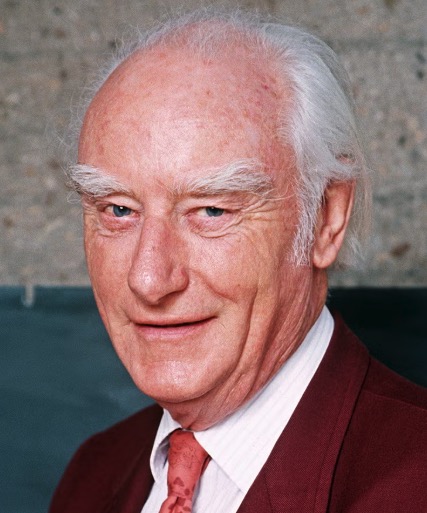 Francis Crick合作论文数Salk Institute for Biological Studies1
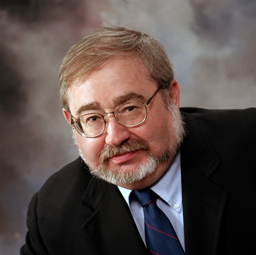 Edward J. Delp合作论文数Elmore Family School of Electrical and Computer Engineering, College of Engineering, Purdue University;The Center for Education and Research in Information Assurance and Security, Purdue University1
 Heinrich Bülthoff合作论文数Department of Human Perception, Cognition and Action, Max Planck Institute for Biological Cybernetics;Eberhard Karls Universität in Tübingen1
 Pascal Fua合作论文数Computer Vision Laboratory, Institute of Computer and Communication Sciences, School of Computer and Communication Sciences, Ecole Polytechnique Fédérale de Lausanne;IC - Computer Science Section, School of Computer and Communication Sciences, Ecole Polytechnique Fédérale de Lausanne;Neural Concept1Michael W. Beauvois合作论文数Laboratoire de Psychologie Expérimentale, Université René Descartes1
 Jeremy M. Wolfe合作论文数Visual Attention Lab, Department of Surgery, Harvard Medical School;Department of Ophthalmology, Harvard Medical School;Brigham and Women's Hospital1
 James L. Crowley合作论文数Institut polytechnique de Grenoble, Grenoble INP;National School of Computer Science and Applied Mathematics of Grenoble;INRIA Grenoble-Rhone Alpes1
 Nestor Matthews合作论文数Center For Neurobiology and Behavior, Columbia University1
 Christof Koch合作论文数Allen Institute for Brain Science1
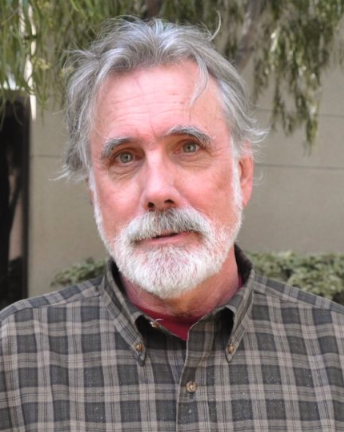 Bruce McNaughton合作论文数Department of Neuroscience, Faculty of Arts & Science, University of Lethbridge;Center for the Neurobiology of Learning and Memory, University of California, Irvine;School of Biological Sciences, University of California, Irvine1Stephen Pizer合作论文数University of North Carolina at Chapel Hill;Department of Computer Science1
 Jack D. Cowan合作论文数Department of Mathematics, The University of Chicago1
 Peter D. Eimas合作论文数Brown University1Zoran Bujas合作论文数1W. T. Thach合作论文数1
 Terrence Sejnowski合作论文数Department of Neurobiology, School of Biological Sciences, University of California, San Diego;Howard Hughes Medical Institute;The Salk Institute for Biological Studies1
 Donald A. Robin合作论文数Department of Speech;Pathology & Audiology;University of Iowa;Department of Speech|Pathology & Audiology, University of Iowa1
 Garvin Chastain合作论文数Department of Psychology, Boise State University1Marty Herman合作论文数1
 Donald J Tellinghuisen合作论文数Augustana College1, W. Eric合作论文数1Georgije Lukatela合作论文数1Andro Zangaladze合作论文数1Erik Börjesson合作论文数1John W Wiley合作论文数1John Mayhew合作论文数1




