Here is presented a fragment of the family tree of the Vienna School of statistical physics. Its branches have extended far beyond the Austrian national boundaries into The Netherlands, the United States, and China. Some vignettes from the lives and works of some of the Vienna School's prominent members are also given.
It has been observed over the past 15 years that experimental frequency-dependent dielectric constants of broad classes of materials including polymeric systems and glasses may be interpreted in terms of the Williams-Watts polarization decay function [Formula: see text] The exponent alpha and the time constant T depend on the material and fixed external conditions such as temperature and pressure. We derive this form of varphi(alpha)(t) from the following random-walk model. Suppose that an electric field has been applied for some time to a medium containing many polar molecules (or polar groups in complex molecules) and the direction of their dipole moments remains frozen as the field is removed. Furthermore, suppose that the medium contains mobile defects that on reaching the site of a frozen dipole relax the medium to the degree that the dipole may reorient itself. If the diffusion of defects toward dipoles is executed as a continuous-time random walk composed of an alternation of steps and pauses and the pausing-time distribution function has a long tail of the form psi(t) infinity t(-1-alpha), then the relaxation function has the above fractional exponential form.
Many scaling relations for complex systems in the physical sciences involve non-integer exponents. We list several examples all of which may not be well known. We interpret non-integer exponents as indicating singularities arising from a long tailed probability distribution governing the physical observables. If the first appropriate moment of the probability distribution diverges, then no scale exists in which to qauge measurements and phenomena occur on all scales. Self-similar fractals, non-differentiability, and also non-integer exponents will arise. Random walk examples are presented where the above characteristics appear simply and naturally. The analysis provides a generalization of Weierstrass' continuous, but nowhere differentiable function. Lastly, the Riemann Hypothesis is recast in a random walk framework.
We review and comment on styles of applied mathematics before exhibiting our own in regard to relating the theory of Lévy's stable distributions to dynamic processes in complex disordered materials. Lévy's probability distributions have long tails, infinite moments and elegant scaling properties. Our first example connects intermittant currents in certain xerographic films to a Lévy distribution of waiting times for the jumping of charges out of a distribution of deep traps. We then extend our analysis from transport to electron-hole recombination reactions in amorphous materials. A Lévy distribution of first passage times appears both in this recombination problem as well as in the dielectric relaxation phenomena described by the Williams-Watts formula. Lastly, the most famous scaling problem, "1/f noise", is shown to be related to a log-normal distribution of relaxation times. We derive the log-normal distribution in a generic fashion and show it to be a limiting form of a Lévy distribution.
The general formalism for the exact scattering of a scalar wave from N scatterers on a discrete lattice is reviewed. The interpretation of the exact solution in terms of approximation techniques is given and the expression for the scattering cross sections is derived. The expressions necessary for the calculation of the lattice Greens function are discussed and a number of asymmetric scattering configurations are considered.
In this report on examples of distribution functions with long tails we (a) show that the derivation of distributions with inverse power tails from a maximum entropy formalism would be a consequence only of an unconventional auxilliary condition that involves the specification of the average value of a complicated logarithmic function, (b) review several models that yield log-normal distributions, (c) show that log normal distributions may mimic 1/f noise over a certain range, and (d) present an amplification model to show how log-normal personal income distributions are transformed into inverse power (Pareto) distributions in the high income range.
We consider a class of random walks (on lattices and in continuous spaces) having infinite mean-squared displacement per step. The probability distribution functions considered generate fractal self-similar trajectories. The characteristic functions (structure functions) of the walks are nonanalytic functions and satisfy scaling equations.
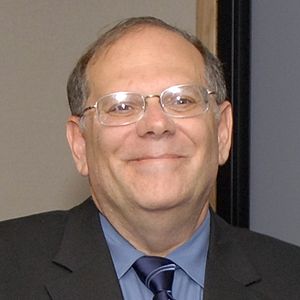 Michael F. Shlesinger合作论文数Physics Division, Office of Naval Research6
 Bruce J West合作论文数Department of Physics, Duke University5
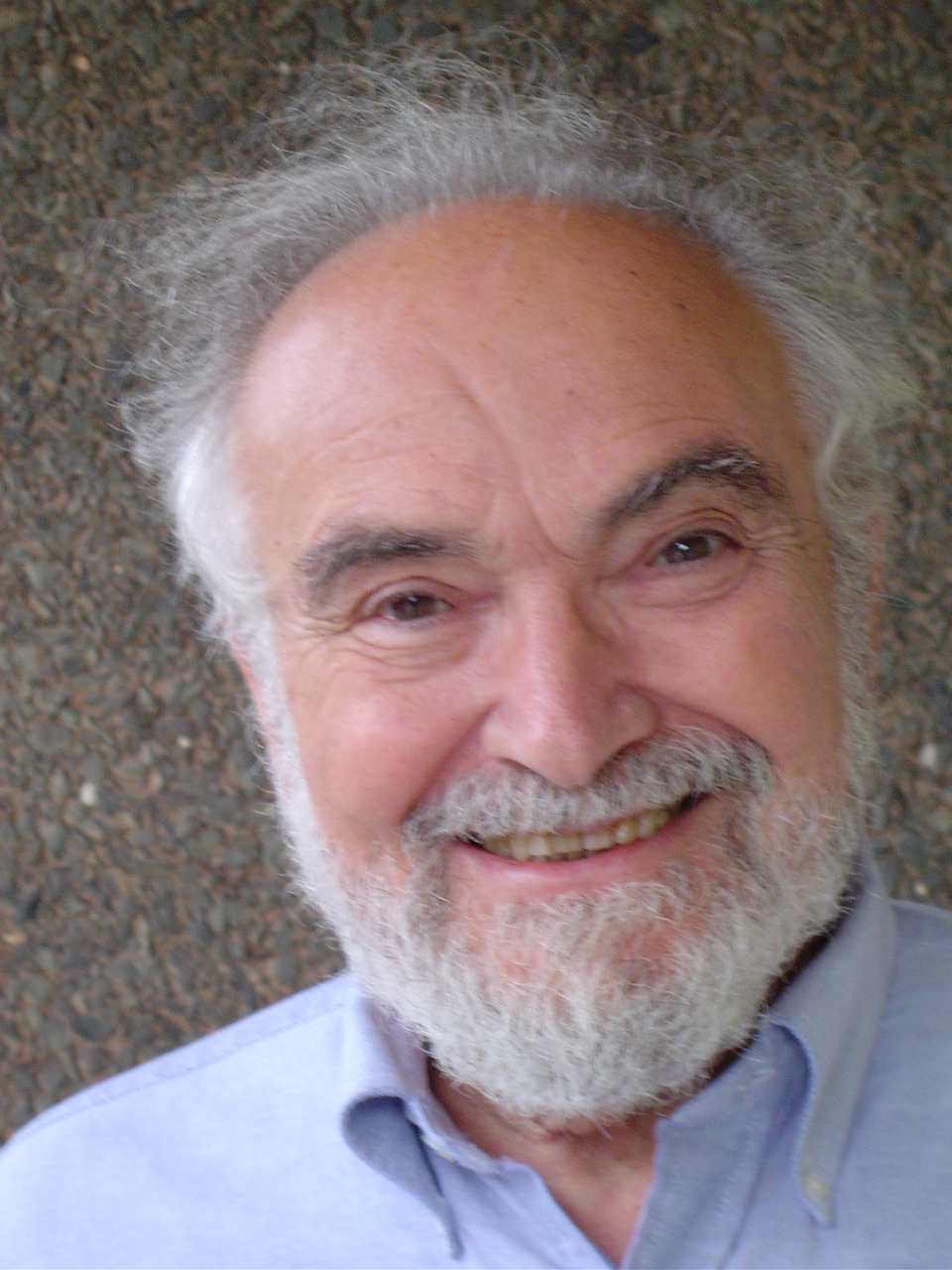 Joel L. Lebowitz合作论文数Center For Mathematical Sciences Research, Rutgers, The State University of New Jersey;Department of Physics and Astronomy, School of Arts and Sciences, Rutgers, The State University of New Jersey;Department of Mathematics, Rutgers, The State University of New Jersey5
 Foek T Hioe合作论文数Department of Physics, St. John Fisher College/University of Rochester4
 George Herbert Weiss合作论文数National Institutes of Health3Narendra S. Goel合作论文数Department of Computer Science, Wayne State University Detroit3Ke Shuler合作论文数2john c ward合作论文数2don macmillen合作论文数2
 Robert Herman合作论文数Research Staff, General Motors Corporation2
 Harvey Scher合作论文数Department of Earth and Planetary Sciences, Weizmann Institute of Science2Gordon Frank Newell合作论文数Civil Engineering, University of California, Berkeley2Robert H. G. Helleman合作论文数2G.E. UHLENBECK合作论文数1S.C. Maitra合作论文数1Je Mayer合作论文数1norman w bazley合作论文数1peter mazur合作论文数1Robert Weisbein Hart合作论文数1Alexei a Maradudin合作论文数1Julius L Jackson合作论文数1
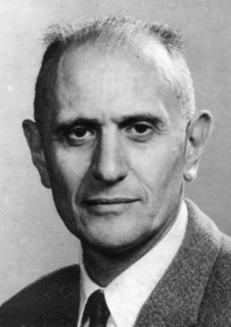 Robert Simha合作论文数Case Western Reserve University1Geoffrey W Ford合作论文数1Robert J. Rubin合作论文数1
 Uzi Landman合作论文数School of Physics, College of Sciences, Georgia Institute of Technology;Center for Computational Materials science, Georgia Institute of Technology1John T. Bendler合作论文数1I. P. Ipatova合作论文数1Harold J. Raveché合作论文数1Lee-Po Yu合作论文数1
 Howard Reiss合作论文数Department of Chemistry and Biochemistry, University of California, Los Angeles1Jerald A. Devore合作论文数1C. A. Ginsburg合作论文数1Renfrey B. Potts合作论文数1
 Roger Wartell合作论文数School of Biology;Georgia Institute of Technology;School of Biology, Georgia Institute of Technology1Barry D. Hughes合作论文数Department of Mathematics and Statistics, University of Melbourne1Kurt E. Shuler合作论文数1




