This case study aims to explore the experience of a group of religious Druze students in an advanced distance learning intercollegiate course on multiculturalism, that involved a distant learning platform and a virtual world (VW). Though 96 students from four different colleges and backgrounds took part in this intercollegiate course, this study focuses only on one group of twenty religious Druze students from one college. This group is of particular interest and significance since it is culturally detached from the Arab and Jewish communities in Israel. The qualitative data was collected by examining students’ reflections on the experiences they had in the VW during the distance learning course, their responses to the forum assignments as well as their reflections (video/open-ended questions) at the end of the course. The findings revealed three main themes that reflect the students’ self-exploration journey throughout the course. These themes relate to the students’ experiential, techno-emotional, and cognitive aspects of the learning experience throughout the course.
The present study compared participants' evaluations of their own conflict with their evaluation of another conflict. These evaluations were examined through the prism of the ideological ethos of conflict (EOC), which was seen as the major contributing factor in the development of the biased perceptions, divergent understandings, and emotional responses previously observed among groups in conflict. The participants in the study were students: Protestants and Catholics from Northern Ireland, Jews and Palestinians from Israel, and an additional group of Swiss students. They were presented with four scenarios: Two scenarios presented separately the views of Catholics and Protestants about the conflict in Northern Ireland and two presented the views of Jews and Palestinians about the conflict in the Middle East. They were followed by a questionnaire that assessed emotional responses, attributions, and conflict assessment. Participants demonstrated greater bias when evaluating their own conflict than the other one, as a function of their level of adherence to the ethos of their conflict. The results showed consistently, and without exception, that individual's ratings of their own conflict were significantly associated with their level of EOC's acceptance as an ideology, but responses to another conflict were not. They imply that the EOC serves as a lens that is used to judge one's own conflict in a biased way.
This case study explored the real-time experience of participants in the Arab Academic College for Education in Haifa, Israel, during the coronavirus pandemic. Twenty in-depth interviews were conducted with management, administrative staff, faculty and students. Participants' stories reveal that feelings of stress and isolation gave way to new learning and self-discovery, a new relationship with time, and the creation of new knowledge on the personal and institutional levels. Strong, coordinated leadership, combined with legal and financial security, facilitated the transition to online learning and allowed the college to emerge from the crisis successfully. Implications are drawn for dealing with future crises.
Living in a pluralistic society where groups are ethnically, nationally and religiously different and sometimes live in conflict with one another requires teachers to be prepared to deal with conflict-laden issues. In such societies, educational institutions in general and especially teaching colleges should not be ethnocentric but should acknowledge the experiences, cultures, and histories of different minority groups to educate for multiculturalism and to promote multi-cultural and inter-faith education. For this reason, the main purpose of this study was to investigate the manifestations of multiculturalism and multicultural and inter-faith education in two teaching colleges in Israel, one that belongs to the Arab minority and one that belongs to the Jewish majority. Seven senior staff members of each college were interviewed and asked about the way multiculturalism is demonstrated in their college and how multicultural and inter-faith education are expressed. The findings confirm that multicultural and inter-faith education have not penetrated all realms of activity in the two colleges and the gap existing between preaching multiculturalism and practicing it is still deep.
Multiculturalism in a conflict zone: Multiculturalism as perceived by senior staff members of Jewish and Arab teaching colleges in IsraelLiving in a plural society where groups are ethnically, nationally and religiously different and sometimes live in conflict necessitates teachers to be prepared to deal with conflict laden issues.In such societies, teaching colleges are expected to educate for multiculturalism and to prepare graduate students to deal with diversity.However, former studies have shown that multiculturalism was far from fulfilling a significant role in such colleges.For this reason, the main purpose of the study was to investigate perceptions towards multiculturalism and multicultural education, as they pertain to teacher education, among senior staff members in two colleges of education in Israel and to check whether the situation has changed.The findings confirm that the level of the intensity of multiculturalism is still not satisfying.Multicultural education hasn"t penetrated all realms of activity in the two colleges and the gap existing between preaching for multiculturalism and practicing it is still deep.
Self-censorship in education has rarely been studied and is rather difficult to identify. Nevertheless, exploring this topic may contribute to a better understanding of educational processes, particularly in societies involved in intractable conflict, serving as one of the mechanisms that significantly influence the maintenance of conflict-supportive narratives. We suggest that actors in the educational arena find themselves in this context in one of three roles: narrative-adherers, myth-breakers, or self-censors. The current chapter focuses on the choice of educational gatekeepers such as policymakers, textbook authors, and teachers to intentionally and voluntarily avoid teaching factual truths that are not consistent with the national conflict-supportive narratives. It describes various modes of self-censorship in education, and identifies several motivations to self-censor at both the collective and individual levels, giving examples from conflict-ridden societies throughout the world. In addition, it points to the educational and psycho-sociological implications of preventing contradictory information from students, especially in the context of intractable conflict. Between the lines, the chapter considers the dilemma that educators face as to whether to engage in preparing students for enduring the conflict and its current challenges, or rather to prepare and mobilize them for the possibility of peacemaking in the future.
Conflict narratives, having at their core the belief that the ingroup suffered more than the outgroup (competitive victimhood), are key in maintaining conflicts. Three experiments conducted with Jewish Israelis (Study 1), Turkish Kurds (Study 2), and Americans (Study 3) tested whether conflict narratives can reduce conflict. Studies 1 and 3 showed that people respond to inclusive victimhood narratives that emphasize both ingroup and outgroup suffering with a reduction in competitive victimhood and, in turn, reduced support for aggressive policies—but only when people were relatively less concerned that acknowledgment of outgroup suffering might risk loss of third-party support. Study 2 further found that inclusive narratives reduce conflict for low-power groups, yet without being moderated by concern. Together, these studies show that inclusive victimhood narratives can reduce conflict when people are not concerned about losing third-party support. The important role of third parties in conflict resolution is discussed.
One significant socio-psychological barrier for peaceful resolution of conflicts is each party’s adherence to its own collective narrative. We hypothesized that raising awareness to the psychological bias of naïve realism and its identification in oneself would provide a path to overcoming this barrier, thus increasing openness to the adversary’s narrative. We conducted three experimental studies in the context of the Israeli–Palestinian conflict. Studies 1 and 2, conducted among Jewish Israelis and Palestinian Israelis, respectively, revealed that participants with hawkish political ideology reported greater openness to the adversary’s narrative when they were made aware of naïve realism bias. Study 3 revealed that hawkish participants at the baseline adhered to the ingroup narrative and resisted the adversary’s narrative more than dovish participants. They were also more able to identify the bias in themselves upon learning about it. This identification may explain why the manipulation led to bias correction only among hawkish participants.
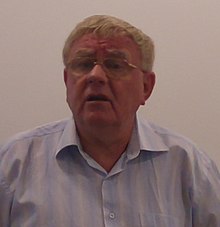 Daniel Bar Tal合作论文数School of Education, Tel Aviv University9
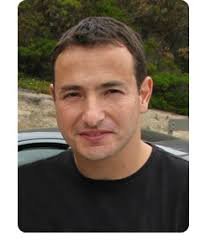 Eran Halperin合作论文数The Hebrew University of Jerusalem7
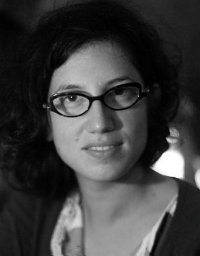 Ruthie Pliskin合作论文数Israel Interdisciplinary Center Herzliya, Tel Aviv University6
 Nasie Meytal合作论文数Tel Aviv University6
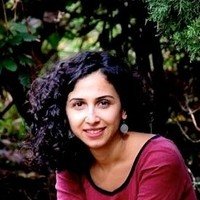 Helin Ünal合作论文数Clark University3
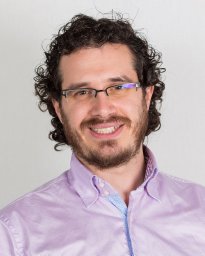 Adelman Levi合作论文数Department of Psychology, University of Massachusetts-Amherst.3
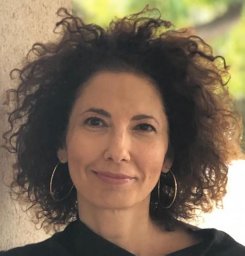 Nurit Shnabel合作论文数Sch Psychol Sci, Tel Aviv Univ3
 Bernhard Leidner合作论文数3Efrat Ambar合作论文数1Soli Vered合作论文数1
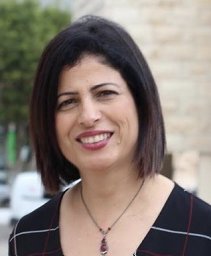 Manal Yazbak Abu Ahmad合作论文数Sakhnin College for Teacher Education1
 Shai Fuxman合作论文数1
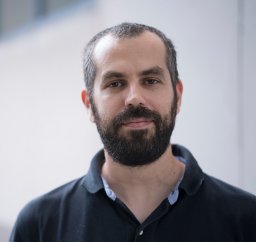 Boaz Hameiri合作论文数School of Psychological Sciences and;School of Psychology, Interdisciplinary Center, Herzliya 46150, Israel;School of Psychological Sciences and;School of Psychology, Interdisciplinary Center, Herzliya 46150, Israel1Randa Abbas合作论文数1
 Clifford Stevenson合作论文数University Belfast1Karen Trew合作论文数1




