The phenomenon of diverse families has expanded in recent years. Although it has important implications in the field of education, this issue has been largely overlooked in the research on early education in Israel. The aim of the present study is to examine the attitudes of Israeli kindergarten teachers towards diverse families and the practices they use in this context. For this purpose, we conducted a qualitative study, using in-depth, semi-structured interviews among 20 Jewish-Israeli state kindergarten teachers. The main findings are that, overall, the attitudes of kindergarten teachers towards diverse families are positive, and they use different practices for dealing with family diversity and integrate this issue in their routine educational activities. Despite this, due to various factors, the positive attitudes are not always implemented in practice. These findings highlight the need to guide kindergarten teachers to work with diverse families, preparing them to adapt to the changing society.
Children's perceptions of similarity and dissimilarity between in- and out-groups and their associations with intergroup attitudes were examined. Using mixed qualitative and quantitative methods, 5- and 8-year-old Jewish-Israeli children (N = 100, 48 % girls) were investigated. They were asked about Arabs (which are considered a conflict out-group). Specifically, they were asked whether a Jewish girl/boy and an Arab girl/boy are similar or dissimilar and in what way. They were also asked about their attitudes towards Arabs. In general, children reported more intergroup dissimilarities than similarities between Jews and Arabs. Children's perceptions revealed that they considered three types of properties as fundamental for intergroup (dis)similarity: appearance, psychological characteristics, and social identity. The results indicate that children form intergroup dissimilarity perceptions at an early age, but only at about 8 years of age do these perceptions become associated with negative attitudes towards the out-group. These findings highlight the importance of promoting early awareness of similarities between groups to mitigate the development of negative attitudes as children grow older.
Biases towards conflict out-groups pose significant barriers for conflict resolution. These biases can perpetuate social divisions, hinder positive intergroup relations, and impede long-term peacebuilding efforts. Therefore, intervening early, before biases are fully formed, is necessary. This article reviews existing knowledge and presents a research synthesis of effective educational interventions aimed to improve intergroup attitudes of young children (preschool and elementary school age) living in conflict zones towards the conflict out-group. The literature review includes interventions that have been implemented to address intergroup bias among such children. This review identifies effective strategies in existing literature and highlights areas for further research and development. These interventions provide practical strategies to reduce intergroup bias among children and foster positive intergroup relations; as such, they hold significant implications for educators, practitioners, and policymakers working in conflict zones. However, more longitudinal studies are needed to assess the long-term effects of interventions and their impact on sustained attitude change. Moreover, interventions should be tailored to specific conflict contexts, considering cultural nuances and local dynamics. Overall, the present article may contribute to our understanding of how to effectively intervene and moderate intergroup biases and negative attitudes among children living in conflict contexts before biases become stronger and more fully formed in adulthood.
The Informative Process Model (IPM) proposes an intervention to facilitate change in conflict-supporting narratives in protracted conflicts. These narratives develop to help societies cope with conflict; but over time, they turn into barriers for its resolution. The IPM suggests raising awareness of the psychological processes responsible for the development of these narratives and their possibility for change, which may unfreeze conflict attitudes. Previous studies in the context of the Israeli-Palestinian conflict found that the IPM (versus control) increased participants' support for negotiations. In three preregistered studies (combined N = 2,509), we illuminate the importance of feeling that one's conflict-related attitudes are accepted-that is, acknowledged without judgement-in explaining the effectiveness of the modeland expand the IPM's validity and generalizability: By showing the effectiveness of the IPM compared to an intervention similarly based on exposure to conflict-related information (Study 1); by showing its effectiveness in unfreezing attitudes when communicating different thematic conflict-supporting narratives-victimhood and security (Study 2); and by showing its effectiveness when using messages referring to ongoing, not only resolved conflicts, and text-based, not only visually stimulating, message styles (Study 3). These results contribute to theory and practice on psychological interventions addressing the barrier of conflict-supporting narratives.
Respect is a common social concept, yet how lay people define it has not been thoroughly investigated. This study used a grounded theory approach, using in-depth interviews, to conceptualize respect according to lay knowledge. 40 participants from two cultures in the Middle East-20 Jewish Israelis and 20 Palestinians-reported how they define respect (Kavod in Hebrew and Ihtiram in Arabic). The findings define respect as a complex, multidimensional concept. Based on the findings, a respect pyramid model was developed, which includes four dimensions: avoiding disrespect, deserved/normative respect, conditional respect, and considerate respect. Each dimension indicates an increase in aspects that make the respect less conditional and more intrinsic, while requiring higher sensitivity and greater effort. The implications of the respect pyramid for relationships and the cultural differences regarding definitions of respect are discussed.
The role of educators includes promoting cultural competence and cultural sensitivity in order to create an inclusive school climate, and for this role, they need multicultural knowledge and skills. This article presents theory-based and evidence-based principles, adopted from social psychology, to reduce intergroup biases and to improve intergroup attitudes. These principles are proposed here for use in intercultural educational intervention programmes with the aim of promoting cultural competence and cultural sensitivity in schools. Awareness of these principles and their implementation in educational programmes can contribute to acquaintance with the 'other', heterogeneous perception of groups, identifying similarities between cultures, addressing stereotypes, reducing intergroup biases, and enhancing intergroup attraction. All of these have the capability to contribute to an optimal and inclusive educational climate in schools and in society.
Children notice similarities and dissimilarities between people very early in life and are capable of categorizing people into in-groups and out-groups based on these perceptions. Previous research presented contradictory evidence concerning the effects of intergroup (dis)similarity perceptions on intergroup attitudes — or whether similarity-attraction or similarity-differentiation occurs. However, scant research has examined how this plays out in children. The present study aimed to assess how inducing (dis)similarities between in- and out-group members affects children's intergroup attitudes and concepts (positive behavioral intentions, resource distribution, distance, perceived (dis)similarity, and essentialism). We investigated 100 5- and 8-year-old Jewish-Israeli children (48 % girls), in the context of the Israeli-Palestinian conflict, regarding their in-group and a "conflict" out-group (Arabs). A pre- and post-test assessed three condition intervention effects on intergroup attitudes: Full, Partial, or No Similarity between the participant and a member of the out-group. The intervention was based on provision of fully similar, partial similar or no similar information about an out-group member according to eight details the participants provided about themselves at T0, referring to their preferences, interests, family composition, and personal appearance. The findings revealed that, generally, Full and Partial Similarity improved attitudes towards the out-group to the same extent, and No Similarity worsened them. Developmental differences were found regarding the effect of the intervention on essentialism. The findings have implications for early intervention programs that include acquaintance with similarities between groups and between their members.
Respect has been found to play a crucial role in human relationships including intergroup relations. Its presence has a significant positive influence in shaping the character of all relationship interactions. In intractable violent conflicts, there is almost no space for gestures of respect between adversarial parties, and the prevailing phenomenon is a mutual disrespect that fuels the conflict. This study examines a novel and challenging intervention that aims to induce in laboratory experiments, for the first time, perceptions of respect from adversary group members in the context of intractable intergroup conflict. In addition, this research examines the effect of perceived respect from the adversary on attitudes and perceptions towards the adversary group and the conflict. In three experimental studies (N = 1261) in the context of the Israeli-Palestinian conflict, we manipulated expressions of respect from the Palestinian adversary group members and presented them to Jewish Israelis. Results revealed that, a group involved in a prolonged violent conflict may perceive respect from its adversary outgroup, and the perceived respect from the adversary in turn predicts improvement in attitudes and perceptions towards the adversary group and the conflict. These findings underline the important role of respect in intergroup conflict and its role in mitigating the conflict.
This study evaluated the effectiveness of a vicarious contact intervention program for improving knowledge and attitudes of Jewish-Israeli secular and religious children regarding their ingroup and three outgroups: secular/religious Jews, Ethiopian-descendant Jews, and Arabs. One hundred and nine kindergartners participated in a four-week intervention, in which experimenters introduced to them four persona dolls representing the different groups. Accompanied by stories, children were exposed to the dolls' individual and group characteristics, and to positive encounters between the dolls. A pre- and post-test battery assessed the intervention's effects on children's intergroup knowledge and attitudes. Findings revealed an increase in children's knowledge of the groups, improvements in religious children's attitudes towards Arabs, and in both secular and religious children's willingness to sit closer to Ethiopian-descendant children. These findings highlight the potential of indirect contact for reducing intergroup bias in young children living in multicultural and conflict-ridden societies.
Children's intergroup attitudes arguably reflect different construals of in- and out-groups, whereby the former are viewed as composed of unique individuals and the latter of homogeneous members. In three studies, we investigated the scope of information (individual vs. category) Jewish-Israeli 5- and 8-year-olds prefer to receive about "real" in-group ("Jews") and out-group members ("Arabs" and "Scots") (Study 1, N = 64); the scope of information Jewish and Arab Israeli 8-year-olds prefer to receive about minimal in- and out-groups (Study 2, N = 64); and how providing such information affects children's intergroup attitudes (Study 3, N = 96). The main findings were that (a) 8-year-olds requested category information more about out-groups than in-groups, and vice-versa regarding individual information-for both, "real" and minimal groups, and (b) providing individual information about a "conflict" out-group reduced attitudinal biases. These findings highlight children's differential construal of in- and out-groups and suggest ways for remedying biases toward out-groups.
This article examines the political socialization of young children who live under conditions of intractable conflict. We present four premises: First, we argue that, within the context of intractable conflict, political socialization begins earlier and faster than previously suspected, and is evident among young children. Second, we propose that the agents of political socialization impart narratives of the ethos of conflict and of collective memory in young children that support continuation of the conflict. Third, we maintain that the great majority of the young children form systematic and coherent systems of beliefs, attitudes, and emotions that support the conflict as a result of political socialization and direct exposure to conflict. Finally, we suggest that the conflict-related contents absorbed by children have lasting effects on the solidification of children’s later socio-psychological repertoire. Our arguments highlight the serious consequences of political socialization processes on very young children in societies involved in intractable conflict.
This study investigated political socialization in Israeli-Jewish kindergartens. Specifically, it examined the scope of conflict supporting and peace supporting themes that Jewish-Israeli kindergarten teachers transmit to children during ceremonies of national events. Sixty-eight observations in 17 state-secular and state-religious kindergartens were conducted during five ceremonies: Passover, Holocaust Day, Memorial Day for Israeli Fallen Soldiers, Independence Day, and Jerusalem Day. The findings reveal that teachers transmit messages that comply with the conflict supporting themes to the children. The most dominant themes were collective self-perceived victimization, justness of one's own goals, positive collective self-image, ingroup security, and patriotism. These themes were more dominant in state-religious than in state-secular kindergartens. Thus, we found that the kindergarten teachers serve as agents of political socialization who transmit the hegemonic national narratives to the younger generation.
Funding information This research was conducted with the support of MOFET Institute Abstract One of the key factors contributing to the development of negative attitudes toward out‐groups is lack of knowledge about them. The present study investigated what type of information 3‐ to 4‐ and 5‐ to 6‐ year‐old Jewish Israeli chil‐ dren (N = 82) are interested in acquiring about unfamiliar in‐ and out‐group individuals, and how providing children with the requested information affects their intergroup at‐ titudes. Children were shown pictures of individuals from three groups—an in‐group (“Jews”), a “conflict” out‐group (“Arabs”), and a “neutral” out‐group (“Scots”)—and were asked what they would like to know about them. The ex‐ perimenter responded by either answering all of children's questions, half of the questions, or none. Children's atti‐ tudes toward the groups were also assessed. It was found that children asked the most questions in regard to conflict out‐group individuals. Moreover, the older age group asked more questions regarding the psychological characteristics, and fewer questions regarding the social identity, of the conflict out‐group than of the other two groups. Finally, full provision of information improved attitudes toward the groups, especially among 3‐ to 4‐year olds, and especially regarding the conflict out‐group. These findings have impli‐ cations for understanding the sources of intergroup biases, and for developing interventions to reduce them.
One of the major challenges of intercultural training refers to the question, how it can be implemented in intractable violent and persistent conflict. Usually, societies in conflict do not recognize the need for intercultural training because they concentrate on mutual delegitimizing and harming each other. Also, they do not strive to promote their relations as a goal stands in their priority. The current chapter suggests that intercultural training under conflict is possible but involves a long process. During the conflict, and especially during times of its de-escalation, it is possible to begin to provide information about the rival. In further stages, especially during negotiations for its peaceful resolution, it is possible to initiate encounters between rival group members. In order to reach the desired outcomes of intercultural training, groups in conflict should get to know each other, not only in conflict-related contexts but also in everyday humane contexts. It is a long process that requires the mobilization and involvement of all institutions. By training that provides neutral and positive information that humanizes, personifies, and legitimizes the opposite group, rival groups can formulate their perceptions towards their adversary in a way that considers its multidimensional aspects, thereby contributing to changing delegitimization of the rival group.
This article examines the political socialization of young children who live under conditions of intractable conflict. We present four premises: First, we argue that, within the context of intractable conflict, political socialization begins earlier and faster than previously suspected, and is evident among young children. Second, we propose that the agents of political socialization impart narratives of the ethos of conflict and of collective memory in young children that support continuation of the conflict. Third, we maintain that the great majority of the young children form systematic and coherent systems of beliefs, attitudes, and emotions that support the conflict as a result of political socialization and direct exposure to conflict. Finally, we suggest that the conflict-related contents absorbed by children have lasting effects on the solidification of children's later socio-psychological repertoire. Our arguments highlight the serious consequences of political socialization processes on very young children in societies involved in intractable conflict.
The article examines the political socialization of young Jewish-Israeli children who live under the Israeli–Palestinian intractable conflict. It proposes arguments and presents empirical evidence to suggest that the way in which political socialization of young children happens in this context contributes to the development of conflict-supporting narratives of ethos of conflict and collective memory by the youngest generation. As a result, the conflict solidifies adherence to these narratives in adulthood, thereby serving as a major obstacle to the processes of peace-making and peace-building. Specifically, as evidence for showing how the political socialization works in Israel, a series of studies conducted in Israeli kindergartens and elementary schools are presented. These studies recount the contents acquired by young children, as well as contents delivered by teachers, related to the Israeli–Palestinian conflict. This indicates the serious consequences of acquiring conflict-supporting narratives at an early age in societies involved in intractable conflict.
Children, as other members of societies involved in intractable conflicts, are continuously exposed to the powerful effects of these conflicts, because the chronic threat of violence dominates their lives. From a very early age, they are aware of the conflictual environment, absorbing information, forming concepts, categories, impressions, understandings, and preferences regarding the conflict and the rival. The present chapter discusses the personal experiences of young children in the context of an intractable conflict and the ways in which they learn about the conflict. In addition, it presents the content that young children acquire regarding the conflict in general and particularly pre-school children, focusing on the Israeli-Jewish case. The chapter concludes by arguing that these early conflict-related experiences and learning contribute to the continuation and preservation of conflicts.
One significant socio-psychological barrier for peaceful resolution of conflicts is each party’s adherence to its own collective narrative. We hypothesized that raising awareness to the psychological bias of naïve realism and its identification in oneself would provide a path to overcoming this barrier, thus increasing openness to the adversary’s narrative. We conducted three experimental studies in the context of the Israeli–Palestinian conflict. Studies 1 and 2, conducted among Jewish Israelis and Palestinian Israelis, respectively, revealed that participants with hawkish political ideology reported greater openness to the adversary’s narrative when they were made aware of naïve realism bias. Study 3 revealed that hawkish participants at the baseline adhered to the ingroup narrative and resisted the adversary’s narrative more than dovish participants. They were also more able to identify the bias in themselves upon learning about it. This identification may explain why the manipulation led to bias correction only among hawkish participants.
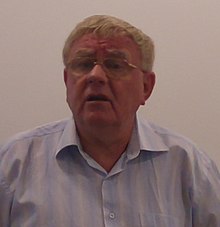 Daniel Bar Tal合作论文数School of Education, Tel Aviv University14
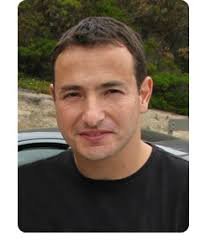 Eran Halperin合作论文数The Hebrew University of Jerusalem6
 Ruthie Pliskin合作论文数Israel Interdisciplinary Center Herzliya, Tel Aviv University6
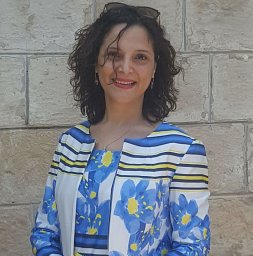 Eman Abu Hanna Nahhas合作论文数Arab College for Education in Israel6
 Gil Diesendruck合作论文数Bar-Ilan University3
 Aurel H. Diamond合作论文数Federmann Sch Publ Policy, Hebrew Univ Jerusalem2
 Yara Nassir合作论文数1
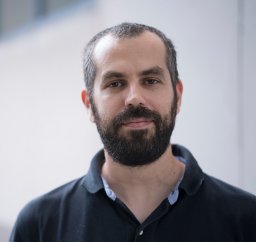 Boaz Hameiri合作论文数School of Psychological Sciences and;School of Psychology, Interdisciplinary Center, Herzliya 46150, Israel;School of Psychological Sciences and;School of Psychology, Interdisciplinary Center, Herzliya 46150, Israel1
 Nimrod Rosler合作论文数1Margalit Ziv合作论文数1Keren Sharvit合作论文数Department of Psychology, Tel Aviv University1
 Michal Reifen Tagar合作论文数1




