On January 2, 2005, the scientific community lost a valued colleague and friend. Maclyn McCarty, or “Mac,” as he was better known, was perhaps most recognized for his part in the discovery of DNA as the carrier of genetic information. But McCarty's scientific career was long and fruitful, and his contributions to science were vast. This retrospective offers a look at some of Mac's other notable scientific achievements.
The implementation of PCR technology to study the incidence age distribution and etiology of bacterial meningitis in Burkina Faso a country that is representative of the “meningitis belt” of sub-Saharan Africa unearthed several important aspects of this disease. The study was conducted during an unusual epidemic of meningococcal meningitis in which serogroup W135 rather than serogroup A was the predominant pathogen. Population-based surveillance with PCR technology as well as with culture and capsular polysaccharide antigen detection permitted greater test sensitivity for the identification of pathogens. Whereas attention has been almost entirely focused on epidemic group A meningococcal meningitis endemic bacterial meningitis is a common disease that is caused by the same pathogens that cause bacterial meningitis in developing countries (i.e. pneumococci and Haemophilus influenzae type b as well as meningococci). (excerpt)
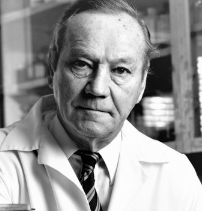
Maclyn McCarty (1911-2005) was best known for his part in the pioneering discovery that genes are made of DNA.
In his book Bullets and bacilli: the Spanish-American War and military medicine, Vincent Cirillo presents a highly readable account of the medical history of the Spanish-American War, a war that fundamentally altered the geopolitical role of the US, as it afterwards bestrode the Caribbean area as well as the Philippines in the Far East. The actual military encounters of the war occurred mainly in Cuba and involved approximately 22,000 US soldiers in combat for less than one month before the Spanish forces surrendered on July 16, 1898. Of the 1691 combat casualties, 260 were fatal. However, the ravages of yellow fever, typhoid, malaria, and dysentery were so severe that, by the beginning of August, less than one-quarter of the Army that had gone ashore on June 22, 1898, remained fit for service. This precipitated evacuation of the entire corps from Cuba to the hurriedly established Camp Wikoff at the eastern end of Long Island. Within the continental US, matters were not much better. In preparation for hostilities, 108,000 volunteers from various states had been assembled in a handful of national encampments located in Georgia, Florida, Virginia, and Pennsylvania. With some notable exceptions, military officers had very little knowledge of the role of hygiene in the prevention of disease. As a result, the sanitary facilities in the camps rapidly became overwhelmed, and the resultant situation was appalling. Typhoid fever epidemics broke out in all of the encampments. Regiments in these camps suffered 20,738 cases of typhoid fever, which resulted in 1,590 fatalities. Typhoid fever accounted for 87% of all deaths attributable to disease. This disaster prompted medical and political responses: the appointment of the Typhoid Board by Surgeon General George Sternberg and the creation of the Dodge Commission by President McKinley. The Typhoid Board consisted of three prominent physicians: Walter Reed, who headed the board, Victor C. Vaughn, and Edward O. Shakespeare. Within six weeks, the board had inspected all of the camps, and by June 1890, it had reviewed the regimental and hospital sick reports of 107,973 men who had never left the continental US. Beyond documenting the pestilential sanitary conditions in the camps and finding the commanding officers responsible, the board, through its inquiry, greatly furthered understanding of the epidemiology of typhoid. While the disease had been viewed mainly as a waterborne illness, the board found that direct human-to-human contact was a far more common cause, although 15% of cases were transmitted by flies. It also discovered the existence of the asymptomatic carrier state. The Presidential Commission, headed by Major General Grenville M. Dodge, also acquitted itself very well, taking testimony from 495 witnesses and visiting most of the camps and cities connected with the war. The commission concluded that the Army Medical Department was short on personnel and was not organized to meet the demands of a war. In addition, it discovered that the department did not investigate the sanitation at the camps, that it employed too few nurses and did not recognize the value of the female nurses, and that it was at the mercy of the quartermaster corps for distribution of medical supplies. The commission’s most important recommendations were to increase the number of medical officers, organize a reserve corp of female nurses, stockpile a year’s medical supplies adequate for an army four times the actual strength of the present forces, and take charge of the delivery of the supplies. The power of the Dodge commission was evident when most of these recommendations were implemented within a few years. Perhaps the commission’s influence was felt most strongly when its findings led to the implementation of curricula in hygiene and public health at military academies such as West Point as well as efforts to instill in the line officer a sense of responsibility for the health of his command. Yellow fever posed a major threat to continued military operations in the Americas; hence, on May 23, 1890, Sternberg appointed the Yellow Fever Board (led by Walter Reed and otherwise consisting of James Carroll, Jesse W. Lazear, and Aristide Agromonte) to investigate this disease, its etiology, and possible means of prevention. The conventional wisdom was that this disease was conveyed by fomites; Bacillus icteroides was proposed as the agent. However, Carlos Finlay, a Cuban physician, believed that the disease was mosquito borne, though his inoculation experiments had been inconclusive. Experiments by the board were begun by raising mosquitoes individually from eggs, letting them feed on patients with the disease, and then allowing them to bite members of the team. Carroll became infected with a very severe case of yellow fever. Lazear, while applying a laboratory-raised mosquito to a hospitalized yellow fever patient, was stung by a random mosquito, sickened three days later, and died of yellow fever within a week. These tragic events steered the subsequent investigation into controlled experiments, which proved that yellow fever was mosquito borne and not due to contact with fomites. Carroll, when he recovered, was able to prove that a living agent other than bacteria was the cause of the disease since injection of filtered serum from a patient could transmit the disease to volunteers. Major William Gorgas, as the chief sanitary officer of Havana, took immediate action by carrying out a mosquito eradication program and, for the first time in history, the city was free of yellow fever. This served as a prelude to his famous sanitary work in Panama, which rendered the construction of the Isthmian Canal possible. Cirillo’s book also summarizes the work of the Tropical Disease Board, primarily active in the Philippines, which identified dengue as a mosquito-borne disease and beriberi as due to dietary deficiency. The early development of typhoid vaccination and the remarkably rapid introduction of X-ray technology into the treatment of battlefield wounds is also briefly reviewed. A chapter on the Boer War documents that the British military leadership, despite knowing of the American experience, remained benighted about the need to enforce sanitation; consequently, their troops suffered monstrously from typhoid fever and dysentery. This very readable book on the state of military medicine at the turn of the last century is a deft recounting of the tragedies and the heroic advances that have always accompanied wars. Many readers will find this a welcome springboard to more extensive accounts of this conflict.
Endemic and epidemic group A meningococcal meningitis remains a major cause of morbidity and mortality in sub-Saharan Africa, despite the availability of the safe and inexpensive group A meningococcal polysaccharide vaccine, which is protective at all ages when administered as directed. Despite optimal therapy, meningococcal meningitis has a 10% fatality rate and at least 15% central nervous system damage. WHO's policy of epidemic containment prevents, at best, about 50% of cases and ignores endemic meningitis, which is estimated at 50,000 cases per year. The effectiveness of group A, C, W135, and Y capsular polysaccharides is the basis for recommending universal vaccination with group A meningococcal polysaccharide twice in infancy, followed by the four-valent vaccine in children aged two and six years. This could eliminate epidemic and endemic disease, prepare for the use of conjugates when they become available, and probably could have prevented the recent epidemics of groups A and W135 meningitis in Burkina Faso.
Neisseria gonorrhoeae is naturally able to take up exogenous DNA and undergo genetic transformation. This ability correlates with the presence of functional type IV pili, and uptake of DNA is dependent on the presence of a specific 10-bp sequence. Among the known competence factors in N. gonorrhoeae, none has been shown to interact with the incoming DNA. Here we describe ComE, a DNA-binding protein involved in neisserial competence. The gene comE was identified through similarity searches in the gonococcal genome sequence, using as the query ComEA, the DNA receptor in competent Bacillus subtilis. The gene comE is present in four identical copies in the genomes of both N. gonorrhoeae and Neisseria meningitidis, located downstream of each of the rRNA operons. Single-copy deletion of comE in N. gonorrhoeae did not have a measurable effect on competence, whereas serial deletions led to gradual decrease in transformation frequencies, reaching a 4 x 10(4)-fold reduction when all copies were deleted. Transformation deficiency correlated with impaired ability to take up exogenous DNA; however, the mutants presented normal piliation and twitching motility phenotype. The product of comE has 99 amino acids, with a predicted signal peptide; by immunodetection, a 8-kDa protein corresponding to processed ComE was observed in different strains of N. gonorrhoeae and N. meningitidis. Recombinant His-tagged ComE showed DNA binding activity, without any detectable sequence specificity. Thus, we identified a novel gonococcal DNA-binding competence factor which is necessary for DNA uptake and does not affect pilus biogenesis or function.
The genes encoding the glycosyltransferases responsible for the addition of the five sugars in the alpha -oligosaccharide (alpha -OS) moiety of lipooligosaccharide (LOS) have been identified. Disruption of these glycosyltransferase genes singly or in combination results in corresponding truncations in LOS. In the present work we show that sequential deletion of the terminal four sugar residues of gonococcal alpha -OS had no discernible effect on the invasion of human conjunctival, endometrial, and cervical cell lines. However, deletion of the proximal glucose, which resulted in the complete deletion of alpha -OS, significantly impaired invasion of the gonococci into all three cell lines. The effect of deleting alpha -OS on invasion was independent of and additive to the known invasion-promoting factor OpaA. These data suggest that the proximal glucose residue of the alpha -OS chain of LOS is required for efficient invasion of gonococci into host mucosa.
From the National Institute of Child Health and Human Development, National Institutes of Health, Bethesda, MD (JBR, RS), and The Rockefeller University, New York, NY (ECG). Accepted for publication July 21, 2000. Address for reprints: John B. Robbins, M.D., National Institutes of Health, Building 6, Room 424, Bethesda, MD 20892. E-mail [email protected] The authors have no financial conflict of interest in espousing the routine use of meningococcal polysaccharide vaccines.
The lipooligosaccharide from Neisseria gonorrhoeae (GC), consists of lipid A, an oligosaccharide core and three branches, alpha, beta, and gamma. We report the cloning of the gene (lgtG, lipooligosaccharide glycosyl transferase G) encoding the glucosyl transferase of GC that initiates the beta chain which consists of a lactosyl moiety. This gene contains a homopolymeric tract of cytidine [poly(C)] and we demonstrate that changes in the number of Cs in poly(C) account for the variation of beta chain expression in different GC strains. Biochemical analyses and mass spectrometry clearly attribute the reactivity of mAb 2C7 to the presence of the lactosyl beta chain. In addition, we demonstrate that in the absence of the lactosyl group, a phosphoethanolamine is added to generate a new antigenic epitope as evidenced by the gain of reactivity to mAb 2-L1-8. These results show that, like the alpha chain, the beta chain of lipooligosaccharide is subject to antigenic variation.
In spite of 50 years of extensive use of penicillin, group A streptococci remain exquisitely susceptible to this antibiotic. This observation that continuing susceptibility has occurred despite the development of resistance to other antimicrobial agents prompted a day-long meeting at Rockefeller University (New York) in October 1996. Among the most likely explanations for this remarkable state of continued susceptibility to penicillin are that beta-lactamase may not be expressed or may be toxic to the organism and/or that low-affinity penicillin-binding proteins either are not expressed or render organisms nonviable. Other potential explanations are that circumstances favorable for the development of resistance have not yet occurred and/or that there are inefficient mechanisms for or barriers to genetic transfer. Recommended future actions include (1) additional laboratory investigations of gene transfer, penicillin-binding proteins, virulence factors, and homeologous recombination and mismatch repair; (2) increased surveillance for the development of penicillin resistance; (3) application of bioinformatics to analyze streptococcal genome sequences; and (4) development of vaccines and novel antimicrobial agents. Thus far the susceptibility of group A streptococci to penicillin has not been a major clinical or epidemiological problem. A similar observation, however, could have been made decades ago about Streptococcus pneumoniae. It is therefore vital for the scientific community to closely examine why penicillin has remained uniformly highly active against group A streptococci in order to maintain this desirable state.
Standardization schemes devised by Control Agencies have followed clinical trials of experimental vaccines. The wealth of information about the pathogenesis of and immunity to bacteria, whose surface polysaccharides are protective antigens, now permits standardization to predict the efficacy of polysaccharide-based vaccines. There has been tacit acceptance of this notion with the licensure of groups Y and W135 meningococcal vaccines and of many of the pneumococcal types whose frequency in patients was too low for statistical significance to be assigned for their clinical efficacy. In fact, this was also the case for licensure of polio virus type 2 vaccine. We can reliably measure the level of anti-polysaccharide antibodies for meningococci, pneumococci, GBS and the Vi of S. typhi. Haemophilus type b conjugates have been reliably standardized by physico-chemical assays. New conjugates, therefore, may be licensed by data provided by standardization without awaiting the results of costly and time-consuming efficacy trials. Adoption of this scientifically-based approach to licensure will hasten the implementation of new and more effective vaccines.
The authors respond to criticism of their recommendation to immunize all people in sub-Saharan Africas meningitis belt with unconjugated group A meningococcal vaccine. Meningococcal polysaccharide vaccine (GAMP) induces booster responses up to age 2 years herd immunity and long-lived and protective antibody levels and immunity at all ages. Two injections beginning at age 3 months and given at least 1 month apart an injection at 2 years and again at about age 6 years confer a high degree of immunity in infants and young children. In the authors small sample GAMP injected according to this schedule induced 100% protection in infants. Just 1 injection of GAMP in young adults induces protective antibody levels for at least 10 years. Critics suggestions that GAMP could interfere with carriage allowing the accumulation of susceptibles and increasing the intensity of future epidemics is based upon neither data nor experience. Mass vaccination of the entire population followed by the routine vaccination of infants with GAMP according to the recommended schedule will eliminate endemic disease and prevent epidemics. The World Health Organization should recommend the approach accordingly for meningitis belt countries. The authors question the wisdom of waiting for a better vaccine when one which is highly effective safe inexpensive and readily available already exists.
Despite the availability of a safe, effective polysaccharide vaccine, group A meningococcal meningitis epidemics persist in sub-Saharan Africa. In October 1996, there were almost 150,000 reported cases and 15,000 deaths, the majority of which involved children. At 3 months of age, induction of protective group A meningococcal antibody levels requires 2 injections at least 1 month apart. Reinjection of 5-year-old children increases group A antibodies to long-term protective levels. During meningitis epidemics in Nigeria, Mali, and Rwanda, fatality was significantly reduced in areas where scarce vaccine was administered selectively. Although effective on an individual basis, selective vaccination is unable to control meningitis epidemics. In Chad, mass vaccination of the entire population (excluding infants under 12 months) eliminated the disease. Successful mass vaccination against group A meningococcal epidemics also has been reported in Saudi Arabia, China, and refugee camps in Africa. Although cost is cited as an obstacle to routine mass vaccination to prevent meningococcal meningitis in South Africa, prevention is the least expensive approach to disease control. It is recommended that the entire population of Africa's meningitis belt receive group A meningococcal vaccine in accordance with the recommended age schedule in a mass vaccination program.
Neisseria gonorrhoeae (GC) is a human pathogen that adheres to and invades genital surfaces. Although pili are required for the initial adherence, the interaction of GC with epithelial cells is also promoted by a family of outer membrane proteins, the opacity (Opa) proteins such as OpaA protein from strain MS11. Studies have demonstrated that the interaction of the OpaA GC with epithelial cells involves binding to heparan sulfate attached to syndecan receptors. However, other Opa proteins interact with CEA gene family member 1 (CGM1) or biliary glycoprotein (BGP), members of the CD66 antigen family. In this study, we demonstrate that, in addition, the 180-kD carcinoembryonic antigen (CEA) is a receptor for Opa proteins. This conclusion was based on the following observations. First, transfected HeLa cells expressing CEA (HeLaCEA) and the CEA-expressing colon cancer cell line (LS 174T) bound and subsequently engulfed the Opa+ bacteria. These interactions were inhibited by anti-CEA antibody, but could not be inhibited by addition of heparin. Furthermore, OpaI E. coli directly bound purified CEA. We also compared the adherence and invasion by Opa+ bacteria of CD66 transfected HeLa cells: HeLa-BGPa, HeLa-CGM6, HeLa-NCA, HeLa-CGM1a, HeLa-CEA, and HeLa-Neo serving as negative control. Using OpaI as the prototype, the relative ability of the transfected HeLa cell lines to support adherence was (CEA = BGPa >CGM1a >NCA >>CGM6 = Neo). The ability to mediate invasion of the transfectant cells was (CGM1a >CEA >BGPa >NCA >CGM6 = Neo). Among the Opa proteins tested, OpaC proved to be bifunctional, able to mediate adherence to both syndecan receptors and to CD66 antigens.
We report the cloning of lldA, a Neisseria meningitidis gene for L-lactate dehydrogenase (L-LDH). Escherichia coli contains a single L-LDH gene (lldD) in the lld operon (previously lct). E. coli grown in complex media does not have L-LDH activity, but the activity is induced by growth in defined medium with L-lactate as the carbon source. In contrast, meningococci contain at least one L-LDH in addition to the lldA gene product. These enzymes are active in meningococci grown in complex media and are not dependent on growth in L-lactate. The predicted amino acid sequence of lldA is homologous to that of E. coli lldD and of other prokaryotic and eukaryotic flavin mononucleotide-containing enzymes that catalyze the oxidation of L-lactate and other small alpha-hydroxy acids. A mutant with a deletion in lldA was found to have reduced L-LDH activity. However, this mutant was able to grow on L-lactate, indicating that a second L-LDH must exist. Activity of the lldA enzyme was affected by growth conditions, being increased by growth on a defined medium with either L-lactate or pyruvate as the carbon source. For meningococci grown on a complex medium, activity of the lldA enzyme was increased by growth on plates or in well-aerated broth. A second L-lactate-oxidizing activity was seen in bacteria grown in poorly aerated broth. Neisseria gonorrhoeae contains a homolog of lldA. As for meningococci, mutation of the gonococcal lldA reduced L-LDH activity but did not affect growth on L-lactate.
The lipooligosaccharide (LOS) expressed by gonococci spontaneously varies its structure at high frequency, but the underlying genetic mechanism has not been described. We have previously reported that the genes encoding the glycosyl transferases responsible for the biosynthesis of the variable alpha chain of the LOS of Neisseria gonorrhoeae are located in a locus containing five genes, lgtA, lgtB, lgtC, lgtD, and lgtE. Sequence analysis showed that lgtA, lgtC, and lgtD contained poly-G tracts within the coding frames, leading to the hypothesis that shifts in the number of guanosine residues in the poly-G tracts might be responsible for the high frequency variation in structure of gonococcal LOS. We now provide experimental evidence confirming this hypothesis.
 Michael Blake合作论文数25
 Lee M Wetzler合作论文数Boston Medical Center, Boston University School of Medicine11
 Rachel Schneerson合作论文数National Institute of Child Health and Human Development7
 John Michael Koomey合作论文数Department of Biosciences, The Faculty of Mathematics and Natural Sciences, University of Oslo7Jb Robbins合作论文数6
 Vincent A. Fischetti合作论文数Laboratory of Bacterial Pathogenesis and Immunology, The Rockefeller University6Irving Goldschneider合作论文数6
 John B. Robbins合作论文数Laboratory of Developmental and Molecular Immunity, National Institute of Child Health and Human Development, National Institutes of Health6I E Salit合作论文数5T Y Liu合作论文数5Martha L. Lepow合作论文数5A L Erwin合作论文数4K BARRY合作论文数4Seiff M E合作论文数4
 Debra Bessen合作论文数Department of Pathology, Microbiology and Immunology, New York Medical College4Ronald Gold合作论文数4W R Sanborn合作论文数3Tai J Y合作论文数3Glode M P合作论文数3Triau R合作论文数3
 Gary Schoolnik合作论文数Division of Infectious Diseases & Geographic Medicine, Department of Medicine, Stanford School of Medicine, Stanford University;Stanford Cancer Institute, Stanford School of Medicine, Stanford University;Visby Medical3Gregory John Russelljones合作论文数3B. Cvjetanovic合作论文数3
 John B. Zabriskie合作论文数Rockefeller University3M. Seiff合作论文数3SJ KRAUS合作论文数2Eb Lewin合作论文数2TEH-YUNG LIU合作论文数2Ty Liu合作论文数2J Swanson合作论文数2Kh Johnston合作论文数2
 Jeffrey N. Weiser合作论文数Department of Microbiology, Perelman School of Medicine, University of Pennsylvania2William Egan合作论文数2McNelis R M合作论文数2Rey M合作论文数2
 King K Holmes合作论文数Department of Global Health, University of Washington;School of Public Health, University of Washington2
 George H. Mccracken Jr.合作论文数Department of Pediatrics, The University of Texas Southwestern Medical Center2
 Chap T. Le合作论文数2John Swanson合作论文数2J.E. Sippel合作论文数2C. R. Tinsley合作论文数2Carl E. Frasch合作论文数2
 Asesh Banerjee合作论文数Dept Microbiol & Immunol, New York Med Coll2Eduardo B. Oliveira合作论文数School of Medicine of Ribeirão Preto, University of São Paulo2
 Keith Klugman合作论文数School of Medicine, Emory University;Hubert Department of Global Health, Emory University2Milan S. Blake合作论文数2F Y Lin合作论文数1H Finger合作论文数1




