Member of the Russian Academy of Sciences, Doctor of Physicomathematical Sciences, died onMarch 5, 2007 after a long severe illness. B A Mamyrin was born on May 25, 1919 in the town of Lipetsk. Having graduated from a secondary school in Saratov, he enrolled in 1937 in the Physics and Mechanics Department of Leningrad Polytechnical Institute (LPI). As an LPI freshman and sophomore, Mamyrin took part in oscilloscope development work. In 1939, third-year student Mamyrin volunteered for military service in the war against Finland, immediately displaying his passion for all things technical Ð he was in a unit that saved Red Army soldiers from frostbite using high-frequency irradiation. During Great Patriotic war Boris Aleksandrovich was on active duty in the army and in the Communications Academy. In 1948, Soviet Army captain Mamyrin was invited by Academician A F Ioffe to the Physico-Technical Institute (FTI, or Fiztekh); he was demobilized and started as senior research worker in Yu ADunaev's laboratory, which worked on isotope separation for the Atomic Project. In 1949, Mamyrin wrote, submitted, and successfully defended his thesis ``Modulating circuits for uranium-isotope-separation facilities by high-frequency method'' for Candidate of Technical Sciences. As any work on isotope separation and enrichment requires knowledge of the composition of the compounds involved, mass spectrometry analysis was started at Fiztekh and Mamyrin began to work in this field in the laboratory headed by V M Dukel'sky, together with more experienced experimenters who were already well known: N I Ionov, N V Fedorenko, and E Ya Zandberg. Boris Aleksandrovich's talent for seeing the general behind a particularity, of approaching any problem from contrasting standpoints, of regarding any device or instrument as an object for making improvements, of identifying weak spots and suggesting novel solutions manifested itself here in full measure. One of the main principles of Mamyrin's work was that any research effort should be extended to its logical end: the implementation of the result of research as a practical device or as an industrially produced item, or the development of an instrument with improved parameters or of a completely novel device, or obtaining a numerical value of a quantity measured. Mamyrin and his co-workers along with colleagues from other institutions developed with equal relish highvacuum metal seals allowing numerous close ± open cycles, ion sources, modulators, phase shifters, broad-band amplifiers, stroboscopic devices for weak signal extraction, electrometric amplifiers, open-input dynode multipliers (in collaboration with M R Ainbund, G S Vildgrube, and N V Dunaevskaya), vacuum leak-valves, and many other elements or devices that are still used by experimenters. Many of Mamyrin's publications deal with developing methods for measuring certain physical quantities: extremely low pulse voltages and currents, the characteristics of gas discharge, plasma parameters at high discharge current densities, small inhomogeneities of magnetic induction in high-intensity fields, etc. In 1966, Boris Aleksandrovich Mamyrin presented and brilliantly defended a thesis ``Studies of ion separation by time-of-flight technique'' for Doctorate of Physicomathematical Sciences. In the mid-1970s, he received a Professorship certificate. In 1981, Mamyrin organized at the A F Ioffe FTI the first mass spectrometry laboratory in the USSRAcademy of Sciences with the task of developing new mass-spectrometric techniques for utilization in fundamental and applications-oriented research. Mamyrin's main contribution to science was made in the field of dynamic mass spectrometry and its applications. In contrast to static mass spectrometers in which ions with different mass-to-charge ratios are separated in constant electric and magnetic fields, ions in dynamic spectrometers Uspekhi Fizicheskikh Nauk 177 (6) 693 ± 694 (2007) Translated by V I Kisin PERSONALIA PACS number: 01.60.+q
Памяти Олега Игоревича Сумбаева, Алферов Ж.И., Варшалович Д.А., Воробьев А.А., Коноплев К.А., Лобашев В.М., Мазец Е.П., Назаренко В.А., Петров Г.А., Петров Ю.В., Серебров А.П., Скринский А.Н., Федоров В.В.
 Dmitrii A Varshalovich合作论文数5V. A. Nazarenko合作论文数Institute for Problems of Materials Science, National Academy of Sciences of Ukraine4
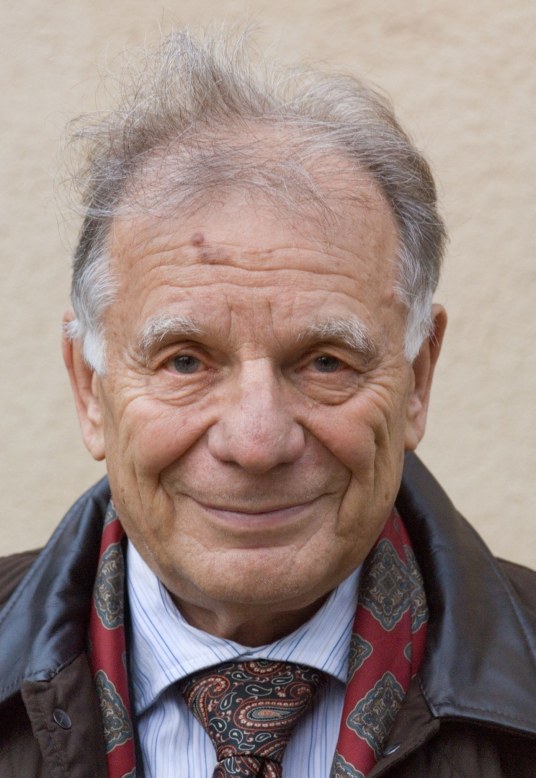 Zhores I. Alferov (若列斯·阿尔费罗夫)合作论文数Saint Petersburg Academic University4Д. А. Варшалович合作论文数4mikhail p petrov合作论文数3Г. С. Ануфриев合作论文数3V. I. Karataev合作论文数3Anatolii P. Serebrov合作论文数3K. A. Konoplev合作论文数3N. N. Aruev合作论文数3Evgenii B Aleksandrov合作论文数3жорес иванович алферов合作论文数2владимир михайлович лобашев合作论文数2александр николаевич скринский合作论文数2Valery V Fedorov合作论文数2М. Н. Павлинский合作论文数2Алексей Александрович Старобинский合作论文数1academician a a galeev合作论文数1aleksandr aleksandrovich kaplyanskii合作论文数1анатолий михайлович черепащук合作论文数1евгений михайлович чуразов合作论文数1v v zheleznyakov合作论文数1andrei georgievich zabrodskii合作论文数1владимир васильевич железняков合作论文数1An Skrinskii合作论文数1Andrei G. Zabrodskii合作论文数1A. A. Starobinskii合作论文数1Zh. I. Alferov合作论文数1Ka Konoplev合作论文数1yu v petrov合作论文数1AA Galeev合作论文数1VM LOBASHEV合作论文数1Anatolii M. Cherepashchuk合作论文数1А. А. Каплянский合作论文数1Oleg V. Terekhov合作论文数1Aleksandr N Skrinskii合作论文数1
 Eugene Churazov合作论文数Max Planck Institute for Astrophysics1V.M. Lobashev合作论文数1Anatolii P Serebrov合作论文数1Nikolai Shakura合作论文数1
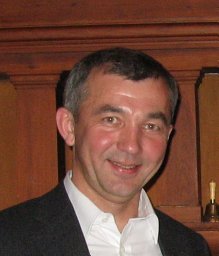 Marat Gilfanov合作论文数MPA1Sergei Grebenev合作论文数High Energy Astrophysics Department, Space Research Institute, Russian Academy of Sciences1Yurii V Petrov合作论文数1




