The current surge in interest surrounding small unmanned aerial vehicles can be attributed to their extensive range of applications. This growing interest is not accompanied by a corresponding increase in knowledge regarding their aeroacoustic performance and behavior. Studies concentrate on commercial geometries, with low-fidelity models being employed as they are deemed sufficient for the acquisition of the requisite quantities for flight mechanics. This paper aims at providing a detailed description of a drone propeller aeroacoustic performance using a high level of modeling. This propeller is computed with a Large Eddy Simulation turbulence model and with two distinct mesh resolutions. The aeroacoustic performance of the propeller is evaluated for both configurations and compared to quantify the losses due to the reduction in mesh resolution, with the aim of limiting the computational cost. It is observed that the grid resolution does not affect the computation of the integral force. Furthermore, the overall flow topology remains qualitatively similar, despite some localized quantitative differences. Notably, the size of the separated region varies, and discrepancies in the computed acoustic waves and energy levels are observed between the simulations.
This paper presents a methodology that aims at performing a CFD simulation of a micro unmanned aerial vehicle. The rotors are described by a set of overset near-body grids, whereas the fuselage is represented by immersed boundaries within a Cartesian mesh. A coupling between the two methods is proposed and applied to a complete rotor mounted on a drone arm. Three simulations of increasing geometrical complexity are performed, in order to highlight their respective contribution to the aerodynamics. The hub is found to be responsible for a significant increase in forces with almost no impact on the flow behavior whereas the mounting on the arm changes the wake structure and the noise generation.
Flow control aims at modifying a natural flow state to reach an other flow state considered as advantageous. In this paper, active feedback flow separation control is investigated with two different closed-loop control strategies, involving a reference signal tracking architecture. Firstly, a data-driven control law, leading to a linear (integral) controller is employed. Secondly, a phenomenological/model-driven approach, leading to a non-linear positive (integral) control strategy is investigated. While the former benefits of a tuning simplicity, the latter prevents undesirable effects and formally guarantees closed-loop stability. Both control approaches were validated through wind tunnel experiments of flow separation control over a movable NACA 4412 plain flap. These control laws were designed with respect to hot-film measurements, performed over the flap for different deflection angles. Both control approaches proved efficient in avoiding flow separation. The main contribution of this work stands in providing practitioners, simple but yet efficient control design methods for the flow separation phenomena. Equivalently important, a complete validation campaign data-set is also provided.
In the field of NATO/STO Research Task Group AVT-351 dedicated to numerical methods for prediction of Stability and Control, wind tunnel tests have been carried out at ONERA to obtain reference values concerning aerodynamics under static and above all dynamic conditions in the low speed domain. First works did focus on the choice of the geometry. An overview of the process for the design of ONERA_DLR_M421 is presented. Then the experiments are detailed and major results are discussed.
This paper compares several approaches to model the unsteady and nonlinear longitudinal aerodynamics of a generic unmanned combat air vehicle configuration based on computational fluid dynamics (CFD). Three different reduced-order models (ROMs) are implemented through unsteady simulations to predict the evolution of forces and moments during prescribed trajectories carried out at M=0.15. The first model investigates a linear quasi-steady model based on a first-order Taylor series expansion of the aerodynamic coefficients. The second one picks up the mathematical formulation of the first model but adds a dynamic coefficient in order to take into account the unsteady effect of rotation rate variations. Finally, the third model is built on indicial functions computed from positive step changes in the angle of attack or pitch rate. The unknown parameters of the first two models and the unknown indicial functions of the third one are obtained, respectively, from the study of forced oscillations and step motions. These prescribed trajectories are performed using unsteady Reynolds-averaged Navier-Stokes simulations coupled with a grid displacement tool. Two different methods are tested and compared to carry out the CFD mesh motions: an overset method and a full moving grid (FMG) method. The indicial functions obtained using the FMG method give results equivalent to those found in the literature in half the time of the overset method. To reduce the computational costs to set up the ROMs, the FMG method is preferred to the overset method. ROMs are then applied, and their predictions are compared with CFD simulations for prescribed trajectories with different angular rates and angles of attack. A study of instantaneous and overall accuracy associated with the implementation cost of the ROMs has allowed to show their strengths and their weaknesses. Similar results are observed at low angles of attack for the ROMs studied, while a major modeling advantage of the indicial method has been identified for higher angles of attack in the nonlinear domain.
This paper investigates two control strategies to maintain low perturbation amplitudes of second Mack mode instabilities in a two-dimensional boundary layer with freestream velocity variations of [Formula: see text] around [Formula: see text]: the multimodel synthesis and the gain scheduling method, both based on the structured mixed [Formula: see text] synthesis to handle simultaneously, in an optimal way, the problems of nominal performance, stability, and performance robustness. The multimodel synthesis is based on a single linear-time invariant (LTI) controller optimized over multiple operating points, whereas the gain scheduling method results in a control law based on the interpolation of multiple LTI controllers designed at the various operating points. Both methods are compared with simple LTI controllers based solely on the nominal operating point in two sensor–actuator architectures: in feedforward (respectively, feedback) the estimation sensor is located upstream (respectively, downstream) of the actuator. In the feedforward case, significant performance loss is observed in off-design conditions, regardless of the method used. In the feedback case, multimodel synthesis enhances slightly performance robustness (but improvement is weak because of the wide range of freestream velocity variation), while the gain scheduling approach succeeds in strongly reducing the perturbation amplitude over the entire range of variation.
For a Mach $4.5$ flat-plate adiabatic boundary layer, we study the sensitivity of the first, second Mack modes and streaks to steady wall-normal blowing/suction and wall heat flux. The global instabilities are characterised in frequency space with resolvent gains and their gradients with respect to wall-boundary conditions are derived through a Lagrangian-based method. The implementation is performed in the open-source high-order finite-volume code BROADCAST and algorithmic differentiation is used to access the high-order state derivatives of the discretised governing equations. For the second Mack mode, the resolvent optimal gain decreases when suction is applied upstream of Fedorov's mode $S$/mode $F$ synchronisation point, leading to stabilisation, and the converse when applied downstream. The largest suction gradient is in the region of branch I of mode $S$ neutral curve. For heat-flux control, strong heating at the leading edge stabilises both the first and second Mack modes, the former being more sensitive to wall-temperature control. Streaks are less sensitive to any boundary control in comparison with the Mack modes. Eventually, we show that an optimal actuator consisting of a single steady heating strip located close to the leading edge manages to damp the linear growth of all three instability mechanisms.
We consider closed-loop control of a two-dimensional supersonic boundary layer at M = 4.5 that aims at reducing the linear growth of second Mack mode instabilities. These instabilities are first characterized with local spatial and global resolvent analyses, which allow us to refine the control strategy and to select appropriate actuators and sensors. After linear input-output reduced-order models have been identified, multi-criteria structured mixed H2/H infinity synthesis allows us to fix beforehand the controller structure and to minimize appropriate norms of various transfer functions: the H2 norm to guarantee performance (reduction of perturbation amplification in nominal condition), and the H infinity norm to maintain performance robustness (with respect to sensor noise) and stability robustness (with respect to uncertain free-stream velocity/density variations). Both feedforward and feedback set-ups, i.e. with estimation sensor placed respectively upstream/downstream of the actuator, allow us to maintain the local perturbation energy below a given threshold over a significant distance downstream of the actuator, even in the case of noisy estimation sensors or free-stream density variations. However, the feedforward set-up becomes completely ineffective when convective time delays are altered by free-stream velocity variations of +/- 5 %, which highlights the strong relevance of the feedback set-up for performance robustness in convectively unstable flows.
This paper reports the realization of thermal MEMS (Micro Electro-Mechanical Systems) sensors designed for wall shear stress measurement during real flight on a microlight aircraft. Based on constant temperature anemometry and calorimetric principle, the micro-sensors measure the viscous shear stress occurring at the wall of a structure interacting with a fluid flow and detect the flow direction. A proper packaging was realized for ensuring a flush but robust integration of the devices on a pod fixed on a microlight aircraft. Real flight-testing demonstrated the ability of the micro-sensors to realize aerodynamic measurements up to 250 km/h on the microlight aircraft.
Flow control consists in modifying a flow natural state in order to converge towards another state which is considered as favorable, as drag or noise radiation might be reduced. In this paper, open-loop flow control experiments are carried out on a subsonic open-cavity flow. In the case of unstable flow control, the control focus is brought onto the flow fluctuations modifications rather than modification of the mean flow properties. Therefore, the forcing flexibility using arbitrary signals and the forcing linearity are essential for such flow control cases. In that sense, a linear array of Micro Magneto-Electro-Mechanical Systems actuators has been implemented to perform open-loop flow control experiments on an open-cavity. The actuators are able to generate both quasi-steady and pulsed jets with linear behavior. We proved the microvalves efficiency to damp the cavity oscillations. The quasi-steady jets reached a reduction of 20 dB in the cavity fundamental amplitude sound pressure level. Pulsed jets enabled an additional cavity tone amplitude reduction, which depends on the pulsating frequency and on the forcing amplitude. These results are a first step towards the implementation of the closed-loop control of the open-cavity flow.
A non-intrusive method to get a multi-element Polynomial Chaos model is developed. This method is called ME-ACD, for Multi-Element based on Agglomerative Clustering on Derivatives. It aims at approximating a Quantity of Interest which presents discontinuities or irregularities making it difficult to be accurately approximated by standard Polynomial Chaos models. The method permits to efficiently split the parameter space and to train local polynomial models of lower degrees on every element where the local pieces of the Quantity of Interest are smoother. The algorithm is based on agglomerative clustering of the observations in a well-chosen abstract space taking into account the value of the Quantity of Interest and of its derivatives with respect to the stochastic input parameters. The same observations are used for both partitioning the space and training the local models. Several partitions of the parameter space are tested, and the one leading to local models minimising a cross-validation error is selected. Once the training observations are labelled with a class number indicating the element they are located in, a neural network classifier is trained to determine which local model to use for further evaluations. The method has proven to efficiently split the parameter space for a set of applications of moderate dimension. The piecewise chaos model is compared with the ones of a standard Polynomial Chaos non-intrusive method and of a Gradient Boosted Trees method in terms of accuracy.
Flow control aims at modifying a natural flow state to reach an other flow state considered as advantageous. In this paper, active feedback flow separation control is investigated with two different closed-loop control strategies, involving a reference signal tracking architecture. Firstly, a data-driven control law, leading to a linear (integral) controller is employed. Secondly, a phenomenological/model-driven approach, leading to a non-linear positive (integral) control strategy is investigated. While the former benefits of a tuning simplicity, the latter prevents undesirable effects and formally guarantees closed-loop stability. Both control approaches were validated through wind tunnel experiments of flow separation over a movable NACA 4412 plain flap. These control laws were designed with respect to hot film measurements, performed over the flap for different deflection angles. Both control approaches proved efficient in avoiding flow separation. The main contribution of this work is to provide practitioners simple but yet efficient ways to design a flow separation controller. In addition, a complete validation campaign data-set is provided.
The evolution of any complex dynamical system is described by its state derivative operators. However, the extraction of the exact N-order state derivative operators is often inaccurate and requires approximations. The open-source CFD code called BROADCAST discretises the compressible Navier-Stokes equations and then extracts the linearised Nderivative operators through Algorithmic Differentiation (AD) providing a toolbox for laminar flow dynamic analyses. Furthermore, the gradients through adjoint derivation are extracted either by transposition of the linearised operator or through the backward mode of the AD tool. The software includes base-flow computation and linear global stability analysis via eigen-decomposition of the linearised operator or via singular value decomposition of the resolvent operator. Sensitivity tools as well as weakly nonlinear analysis complete the package. The numerical method for the spatial discretisation of the equations consists of a finite-difference high-order shock-capturing scheme applied within a finite volume framework on 2D curvilinear structured grids. The stability and sensitivity tools are demonstrated on two cases: a cylinder flow at low Mach number and a hypersonic boundary layer.
ABSTR A C T Flow control devices are used within complex intakes to reduce the flow distortion which can adversely impact the stability and performance of embedded engines. There is a need to assess the capability of modern computational methods such as detached eddy based models to compute the unsteady flowfield and to evaluate the potential benefits of flow control devices on the unsteady distortion. This paper investigates the unsteady flowfield for an S-duct using Zonal Detached Eddy Simulations (ZDES) with passive flow control devices modelled with an overlapping Chimera grid method. The ability of ZDES to evaluate the impact of passive flow control devices on the unsteady flow distortion was assessed. The computed unsteady flowfield at the Aero-dynamic Interface Plane was compared with experimental data based on total pressure and velocity field mea-surements. For the baseline configuration, the ZDES model has proven to be able to simulate the unsteady flowfield at the AIP, to provide the time averaged and fluctuating levels of swirl distortion within 1% and 13% respectively of the measurements. The strong impact of the flow control devices on the AIP flowfield was also captured by the ZDES. The overall increase of pressure ratio (PR) at the AIP due to the flow control devices was predicted with less than 1% error. The 65% reduction in swirl distortion fluctuation when the flow control devices are used was predicted within less than 8% error by the ZDES compared with S-PIV measurements. Overall it was determined that the ZDES method is able to simulate the unsteady flow and distortion charac-teristics for both the baseline reference configuration as well as the case with flow control.
This paper investigates the unsteady flow around a high-rise building using OpenFoam. A Vortex Method is developed to generate upstream unsteady fluctuations that are validated considering the numerical simulation of a neutral atmospheric boundary layer around a high-rise building. The Vortex Method parameters are tuned to produce an upstream velocity profile whose turbulence characteristics are comparable to experimental data. Comparison between mean and fluctuating velocity profiles of the numerical data measured in the building's wake with experimental data shows satisfactory results. The resulting database is used to reconstruct the flow from limited velocity measurements inside the wake and static wall pressure measurements on the building surface. Machine learning techniques such as linear regressions (Ridge, Lasso, ElastikNet, MultiTaskLasso regression) and Artificial Neural Network are tested and compared. The flow reconstruction using velocity measurements inside the wake leads to a better result compared to the flow reconstruction from the wall pressure measurements. At the same time, it was noticed that the Artificial Neural Network regression does not lead to more satisfactory results compared to linear regression techniques.
 Pierre Sagaut合作论文数Laboratoire de Mécanique, Modélisation et Procédés Propres, Aix-Marseille University37
 Philippe Pernod合作论文数27
 Alain Merlen合作论文数26
 Abdelkrim Talbi合作论文数25
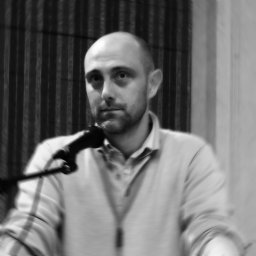 Romain Viard合作论文数INSERM U703, Pavillon Vancostenobel CHRU de Lille 59037 Lille cedex France19
 Cecile Ghouila-Houri合作论文数University of Lille, University Polytechnique Hauts-de-France16
 Denis Sipp合作论文数ONERA-DAFE16Quentin Gallas合作论文数14Julien Dandois合作论文数13Colin Leclercq合作论文数ONERA, Univ Paris Saclay10T. Arnoult合作论文数9
 Claude Basdevant合作论文数9jacques riou合作论文数8
 Nikolaus A. Adams合作论文数School of Engineering and Design, Technical University of Munich8C. Ghouila-Houri合作论文数7
 Mickael Zeidler合作论文数7
 Sébastien Deck合作论文数Department of Applied Aerodynamics, ONERA7Pierre Nibourel合作论文数6Geoffrey Tanguy合作论文数6
 Reynald Bur合作论文数ONERA Fundamental and Experimental Aerodynamics Department 92190 Meudon France6
 Michel O. Deville合作论文数6A. Mazzamurro合作论文数5
 Cedric Content合作论文数ONERA, Université Paris Saclay5timothee chabert合作论文数5
 Fabrice Demourant合作论文数Syst. Control & Flight Dynamics Dept., ONERA-CERT/DCSD;c;Syst. Control & Flight Dynamics Dept., ONERA-CERT/DCSD5
 Eric Tromeur合作论文数5Mathieu Pamiès合作论文数5Laurent Jacquin合作论文数5p y pamart合作论文数4
 Arthur Poulain合作论文数4
 Mohammed Moutaouekkil合作论文数Mohammed First University4lionel larcheveque合作论文数4Roxan Cayzac合作论文数4V. Preobrazhensky合作论文数3Gregory Watts合作论文数3Marc Pruvost合作论文数3
 Mathieu Lugrin合作论文数Paris Saclay Univ3
 Samir Beneddine合作论文数Aerodynamics, Aeroelasticity and Acoustics Department (DAAA),, Université Paris-Saclay3
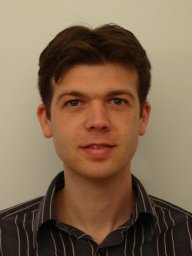 Jean-Claude Gerbedoen合作论文数LIMMS/CNRS-IIS, The University of Tokyo3john webster合作论文数3
 Georgios Rigas合作论文数Department of Aeronautics, Faculty of Engineering, Imperial College London3
 David MacManus合作论文数3
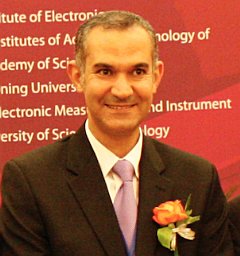 Omar Elmazria合作论文数Laboratoire de Physique des Milieux Ionisés & Application (CNRS UPRES A 7040), Université Henri Poincaré3Christophe Benoit合作论文数3
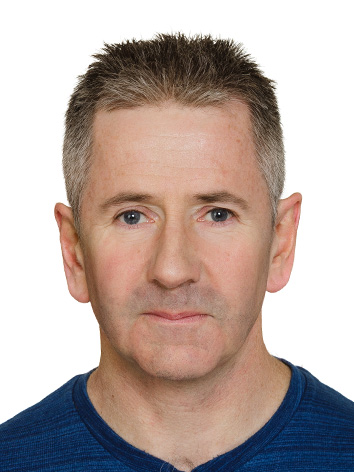 Michael O'Boyle合作论文数School of Informatics, University of Edinburgh3Christian Wakelam合作论文数3
 Charles Poussot-Vassal合作论文数Control Systems Department3
 Pierreelie Weiss合作论文数Office National d’Etudes et de Recherche Aérospatiale3




