Progress in signal processing continues to enable welcome advances in high-frequency (HF) radio performance and efficiency. The latest data waveforms use channels wider than 3 kHz to boost data throughput and robustness. This has driven the need for a more capable Automatic Link Establishment (ALE) system that links faster and adapts the wideband HF (WBHF) waveform to efficiently use available spectrum. In this paper, we investigate the possibility and advantages of using various non-scanning ALE techniques with the new wideband ALE (WALE) to further improve spectrum awareness and linking speed.
Intellectual property law assumes that people need monetary incentives to create; to this end, it enables the formation of markets for intellectual works. Remarkably, however, sharing-i.e., socially mediated gifting without any expectation of payment may work much better than markets for distributing the bulk of intellectual property. This Article explains why. While markets work by using money as the medium of exchange, money is actually a poor incentive for creative labors. Emerging research shows that payment in the currency of gratitude and social validation is afar more effective form of encouragement, and it is something sharing is exquisitely adapted to provide. In addition, sharing can offer a surprising efficiency advantage over markets by lowering net transaction costs.Despite its virtues, sharing of intellectual property rights has received scant attention in the literature. Thus, this Article provides a comprehensive account of intellectual property sharing, explaining what motivates people to share, how sharing compares to markets, what barriers may inhibit sharing, and how to overcome those barriers.The analysis provided here yields a variety of insights about the functioning of real-world transactional systems that deal in intellectual property entitlements. For example, the contemporary stock photography market appears to thrive despite the fact that most photographers receive only negligible remuneration. This Article resolves the paradox by showing that this "market" is better characterized as a dysfunctional sharing scheme one that could be made more efficient by being transformed into an explicitly social, non-monetary enterprise. In addition, this Article examines Creative Commons, a nonprofit program that offers a suite of formal, standardized licenses to surrender selected copyright entitlements. This Article uncovers how the design of Creative Commons is not aligned with people's natural motivations to share, but how, with some modification, it could be. Finally, this Article puts forward a different model for the distribution of rights to intellectual works: informal person-to-person sharing, which has great potential to build our society's creative wealth.
Background: There are limited published data of long term survival benefit of cardiac resynchronization therapy (CRT) in elderly (age ≥ 75 years at implant) patients. Two large randomized clinical trials (COMPANION and CARE-HF, median age 67 years) reported survival data out to 24 months. We report the long term survival of elderly CRT patients at our single center. Methods: 301 elderly patients (68% male, 64% CRT-defibrillators, 67% ischemic cardiomyopathy, median age 80.3±4.3 years and LVEF 26%) were implanted with CRT at a single center from August 2001 to December 2007. A retrospective database analysis of these patients were performed. All patients implanted with CRT age ≥75 years were analyzed. Current survival status was verified through patient records or Social Security Death Index in May 2012. Results: Figure 1 shows the survival curve for the 301 CRT patients. Median follow-up was 7.7 years (4.5-11).122 patients had >8 years follow-up. One-year mortality in this group was 20%. Five and 8 year survival are 43% and 30% respectively. CARE-HF and COMPANION had one-year mortality rates of 10 and 13.5% in a much younger patient group. No other long term data for CRT patients are available for comparison. Average life expectancy in our area at age 80 is 8.7 years, irrespective of comorbidities. Conclusions: This single center retrospective review of elderly patients (age ≥75 years at implant) show long term mortality benefit of CRT. Irrespective of age, these data suggest CRT should be considered in all eligible patients.
Casebook on entertainment law, including relevant First Amendment, contract, tort, and copyright law.
Contains principal federal antitrust laws of the United States for use in a law school course.
Casebook on American tort law covering negligence and health-care liability.
Human epicardial adipose tissue expresses and secretes in vitro hormones and inflammatory cytokines and chemokines collectively termed adipokines. We hypothesized that human epicardial fat did not secrete adipokines into coronary blood under basal conditions in vivo. Adiponectin, leptin, resistin, tumor necrosis factor-α, monocyte chemoattractant protein-1, active plasminogen-activator inhibitor-1, interleukin-1β,-6,-8 and vascular endothelial growth factor were measured simultaneously in femoral arterial (a surrogate for coronary arterial) blood and coronary sinus venous blood from eleven patients, mostly young non-obese women, without known heart disease undergoing cardiac catheterisation for radioablation of supraventricular tachycardia. Mean adipokine concentrations were not significantly different in both vessels. In contrast, free fatty acid levels were significantly higher in femoral arterial than coronary sinus blood in keeping with net uptake of free fatty acids by the myocardium. Femoral artery levels of monocyte chemoattractant protein-1, active plasminogen activator inhibitor-1, leptin and resistin showed positive correlations with BMI in descending order of significance but adiponectin showed no relationship. Values for the other adipokines were below the assay detection limit in several patients negating the use of regression analysis. As opposed to their secretion in vitro, the adipokines described above are not secreted into coronary blood by human epicardial adipose tissue under near-normal basal conditions in vivo and are more likely released into the interstitium of the myocardium and coronary vessels to function as local paracrine regulators. Adipobiology 2009; 1: 51-56.
 Mark A. Coppess合作论文数6Frank A. Mcgrew合作论文数6Sandra B. Charlton合作论文数5james robert schwartz合作论文数4arthur a molitierno合作论文数4
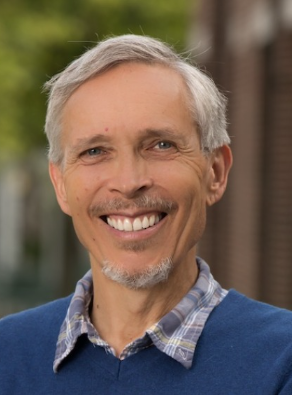 Chris Impey合作论文数Department of Astronomy, The University of Arizona;Steward Observatory, The University of Arizona;StudentOnTheGo4Jessie Antonellis合作论文数4
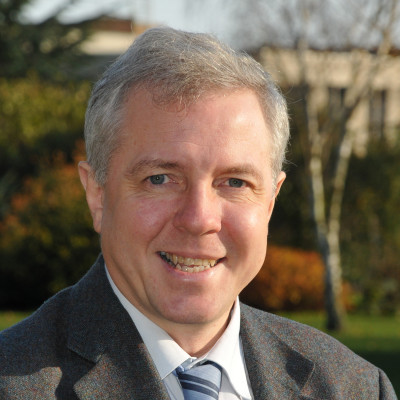 Mark J. Burchell合作论文数School of Physical Sciences, University of Kent3Raymond E. Ideker合作论文数3
 Robert A. Malkin合作论文数Department of Biomedical Engineering, Pratt School of Engineering, Duke University;Developing World Healthcare Technologies Lab, Pratt School of Engineering, Duke University3James J. Sims合作论文数2Thomas A. Charlton合作论文数2Tc Pilkington合作论文数2guy pace合作论文数2Barbara Hamilton合作论文数2J. Jason Sims合作论文数2j e koonce合作论文数1
 J. W. Skiles合作论文数1joshua j bloch合作论文数1e j williams合作论文数1albert j viscio合作论文数1david k swanson合作论文数1Diane Roussel-Dupré合作论文数1Pf Vonvoigtlander合作论文数1tyler freed合作论文数1matt alsleben合作论文数1cynthia klink合作论文数1william w parson合作论文数1
 Michael H. Young合作论文数Bureau of Economic Geology, Jackson School of Geosciences, University of Texas at Austin1RS SHULMAN合作论文数1KS KORR合作论文数1EW BOUGH合作论文数1daniel bricklin合作论文数1
 Yudi Satria Gondokaryono合作论文数Sch. of Electr. Eng. & Inf., Inst. Teknol. Bandung;c;Sch. of Electr. Eng. & Inf., Inst. Teknol. Bandung1
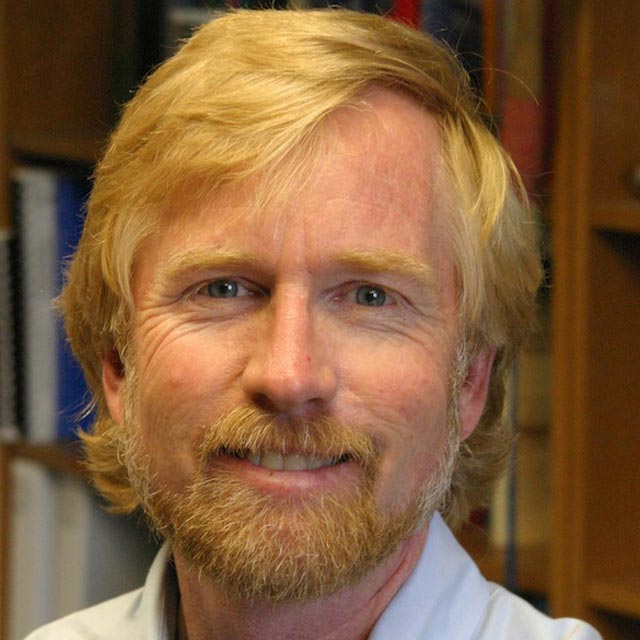 Scott Tyler合作论文数Department of Civil and Environmental Engineering, University of Nevada, Reno;Department of Geological Sciences and Engineering, The Mackay School of Earth Sciences and Engineering, College of Science, University of Nevada, Reno1
 Alandjani, G.合作论文数Klipsch Sch. of Electr. & Comput. Eng., New Mexico State Univ.;c;Klipsch Sch. of Electr. & Comput. Eng., New Mexico State Univ.1Polson, J.T.合作论文数1Moore, R.S.合作论文数1Ruoso G合作论文数1
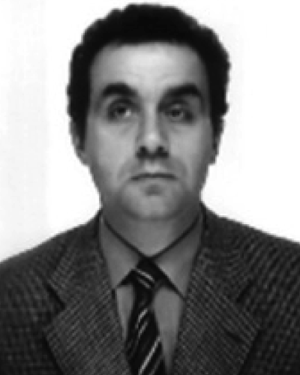 Marco Bregant合作论文数Departamento de Física Nuclear, Instituto de Física, Universidade de São Paulo;Subatech, CNRS1
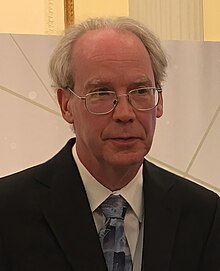 John Hawley合作论文数College of Arts and Sciences, University of Virginia1William E. Boden合作论文数1Jay B Jordan合作论文数1
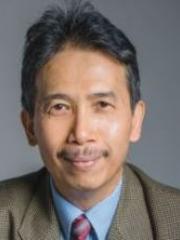 Anh Nguyen合作论文数School of Chemical Engineering, The University of Queensland1
 Bryan Pfaffenberger合作论文数Univ. of Virginia1Gerald M. Flachs合作论文数1
 Graeme Lockaby合作论文数School of Forestry and Wildlife Sciences;Auburn University;School of Forestry and Wildlife Sciences, Auburn University1
 Matthew Decamp合作论文数1




