KEGG Pathway Enrichment Analysis of Differential Expressed Genes Between Thymus and T-ALL
KEGG Pathway Enrichment Analysis of Differential Expressed Genes Between CD4 T-Cells and T-ALL
KEGG Enrichment Analysis of Overlapped rMATS Transcripts in CD3 T Cells vs Thymus and CD4 T Cells vs Thymus
A block in cellular differentiation is a hallmark of acute myeloid leukemia (AML) that promote clonal expansion and influence therapy response 1,2. It has become evidently clear that non-genetic mechanisms are critical to prevent malignant cells to resume its lineage maturation trajectory 3,4. However, there is still an incomplete understanding of gene regulatory pathways that induce differentiation arrest of leukemia cells. Here, we applied an immunophenotypic readout and positive selection CRISPR/Cas9 screens to identify suppressors of leukemia differentiation. These screens converged on ZBTB7A, a zinc finger transcription factor whose loss-of-function restricted AML maturation in the prescence of differentiation-inducing agents. Mechanstically, ZBTB7A ablation led to an elevated inflammatory state to stimulate leukemia proliferation. In addition, we found that genetic deletion of ZBTB7A and its paralog, ZBTB7B cooperatively suppresses myeloid differentiation and promotes resistance to several clinical compounds. Lastly, we identify that leukemic cells hijack multiple upstream 3'UTR processes, such as alternative polyadenylation and mRNA decay to downregulate ZBTB7A and ZBTB7B expression. Together, these data provide fundamental insight into non-genetic mechanisms that impede myeloid differentiation and mediate drug resistance.
Differential Gene Expression and Enrichment Analysis Between Control and shSRSF6-Treated JURKAT Cells
KEGG Pathway Enrichment Analysis of Differential Expressed Genes Between CD3 T-Cells and T-ALL
Author(s): Wang, Eric | Advisor(s): Oakes, Scott | Abstract: Apoptosis is a highly conserved form of programmed cell death in multicellular organisms where a cell activates caspase proteases to trigger its own demise. It has critical functions under physiological conditions in removing superfluous or damaged cells from a healthy organism. However, dysregulated apoptosis plays an important role in diseases: improper or elevated apoptosis leads to diseases of cell loss, such as diabetes or neurodegeneration, while deficiencies in apoptosis can contribute to tumor cell growth and survival.While the importance of apoptosis during late embryogenesis is well-established, its function during the earliest stages of development, namely the exit of embryonic stem cells (ESC) from the pluripotent state, is unclear. Here, I discovered that apoptosis plays a critical role in removing slow-differentiating murine ESC from the total cell population. This is initiated by p53-dependent upregulation of the Fas death receptor on straggling ESCs, which then triggers apoptosis specifically in these cells. An inability to initiate apoptosis, by transient knockdown or genetic deletion of components of this pathway, causes retention of slow-differentiating ESCs and a global delay in differentiation, both in vitro and in an in vivo teratoma model. Thus, apoptosis is crucial in promoting the efficient differentiation of ESCs.While apoptosis is important for normal development, elevated levels due to cellular stress can cause inappropriate cell loss and degeneration, leading to disease. One such example is retinitis pigmentosa, an inherited disease where rod photoreceptors are progressively lost from the neural retina, eventually leading to blindness. There is increasing evidence that accumulation of unfolded proteins within the endoplasmic reticulum (ER) of rod photoreceptors causes ER stress and subsequent cell death. Here, I utilize a novel small molecule inhibitor to show that inhibition of IRE1α, an ER transmembrane kinase/endoribonuclease that can signal both adaptation and apoptosis in response to ER stress, preserves rod photoreceptor viability and function in two rodent models of ER stress-induced photoreceptor degeneration.These findings reveal new insights into the role of apoptosis under both normal and stressed conditions, and may have implications for human diseases such as cancer and neurodegeneration.
 Cuijuan Han合作论文数Simpson Querrey Inst Epigenet, Northwestern Univ17
 Aristotelis Tsirigos合作论文数Department of Pathology, Grossman School of Medicine, New York University17
 Iannis Aifantis合作论文数Department of Pathology, Grossman School of Medicine, New York University17
 Blanca T. Gutierrez Diaz合作论文数16Emily J Rendleman合作论文数16George Yacu合作论文数16
 Radhika Rawat合作论文数Department of Neurology, Northwestern University Feinberg School of Medicine16Byoung-Kyu Cho合作论文数16Christian Marier合作论文数16Maddalena Paganin合作论文数16David R Amici合作论文数Northwestern Univ, Feinberg Sch Med, Dept Biochem & Mol Genet, Chicago, IL 60611 USA16Yuliya Politanska合作论文数16
 Francoise Pflumio合作论文数16
 Adriana Heguy合作论文数Department of Pathology, Grossman School of Medicine, New York University16Yoh-hei Takahashi合作论文数Northwestern University16Mendillo Marc L合作论文数The Whitehead Institute for Biomedical Research16
 Benedetta Accordi合作论文数16Mishra Rama合作论文数16
 Irawati Kandela合作论文数16Fang Celestia合作论文数16
 Valentina Serafin合作论文数Università degli Studi di Modena e Reggio Emilia16Palhais Bruno合作论文数16
 Tabaglio Tommaso合作论文数Dipartimento di Biotecnologie Mediche e Medicina Traslazionale, Università degli Studi di Milano16
 Szymon Filip合作论文数16
 Anna Kuchmiy合作论文数16
 Jin Qi (漆进)合作论文数School of Information and Communication Engineering, University of Electronic Science and Technology of China16
 Ernesto Guccione合作论文数International Centre for Genetic Engineering and Biotechnology16Keng Boon Wee合作论文数NUS Graduate School for Integrative Sciences and Engineering, National University of Singapore16Hu Li合作论文数16Julien Calvo合作论文数16
 Pieter Van Vlierberghe合作论文数Institute for Cancer Genetics, Columbia University College of Physicians and Surgeons16
 Adam Lorch合作论文数Michael Smith Laboratories, University of British Columbia16
 Cheng Zhang合作论文数14
 Giuseppe Basso合作论文数Dipartimento di Salute della Donna e del Bambino, Università degli Studi di Padova8
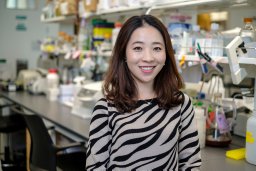 Yalu Zhou合作论文数Feinberg Cardiovascular and Renal Research Institute, Northwestern University6
 Alireza Khodadadi-Jamayran合作论文数Univ Alabama Birmingham, Dept Biochem & Mol Genet, Stem Cell Inst, Birmingham, AL 35294 USA6
 Panos Ntziachristos合作论文数Ghent University6Goo Young Ah合作论文数6
 Silvia Bresolin合作论文数6
 Hiam Abdala Valencia合作论文数6Tom Taghon合作论文数Division of Biology;California Institute of Technology;Division of Biology, California Institute of Technology6Limin Sun合作论文数Northwestern Univ, Feinberg Sch Med, Dept Med, Div Hematol Oncol, Chicago, IL 60611 USA5
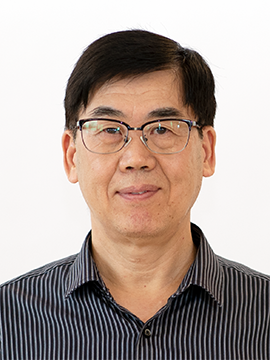 Ping Zhu (朱平)合作论文数Institute of Materia Medica, Chinese Academy of Medical Sciences3Alexander Calderon合作论文数1Sonali Narang合作论文数1Yixiao Gong合作论文数Perlmutter Canc Ctr, NYU1Hua Zhou合作论文数Laura & Isaac Perlmutter Canc Ctr, NYU Langone Hlth1
 Andrea Lopez合作论文数1




