Protein mutational landscapes are sculpted by the impacts of the resulting amino acid substitutions on the proteins stability and folding or aggregation kinetics. These properties can, in turn, be modulated by the composition and activities of the cellular proteostasis network. Heat shock factor 1 (HSF1) is the master regulator of the cytosolic and nuclear proteostasis networks, dynamically tuning the expression of cytosolic and nuclear chaperones and quality control factors to meet demand. Chronic increases in HSF1 levels and activity are prominent hallmarks of cancer cells. One plausible explanation for this observation is that the consequent upregulation of proteostasis factors could biophysically facilitate the acquisition of oncogenic mutations. Here, we experimentally evaluate the impacts of chronic HSF1 activation on the mutational landscape accessible to the quintessential oncoprotein p53. Specifically, we apply quantitative deep mutational scanning of p53 to assess how HSF1 activation shapes the mutational pathways by which p53 can escape cytotoxic pressure conferred by the small molecule nutlin-3, which is a potent antagonist of the p53 negative regulator MDM2. We find that activation of HSF1 broadly increases the fitness of dominant-negative substitutions within p53. This effect of HSF1 activation was particularly notable for non-conservative, biophysically unfavorable amino acid substitutions within buried regions of the p53 DNA-binding domain. These results indicate that chronic HSF1 activation profoundly shapes the oncogenic mutational landscape, preferentially supporting the acquisition of cancer-associated substitutions that are biophysically destabilizing. Along with providing the first experimental and quantitative insights into how HSF1 influences oncoprotein mutational spectra, these findings also implicate HSF1 inhibition as a strategy to reduce the accessibility of mutations that drive chemo-therapeutic resistance and metastasis.
The recently discovered HAPSTR1 protein broadly oversees cellular stress responses. This function requires HUWE1, a ubiquitin ligase that paradoxically marks HAPSTR1 for degradation, but much about this pathway remains unclear. Here, leveraging multiplexed proteomics, we find that HAPSTR1 enables nuclear localization of HUWE1 with implications for nuclear protein quality control. We show that HAPSTR1 is tightly regulated and identify ubiquitin ligase TRIP12 and deubiquitinase USP7 as upstream regulators titrating HAPSTR1 stability. Finally, we generate conditional Hapstr1 knockout mice, finding that Hapstr1-null mice are perinatal lethal, adult mice depleted of Hapstr1 have reduced fitness, and primary cells explanted from Hapstr1-null animals falter in culture coincident with HUWE1 mislocalization and broadly remodeled signaling. Notably, although HAPSTR1 potently suppresses p53, we find that Hapstr1 is essential for life even in mice lacking p53. Altogether, we identify novel components and functional insights into the conserved HAPSTR1-HUWE1 pathway and demonstrate its requirement for mammalian life.
Heat Shock Factor 1 (HSF1) is best known as the master transcriptional regulator of the heat-shock response (HSR), a conserved adaptive mechanism critical for protein homeostasis (proteostasis). Combining a genome-wide RNAi library with an HSR reporter, we identified Jumonji domain-containing protein 6 (JMJD6) as an essential mediator of HSF1 activity. In follow-up studies, we found that JMJD6 is itself a noncanonical transcriptional target of HSF1 which acts as a critical regulator of proteostasis. In a positive feedback circuit, HSF1 binds and promotes JMJD6 expression, which in turn reduces heat shock protein 70 (HSP70) R469 monomethylation to disrupt HSP70-HSF1 repressive complexes resulting in enhanced HSF1 activation. Thus, JMJD6 is intricately wired into the proteostasis network where it plays a critical role in cellular adaptation to proteotoxic stress.
KEGG Pathway Enrichment Analysis of Differential Expressed Genes Between Thymus and T-ALL
KEGG Pathway Enrichment Analysis of Differential Expressed Genes Between CD4 T-Cells and T-ALL
We recently identified HAPSTR1 (C16orf72) as a key component in a novel pathway which regulates the cellular response to molecular stressors, such as DNA damage, nutrient scarcity, and protein misfolding. Here, we identify a functional paralog to HAPSTR1: HAPSTR2. HAPSTR2 formed early in mammalian evolution, via genomic integration of a reverse transcribed HAPSTR1 transcript, and has since been preserved under purifying selection. HAPSTR2, expressed primarily in neural and germline tissues and a subset of cancers, retains established biochemical features of HAPSTR1 to achieve two functions. In normal physiology, HAPSTR2 directly interacts with HAPSTR1, markedly augmenting HAPSTR1 protein stability in a manner independent from HAPSTR1's canonical E3 ligase, HUWE1. Alternatively, in the context of HAPSTR1 loss, HAPSTR2 expression is sufficient to buffer stress signaling and resilience. Thus, we discover a mammalian retrogene which safeguards fitness.
KEGG Enrichment Analysis of Overlapped rMATS Transcripts in CD3 T Cells vs Thymus and CD4 T Cells vs Thymus
Differential Gene Expression and Enrichment Analysis Between Control and shSRSF6-Treated JURKAT Cells
KEGG Pathway Enrichment Analysis of Differential Expressed Genes Between CD3 T-Cells and T-ALL
All cells contain specialized signaling pathways that enable adaptation to specific molecular stressors. Yet, whether these pathways are centrally regulated in complex physiological stress states remains unclear. Using genome-scale fitness screening data, we quantified the stress phenotype of 739 cancer cell lines, each representing a unique combination of intrinsic tumor stresses. Integrating dependency and stress perturbation transcriptomic data, we illuminated a network of genes with vital functions spanning diverse stress contexts. Analyses for central regulators of this network nominated C16orf72/HAPSTR1, an evolutionarily ancient gene critical for the fitness of cells reliant on multiple stress response pathways. We found that HAPSTR1 plays a pleiotropic role in cellular stress signaling, functioning to titrate various specialized cell-autonomous and paracrine stress response programs. This function, while dispensable to unstressed cells and nematodes, is essential for resilience in the presence of stressors ranging from DNA damage to starvation and proteotoxicity. Mechanistically, diverse stresses induce HAPSTR1, which encodes a protein expressed as two equally abundant isoforms. Perfectly conserved residues in a domain shared between HAPSTR1 isoforms mediate oligomerization and binding to the ubiquitin ligase HUWE1. We show that HUWE1 is a required cofactor for HAPSTR1 to control stress signaling and that, in turn, HUWE1 feeds back to ubiquitinate and destabilize HAPSTR1. Altogether, we propose that HAPSTR1 is a central rheostat in a network of pathways responsible for cellular adaptability, the modulation of which may have broad utility in human disease.
 Mendillo Marc L合作论文数The Whitehead Institute for Biomedical Research28Byoung-Kyu Cho合作论文数18Goo Young Ah合作论文数18Blanca T. Gutierrez Diaz合作论文数16Emily J Rendleman合作论文数16George Yacu合作论文数16
 Cuijuan Han合作论文数Simpson Querrey Inst Epigenet, Northwestern Univ16
 Radhika Rawat合作论文数Department of Neurology, Northwestern University Feinberg School of Medicine16Christian Marier合作论文数16Maddalena Paganin合作论文数16
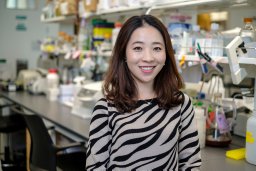 Yalu Zhou合作论文数Feinberg Cardiovascular and Renal Research Institute, Northwestern University16Limin Sun合作论文数Northwestern Univ, Feinberg Sch Med, Dept Med, Div Hematol Oncol, Chicago, IL 60611 USA16Yuliya Politanska合作论文数16
 Alireza Khodadadi-Jamayran合作论文数Univ Alabama Birmingham, Dept Biochem & Mol Genet, Stem Cell Inst, Birmingham, AL 35294 USA16
 Francoise Pflumio合作论文数16
 Giuseppe Basso合作论文数Dipartimento di Salute della Donna e del Bambino, Università degli Studi di Padova16
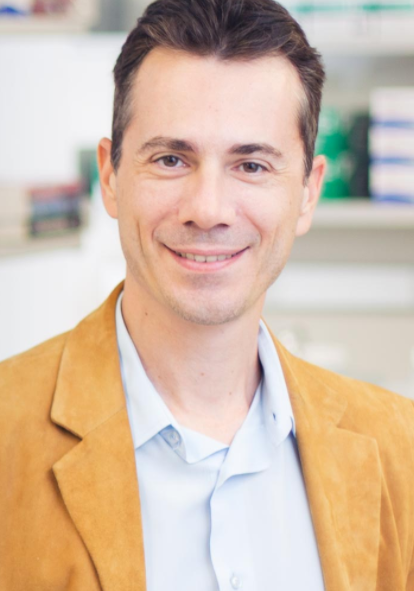 Aristotelis Tsirigos合作论文数Department of Pathology, Grossman School of Medicine, New York University16
 Adriana Heguy合作论文数Department of Pathology, Grossman School of Medicine, New York University16
 Iannis Aifantis合作论文数Department of Pathology, Grossman School of Medicine, New York University16Yoh-hei Takahashi合作论文数Northwestern University16
 Panos Ntziachristos合作论文数Ghent University16
 Benedetta Accordi合作论文数16Mishra Rama合作论文数16
 Silvia Bresolin合作论文数16
 Irawati Kandela合作论文数16Fang Celestia合作论文数16
 Valentina Serafin合作论文数Università degli Studi di Modena e Reggio Emilia16Palhais Bruno合作论文数16
 Tabaglio Tommaso合作论文数Dipartimento di Biotecnologie Mediche e Medicina Traslazionale, Università degli Studi di Milano16
 Szymon Filip合作论文数16
 Anna Kuchmiy合作论文数16
 Jin Qi (漆进)合作论文数School of Information and Communication Engineering, University of Electronic Science and Technology of China16
 Ernesto Guccione合作论文数International Centre for Genetic Engineering and Biotechnology16Keng Boon Wee合作论文数NUS Graduate School for Integrative Sciences and Engineering, National University of Singapore16
 Hiam Abdala Valencia合作论文数16Hu Li合作论文数16Tom Taghon合作论文数Division of Biology;California Institute of Technology;Division of Biology, California Institute of Technology16Julien Calvo合作论文数16
 Pieter Van Vlierberghe合作论文数Institute for Cancer Genetics, Columbia University College of Physicians and Surgeons16
 Adam Lorch合作论文数Michael Smith Laboratories, University of British Columbia16
 Eric Wang合作论文数Cold Spring Harbor Laboratory;Cold Spring Harbor Laboratory15Zhu Ping合作论文数13
 Cheng Zhang合作论文数13Seesha R Takagishi合作论文数6Brockway Sonia合作论文数5
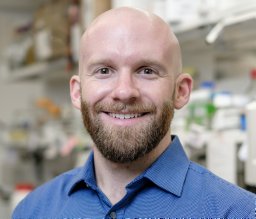 Roger S. Smith合作论文数Department of Microbiology and Molecular Genetics, Harvard Medical School5Milad J Alasady合作论文数4
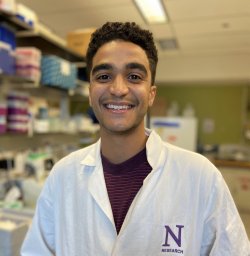 Jasen M Jackson合作论文数4
 Lisa Christopher Stine合作论文数Division of Rheumatology, Department of Medicine, Johns Hopkins University4




