Online forums offer family scholars a unique opportunity to learn how people make sense of complex issues related to family, identity, and relationships. These digital spaces often mirror or even amplify offline dynamics, as users interact to disclose sensitive information, construct narratives, offer validation, or address uncertainty. Online forums provide an authentic glimpse into a group or phenomenon through easily accessible, naturally-occurring interactions, including from hard-to-reach populations. Guided by symbolic interactionism, we offer practical guidance for researchers interested in this approach. We draw from existing literature to outline strategies for identifying relevant forums, collecting data ethically, and analyzing data using qualitative methods. In addition to providing several examples of published work using forums as a data source, we provide a case example of a published study using data from Reddit to demonstrate potential steps for interested scholars to follow in conducting online forums research. We explore potential study design challenges that researchers should consider, including the lack of consistent demographic data, difficulties in conducting follow-ups, and the risk of social desirability bias, even in anonymous settings. We also highlight ethical considerations inherent in this type of research. Overall, family scientists can expand their methodological toolkit and gain deeper insights into the lived experiences of individuals and families in the digital age by considering online forums as a rich data source.
Anti-fatness dominates scholarly and interpersonal conversations about bodies, including those in the Communication discipline. In this Dialogue on Difference, a panel of scholars who challenge body-based oppression in their work participated in a dialogue with the goals of describing how body-based oppression governs research across sub-disciplines in Communication and identifying actions that Communication scholars can take to combat anti-fatness in their own work. We identify three problems (anti-fat scholarship, resistance to work on addressing anti-fatness, anti-fatness having a public platform) and six action steps to dismantle fat oppression at individual and disciplinary levels (take personal responsibility for anti-fat attitudes, examine scholarship for anti-fatness, conceptualize bodies as sociallyconstructed, use inclusive language, incorporate fatness when it makes sense, honor size diversity).
Sexual and gender minority (SGM) individuals experience higher rates of suicidal thoughts and behaviors (STBs) compared to cisgender and heterosexual individuals. Increased risk for STBs can be conceptualized via (a) suicide risk models (e.g., ideation-to-action frameworks) and (b) SGM health literature (e.g., minority stress frameworks); yet, integration of these literatures in conceptualizing SGM suicide risk is lacking. As such, the current study generated a grounded theory of SGM suicide, addressing the following research questions: What factors do SGM individuals describe as contributing to and/or thwarting: (a) the development of suicidal ideation? and (b) the progression from suicidal ideation to attempt? SGM adults from the United States (N = 30) completed semistructured interviews via video conferencing. Data analysis was conducted in four stages (i.e., open coding, focused coding, axial coding, and theoretical coding) per grounded theory methodology. The SGM suicide risk and protective (SuRAP) model was constructed, which outlines the role of (a) precipitating vulnerabilities and stressors, including minority stress; (b) lacking a solution (i.e., development of negative cognitions); (c) halting the suicide cascade (i.e., protective factors); and (d) acquiring capability for suicide (e.g., accessing lethal means) in suicidal ideation and suicide attempt among SGM individuals. Therapeutic modalities such as affirmative dialectical behavior therapy, which addresses minority stress and suicide risk factors (e.g., distress intolerance, interpersonal ineffectiveness), may be of utility in SGM suicide prevention based upon the SGM SuRAP model.
Communal coping theorists have advanced our understanding of stress management in relationships. We add to that work by exploring the content of messages that people exchange when they talk about how they coped with stress. We collected data from 39 online forums and analyzed 446 posts in which people described how they coped with sexual health stress. Results indicated the presence of five types of coping (individual coping, parallelism, communal coping, refused communal coping, reluctant communal coping), distinguished by posters' descriptions of emotions, communication, and relationships in each category. Our findings indicate the need to consider valence in the study of communal coping.
Infertility is physically, emotionally, psychologically, financially, and socially challenging. For people in larger bodies, infertility challenges are intensified as providers often blame them for their inability to conceive or carry a pregnancy to term. Using a memorable messages framework, we examined messages that fat women (N = 69) with an infertility diagnosis received while trying to conceive, pregnant, and in the postpartum period. Using reflexive thematic analysis, we found three core messages that fat women received from providers: (a) body size is a primary reason for infertility, (b) weight loss will lead to a successful pregnancy, and (c) denial of care.
Weight stigma contributes to healthcare-related stress and can make pregnancy difficult for people in larger bodies who are frequently denied reproductive healthcare treatment or receive poor quality care. Support from similar others - those who have experienced the same stressor - is particularly useful for navigating these challenges. Our goal in this study was to solicit advice from fat individuals who have tried to conceive, been pregnant, or had a baby. Survey responses from 150 people included 225 units of advice. We used content analysis to code the advice into 10 types that fell under three main categories: intrapersonal advice, communication advice, and social support advice. The two most prevalent pieces of advice were to trust yourself and your body (n = 57) and find an inclusive provider (n = 56). Based on our results, we suggest finding fat-affirming and inclusive providers, seeking nourishment rather than a restrictive diet, engaging in joyful movement, and connecting with a community of other fat individuals.
War zone exposure is associated with enduring negative mental health effects and poorer responses to treatment, in part because this type of trauma can entail crises of conscience or moral injury. Although a great deal of attention has been paid to posttraumatic stress disorder and fear-based physiological aspects of trauma and suffering, comparatively less attention has been given to the morally injurious dimension of trauma. Robust themes of moral injury were identified in interviews with 26 post-9/11 military veterans. Thematic analysis identified 12 themes that were subsumed under four categories reflecting changes, shifts, or ruptures in worldview, meaning making, identity, and relationships. Moral injury is a unique and challenging clinical construct with impacts on the individual as well as at every level of the social ecological system. Recommendations are offered for addressing moral injury in a military population; implications for community public health are noted. (PsycInfo Database Record (c) 2024 APA, all rights reserved).
Validating communication is a relational variable tied to physical functioning and emotional well-being and helps couples navigate the stress of chronic illness. In this study, we evaluated relational uncertainty, illness severity, and depressive symptoms as correlates of validating communication, and then considered associations between validating communication and both resilience and relational load. A cross-sectional study of romantic dyads coping with one or more chronic illnesses revealed support for hypothesized associations, illustrating associations among relational perceptions, illness characteristics, mental health, communication, and global relationship qualities.
Assessing resilience among alternative sexuality (alt-sex; e.g., kink, polyamory) community members is imperative as alt-sex individuals often face discrimination and possess intersecting marginalized identities. The Brief Resilience Scale (BRS) has extensive psychometric support; however, prior research indicates both a one- and two-factor (i.e., succumbing and resilience) structure. Further, the psychometric properties of the BRS have not been examined among alt-sex community members. As such, the current study examined the BRS factor structure among alt-sex individuals and measurement invariance across demographic groups (i.e., sexual orientation, gender identity, and sexual assault history). Confirmatory factor analyses and multi-groups invariance analyses were conducted. The two-factor BRS model demonstrated better fit to the data. Model fit did not differ by sexual orientation or gender identity. Measurement invariance was observed by lifetime sexual assault history, with higher factor loadings on succumbing items among alt-sex community members with a lifetime history of sexual assault. Our findings support use of the BRS to measure resilience among alt-sex individuals. Succumbing, or weakened resilience, is a salient factor for alt-sex community members who are sexual assault survivors, warranting further attention.
Abstract Stress research typically focuses on past/current events as opposed to future ones. We identified future anticipated stressful and rewarding events at 2 timepoints utilizing qualitative data from older adults (N = 103, Mage = 68.11, 68.9% female, 93.2% white) who participated in a study of social reintegration after vaccines were available in the US. COVID-19 cases were typically below 1 million during T1 (Fall 2021), but exceeded 5 million during T2 (Winter 2022), coinciding with the Omicron variant. This afforded the opportunity to examine anticipated stressors and rewards at timepoints with different levels of COVID-19 threat. We used content analysis to identify anticipated stressors and rewards, which fit into 13 categories (Cohen’s κ = .86-.96) and examined rates of ambivalence (i.e., same event was a stressor and reward within timepoints) and chronicity (i.e., same stressor or reward was named across timepoints). At T1, the modal stressor was own transition/change (13.6%; e.g., relocating). At T2, it was the pandemic (20.4%; e.g., family member recovering from COVID). Family/friend relationships (e.g., celebrating grandkids’ birthdays) was the modal reward at T1 (32%) and T2 (24.3%). A quarter of participants demonstrated ambivalence (T1 = 23.3%; T2 = 28.2%). Stressor and reward chronicity (22.3% and 32%, respectively) were low. Findings highlight variability in the events older adults were concerned and excited about within and across timepoints. Salience of the pandemic as an anticipated stressor ebbed and flowed alongside emerging variants, despite vaccine availability.
Sexual health is critical to overall well-being, yet it is challenging and uncomfortable to discuss. Individuals frequently encounter uncertainty about their sexual health as they experience bodily changes, navigate romantic or sexual relationships, and explore their identities. In this study, we called on uncertainty management theory to guide an investigation of sexual health uncertainty. Specifically, we asked how people use social support to manage their sexual health uncertainty in online forums. Grounded theory analyses revealed that negative emotions, avoidance, and pursuing medical care prompted people to seek emotional and informational support online, and support served three functions: integrating information, assessing risk, and strategizing communication. The results point to stigma as a driving force in sexual health discussions online and imply practical recommendations for sexual education, communication about sexual topics, and patient-provider relationships.
Type 2 diabetes is prevalent among Black Americans. Stigma associated with type 2 diabetes, both in general and specific to weight, is damaging to self-care, which is crucial for the effective management of diabetes. Family relationships may buffer the negative impact of stress, especially among Black Americans who have historically relied on informal support networks. Our goal was to investigate how type 2 diabetes stigma (H1) and weight stigma (H2) were related to self-care and intuitive eating – a non-restrictive approach to nutrition; H3 predicted that family relationship satisfaction would moderate the relationships predicted in H1 and H2. Black Americans diagnosed with type 2 diabetes (N = 225) were recruited via Qualtrics panels to complete an online survey of self-report measures. We used multiple linear regression to test our hypotheses. Both chronic illness and weight stigma were related as predicted to one subscale of intuitive eating (eating for physical hunger). Our moderation analyses revealed that family relationship satisfaction was protective against the harms of stigma at moderate to high levels. Intuitive eating is a promising non-restrictive treatment option for type 2 diabetes.
Chronic illness is both prevalent in U.S. adults and influential in people’s lives and relationships. In this study, we integrate relational turbulence theory with the theory of resilience and relational load to consider associations between perceptions of the relationship, relational maintenance, and two global relationship qualities: resilience and relational load. Results from a cross-sectional online survey of 100 dyads in which at least one partner reported a chronic condition suggest relational turbulence was associated with relational maintenance, which, in turn, was associated with relational load and resilience. Relational maintenance emerged as a mediator in the association between relational turbulence and resilience and relational load in several tests. Communal orientation was positively associated with relational maintenance and indirectly related to resilience and relational load in certain circumstances. We discuss these findings for each theory individually, the value of considering these theories concurrently, and pragmatic advice for couples navigating chronic illness.
Weight bias is prevalent for people in large bodies who are trying to conceive, pregnant, or postpartum. Using the theory of memorable messages as a framework, we explored the sources, valence, and content of messages that fat individuals (N = 237) recalled about their bodies before pregnancy through the postpartum stage. The most common source of memorable messages was healthcare providers, and most (77.2%) messages were negatively valenced. Thematic analysis revealed four overarching themes (fat mothers are bad mothers, denial of competent treatment, weight-normative commentary on fat bodies, and weight-inclusive counter-narratives). Our findings illuminate the significance of patient-practitioner communication across the pregnancy trajectory and highlight how counter-narratives can disrupt negative messages about fat pregnancy.
Deployment requires considerable preparation for military families and changes to these plans may create notable stress. The current study leveraged data from a sample of military couples who experienced the cancellation of an overseas deployment to learn more about their experiences as they adjusted to this change. Guided by family stress and anticipatory stress perspectives, we analyzed qualitative data from 28 service members and their significant others (i.e., spouses or cohabitating partners) to understand their overall reactions to the deployment cancellation. We identified three overall reactions (positive, negative, and ambivalent) that were based on participants' appraisals of-and preparations for-deployment, as well as ambiguity about family roles and relationships. Further, participants across groups experienced uncertainty about whether or not the deployment would occur, and altered timelines for other life events. Together, our findings highlight the post-cancellation period as a significant time of stress and transition for military families. However, our findings also signify the need to help all military families cope with uncertainty about when or if deployments will occur given that the military's priorities are often in flux. We therefore describe coping efforts that may be particularly adaptive for families to engage in as they prepare for uncertain, anticipated stressors.
The COVID-19 pandemic has negatively impacted the physical and mental health of many and has necessitated widespread societal shifts, including changes to work and family activities. These changes have impacted individuals’ identity, including their sexual self-image and body image, yet research on perceptions of these changes is missing. This study reports on quantitative and qualitative data from an electronic survey with adults in the United States (N = 326) to examine these perceptions. Body appreciation did not significantly differ between demographic groups. Themes emerging from the qualitative results included changes in general self-image (becoming more restricted or disempowered), changes in sexual self-image (deepening, becoming more sexy/sexual, or less sexy/sexual), and changes in body image (positive, negative, and neutral). Our findings point to positive, negative, and neutral effects on sexual self-image and body image, implying that nuanced approaches are needed to understand how identity has transformed as a result of the COVID-19 pandemic.
How individuals in romantic partnerships cope with health challenges either separately or together has a profound impact on their individual and relational well-being. The goal of this investigation was to test the logic of the recently extended Theoretical Model of Communal Coping (TMCC) by assessing how the two dimensions of communal coping, shared appraisal and joint action, are related to individual and relational well-being. Dyadic survey data from 100 romantic couples were analyzed using the Actor-Partner Interdependence Model. Results support the TMCC's assertion that shared appraisal and joint action are distinct facets of communal coping and extend the model by highlighting how different partners' experiences with communal coping may be.
Relational uncertainty is both prominent and pivotal during the transition from deployment to reintegration. Most prior research has considered the outcomes rather than the origins of relational uncertainty, hampering the development of interventions for military couples. We theorize about two predictors of relational uncertainty during the post-deployment transition: suspicion about a partner’s deception and trust. Results of an 8-wave longitudinal study involving 287 U.S. military couples ( N = 4,147 observations) revealed that relational uncertainty increased over the transition for both returning service members and at-home partners. Suspicion about a partner’s deception, and particularly trust, predicted the relational uncertainty of military couples at homecoming and over time. These findings advance knowledge about the roots of relational uncertainty and suggest ways to assist military couples upon reunion.
 Amy L. Delaney合作论文数Dept Commun, Millikin Univ8
 Wehrman Erin C合作论文数University of Illinois at Urbana-Champaign8Kelly G. McAninch合作论文数7Bryan Abendschein合作论文数7
 Leanne K. Knobloch合作论文数Department of Communication, College of Liberal Arts & Sciences, University of Illinois at Urbana-Champaign6
 Kale Monk合作论文数5
 John P. Caughlin合作论文数Department of Communication, College of Liberal Arts & Sciences, University of Illinois Urbana-Champaign5
 Jennifer Kam合作论文数5
 Jessamyn Bowling合作论文数3
 Margaret M. Quinlan合作论文数3Andrea Figueroa-Caballero合作论文数2
 Christina M Marini合作论文数Adelphi Univ2
 Alicia A. Dahl合作论文数Univ N Carolina2
 Andrea R Kaniuka合作论文数Department of Public Health Sciences, University of Charlotte2
 Robert A. Cramer合作论文数Department of Microbiology and Immunology, Geisel School of Medicine, Dartmouth College2Niya Pickett Miller合作论文数1Eleanor Nanney合作论文数1Russell Stambaugh合作论文数1Kevin Benson合作论文数1patricia c mcglaughlin合作论文数1Shanice Jones Cameron合作论文数1Gracie Allen合作论文数1
 Christine E. McCall合作论文数Department of Human Development and Family Studies, Purdue University1
 Ryan Robertson合作论文数Dept Publ Hlth Sci, Univ North Carolina Charlotte1
 Hailey Otis合作论文数1K. C. Kalmbach合作论文数1Mary Beth Asbury合作论文数1
 Liesel Sharabi合作论文数Hugh Downs Sch Human Commun, Arizona State Univ1
 Bryan Bayles合作论文数Dept Family & Community Med, Univ Texas Hlth Sci Ctr San Antonio1
 Ningxin Wang合作论文数Departments of Management and Organisation, National University of Singapore Business School1
 Janice L. Krieger合作论文数Mayo Clinic1Arroyo Analisa合作论文数1
 Erika Montanaro合作论文数1
 Wadsworth Shelley MacDermid合作论文数Department of Sociology, University of Notre Dame1
 Tyler B. Jamison合作论文数Department of Human Development and Family Studies, University of New Hampshire1
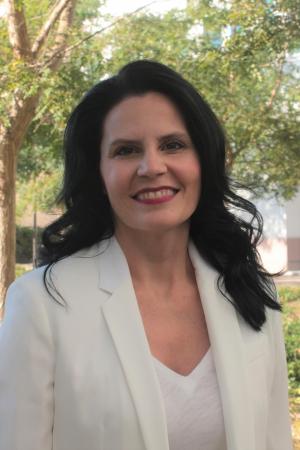 Tamara Dawn Afifi合作论文数Department of Communication, University of California, Santa Barbara1
 Kirsten M Weber合作论文数1
 Susan Wright合作论文数1
 Howie Giles合作论文数Department of Communication, University of California, Santa Barbara;School of Psychology, University of Queensland1Michael F. Para合作论文数1
 Aaron T Ebata合作论文数Department of Human Development and Family Studies, College of Agricultural, Consumer and Environmental Sciences, University of Illinois at Urbana-Champaign1Bret A. Moore合作论文数Adler School of Professional Psychology, 65 East Wacker Place, Chicago, IL 60601, USA1
 Jennifer Theiss合作论文数Dept Commun, Rutgers State Univ1
 Dale E. Brashers合作论文数Department of Communication, University of Illinois1Richard G. Tedeschi合作论文数1
 Lance S. Rintamaki合作论文数1
 Amy J Rauer合作论文数Department of Psychology, University of Michigan1
 Jeremy B. Yorgason合作论文数School of Family Life, Brigham Young University1
 Lisa Guntzviller合作论文数Department of Communication, College of Liberal Arts and Sciences, University of Illinois at Urbana-Champaign1




