Practice-embedded learning opportunities close the gap between professional development and practice. Side-by-side coaching can serve as such a learning opportunity by situating the teacher and coach in co-participation in the teacher's classroom. In this paper, we decompose side-by-side coaching drawing on Rogoff's (1995) constructs of guided participation and appropriation to demonstrate how co-participation can provide varied learning opportunities for teachers. We found that during side-by-side coaching teachers and coaches moved between seven forms of guided participation and opportunities for appropriation of practice. We discuss the adaptability of side-by-side coaching as a practice-embedded teacher learning opportunity and discuss implications for design.
In a community of practice, such as those designed to support teachers' professional development, learning is fostered through participation in the joint enterprise of the community as teachers appropriate practice and engage in guided participation of practice.Because sociocultural activity is not sequential or isolated, this study explores the interaction between guided participation and appropriation in one environment designed to support teacher learning: side-by-side coaching.In side-by-side coaching, a teacher and coach partner to co-enact a focal pedagogical practice with the teacher's students during instruction.In our analysis, we explore the relationship between appropriation and guided participation during side-by-side coaching, finding two kinds of teacher learning opportunities at their intersection.Both theoretically and analytically, our findings indicate that appropriation is inherent to the process of teacher learning, rather than an outcome or end point.
BackgroundEmotions are inherently intertwined with learning and disciplinary identity, and this relationship demands that teachers attend and respond to students' emotions. In this study, we forward a theory that the development of pedagogical empathy, or the capacity to understand the implications of student emotions and use emotional data to make adaptive pedagogical decisions, is a component of adaptive expertise.MethodsUsing qualitative methods to analyze the discourse in eight debrief discussions among secondary mathematics teachers following rehearsals of practice, we examine how teachers used this opportunity to generate and use emotional data in support of the development of pedagogical empathy.FindingsWe found that rehearsal debriefs provided an opportunity to make emotional data available to participants in three ways and that teachers then used that emotional data in six ways across the debriefs. Student emotions, both from teachers in the position of students and in consideration of hypothetical students in the classroom, were pervasive in the debrief discussions.ContributionAfter considering the ways in which emotional data were made visible and used, we return to theory to consider how these highlight the opportunities rehearsals offer to develop pedagogical empathy and discuss implications for teacher education and future research.
Recent critiques of practice-based teacher education raise concerns about reducing pedagogy to acontextual procedures and decentering teacher reasoning. Building on our model of non-rehearsing teachers’ development of adaptive expertise in rehearsal debriefs, we examine thought experiments as a mechanism for pedagogical reasoning and resisting prescription. Non-rehearsing teachers’ thought experiments were characterized by discussions of what could have happened or might happen under different conditions or contexts. We examine four interrelated types of thought experiments and consider the role of position. Results suggest that thought experiments function as bridges between the simplification of rehearsals and the complexity of practice in context.
Responding to student errors is a complex practice that connects teachers’ vision and goals around students, mathematics, and teaching. We explore teacher candidates’ (TCs) reflections on responding to errors during rehearsals of whole-class discussion to gain insight into the vision and goals that might influence their thinking. We discuss five TCs’ assessment of their practice based on video-elicitation interviews to infer their vision around responding to errors and their associated goals for practice. In particular, we attend to how their vision and goals interact in shaping TCs’ reflections on practice. This work offers implications for considering TC development and support.
Students' contributions that are not yet mathematically complete, precise, or correct are crucial for learning through classroom discussions. We aim to support teacher candidates (TCs) to see students' ideas as evidence of sensemaking and to respond in ways that keep student thinking central to the discussion. Although approximations of practice are a promising pedagogy for supporting TCs' learning, more research is needed to link features of approximations and TCs' opportunities to learn. Using data from a multiyear collaboration across two institutions, we investigate the use of coached rehearsals and how the design feature of "planted errors" contributed to multiple components of teacher learning in part through the impact on key features of approximations of practice. Our findings illustrate the available opportunities for TCs to develop skill with a complex practice. These results offer implications for the design of approximations of practice and approaches to studying their role in teacher development.
Practice-based pedagogies, such as representations of practice and approximations of practice, are increasingly common in mathematics teacher education. More needs to be known about how teacher candidates' (TCs') productions through such activities make visible the resources they bring to the work of teaching. In this paper, we highlight our use of "scripting tasks," through which secondary mathematics TCs produced dialogues of classroom interactions and rationales for those scripts in response to a provided classroom scenario. We share how analyses of TCs' scripts and rationales can make visible a range of resources that TCs bring to the work of teaching-tools and practices, vision and dispositions of teaching, and understandings of students and content (Hammerness et al., 2005)-that inform how they respond to student contributions in whole-class discussions as a focal teaching practice. We illustrate a rich example and framework for analyzing TCs' responses to scripting tasks and offer implications for how such analyses can support teacher educators and researchers to make claims about TCs' learning and inform decisions about supports for TCs' development.
Responding to student errors is a complex practice that connects teachers’ vision and goals around students, mathematics, and teaching. We explore teacher candidates’ (TCs) reflections on responding to errors during rehearsals of whole-class discussion to gain insight into the vision and goals that might influence their thinking. We discuss five TCs’ assessment of their practice based on video-elicitation interviews to infer their vision around responding to errors and their associated goals for practice. In particular, we attend to how their vision and goals interact in shaping TCs’ reflections on practice. This work offers implications for considering TC development and support.
Students need opportunities to construct definitions in mathematics. We describe a sorting activity that can help students construct and refine definitions through discussion and argumentation. We include examples from our own work of planning and implementing this sorting activity to support constructing a definition of linear function.
Analyzing and interpreting student thinking through written work is a key, often challenging, practice of teaching. It entails noticing students' mathematical thinking and drawing on mathematical knowledge for teaching. This study investigates how pre-service secondary teachers at the beginning of their preparation reason about students' written work. In interviews, participants solved mathematical tasks and the analyzed student written work in order to make assertions about student understanding. Analysis of participants' assertions revealed three primary reasoning strategies: mathematical reasoning, pedagogical reasoning, and reasoning through self-comparison. Self-comparison involved participants comparing the student work directly with their own work on the task. This strategy showed promise, as it could be used to help make inferential assertions about student understanding. It also highlighted areas of caution around how beginning pre-service teachers might make use of evidence. This study contributes to the existing literature around noticing student thinking in written work by highlighting the significance of reasoning through self-comparison.
This study explores conceptual links between practice-based teacher education and adaptive expertise, drawing on constructs of teacher noticing and position. We specifically examined debrief discussions following rehearsals, focusing on the experiences of non-rehearsing teachers (NRTs) who participate in rehearsals as students. We propose an emergent model of how debriefs can support NRTs' development of adaptive expertise, through qualitative analysis of debriefs with secondary mathematics teachers. Debriefs provided opportunities for NRTs to socially construct adaptive expertise through making their experiences public and considering implications for teaching. We discuss ways debriefs contribute to the co-construction of adaptive expertise in practice-based teacher education.
Approximations of practice provide opportunities for teacher candidates (TCs) to engage in the work of teaching in situations of reduced complexity. A problem of practice for teacher educators relates to how to represent student voice in approximations to engage TCs with interactive practices in meaningful ways. In this article, we share an analysis of our use of “planted errors” in coached rehearsals with secondary mathematics TCs focused on the practice of responding to errors in whole-class discussion. We highlight how different iterations of the planted errors affect the authenticity of how student voice was represented in the rehearsals and the resulting opportunities for TC learning. We offer design considerations for coached rehearsals and other approximations of practice.
This chapter examines how research focused on integrated science, technology, engineering, and mathematics (STEM) education conceptualizes mathematics. It responds to the concern that integrated STEM education research often treats mathematics as a tool for scientific investigation rather than viewing integrated STEM education as a site for conceptual mathematical learning. A review of literature in secondary-level STEM teaching and learning published from 2013 to 2018 in 19 international science, technology, engineering, and/or mathematics-focused journals identified 32 articles that focused on mathematically rich approaches. Analysis tracked the mathematical topics, proficiencies, and practices present in each article. Cross-cutting themes in mathematically rich integrated STEM studies include communication, task authenticity, the centrality of inquiry, and the importance of informal learning spaces. The chapter closes with priorities for further international research on mathematically-accountable STEM integration.
Recent research shows the promise of using tasks that situate mathematics in a pedagogical context in courses for secondary teachers. Such tasks can engage teachers in connecting undergraduate mathematics and secondary mathematics teaching, even when pedagogical knowledge is not needed to solve the task. We examine the phenomenon that the presence of pedagogical context appears to change the work of a mathematical task. We presented 17 practicing secondary teachers with the same set of arguments to validate, first in the context of teaching secondary mathematics, and then in the context of a university mathematics course. We argue that the construct of social positioning - as a student or teacher - explains differences in secondary teachers' validations as well as the problem of disconnection between undergraduate mathematics and secondary teaching.
 Matthew Peter Campbell合作论文数12
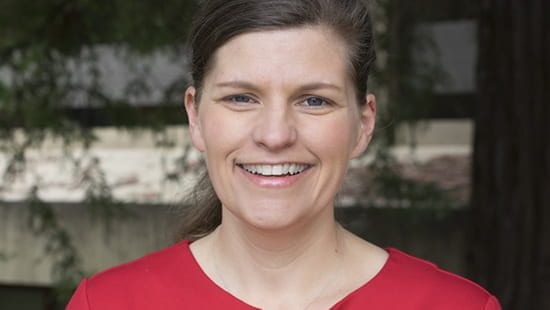 Jen Munson合作论文数School of Education and Social Policy, Northwestern University8
 Foster Graif合作论文数7
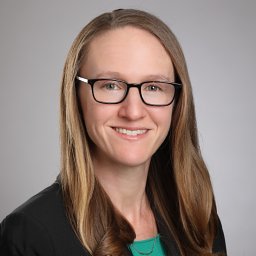 Sarah Kate Selling合作论文数Stanford University School of Medicine7
 Eileen Murray合作论文数Math for America3
 Rajeev Virmani合作论文数2
 Diana White合作论文数2Sarah Larison合作论文数2
 Nicholas Henning Wasserman合作论文数Mathematics, Science & Technology, Teachers College, Columbia University2Rebekah Elliott合作论文数2
 Yvonne Lai合作论文数2Huma Hussain-Abidi合作论文数1Kyle Hunkar合作论文数1Ben Freeburn合作论文数1Zhitong Yang合作论文数1Sean Freeland合作论文数1
 Elena Contreras Gullickson合作论文数1
 Mari Altshuler合作论文数1Josh Karr合作论文数1
 Elizabeth Schiavone Gotwalt合作论文数1
 Nicole Garcia合作论文数1Hala Ghousseini合作论文数1Bismark Akoto合作论文数university of cape coast1
 melinda knapp合作论文数Oregon State University1Noora F. Noushad合作论文数Grad Sch Educ, Univ Penn1Thomas Richman合作论文数1
 Kathy Liu Sun合作论文数Educ, Santa Clara Univ1Cathy Humphreys合作论文数1
 Nicole Bowers合作论文数Mary Lou Fulton Teachers College, Arizona State University1
 Lihua Xu合作论文数1
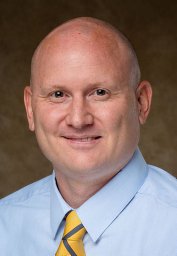 Jared Webb合作论文数Brigham Young University1
 Jan Van Driel合作论文数Melbourne Graduate School of Education, The University of Melbourne1
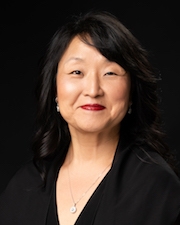 Susan A. Yoon合作论文数Teaching, Learning, and Leadership Division, Graduate School of Education, University of Pennsylvania1
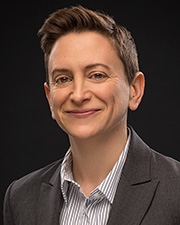 Abby Reisman合作论文数Teaching, Learning, and Leadership Division, Graduate School of Education, University of Pennsylvania1
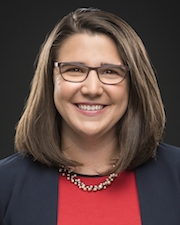 Sarah Schneider Kavanagh合作论文数Teaching, Learning, and Leadership Division, Graduate School of Education, University of Pennsylvania1
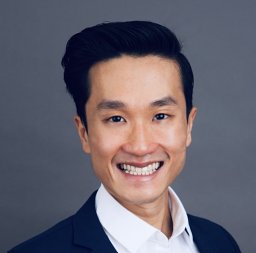 Lam Pham合作论文数CSIRO, Commonwealth Scientific and Industrial Research Organization1
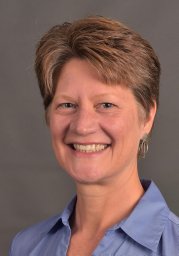 Laura R. Van Zoest合作论文数Department of Mathematics and Statistics, Western Michigan University1
 Amanda Berry合作论文数School of Curriculum, Teaching and Inclusive Education, Faculty of Education, Monash University1
 Susan Staats合作论文数1
 Clark A. Chinn合作论文数Department of Educational Psychology, Graduate School of Education, Rutgers University1
 Wanty Widjaja合作论文数School of Education, Faculty of Arts and Education, Deakin University1Kristin Lesseig合作论文数1
 Colleen Vale合作论文数School of Curriculum, Teaching and Inclusive Education, Faculty of Education, Monash University1




