ABSTRACT In this article, we describe rehearsals designed for use in professional development (PD) with secondary mathematics teachers to support them in reimagining and refining their practice. We detail a theoretical framework for learning in PD that informs our rehearsal design. We then share evidence of secondary mathematics teachers’ improvements in classroom practice from a broader study examining their participation in a PD that featured the use of rehearsals and provide examples of the ways two teachers’ rehearsals of the practice of monitoring students’ engagement with mathematics corresponded to changes in their practice. We conclude with a set of considerations and revisions to our design and a discussion of the role of mathematics teacher educators in supporting teachers in expanding their practice toward more ambitious purposes for students’ mathematical learning.
This chapter provides a set of recommendations for teacher educators interested in using simulated teaching experiences to support teacher learning of pedagogical practice in the post-COVID era. Built from existing research, the recommendations from the study come from lessons learned as five elementary mathematics and science teacher educators used a simulated teaching experience to support preservice teacher learning during the COVID-19 pandemic. The authors begin by situating this work in the larger context of practice-based teacher education and then provide an in-depth description of how five teacher educators at different universities integrated a simulated teaching experience into their elementary mathematics or science methods course. The chapter ends with a discussion of lessons learned and how educator preparation programs and teacher educators can leverage the opportunities created by using simulated teaching experiences in the post-COVID era.
An important decision that professional development (PD) facilitators must make when preparing for activities with teachers is to select an appropriate tool for the intended learning goals of the PD (Sztajn, Borko, & Smith, 2017). One important and prevalent tool is artifacts of student thinking (e.g. Jacobs & Philipp, 2004). In this paper we add to the literature on artifact selection for professional development by discussing the affordances and constraints of different written artifacts of student thinking. Through a professional noticing assessment, we examine the interpretive frames (Sherin & Russ, 2014) that were invoked by 72 secondary teachers regarding 6 students’ written strategies to proportional reasoning tasks. We characterize different ways teachers might make sense of different artifacts of student thinking, and discuss for what purposes PD facilitators might select particular written solutions.
We detail our ongoing work in Flint, Michigan to detect pipes made of lead and other hazardous metals. After elevated levels of lead were detected in residents' drinking water, followed by an increase in blood lead levels in area children, the state and federal governments directed over $125 million to replace water service lines, the pipes connecting each home to the water system. In the absence of accurate records, and with the high cost of determining buried pipe materials, we put forth a number of predictive and procedural tools to aid in the search and removal of lead infrastructure. Alongside these statistical and machine learning approaches, we describe our interactions with government officials in recommending homes for both inspection and replacement, with a focus on the statistical model that adapts to incoming information. Finally, in light of discussions about increased spending on infrastructure development by the federal government, we explore how our approach generalizes beyond Flint to other municipalities nationwide.
Property blight affects more than 20% of properties in Detroit. The City of Detroit issues tickets to owners of these blighted parcels, which incentivize residents to maintain their properties. However, the compliance rate for these tickets is under 10%, which leaves tens of millions of dollars in unpaid fines. In this paper, we seek to understand why compliance is so low and how violations could be better enforced to effectively address the city’s blight epidemic. To this end, we build a predictive model that forecasts ticket compliance, perform in-depth analysis on the groups of residents who own blight-ticketed properties, and investigate how compliance varies between these very different groups.
The City of Detroit maintains an active fleet of over 2500 vehicles, spending an annual average of over \$5 million on new vehicle purchases and over \$7.7 million on maintaining this fleet. Understanding the existence of patterns and trends in this data could be useful to a variety of stakeholders, particularly as Detroit emerges from Chapter 9 bankruptcy, but the patterns in such data are often complex and multivariate and the city lacks dedicated resources for detailed analysis of this data. This work, a data collaboration between the Michigan Data Science Team (this http URL) and the City of Detroit's Operations and Infrastructure Group, seeks to address this unmet need by analyzing data from the City of Detroit's entire vehicle fleet from 2010-2017. We utilize tensor decomposition techniques to discover and visualize unique temporal patterns in vehicle maintenance; apply differential sequence mining to demonstrate the existence of common and statistically unique maintenance sequences by vehicle make and model; and, after showing these time-dependencies in the dataset, demonstrate an application of a predictive Long Short Term Memory (LSTM) neural network model to predict maintenance sequences. Our analysis shows both the complexities of municipal vehicle fleet data and useful techniques for mining and modeling such data.
This study examines teachers’ discussions in a professional development setting to understand the ways in which learning a mathematics learning trajectory may change aspects of their discourse about students as learners. Using mixed methods, we bring together two theoretical frames that use a Vygotskian perspective on learning to analyze professional discussions among 22 elementary-grade teachers participating in a yearlong, 60-hour mathematics professional development program. Results indicate that over time, some discursive patterns for explaining students’ academic performance changed to incorporate the trajectory, while others remained unaffected. Whereas this change transformed one of the patterns in a way that led to new explanations for student performance, another pattern changed only slightly and was still used to express the same explanations for performance.
When the residents of Flint learned that lead had contaminated their water system, the local government made water-testing kits available to them free of charge. The city government published the results of these tests, creating a valuable dataset that is key to understanding the causes and extent of the lead contamination event in Flint. This is the nation's largest dataset on lead in a municipal water system.In this paper, we predict the lead contamination for each house-hold's water supply, and we study several related aspects of Flint's water troubles, many of which generalize well beyond this one city. For example, we show that elevated lead risks can be (weakly) predicted from observable home attributes. Then we explore the factors associated with elevated lead. These risk assessments were developed in part via a crowd sourced prediction challenge at the University of Michigan. To inform Flint residents of these assessments, they have been incorporated into a web and mobile application funded by Google. org. We also explore questions of self-selection in the residential testing program, examining which factors are linked to when and how frequently residents voluntarily sample their water.
Mathematics teacher educators play a critical role in translating research findings into frameworks that are useful for mathematics teachers in their daily practice. In this article, we describe the development of a representation that brings together four research-based learning trajectories on number and operations. We detail our design process, present the ways in which we shared this representation with teachers during a professional development project, and provide evidence of the ways teachers used this translation of research into a pedagogical tool to make sense of students' mathematics. We conclude with revisions to the representation based on our analysis and discuss the role of mathematics teacher educators in translating research findings into useful tools for teachers.
Recovery from the Flint Water Crisis has been hindered by uncertainty in both the water testing process and the causes of contamination. In this work, we develop an ensemble of predictive models to assess the risk of lead contamination in individual homes and neighborhoods. To train these models, we utilize a wide range of data sources, including voluntary residential water tests, historical records, and city infrastructure data. Additionally, we use our models to identify the most prominent factors that contribute to a high risk of lead contamination. In this analysis, we find that lead service lines are not the only factor that is predictive of the risk of lead contamination of water. These results could be used to guide the long-term recovery efforts in Flint, minimize the immediate damages, and improve resource-allocation decisions for similar water infrastructure crises.
Murstein's (1970) "stimulus–value–role" theory suggests that mate selection consists of three stages. At each stage people seek different types of information. This study extends previous research on couple similarity by focusing on the "stimulus" stage where people attend to stimulus information—the most salient personal information. This stage has received less attention than the "value" and "role" stages. A sample of 641 married couples from Central Alberta, Canada provided information on a wide range of stimulus characteristics including background, physical and perceptual variables, as well as spirituality and growth orientation for comparison. Correlation results showed evidence for strong and consistent couple similarity on stimulus characteristics, suggesting that those characteristics are important domains to partner selection. Structural equation modeling results indicated that couple similarity (measured by absolute and directional difference score) overall was not a strong predictor of marital satisfaction; however, discrepancies in age, spirituality, and growth orientation were significant predictors of dissatisfaction.
Abstract Past research has identified an explanatory model of how Engineering Self-Efficacy, Values, and Identity combine to drive student engagement in engineering activities such as study groups, internships, design-workshops, and conferences (Walton, Knisley, McCullough, 2019). The model suggests that engineering self-efficacy is the most proximal driver of engagement while engineering identity and values by contrast are more indirect and distal motivators of engagement in engineering activities with their effects on student engagement being mediated by the more proximal influence of engineering self-efficacy. In essence, for students to be motivated to engage in engineering activities they must first feel capable within engineering (self-efficacy). Walton et al., (2019), further argue, given the right educational environment, these relationships constitute a positive feedback loop. Specifically, the more a student feels capable within engineering, the more likely they are to engage with curricular and extracurricular engineering content and activities. This increased engagement increases engineering self-efficacy, and these efficacious experiences, in turn form the building-blocks of engineering identity and promote the internalization of engineering values. This paper reports on an educational intervention that involved curricular changes that incorporate needs finding and engineering design education across all four undergraduate years. It is hypothesized that allowing students to gain practice at identifying important needs and designing solutions will increase their beliefs in their own capability to do engineering (self-efficacy), which will in turn help them see themselves as engineers (identity), and promote their valuation of the knowledge, skills, and utility of the field (values). This study reports on a Pre/Post-Test research design aimed at testing this intervention. Students in six undergraduate engineering courses that were reformulated to provide students with consistent opportunities to engage in needs finding and engineering design activities were administered a pre-test and post-test survey designed to measure their engineering self-efficacy, engineering identity, and engineering values.
 P. Holt Wilson合作论文数7
 Arya Farahi合作论文数Department of Statistics and Data Sciences, College of Natural Sciences, University of Texas at Austin5Cyndi Edgington合作论文数STEM Educ, NC State Univ3
 Eric Schwartz合作论文数Stephen M. Ross School of Business, University of Michigan-Ann Arbor3
 Paola Sztajn合作论文数University of Georgia College of Education3
 Jacob Abernethy合作论文数School of Computer Science, College of Computing, Georgia Institute of Technology;Google;BlueConduit3Adam Rauh合作论文数2
 Alex Chojnacki合作论文数Univ Michigan, Ann Arbor, MI 48109 USA2
 Jonathan C. Stroud合作论文数Google Res, Mountain View, CA 94043 USA2
 Chengyu Dai合作论文数Dept Phys, Univ Michigan2
 Guangsha Shi合作论文数2
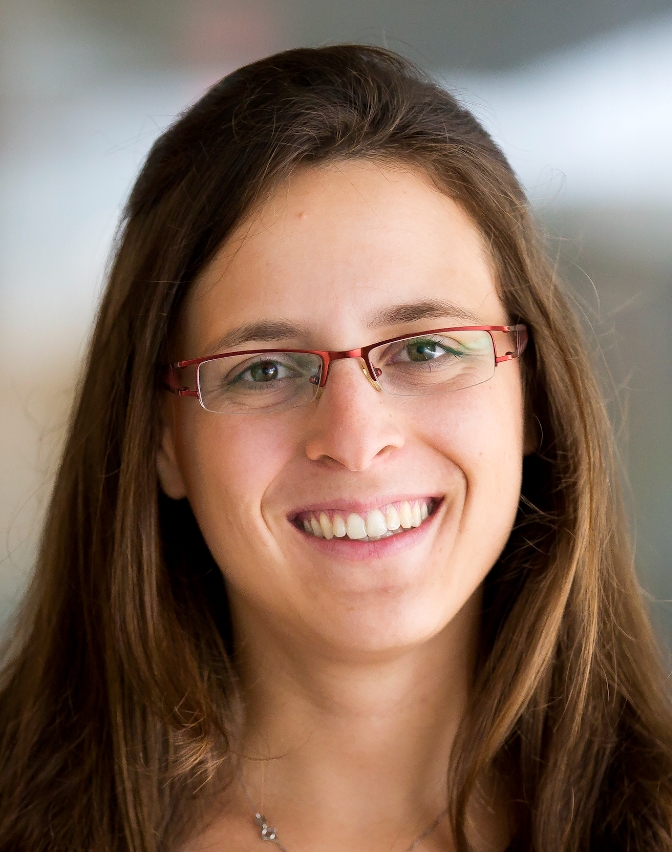 Danai Koutra合作论文数Michigan Institute for Data Science, University of Michigan;Department of Electrical Engineering and Computer Science, University of Michigan;Amazon2Xinyu Tan合作论文数Key Laboratory of Green Chemistry and Technology (Ministry of Education),, Sichuan University2Wenbo Shen合作论文数1Bhavika Jalli合作论文数1Minsung Kwon合作论文数1Jawad Mroueh合作论文数1
 Tobin Walton合作论文数Dept Social Work & Sociol, North Carolina A&T State Univ1
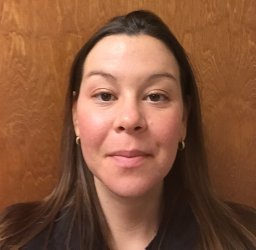 Liza Bondurant合作论文数Delta State University1Darren M. George合作论文数1
 Marrielle Myers合作论文数Kennesaw State Univ1
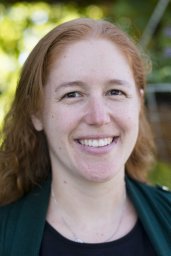 Erin Baldinger合作论文数Dept Curriculum & Instruct, Univ Minnesota1
 Joshua P. Gardner合作论文数Apple1Heather Howell合作论文数ETS1Sheng Yang合作论文数1
 Jamie Mikeska合作论文数1
 Sarah Kate Selling合作论文数Stanford University School of Medicine1Cyrus Anderson合作论文数1
 Zhang Daniel合作论文数University of Notre Dame1Rebekah Elliott合作论文数1
 Shanhong Luo合作论文数1
 Matthew Peter Campbell合作论文数1
 Linh Viet Nguyen合作论文数Dept Math, Univ Idaho1




