Porous carbons are important electrode materials for supercapacitors. One of the challenges associated with supercapacitors is improving their energy density without relying on pseudocapacitance, which is based on fast redox reactions that often shorten device lifetimes. A possible solution involves achieving high total capacitance (Ctot), which comprises Helmholtz capacitance (CH) and possibly quantum capacitance (CQ), in high-surface carbon materials comprising minimally stacked graphene walls. In this work, a templating method is used to synthesize 3D mesoporous graphenes with largely identical pore structures (≈2100 m2 g-1 with an average pore size of ≈7 nm) but different concentrations of oxygen-containing functional groups (0.3-6.7 wt.%) and nitrogen dopants (0.1-4.5 wt.%). Thus, the impact of the heteroatom functionalities on Ctot is systematically investigated in an organic electrolyte excluding the effect of pore structures. It is found that heteroatom functionalities determine Ctot, resulting in the cyclic voltammetry curves being rectangular or butterfly-shaped. The nitrogen functionalities are found to significantly enhance Ctot owing to increased CQ.
Despite great efforts to achieve ideal atomistic packing of carbon in the pore networks of even the largest pore zeolites, templating inaccuracies are ubiquitous in all presently synthesized zeolite-templated carbon (ZTC) materials. Idealized models suggest that the long-sought schwarzite-like structures could in principle be obtained by zeolite templating if the appropriate zeolite template were chosen (e.g., faujasite for D surface schwarzites) and if perfect template fidelity (insertion of a pristine layer of pure carbon directly on the surface of the zeolite) could be achieved. A requirement to achieve such structures is increased carbon density within the zeolite. We report the investigation of a series of alkali metal cation-exchanged zeolites to determine how the periodic trends in the group 1 elements influence zeolite templating, with a specific focus on the metric of structural packing density (SPD) as resolved by ex situ thermogravimetry. In a survey based on controlled synthesis temperature, time, and flow conditions, an increasing SPD was observed with decreasing cation size, an effect that is consistent with the increasing strength of cation-π interactions. This effect could be promising for future work to increase the SPD of ZTCs for the synthesis of closed-tube, schwarzite-like carbonaceous solids.
Dual-ion hybrid capacitors (DIHCs) are a promising class of electrochemical energy storage devices intermediate between batteries and supercapacitors, exhibiting both high energy and power density, and generalizable across wide chemistries beyond lithium. In this study, a model carbon framework material with a periodic structure containing exclusively 1.2 nm width pores, zeolite-templated carbon (ZTC), was investigated as the positive electrode for the storage of a range of anions relevant to DIHC chemistries. Screening experiments were carried out across 21 electrolyte compositions within a common stable potential window of 3.0-4.0 V vs. Li/Li+ to determine trends in capacity as a function of anion and solvent properties. To achieve fast rate capability, a binary solvent balancing a high dielectric constant with a low viscosity and small molecular size was used; optimized full-cells based on LiPF6 in binary electrolyte exhibited 146 Wh kg-1 and >4000 W kg-1 energy and power densities, respectively.
Incorporation of heteroatoms in carbon materials is commonly expected to influence their physical or chemical properties. However, contrary to previous results for methane adsorption, no technologically significant effect was identified for the hydrogen physisorption energies (measured 4.1-4.6 kJ mol-1 and calculated qst = -ΔHads = 4.1 ± 0.7 kJ mol-1 using a comprehensive set of levels of theory) as a function of B- and N-substitution of a mid-plane C-site on open carbon surfaces.
A three-dimensional material comprised exclusively of carbon whose underlying structure lies on a triply periodic minimal surface (TPMS) is a member of the class of hypothetical carbon allotropes known as schwarzites. Such materials are highly sought-after due to their fundamental significance (the last remaining unknown crystalline allotrope of sp2-hybridized carbon) and likely interesting properties (e.g., ballistic conduction at room temperature). Other properties include a large pore volume and high surface area for gas and ion adsorption, making them a class of candidate materials for many applications such as supercapacitor electrodes and gas storage. A true schwarzite has never been synthesized, despite their predicted low energies of formation compared to fullerenes. This research focuses on the synthesis of an interpenetrating schwarzite-like material. A hard-templating strategy has been designed to achieve this through the synthesis of a free-standing graphene foam material whose structure lies on a cubic TPMS. The specific material of interest herein requires an ordered mesoporous silicate template that carries the Ia-3d space group with an optimal pore to wall ratio. Pore and wall structure as well as composition for these materials can be optimized by changing the hydrothermal synthesis temperature, the addition of different precursors, and by varying the cationic and neutral structure-directing agents. We present our recent progress in this effort and also propose future work to achieve optimal templates for schwarzite-like materials synthesis. Figure 1
Experimental studies and theoretical models presently disagree on methane adsorptionenergetics on carbon materials that include crystalline graphene-like structures to amorphousmaterials with or without significant edge structure. However, this information is critical for therational design and optimization of the structure and composition of adsorbents for natural gasstorage. The delicate nature of the interactions inherent to methane physisorption, such asdispersion interactions, polarization of both the adsorbent and the adsorbate, interplay between H-bonding and tetrel bonding, and induced dipole/Coulomb interactions, requires computationaltreatment at the highest possible level of theory while remaining non-prohibitive in terms ofcomputational cost. In this study, we employ the smallest reasonable computational model, amaquette, of porous carbon surfaces with a central atomic binding site for substitution. The mostaccurate predictions of the methane adsorption energetics were achieved by electron-correlatedmolecular orbital theory (CCSD(T)) and hybrid density functional theory (MN15) calculations, bothemploying a saturated all-electron basis set. The characteristic geometry of methane adsorption ona carbon surface was likened to a “lander” position over the ring centers of the adsorbent. Thisadsorbate/adsorbent arrangement arises due to bonding interactions of the adsorbent π-systemwith the proximal H–C bonds of methane, in addition to tetrel bonding between the antibondingorbital of the distal C–H bond and the central atom of the maquette (C, B, or N). The polarization ofthe electron density as well as structural deformations in both the adsorbate and adsorbentmolecules clearly indicate a ~3 kJ mol-1 preference for methane binding on the N-substitutedmaquette. In this study, the B-substituted maquette showed a comparable or lower binding energythan the unsubstituted, pure C model, depending on the level of theory employed. The calculatedthermodynamic results indicate an unambiguous guiding strategy toward incorporating electron-enriched substitutions (e.g., N) in carbon materials as a way to increase methane storage capacityover electron deficient (e.g., B) modifications. The thermochemical calculation methodologies werecritically evaluated in order to establish a conceptual agreement between the experimentalisosteric heat of adsorption and the binding enthalpies/free energies from statisticalthermodynamics principles.
The addition of redox-active molecules into electrochemical-capacitor electrolytes provides increased specific energy density. Here we illustrate the underlying operational mechanisms and design principles for carbons with hierarchical pore sizes in the micropore (0.6-2 nm) to mesopore (2-3 nm, 5-30 nm) range as electrode materials in redox-enhanced electrochemical capacitors. When using iodide as a model redox additive, we discover that the redox capacity is correlated to the pore volume of the carbon electrodes when void space is included. The fastest rates are typically observed with pore-sizes >1 nm, while slow self-discharge requires pores <1 nm. When used without an ion-selective-membrane separator, the delivered capacity correlated with the quantity of redox species held within the carbon. A commercial microporous carbon, MSC30, with substantial hierarchy in pore size, including small <0.8 nm pores and larger 1.1-3 nm pores, showed the best overall performance, illustrating key design principles.
High-density and highly porous graphene-based pellets with anomalous gas densification property and glass-like hardness have been fabricated by using zeolite-templated carbon and reduced graphene oxide.
Zeolite-templated carbons (ZTCs) are a distinct class of porous framework materials in which a three-dimensional network of pores is contained between atomically thin, polycyclic hydrocarbon walls, synthesized by carbonization within a zeolite template. This class of materials arose from the goal to develop carbon-based frameworks with ordered, homogeneous microporosity (as opposed to activated carbons where the pore network is random). It has more recently been suggested that zeolite-templating may be a viable synthetic route to carbon schwarzites, an elusive class of theoretical materials with a triply periodic minimal surface and many fundamentally interesting properties. In this review, we survey the currently proposed atomistic models of ZTCs, compare them to experimental properties of ZTCs, and emphasize the significant differences that remain between actual ZTCs prepared in the laboratory and the still elusive schwarzites.
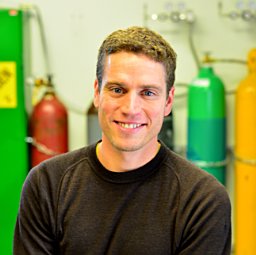 Nicholas Stadie合作论文数9
 Dalton Compton合作论文数2Rylan Rowsey合作论文数2
 Takashi Kyotani (京谷隆)合作论文数Department of Chemical Engineering, Graduate School of Engineering, Tohoku University2Pan Zhengze合作论文数2
 Robert K. Szilagyi合作论文数Department of Chemistry and Biochemistry, Montana State University2
 Hirotomo Nishihara合作论文数2tomomi kanai合作论文数1Wei Yu合作论文数1Gary Wyss合作论文数1
 Mohammed Ouzzine合作论文数1Sadie Posey合作论文数1
 Connor Welty合作论文数Dept Chem & Biochem, Montana State Univ1
 Takeharu Yoshii合作论文数Corresponding author.1
 Yang Zhao合作论文数Dept Chem & Biochem, Univ Calif Santa Barbara1Xudong Hu合作论文数1
 Xiaojun Zeng合作论文数Sch Mat Sci & Engn, Jingdezhen Ceram Univ1Keita Nomura合作论文数Tohoku Univ, Inst Multidisciplinary Res Adv Mat, Aoba Ku, 2-1-1 Katahira, Sendai, Miyagi 9808577, Japan1Atsushi Gabe合作论文数Instituto Universitario de Materiales, Departamento de Química Inorgánica, Universidad de Alicante, Apartado 99, 03080, Alicante, Spain1
 Alex Aziz合作论文数1
 Shannon Boettcher合作论文数Department of Chemical & Biomolecular, University of California, Berkeley;Department of Chemistry, University of California, Berkeley;Lawrence Berkeley National Laboratory, University of California, Berkeley;Center for Electrochemical Science, Engineering, and Technology, University of California, Berkeley1
 Maksym Kovalenko合作论文数Laboratory of Inorganic Chemistry, Department of Chemistry and Applied Biosciences, Eidgenössische Technische Hochschule Zürich;Empa1Brian W. Evanko合作论文数Department of Chemical and Biological Engineering, University of Colorado1
 Kravchyk Kostiantyn V合作论文数1Kazutoshi Inoue合作论文数1
 Jian-Feng Li (李剑锋)合作论文数Department of Chemistry, College of Chemistry and Chemical Engineering, Xiamen University1
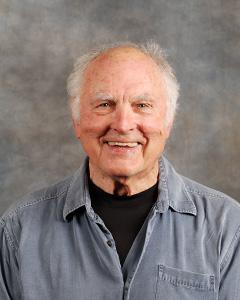 Galen Stucky合作论文数Department of Chemistry & Biochemistry, University of California, Santa Barbara1
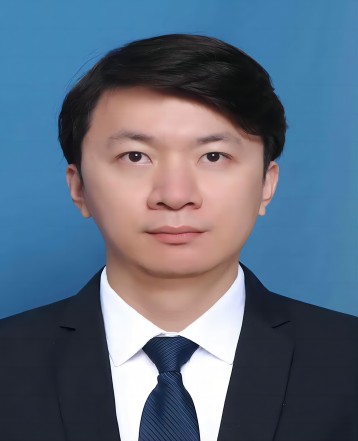 Rui Tang (唐睿)合作论文数College of Materials Science and Engineering, Hunan University1
 Seung Joon Yoo合作论文数1Hengbin Wang合作论文数Lineberger Comprehensive Cancer Center, University of North Carolina at Chapel Hill1
 Hideki Tanaka (田中秀树)合作论文数Toyota Physical and Chemical Research Institute1
 Yuta Nishina合作论文数Graduate School of Natural Science and Technology, Okayama University1Ryohji Ohnishi合作论文数1
 Motoko Kotani合作论文数1
 Stephan Irle合作论文数Computational Sciences and Engineering Division, Oak Ridge National Laboratory1
 Naoki Uchiyama合作论文数1




