The Innovate Genomics Institute brought together regulators from 16 countries to discuss global capacity building for the regulation of genome-edited crops. The workshop provided insights into the suitable use of technical analyses to validate edits and raised future considerations regarding regulation reporting, offering suggestions to help countries meet their objectives in the ever-growing landscape of genome editing techniques.
CRISPR-Cas systems are host-encoded pathways that protect microbes from viral infection using an adaptive RNA-guided mechanism. Using genome-resolved metagenomics, we find that CRISPR systems are also encoded in diverse bacteriophages, where they occur as divergent and hypercompact anti-viral systems. Bacteriophage-encoded CRISPR systems belong to all six known CRISPR-Cas types, though some lack crucial components, suggesting alternate functional roles or host complementation. We describe multiple new Cas9-like proteins and 44 families related to type V CRISPR-Cas systems, including the Casλ RNA-guided nuclease family. Among the most divergent of the new enzymes identified, Casλ recognizes double-stranded DNA using a uniquely structured CRISPR RNA (crRNA). The Casλ-RNA-DNA structure determined by cryoelectron microscopy reveals a compact bilobed architecture capable of inducing genome editing in mammalian, Arabidopsis, and hexaploid wheat cells. These findings reveal a new source of CRISPR-Cas enzymes in phages and highlight their value as genome editors in plant and human cells.
All plants in natural ecosystems are thought to be symbiotic with mutualistic fungal endophytes that can significantly improve plant fitness by enhancing root growth, fertility, nutrient acquisition and biotic or abiotic stress tolerance. Recently, Adaptive Symbiotic Technologies developed the product line BioEnsure® comprised of fungal endophytes that confer abiotic stress tolerance (drought, temperature, salinity) to food crops (www.adsymtech.com). These endophytes communicate similarly with monocots and eudicots to enhance crop production on marginal lands and mitigate the impacts of high daytime or nighttime temperatures on crop fertilization. Yield benefits in endophyte-colonized plants are remarkable and directly proportional to stress levels with average yield increases of 3-5% above control plants under low stress and >26% under high stress. The relationship between stress and yield enhancement was best exemplified in Rajasthan, India, where BioEnsure®-treated pearl millet and mung bean seeds were provided to 400 small landholding farmers. Under the hot, dry growing conditions that are typical in Rajasthan, the average yield increases were 29% for pearl millet and 64% for mung bean compared to untreated plants. This demonstrated the power of this technology to increase food security, animal fodder, carry-over seed and revenues. Interest in the USA is growing with BioEnsure®-treated seeds planted in 300,000 acres in 2017 and 900,000 acres in 2018, and >2,000,000 acres are projected for 2019.
CYCLING DOF FACTOR 1 (CDF1) and its homologs play an important role in the floral transition by repressing the expression of floral activator genes such as CONSTANS (CO) and FLOWERING LOCUS T (FT) in Arabidopsis. The day-length-specific removal of CDF1-dependent repression is a critical mechanism in photoperiodic flowering. However, the mechanism by which CDF1 represses CO and FT transcription remained elusive. Here we demonstrate that Arabidopsis CDF proteins contain non-EAR motif-like conserved domains required for interaction with the TOPLESS (TPL) co-repressor protein. This TPL interaction confers a repressive function on CDF1, as mutations of the N-terminal TPL binding domain largely impair the ability of CDF1 protein to repress its targets. TPL proteins are present on specific regions of the CO and FT promoters where CDF1 binds during the morning. In addition, TPL binding increases when CDF1 expression is elevated, suggesting that TPL is recruited to these promoters in a time-dependent fashion by CDFs. Moreover, reduction of TPL activity induced by expressing a dominant negative version of TPL (tpl-1) in phloem companion cells results in early flowering and a decreased sensitivity to photoperiod in a manner similar to a cdf loss-of-function mutant. Our results indicate that the mechanism of CDF1 repression is through the formation of a CDF-TPL transcriptional complex, which reduces the expression levels of CO and FT during the morning for seasonal flowering.
 Sang Cho合作论文数2
 Alec S. Baird合作论文数2
 Rusty Rodriguez合作论文数Adaptive Symbiotic Technologies LLC2Regina S. Redman合作论文数2
 Kailash Chander Bansal合作论文数National Academy of Agricultural Sciences1Amy R. Eggers合作论文数1Carolyn J Huang合作论文数1Melissa Rienstra合作论文数1Katie E L Malmberg合作论文数1Malia Mercer合作论文数1Zachery Gray合作论文数1Ryan Manglona合作论文数1
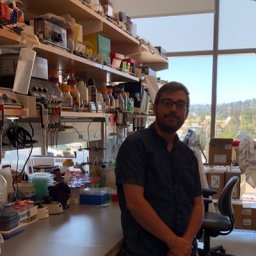 Dylan C J Smock合作论文数Innovat Genom Inst, Univ Calif Berkeley1
 Paul Panipinto合作论文数1
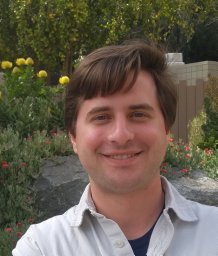 Greg S Goralogia合作论文数Oregon State University1Katarzyna M Soczek合作论文数1
 Basem Al-Shayeb合作论文数Univ Calif Berkeley, Dept Plant & Microbial Biol, Berkeley, CA 94720 USA1
 Tongkun Liu (刘同坤)合作论文数College of Horticulture, Nanjing Agricultural University1
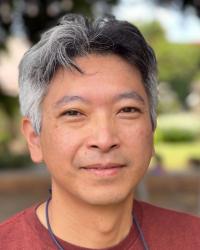 Takato Imaizumi合作论文数Department of Biology, University of Washington1Zheng Li合作论文数1
 Petr Skopintsev合作论文数Deutsches Elektronen-Synchrotron DESY1
 Cress Brady F合作论文数Center for Biotechnology and Interdisciplinary Studies, Rensselaer Polytechnic Institute1
 Pausch Patrick合作论文数1
 Elizabeth C Stahl合作论文数1
 Lin Zhao (赵琳)合作论文数College of Agriculture, Northeast Agricultural University1
 Jennifer A. Doudna合作论文数Department of Chemistry, College of Chemistry, University of California, Berkeley;Department of Molecular and Cell Biology, College of Letters & Science, University of California, Berkeley;Innovative Genomics Institute, University of California, Berkeley1
 Steven Erik Jacobsen合作论文数Department of Biological Chemistry, David Geffen School of Medicine, University of California, Los Angeles1
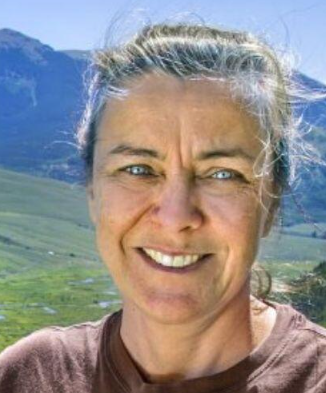 Jill F. Banfield合作论文数Department of Earth and Planetary Science, University of California, Berkeley;Department of Environmental Science, Policy, and Management, University of California, Berkeley;Lawrence Berkeley National Laboratory1
 David Savage合作论文数Metabolic Research Laboratories, University of Cambridge/Wellcome-MRC Institute of Metabolic Science, University of Cambridge1
 Brian Staskawicz合作论文数Department of Plant and Microbial Biology, Rausser College of Natural Resources, University of California, Berkeley;Innovative Genomics Institute1




