Given that ICT is at the heart of today's Smart City approach, it is of paramount importance to investigate concepts, which would enable the unification, the common understanding and the replication of ICT architectures/solutions/models across multiple cities. This unified and replicable approach can be best achieved by a very abstract model, aiming to capture the taxonomy and high-level structure of complex integrative ICT solutions for Smart Cities. The approach should be based on the idea of openness with respect to interfaces, software components and especially data, which is to be seen as the main ingredient of an ICT eco-system for Smart Cities. This paper presents an Open Data based ICT Reference Architecture for Smart Cities, which is developed within the EU project Triangulum [1].
A key challenge for open data portals is the aggregation of metadata from various data catalogs (on different administrative level or from different application fields) also known as metadata harvesting. This paper describes harvesting at the pilot of the German open government portal GovData.de, which is scheduled to become the data portal for all German public administration levels. At the launch of the pilot portal in February, eleven federal, state and local data catalogs were integrated, which produced about 2,000 open data sets. In the meantime, the number of data sets increased to over 3,100 mainly due to improved harvesting capabilities of the portal. This paper discusses GovData.de metadata schema and experiences with the different harvesting techniques that are in use at GovData.de: CKAN-Harvest, CKAN-API, CSW-Harvest and JSON-Dump.
Quality of life in an urban environment depends strongly on ecological, social and mobility aspects. A major innovation in that context is given by the emergence of electric vehicles. Additionally, the explosive growth of social networks has shown how the Internet can be used to maintain and create communities, thereby bringing mutual benefits to the involved participants. Combining both, there is an obvious potential for the realization of collaborative electric vehicle sharing within a city. In this paper, we investigate one of the key aspects required to realize the vision of electric vehicle sharing - a cloud infrastructure for handling the required data. We propose a distributed architecture for the realization of such data cloud. Further, we demonstrate how ISP networks and the electric mobility data cloud can collaborate in order to provide efficient streaming of continuous data.
Open Data (OD) is an emerging trend that aims to facilitate the freedom and reuse of information. Therefore, tools, applications and platforms are required that enable the publishing and consumption of data. In this paper, we present our experience from the integration of components that should constitute an OD platform. The proposed solution is able to store datasets as linked data, to catalogue the datasets, and provides a portal with features for supporting community activities. Further, we exemplify the utilization of the proposed platform, by describing a touristic city guide web mashup that uses published Open Data. This application consumes data in machine readable format over APIs provided by the OD platform.
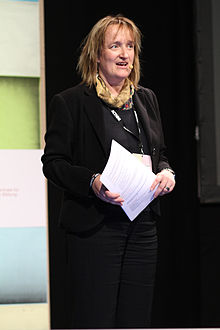 Ina Schieferdecker合作论文数Fraunhofer FOKUS4
 Nikolay Tcholtchev合作论文数Fraunhofer Institute for Open Communication Systems4
 Florian Marienfeld合作论文数3Robert Scholz合作论文数Max Planck School of Cognition, Leipzig, Germany.1Benjamin Dittwald合作论文数Fraunhofer FOKUS, Berlin, Germany1Farid, L.合作论文数1
 Philipp Lammel合作论文数1
 Louay Bassbouss合作论文数Technische Universität Berlin1




