Urban heatwaves pose increasing risks to urban sustainability, particularly in densely populated areas, which necessitates evidence-based and strategic decision-making. Empowering younger generations with the skills required to address such climate-induced challenges is essential for building resilient and climate-adaptive societies. This study investigates the effectiveness of the online serious game “Heatwave City” in enhancing decision-making skills among primary school students in the context of urban heatwave mitigation. The research involved 242 6th grade students, who were assigned to a control group, receiving conventional instruction, and an experimental group, engaging with the “Heatwave City” online serious game. Comparative analysis revealed that students in the experimental group exhibited statistically significant improvements in their performance across the structured steps of the decision-making process, compared with those in the control group. These findings provide empirical evidence that the “Heatwave City” online serious game effectively strengthens students' decision-making skills, contributing to helping cultivate responsible, climate-aware behavior in response to environmental hazards.
The increasing frequency and intensity of urban heatwaves reshapes environmental and social realities globally. These phenomena not only challenge the resilience of urban ecosystems but also call attention to the importance of developing scientific literacy and reasoning skills at a primary level. Situated within these pressing socio-environmental conditions, this study examines the way in which primary school students engage in socio-scientific argumentation (SSA) when reasoning about urban heatwave mitigation. Drawing upon Toulmin’s argumentation model as theoretical lens to explore both the structure and content of students’ arguments and to trace how these evolve through targeted intervention, a qualitative-dominant design was employed involving 148 5th-grade students in Greece, with quantitative summaries used descriptively to illustrate trends and shifts in argumentation components. Data were collected through pre- and post-intervention digital questionnaires and structured worksheets. Students’ written responses were analyzed using a qualitative content analysis, guided by a rubric that assessed both the structural coherence and content quality of their arguments, while frequencies and shift analysis provided descriptive insights into changes across demographic variables. The instructional intervention centered on the serious game Heatwave City, designed to immerse learners in authentic decision-making scenarios around urban sustainability. Findings revealed that pre-intervention arguments were largely fragmented and weakly supported by evidence, whereas post-intervention data indicated more consistent articulation of claims and increased use of relevant scientific information, particularly in questionnaire responses. Advances in reasoning and counterargumentation were more limited, with these components remaining largely at emergent levels. We conclude by offering recommendations for fostering students’ engagement with SSA through sustained, dialogic, model-based, and game-enhanced learning environments.
This paper investigates whether sustainability consciousness is already developed in thefinal years of primary education. The study involvedn= 1532 students ingrades 5 and 6fromn= 48 primary schools in the Epirus region of Greece during the 2024-2025 school year.To assess their knowingness, attitudes, and behaviors related to sustainable development,we used the Sustainability Consciousness Questionnaire, which was reverse-translated intoGreek and tested in a pilot study for age appropriateness. Reliability was examined, andall three subscales-knowingness, attitudes, and behavior-showed statistically significantpositive correlations. Students generally reported high levels of sustainability conscious-ness, with girls consistently scoring higher across all categories. The findings highlight thepotential to foster sustainability-related values and practices early in education, providingoriginal evidence from Greek primary schools and expanding the instrument's internationaluse among younger learners.
Education is an important component to achieve biodiversity conservation. Given the need to increase environmental awareness and literacy towards more effective biodiversity conservation and more participatory management of protected areas, this paper aims to investigate the level of knowledge and perceptions of Biology students in Greece on Natura 2000 protected areas. The research was conducted using a standardized questionnaire, administered to 434 students from five biology departments. The students’ knowledge score was notably low and the department of their study did not differentiate the level of knowledge. In contrast, students in more advanced academic years or interested in Ecology, Zoology or Botany demonstrated a higher knowledge score than participants interested in other scientific disciplines. The majority of the students agreed with the establishment of a protected area in their place of residence. In terms of Natura 2000 management, NGOs, independent authorities and governmental organizations were more favored to the private sector. Regarding Natura 2000 site financing, the payment of users in specific areas and the purchase of local products are preferred. To integrate biodiversity conservation concepts in ecology study programmes and textbooks, the participation of experts from multiple scientific fields and the integration of a diverse array of teaching methods and tools are imperative.
Despite recent proof on the usefulness of vaccination during the SARS-CoV-2 pandemic, global vaccine hesitancy persists, driven by emotional biases and selective information processing. Education can help students acquire the necessary knowledge, critical thinking, as well as improve their decision-making skills. Teachers can play a pivotal role in health promotion and vaccination acceptance, and their training in this domain is essential. Vaccine education through school-based programs for children and adolescents could serve as an effective means to reduce vaccine hesitancy in the broader population. This quantitative study examines Greek pre-service teachers' vaccination attitudes in general, and in certain aspects of vaccine acceptance (VA; vaccine safety, effectiveness and necessity, vaccination program, affect towards vaccination, mandatoriness) and their potential reconsideration after targeted educational interventions focusing on the importance of vaccines in the past and present and considering cognitive biases. Initial attitudes were positive, and educational interventions significantly improved VA. Pre-service teachers mainly recognised the effectiveness and necessity of vaccines but were less confident about vaccine safety. The lowest acceptance was noticed in the legitimacy of authorities mandating vaccination. The findings underscore the importance of integrating comprehensive, bias-aware vaccination education early in curricula, to enhance public awareness and encounter misinformation effectively.
Heatwaves are a natural hazard that predominately affects the health of older people, infants, and vulnerable groups, especially those who live in urban environments. Given their significant impact on people's lives today, heatwaves and their intricate connections to climate change should be incorporated into school curricula. This article examines teachers' preparedness to address heatwaves and their associated health risks with students by identifying potential misconceptions that may act as barriers. Using a quantitative approach, we collected data through a questionnaire that examined secondary education teachers' (N = 205) knowledge and self-reported behaviour related to heatwaves. The research findings indicate that some teachers hold misconceptions regarding heatwaves and the latter's connection to climate change. Additionally, certain teachers may be unaware of the necessary measures to mitigate the impact of heatwaves. These insights could be considered to develop a curriculum that highlights and addresses climate change, fostering a deeper understanding of heatwaves and their broader implications among students.
The increasing use of Artificial Intelligence (AI) in education presents new challenges, particularly in evaluating the credibility of AI-generated content. This study explores the attitudes and evaluative skills of 279 in-service primary and secondary teachers in assessing AI-generated information on urban heatwaves, as a climate-related issue. Using a quantitative pre-and-post design, data were collected through a digital questionnaire administered before and after a targeted training intervention. The instrument, informed by the CRAAP test, assessed teachers’ ability to critically appraise AI-generated content. Findings revealed initial concerns about students’ reliance on AI and difficulties in evaluating the validity and reliability of AI-generated data. Post-training results demonstrated marked improvements in participants’ evaluative competencies across all CRAAP dimensions, particularly in assessing the currency and relevance of AI-generated content. These outcomes underscore the effectiveness of targeted training and reinforce the ongoing need to strengthen digital and data literacy among educators.
The aim of this study was to investigate whether an epistemological adequacy (knowledge of the Nature of Science, NOS) contributes to a better understanding and the acceptance of the Theory of Evolution by Natural Selection (ThENS). It was performed in two parts with the help of two questionnaires: 1. with students of Education, with a minimum familiarity to ThENS and NOS, before and after the application of a general biology course, and 2. with 200 Science Education teachers of various specialties who teach or have taught biology-related subjects. The education students showed some moderate levels of proficiency regarding NOS that was improved statistically significantly, even after a limited teaching intervention. An interesting founding was that, while their understanding of the ThENS was not very much improved by the course, it was found a positive correlation between their NOS familiarity and acceptance of evolution. As for the Science teachers, besides the above queries, some other variables were additionally investigated: E.g. to what extent, a better Epistemological Adequacy (knowledge of the Nature of Science) can influence their understanding and acceptance of the ThENS, or whether this affiliation could have been affected by their college or university instruction. The results showed a positive correlation between their epistemological adequacy and the acceptance and understanding of ThENS.
Natural products contain chemical compounds with limited availability in nature but have been valuable as medicines, cosmetics, or food ingredients from ancient times through present. However, solid information for the public on these products is missing mainly because school teaching does not imply interdisciplinary approaches, and this is possibly the reason for various misconceptions still existing worldwide. In the present study, we explore Greek students'/young citizens' knowledge and alternative ideas on natural products using a questionnaire based on the information included in their school textbooks of chemistry and biology and on the relevant literature. The main findings of this research are that a) students widely use natural products and they are aware of their biological activity; however, they admit that school modestly affects this knowledge and they consider social media as the main sources for their ideas, b) Greek students possess certain misconceptions, recorded already in the literature, such as that the natural substances undergo no processing, they do not contain additives, and they are all beneficial, c) students' ideas are probably signs of chemophobia since they identify additives with "synthetic chemical" and they believe that there is no human intervention in natural product delivery, and d) their social concerns about natural products are restricted to environmental protection, possibly reflecting the absence of socio-scientific teaching approaches in Greek curricula.
Evolutionary theory provides the foundation for modern biology with evolution as a core concept and unifying principle. This research aimed to examine evolutionary knowledge and acceptance among first-year university students. The participants considered for analysis consisted of 87 students enrolled in the first-year bachelor’s in biology and biotechnology at the University of Tirana, Albania. The respondents’ average age was 18.95 ± 0.78 years, with a pronounced dominance of females (90.2%). The study used the standardized research instrument “evolution education questionnaire on acceptance and knowledge” to measure knowledge and acceptance about evolution in an international context. We employed descriptive statistics to analyze the collected data. The findings of research revealed that over half of the respondents, 61%, fall into the ‘very low knowledge’ category on evolution and none fall in the ‘high knowledge’ category. Only 60.9% accept evolution. The need for a revision of the evolutionary concepts and topics in the curricula, from primary school, is recommended coupled with the incorporation of philosophical dialogue into teaching practice.
Abstract Background Evolution is a unifying theme in biology and its understanding is essential to address sustainability problems. However, many people across the world do not understand evolution. Textbooks are among the most widely used educational resources and the way they depict evolution may greatly impact students’ scientific literacy in evolution. In this paper we investigate which evolution concepts are addressed in European science textbooks, from the 1st to the 9th grade. A content analysis using the ‘Framework for the Assessment of school Curricula on the presence of Evolutionary concepts”, was performed on textbooks from eight European countries: Belgium, Cyprus, Czech Republic, Greece, Italy, Netherlands, Portugal and Slovenia. At least two experienced coders per country independently analysed the texts, images and activities, discussed the results and reached a final consensus. Results Our results show that textbooks lack or rarely address concepts considered important for evolution understanding, notably the processes driving evolution and their daily life implications, limiting opportunities for education for sustainability. Conclusions We recommend that science textbooks emphasize evolution and its processes since the first school years. This recommendation is particularly relevant for the analysed textbooks from Cyprus and Belgium, that cover less than 45% of the concepts important to evolution literacy.
The contribution of school curricula to public understanding and acceptance of evolution is still mostly unknown, due to the scarcity of studies that compare the learning goals present in different curricula. To overcome this lack of data we analysed 19 school curricula (18 European and one from Israel) to study the differences regarding the inclusion of learning goals targeting evolution understanding. We performed a quantitative content analysis using the Framework for the Assessment of school Curricula on the presence of Evolutionary concepts (FACE). For each country/region we analysed what this educational system considered the minimum evolution education a citizen should get. Our results reveal that: (i) the curricula include less than half of the learning goals considered important for scientific literacy in evolution; (ii) the most frequent learning goals address basic knowledge of evolution; (iii) learning goals related with the processes that drive evolution are often not included or rarely mentioned; (iv) evolution is most often not linked to its applications in everyday life. These results highlight the need to rethink evolution education across Europe.
Health literacy is a significant element of education and is inextricably linked to children's and adolescents' growth and prosperity. It is critical to monitor students' health literacy on a nationwide scale and identify the factors that influence it in order to create policies that advance it. The purpose of this study was to determine the health literacy level of Greek secondary school students and to correlate it with possible determinants such as personal and family characteristics, social support and personal and/or family illness experiences. A representative sample of 2749 seventh-, ninth-, and tenth-grade students was involved. Results showed that a higher motivation to learn about health topics and having positive social interactions and support were strongly associated with a higher level of health literacy. Gender, high academic achievement, absence of learning disabilities, gender, preference for biology and informatics and primary source of health information were also found to influence the skills' level. In order to enhance health literacy, the Greek educational system should take measures to include health literacy skills development goals in their curricula.
The COVID-19 pandemic really went viral (pun intended) and dominated the media and public discourse, often overshadowing coverage of the equally urgent climate crisis. Despite their distinct features, both crises share important characteristics, such as global impact, economic repercussions, and associations with biodiversity loss, which disproportionately affect marginalized communities. Based on the bibliometric analysis, a significant body of literature exists on the impact of climate change on virus transmission and the environmental consequences of the pandemic. This work focuses on articles that explore the COVID-19 crisis as a learning experiment for the climate crisis, suggesting that in both cases, mitigation policies are less costly than adaptation policies, a collective global response should be agreed upon through international agreements, support for vulnerable communities is crucial, and effective communication to policymakers and the public is paramount.
EvoDash is an interactive dashboard that displays data collected in the EuroScitizen COST Action (CA17127). Several EuroScitizen working groups have collected data to investigate different research questions associated with evolution outreach, evolution education, public knowledge and acceptance, or scientific literacy.EvoDash is our way to transparently disseminate our research results. On EvoDash, you can actively explore EuroScitizen data based on your own research questions, create graphs and download data.EvoDash contains data from three projects: 1. Evolution Acceptance and Knowledge across Europe, 2. European Curricula Analysis, and 3. Evolution Education Sites. You can navigate to the projects via the menu. Information about each project, data availability, resources, and citations are provided for each project.More details can be found at: www.evodash.eu This publication is based upon work from COST Action EuroScitizen, supported by COST (European Cooperation in Science and Technology). COST (European Cooperation in Science and Technology) is a funding agency for research and innovation networks. Our Actions help connect research initiatives across Europe and enable scientists to grow their ideas by sharing them with their peers. This boosts their research, career and innovation. www.cost.eu
The nature of science describes what science is, how it works, and its interactions with society under the perspectives of philosophy, history, sociology, and psychology of science. Understanding it is an essential aspect of scientific literacy. Given the critical role that school textbooks hold, considering what is taught and how it is taught in schools, we find the presence of the nature of science in school science textbooks to be significant. In this research paper, all Greek biology textbooks of lower secondary education are analysed to evaluate whether principal elements of the nature of science can be found in them. The whole array of educational resources available (textbooks, workbooks, lab guides, teachers’ books) was analysed as well as the corresponding official biology curricula. Content analysis was the method of choice, and the ‘meaning unit’ was the unit of analysis. We found that most of the nature of science references in the material that students were taught in 2021/22 was implicit and not especially designed by the curriculum. Some nature of science aspects were more commonly found (e.g., evidence is vital in science) than others (e.g., science has limits). The most opportunities for the nature of science to be introduced were found in history of science vignettes, laboratory activities, and some optional inquiry activities. However, without a structured design from the curriculum, it is the teachers’ responsibility to design and facilitate nature of science instruction (or not). We conclude that lacking explicit references, the nature of science falls into the hidden curriculum and becomes falsely depicted, enforcing a positivist image of science.
Purpose The development of health literacy skills is of paramount importance especially for students, as it is associated with their wellbeing and academic success. Assessing students' health literacy is necessary for its advancement. This study comes to fill the need for a valid multidimensional health literacy assessment instrument for secondary school students. Design/methodology/approach Initially, the authors defined the conceptual framework within which the items of this instrument were generated. Its final form was obtained through three pilot studies. A test-retest followed and, finally, a nationwide survey was conducted on Greek seventh-, ninth- and tenth-grade students ( N = 2,800). Findings A 37-item instrument, the Health Literacy Assessment for Secondary School Students (HeLiASeSS), was developed which includes the following nine dimensions/skills of health literacy: “access to”, “understand” and “evaluate” (health information), “functional communication”, “interactive communication” and “critical communication”, “relying on health information”, “self-efficacy regarding health matters” and “intention for active citizenship regarding health matters”. HeLiASeSS proved to have good stability (ICC = 0.943) and high internal consistency reliability ( a = 0.903). Originality/value HeLiASeSS offers the possibility of a reliable and valid assessment of secondary school students' health literacy skills providing a multidimensional evaluation of this construct and is expected to be useful in interventions aiming at promoting this type of literacy.
 Xana Sa-Pinto合作论文数Res Ctr Didact & Technol Educ Trainers, Univ Aveiro7
 Apostolia Galani合作论文数National and Kapodistrian University of Athens6
 Lucia Vazquez Ben合作论文数4
 Gregor Torkar合作论文数4
 Paul Kuschmierz合作论文数4
 Patricia Pessoa合作论文数4
 Nausica Kapsala合作论文数Dept Internal Med, Volos, Greece4
 Anna Beniermann合作论文数Humboldt Univ4
 Giulia Realdon合作论文数UNICAMearth Grp, Univ Camerino4
 Rianne Pinxten合作论文数Laboratory of Ethology, University of Antwerp4Dragana Cvetkovic合作论文数Research Scientist Department of Electrical and Computer Engineering
Center for Advanced Information Processing (CAIP)
Rutgers University4
Rianne Pinxten合作论文数Laboratory of Ethology, University of Antwerp4Dragana Cvetkovic合作论文数Research Scientist Department of Electrical and Computer Engineering
Center for Advanced Information Processing (CAIP)
Rutgers University4 Martha Georgiou合作论文数Dept Biol, Natl & Kapodistrian Univ Athens3
 Panagiotis K. Stasinakis合作论文数Head of Ampelokipoi Laboratory Centre for Natural Sciences (EKFE), Athens, Greece.3Dittmar Graf合作论文数3
 Penelope Papadopoulou合作论文数Dept Early Childhood Educ, Univ Western Macedonia3
 Bruno Lopes de Sousa合作论文数Departamento de Bioquímica e Biologia Molecular, Universidade Federal do Ceará3
 Konstantinos J. Korfiatis合作论文数Department of Educational Sciences, University of Cyprus3
 Constantine Skordoulis合作论文数Faculty of Primary Education;National and Kapodistrian University of Athens;Faculty of Primary Education, National and Kapodistrian University of Athens3
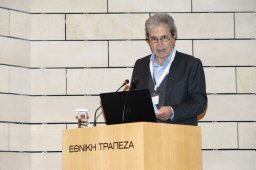 Kyriacos Athanasiou合作论文数Ministry of Environment, Physical Planning and Public Works, Environmental Pollution Control Project Athens3
 Radka Marta Dvorakova合作论文数2Inês Sarmento合作论文数2Alexandre Pinto合作论文数2Tanja Gregorčič合作论文数2Fundime Miri合作论文数2Joana Rocha合作论文数2Vasilios Gialamas合作论文数2
 Andra Meneganzin合作论文数Institute of Philosophy, KU Leuven2Ani Bajrami合作论文数2
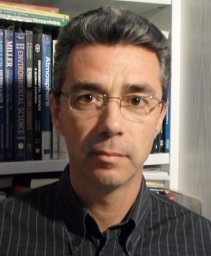 Achilleas Mandrikas合作论文数National and Kapodistrian University of Athens2
 Bento Cavadas合作论文数Polytechnic Institute of Santarém2
 Adam Zoltan Lendvai合作论文数Dept Evolutionary Zool & Human Biol, Univ Debrecen2
 Tania Jenkins合作论文数Centre for Population Biology &, NERC;Department of Life Sciences, Imperial College London;NERC Centre for Population Biology & Division of Biology, Imperial College London2
 Szymek Drobniak合作论文数School of Biological, Earth & Environmental Sciences, Faculty of Science, The University of New South Wales2
 Aivelo Tuomas合作论文数Institute of Biotechnology, University of Helsinki2
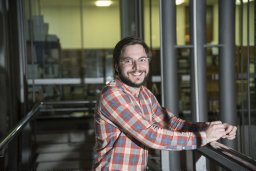 Savković Uroš合作论文数2
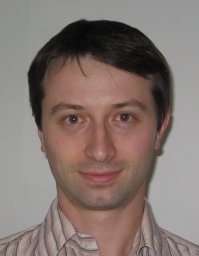 Mate Varga合作论文数2
 Paolucci S合作论文数Centre for Ecological and Evolutionary Studies, University of Groningen2
 Alma Pobric合作论文数Department of Geography, University of Sarajevo2
 Evangelia Galanaki合作论文数2
 J. Bernardino Lopes合作论文数Physics Department, University of Trás-os-Montes e Alto Douro2
 Marcel Eens合作论文数Department of Biology, University of Antwerp2Andreas Panayides合作论文数University of Cyprus2Telmo Pievani合作论文数2
 Dia Galanopoulou合作论文数2Alexander Bergmann-Gering合作论文数1Eleni Tsakiridou合作论文数1Argyrios Kyridis合作论文数1Artemisia Stoumpa合作论文数1
 Costanza Piccoli合作论文数1




