The contribution of school curricula to public understanding and acceptance of evolution is still mostly unknown, due to the scarcity of studies that compare the learning goals present in different curricula. To overcome this lack of data we analysed 19 school curricula (18 European and one from Israel) to study the differences regarding the inclusion of learning goals targeting evolution understanding. We performed a quantitative content analysis using the Framework for the Assessment of school Curricula on the presence of Evolutionary concepts (FACE). For each country/region we analysed what this educational system considered the minimum evolution education a citizen should get. Our results reveal that: (i) the curricula include less than half of the learning goals considered important for scientific literacy in evolution; (ii) the most frequent learning goals address basic knowledge of evolution; (iii) learning goals related with the processes that drive evolution are often not included or rarely mentioned; (iv) evolution is most often not linked to its applications in everyday life. These results highlight the need to rethink evolution education across Europe.
This paper presents a school scientific model designed to serve as an instrument for teaching the theory of evolution in primary education. The model was developed from a selection of evolutionary core ideas and biological levels of scale later organised into a heptagon. This format could allow to gradually increase its complexity in later stages. To check its utility, this model has been employed to create and analyse an initial assessment on evolution aimed to a class-group of fifth graders (10-11 years old). Findings show students at this age have numerous and diverse preconceptions related to evolutionary core ideas. However, very few of those preconceptions could be considered an obstacle to their learning; just the opposite to what usually happens in secondary school. Such an outcome reinforces the convenience of introducing this content from early stages and in a progressive way.
En este artículo se presenta un modelo científico escolar diseñado como instrumento para la enseñanza de la teoría evolutiva en educación primaria. Ha sido elaborado a partir de una selección de ideas nucleares y niveles escalares que fueron organizados en forma de heptágono. Con este formato el modelo podría incrementar su complejidad en etapas educativas posteriores. Para comprobar su utilidad, se ha usado en la creación y análisis de una prueba de evaluación inicial sobre evolución, aplicada a un grupo de estudiantes de 5º de educación primaria. En sus respuestas muestran un gran número y variedad de preconcepciones relacionadas con las ideas nucleares pero, a diferencia de lo que ocurre en secundaria, son escasas las que puedan representar un obstáculo. Estos resultados reafirman la necesidad de comenzar la enseñanza de esta teoría desde etapas tempranas y de una forma progresiva.
Background Investigations of evolution knowledge and acceptance and their relation are central to evolution education research. Ambiguous results in this field of study demonstrate a variety of measuring issues, for instance differently theorized constructs, or a lack of standardized methods, especially for cross-country comparisons. In particular, meaningful comparisons across European countries, with their varying cultural backgrounds and education systems, are rare, often include only few countries, and lack standardization. To address these deficits, we conducted a standardized European survey, on 9200 first-year university students in 26 European countries utilizing a validated, comprehensive questionnaire, the “Evolution Education Questionnaire”, to assess evolution acceptance and knowledge, as well as influencing factors on evolution acceptance. Results We found that, despite European countries’ different cultural backgrounds and education systems, European first-year university students generally accept evolution. At the same time, they lack substantial knowledge about it, even if they are enrolled in a biology-related study program. Additionally, we developed a multilevel-model that determines religious faith as the main influencing factor in accepting evolution. According to our model, knowledge about evolution and interest in biological topics also increase acceptance of evolution, but to a much lesser extent than religious faith. The effect of age and sex, as well as the country’s affiliation, students’ denomination, and whether or not a student is enrolled in a biology-related university program, is negligible. Conclusions Our findings indicate that, despite all their differences, most of the European education systems for upper secondary education lead to acceptance of evolution at least in university students. It appears that, at least in this sample, the differences in knowledge between countries reflect neither the extent to which school curricula cover evolutionary biology nor the percentage of biology-related students in the country samples. Future studies should investigate the role of different European school curricula, identify particularly problematic or underrepresented evolutionary concepts in biology education, and analyze the role of religious faith when teaching evolution.
While several researchers have suggested that evolution should be explored from the initial years of schooling, little information is available on effective resources to enhance elementary school students’ level of understanding of evolution by natural selection (LUENS). For the present study, we designed, implemented and evaluated an educational activity planned for fourth graders to explore concepts and conceptual fields that were historically important for the discovery of natural selection. Observation field notes and students’ productions were used to analyse how the students explored the proposed activity. Additionally, an evaluation framework consisting of a test, the evaluation criteria and the scoring process was applied in two fourth-grade classes to estimate elementary school students’ LUENS before and after engaging in the activity. Our results suggest that our activity allowed students to effectively link all of the key concepts in the classroom and produced a significant increase in their LUENS. These results indicate that our activity had a positive impact on students’ understanding of natural selection. They also reveal that additional activities and minor fine-tuning of the present activity are required to further support students’ learning about the concept of differential reproduction. We also observed a low level of teleological predictions for both pre- and post-tests.
Abstract While several researchers have suggested that evolution should be explored from the initial years of schooling, little information is available on effective resources to enhance elementary school students’ level of understanding of evolution by natural selection (LUENS). For the present study, we designed, implemented, and evaluated an educational activity planned for fourth graders (9 to 10 years old) to explore concepts and conceptual fields that were historically important for the discovery of natural selection. Observation field notes and students’ productions were used to analyze how the students explored the proposed activity. Additionally, an evaluation framework consisting of a test, the evaluation criteria, and the scoring process was applied in two fourth‐grade classes (N = 44) to estimate elementary school students’ LUENS before and after engaging in the activity. Our results show that our activity allowed students to link the key concepts, resulting in a significant increase of their understanding of natural selection. They also reveal that additional activities and minor fine‐tuning of the present activity are required to further support students’ learning about the concept of differential reproduction.
La adaptación es una característica esencial de los seres vivos cuyo estudio contribuye a conocer el medio en el que viven, pero también a explicarlo, pues constituyen una idea clave para la construcción de un modelo tan relevante como el de evolución. Por tal motivo en este estudio se analizan las ideas adaptativas que activan los estudiantes de 5º de Primaria y de 1º de ESO cuando diseñan un animal imaginario que habita el desierto. Los resultados muestran que los participantes describen sin problema un prototipo de desierto y centran las adaptaciones del animal diseñado en las necesidades primarias: obtención de agua/alimento y defensa de otros seres vivos. Las adaptaciones se asocian a rasgos morfológicos, seguidos de los fisiológicos y de comportamiento del animal. Finalmente se reflexiona sobre la importancia didáctica de este tipo de adaptaciones.
Adaptation is an essential characteristic of living beings. Its study contributes to knowing the environment in which they live, but also to explaining it, since it constitutes a key idea for the construction of a relevant model like evolution. For this reason, this study analyzes the adaptive ideas that students in 5th Primary Education and 1st ESO activate when they design an imaginary animal that lives in the desert. The results show that the participants describe a desert prototype without problem and focus the adaptations of the designed animal on the primary needs: obtaining water/food, and defense of other living beings. The adaptations are associated with morphological traits, followed by physiological and animal behavior. Finally, it's reflected on the didactic importance of this type of adaptations.
The lack of standardised assessment of evolutionary knowledge and acceptance of evolution across Europe makes comparisons between studies difficult. The Evolution Education Questionnaire on Acceptance and Knowledge (EEQ) was constructed to measure attitudes and understanding across Europe and beyond. We aimed to compile a brief instrument to allow for easy application in school and university. The target group of the EEQ was freshman university students who had just finished their secondary education. However, several components of the questionnaire were developed and validated for additional target groups. Therefore, this questionnaire may, in addition, be suitable for students in secondary school, in-service teachers as well as the general public. This method report describes the contents and application of the EEQ and provides information on survey conduction, data preparation, analyses and interpretation of results to serve as a standardised and ready-to-use protocol to measure the acceptance of and knowledge about evolution in a local, national or international context. To allow for sampling in different European countries, we present the EEQ in 23 European languages.
Mechanisms are central in scientific explanations. However, developing mechanistic explanations is difficult for students especially in domains in which mechanisms involve abstract components and functions, such as genetics. One of the core components of genetic mechanisms are proteins and their functions. Students struggle to reason about the role of proteins while learning genetics and show limited ability to provide mechanistic explanations of genetic phenomena. In genetics education there are currently two competing theoretical frameworks regarding what domain-specific knowledge about proteins is important for reasoning about genetic mechanisms. One framework assumes knowledge about specific protein functions in the body, a tool kit of functions; the other framework assumes more abstracted knowledge about protein interactions that are common to all protein functions. These frameworks implicate different instructional frameworks: One offers to provide concrete examples of protein functions while the other offers a more general description of protein activity. Our aim in this study was to ascertain the ways in which students' reasoning about proteins' role in genetic phenomena (both familiar and novel) relates to the two theoretical frameworks. Toward this end we engaged 7th grade students in learning about proteins functions in the mechanisms underlying genetic traits using an online simulation environment that embodied key aspects of both frameworks. We analyzed students' responses to the final test questions in which they were asked to generatively reason about the underlying mechanisms of two novel genetic traits. Our findings suggest that students use proteins in their explanations mainly when they can explain the protein function and that knowledge about a few specific functions is insufficient to support conceptualization of new functions. Moreover, knowledge of general protein activities common to most functions is also insufficient. We suggest a new combined approach to supporting students' understanding of proteins' role in genetic mechanisms.
This paper analyses the Science curriculum of Primary Education from United Kingdom, France, Sweden, Portugal, Spain and United States of America. The main purpose is to identify whether biological evolution is included on it, either as framework or as content. This international review of the legislation of Primary / Elementary Education has enabled us to deeply compare how such different legal and socio-political contexts deal with this topic. The analysis of the content have shown the existence, or not, of the core ideas to build up the reasoning about the theory of evolution. The results have allowed us to classify the states according to the different degree of introduction of constructs related to the evolution model. Wherever evolution is included in the curriculum, an effective learning progression of the model is actually possible to achieve. Thus, the citizenship would be provided with the knowledge required to make informed decisions on a wide variety of issues related to evolution, both in terms of health and civic responsibility.
A pesar de estar considerado uno de los modelos basicos en la ensenanza de la Biologia, imprescindible para construir otros como el de ser vivo y ecosistema en Educacion Primaria, el modelo de evolucion no se incluye en el curriculum de esta etapa. Este trabajo presenta las opiniones de expertos y expertas de diversos paises sobre su posible inclusion en Primaria y sobre como afrontar su ensenanza. A traves de un grupo de discusion con profesorado y de entrevistas a especialistas en Didactica de Ciencias, exponen una posicion favorable mayoritaria, al tiempo que enuncian obstaculos que pueden aparecer en su incorporacion, concretando soluciones para afrontarlos, como secuencias de progresion para su tratamiento y una metodologia activa que promueva el desarrollo de la capacidad de razonamiento.
A perda de biodiversidade é un dos problemas ambientais máis urxentes nos nosos días, pero só pode solucionarse por medio da participación, activa e responsable, de toda a cidadanía. Agora ben, para poder entender e valorar a biodiversidade no seu conxunto, é necesario coñecer a evolución biolóxica, pois é este modelo científico o que explica como se orixinou e, polo tanto, as serias consecuencias que pode ter a súa progresiva desaparición. Mais comprender a evolución precisa dunha progresión no seu ensino, que debería comezar nas primeiras etapas. Neste estudo revísase o currículo de ciencias para a etapa de educación primaria para a analizar o seu tratamento nas sucesivas leis educativas implantadas desde 1970 ata a actualidade. Esta análise mostra en que medida se están a impartir nesas idades coñecementos básicos para comprender o mundo que nos rodea. Os resultados poñen de manifesto as graves carencias que presenta a normativa vixente con respecto a esta cuestión, o que pode obstaculizar que estes futuros cidadáns podan tomar decisións acaídas respecto a un tema tan relevante como a conservación ou perda da biodiversidade.
El sistema educativo español establece que el estudio de la teoría de la evolución ha de llevarse a cabo en la etapa de educación secundaria. Ahora bien no se desarolla en profundidad hasta cuarto y último curso, donde forma parte de una asignatura de carácter optativo. Esto se traduce en que año tras año numerosos estudiantes terminan la educación secundaria obligatoria sin haber adquirido apropiadamente un contenido fundamental para la comprensión del mundo en que vivimos, esto es, la teoría de la evolución biológica. Un contenido que guarda estrecha relación con temas tan diversos como el uso de las vacunas, la pérdida de biodiversidad o el consumo de alimentos transgénicos y sobre los que día a día se toman decisiones. Por otra parte, estos estudiantes de encuentran grandes dificultades durante el aprendizaje de dicha cuestión. Por todo ello, se ha realizado una investigación para valorar la posibilidad de introducir la teoría de la evolución en la educación primaria, que facilite el aprendizaje posterior. Se ha procedido entonces al análisis del marco curricular de dicha etapa en España así como en otros países y estados, concretamente Inglaterra (Reino Unido), Portugal, California y Nueva York (EEUU). Los resultados muestran que mientras España o Portugal no incluyen expresamente este contenido, Inglaterra, por ejemplo, sí lo hace. Lo que nos lleva a afirmar la factibilidad de tratar este contenido en la etapa de educación primaria. Ahora bien, para llevar a cabo con éxito esta tarea, los docentes de esta etapa deberán disponer de la formación tanto conceptual como didáctica adecuada.
 anxela bugallo rodriguez合作论文数6Xana Sa-Pinto合作论文数Res Ctr Didact & Technol Educ Trainers, Univ Aveiro4
 Evangelia Mavrikaki合作论文数Faculty of Primary Education, Department of Science, Technology &Environment, National and Kapodistrian University of Athens;Faculty of Primary Education, National and Kapodistrian University of Athens4
 Gregor Torkar合作论文数3
 Paul Kuschmierz合作论文数3
 Patricia Pessoa合作论文数3
 Anna Beniermann合作论文数Humboldt Univ3
 Giulia Realdon合作论文数UNICAMearth Grp, Univ Camerino3
 Adam Zoltan Lendvai合作论文数Dept Evolutionary Zool & Human Biol, Univ Debrecen3
 Aivelo Tuomas合作论文数Institute of Biotechnology, University of Helsinki3
 Rianne Pinxten合作论文数Laboratory of Ethology, University of Antwerp3Dragana Cvetkovic合作论文数Research Scientist Department of Electrical and Computer Engineering
Center for Advanced Information Processing (CAIP)
Rutgers University3
Rianne Pinxten合作论文数Laboratory of Ethology, University of Antwerp3Dragana Cvetkovic合作论文数Research Scientist Department of Electrical and Computer Engineering
Center for Advanced Information Processing (CAIP)
Rutgers University3 Radka Marta Dvorakova合作论文数2Inês Sarmento合作论文数2Alexandre Pinto合作论文数2Maria Petersson合作论文数2
 Alexandru Nicolae Stermin合作论文数Babeș-Bolyai University2Juris Porozovs合作论文数2Dittmar Graf合作论文数2
 Juan Carlos Rivadulla Lopez合作论文数Univ A Coruna2gustav bohlin合作论文数Public & Science (VA)2
 Umran Betul Cebesoy合作论文数Fac Educ, Usak Univ2
 Momir Futo合作论文数Sch Med, Catholic Univ Croatia2
 Szymek Drobniak合作论文数School of Biological, Earth & Environmental Sciences, Faculty of Science, The University of New South Wales2
 Pietrzak Barbara合作论文数Laboratory of Evolutionary Biodemography, Max Planck Institute for Demographic Research, Konrad-Zuse-Straße 1, 18057 Rostock, Germany;Institute of Zoology, University of Warsaw;Max Planck Institute for Demographic Research, University of Warsaw2
 Andrej Sorgo合作论文数2
 Savković Uroš合作论文数2
 Mirko Đorđevic合作论文数2
 Mate Varga合作论文数2
 Paolucci S合作论文数Centre for Ecological and Evolutionary Studies, University of Groningen2
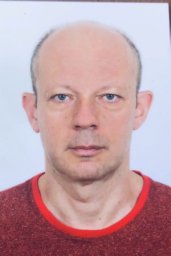 Konstantinos J. Korfiatis合作论文数Department of Educational Sciences, University of Cyprus2
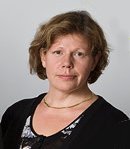 Anna Uitto合作论文数University of Helsinki, University of Helsinki2
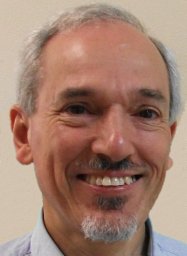 J. Bernardino Lopes合作论文数Physics Department, University of Trás-os-Montes e Alto Douro2Nicoleta Geamana合作论文数Department of Systems Ecology and Sustainable Development, University of Bucharest2
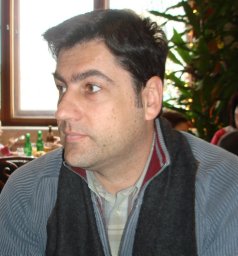 Athanasios Mogias合作论文数Democritus University of Thrace;Department of Education-Primary;Department of Education-Primary, Democritus University of Thrace2Susana Garcia Barros合作论文数Facultade de Ciencias da Educación2
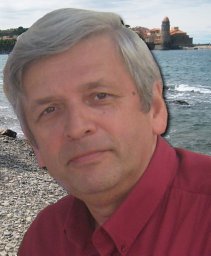 Mircea Sofonea合作论文数Lab Math & Phys, Univ Perpignan2
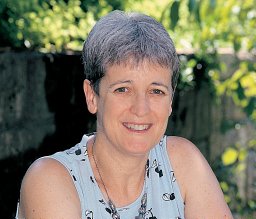 Anat Yarden合作论文数Department of Science Teaching, Weizmann Institute of Science2Tanja Gregorčič合作论文数1bento filipe barreiras pinto cavadas合作论文数1Fundime Miri合作论文数1Joana Rocha合作论文数1
 Martha Georgiou合作论文数Dept Biol, Natl & Kapodistrian Univ Athens1
 Corinne Fortin合作论文数1
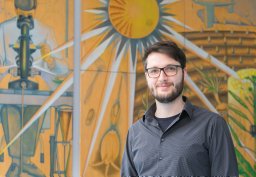 Alexander Bergmann合作论文数Dept Biol, Univ Leipzig1
 Elvisa Sokoli合作论文数Dept Psychol, Univ Tirana1
 Joelyn de Lima合作论文数Dept Plant Biol, Michigan State Univ1
 cicek dilek ozyeral bakanay合作论文数1
 Mirna Varga合作论文数Josip Juraj Strossmayer University of Osijek1




