In this work, a Distributed Antenna Array (DAA) microwave system, comprising 16 plasma sources arranged in a 2D matrix, is successfully used for the deposition of nitrogen-doped single-crystal diamond (SCD) layers of few hundreds of nanometers in thickness using H2/CH4/O2/N2 gas mixtures. Operating at low pressure (<1 mbar), this system provides low growth rates (<120 nm.h−1), ensuring precise control over layer thickness and NV positioning. The purpose is to refine both growth and post-treatment processes in order to improve nitrogen-vacancy (NV) centre creation in terms of precise positioning and spin properties for applications in quantum technology. He+ implantation at 9 keV and varying doses between 1012 to 5 × 10¹³ ions.cm−2 are used on the nitrogen doped layers to ensure vacancies creation, followed by an annealing step at 800 °C to promote the formation of NV centers. A nitrogen concentration of 1000 ppm in the feed gas combined with an implantation dose of 1.6 × 10¹² ions.cm−2 appears to be the optimal compromise between nitrogen incorporation and NV density. Under these conditions, the NV ensemble exhibits a spin dephasing time T2⁎ of 91 ns while maintaining a strong photoluminescence signal.
We demonstrate the self-sustained growth of nanocrystalline diamond (NCD) films using gas-phase plasma-nucleated nanodiamonds as seeds. These nanodiamonds were produced using a microwave microplasma (MWMP) torch and were directly collected on a silicon substrate placed downstream. The resulting carbon nanostructures consisted of agglomerated nanodiamond particles ( 10 nm in size), along with graphite and amorphous carbon phases. Through sonication, these nanostructures were fully dispersed in an isopropanol solution, concentrated, and subsequently deposited onto a clean silicon wafer via drop-casting. NCD films with a thickness of approximately 17 nm were successfully grown on the seeded Si substrate using a distributed antenna array (DAA) microwave plasma reactor. The resulting NCD films were homogeneous and of high quality. This self-sustaining and cost-effective approach to diamond film production presents promising technological opportunities, including applications in bio-implants.
The growth of chemical vapor deposition diamond in microwave plasma ignited in H2/CH4 gas mixture is investigated using a multiscale approach. The plasma composition and temperatures are determined as a function of the growth conditions using an axial one-dimensional simulator. The growth process is then studied at the atomic scale using a kinetic Monte-Carlo simulator developed for (1 0 0), (1 1 1), and (1 1 0) orientations. The calculated growth rates are then injected in a geometric model that predicts the final morphology of the crystal. The simulation of the growth on an etch pit shows that the time necessary to entirely fill the pit is around half an hour. The study of the growth on the three orientations reveals that the surface temperature and methane concentration influence the number, shape, and size of the islands when they appear. On the (1 0 0) surface, the formation of islands may be related to Stranski-Krastanov growth mode, whereas the (1 1 1) surface conducts to Frank-van der Merwe growth mode, and the (1 1 0) surface is governed by Volmer-Weber growth mode. The growth of chemical vapor deposition diamond in microwave plasma ignited in H2/CH4 gas mixture is investigated using a multiscale approach. This model is applied to growth on an etch pit and the morphology of (100), (111), and (110) faces is highlighted. The obtained growth rates, surface morphology, and crystal morphology are consistent with available experimental data.image (c) 2024 WILEY-VCH GmbH
In the present study, a growth strategy allowing widening thick heavily boron doped (113)-oriented diamonds is proposed. It relies on a geometrical model developed at the LSPM, which is used to visualize the evolution of the deposited crystal shape. This model helped us to identify the specific growth parameters allowing to slow down the growth rate along (113) direction and, at the same time, continuously increase the area of this crystalline face. Depositions have been carried out and has resulted in a significant increase of 145% of the top-surface area, giving a functional surface of 3.7mm in diameter after a growth of 930 mu m, starting from 2.3mm. The resistivity, measured by four-point probe system, reaches a value as low as 5m Omega.cm, which is comparable to the best results obtained on thick layers grown on the conventional (100) orientation.
Creating dense and shallow nitrogen vacancy (NV) ensembles with good spin properties, is a prerequisite for developing diamond-based quantum sensors exhibiting better performance. Ion implantation is a key enabling tool for precisely controlling spatial localisation and density of NV colour centres in diamond. However, it suffers from a low creation yield, while higher ion fluences significantly damage the crystal lattice. In this work, we realize N2 ion implantation in the 30 to 40 keV range at high temperatures. At 800 C, NV ensemble photoluminescence emission is three to four times higher than room temperature implanted films, while narrow electron spin resonance linewidths of 1.5 MHz, comparable to well established implantation techniques are obtained. In addition, we found that ion fluences above 2E14 ions per cm2 can be used without graphitization of the diamond film, in contrast to room temperature implantation. This study opens promising perspectives in optimizing diamond films with implanted NV ensembles that could be integrated into quantum sensing devices.
The growth of chemical vapor deposition diamond in microwave plasma ignited in H2/CH4 gas mixture is investigated using a multiscale approach. The plasma composition and temperatures are determined as a function of the growth conditions using an axial one‐dimensional simulator. The growth process is then studied at the atomic scale using a kinetic Monte‐Carlo simulator developed for (1 0 0), (1 1 1), and (1 1 0) orientations. The calculated growth rates are then injected in a geometric model that predicts the final morphology of the crystal. The simulation of the growth on an etch pit shows that the time necessary to entirely fill the pit is around half an hour. The study of the growth on the three orientations reveals that the surface temperature and methane concentration influence the number, shape, and size of the islands when they appear. On the (1 0 0) surface, the formation of islands may be related to Stranski–Krastanov growth mode, whereas the (1 1 1) surface conducts to Frank–van der Merwe growth mode, and the (1 1 0) surface is governed by Volmer–Weber growth mode.
In this study, the characteristics of nanocrystalline diamond films synthesized at low surface temperature on Ti-6Al-4V (TA6V) substrates using a distributed antenna array microwave reactor aiming at biomedical applications were investigated. The surface roughness of the TA6V substrates is varied by scratching with emery paper of 1200, 2400, 4000 polishing grit. Nanocrystalline diamond (NCD) coatings with morphology, purity, and microstructure comparable to those obtained on silicon substrates usually employed in the same reactor and growth conditions are successfully achieved whatever the polishing protocol. However, the latter has a significant effect on the roughness parameters and hardness of the NCD films. The use of the finest polishing grit thus permits us to enhance the hardness value, which can be related to the work-hardening phenomenon arising from the polishing process.
This work deals with the characterization of the Microwave Plasma Assisted Chemical Vapour Deposition (MPACVD) process suitable for nanocrystalline diamond growth. The microwave system used in this study was a Bell Jar reactor and the discharge was ignited in an Ar/H2/CH4 gas mixture. We were especially interested in the investigation of the effect of the simultaneous increase of the microwave power and H2 concentration. Diamond films were characterized by appropriate surface diagnostic techniques. The plasma was analysed through modelling and spectroscopic diagnostics. Results showed in particular that the increase of H2 amount and microwave power strongly influences the diamond film nanostructure. Besides, the high values measured for gas temperature were in good agreement with those predicted by the model. Eventually, the model showed that the relatively high gas temperature in Ar/H2/CH4 discharges was responsible of a strong thermal dissociation of H2.
Diamond is a material of choice for the fabrication of optical windows and for protective and anti-reflecting coatings for optical materials. For these kinds of applications, the diamond coating must have a high purity and a low surface roughness to guarantee a high transparency. It should also be synthesized at low surface temperature to allow the deposition on low melting-point substrates such as glasses. In this work, the ability of a Distributed Antenna Array (DAA) microwave system operating at low temperature and low pressure in H2/CH4/CO2 gas mixture to synthesize nanocrystalline diamond (NCD) films on borosilicate and soda-lime glass substrates is investigated aiming at optical applications. The influence of the substrate temperature and deposition time on the film microstructure and optical properties is examined. The best film properties are obtained for a substrate temperature below 300 °C. In these conditions, the growth rate is around 50 nm·h−1 and the films are homogeneous and formed of spherical aggregates composed of nanocrystalline diamond grains of 12 nm in size. The resulting surface roughness is then very low, typically below 10 nm, and the diamond fraction is higher than 80%. This leads to a high transmittance of the NCD/glass systems, above 75%, and to a low absorption coefficient of the NCD film below 103 cm−1 in the visible range. The resulting optical band gap is estimated at 3.55 eV. The wettability of the surface evolves from a hydrophilic regime on the bare glass substrates to a more hydrophobic regime after NCD deposition, as assessed by the increase of the measured contact angle from less than 55° to 76° after the deposition of 100 nm thick NCD film. This study emphasizes that such transparent diamond films deposited at low surface temperature on glass substrate using the DAA microwave technology can find applications for optical devices.
Nitrogen-vacancy (NV) centres in diamond are point-like defects that have attracted a lot of attention as promising candidates for quantum technologies particularly for sensing and imaging nanoscale magnetic fields. For this application, the use of a high NV density within a high-quality diamond layer is of prime interest. In previous works, it has been demonstrated that in situ doping with N2O rather than N-2 during chemical vapour deposition (CVD), limits the formation of macroscopic defects and improves NV's photostability. In this work, we focus on the optimization of the CVD growth conditions to obtain a high NV density keeping a constant N2O concentration in the gas phase (100 ppm). For this purpose, freestanding CVD layers are prepared varying two main growth parameters: methane content and substrate temperature. High energy electron irradiation followed by annealing is finally carried out in order to increase the NV yield through partial conversion of N impurities. Defect concentrations and spin properties are investigated. We find that growth under lower methane concentrations and lower temperatures enhances NV doping. NV ensembles with a density of the order of 2 ppm are finally obtained with narrow spin resonance linewidth. In addition, higher annealing temperatures of 1200 degrees C following irradiation are found to efficiently remove defects thus improving spin properties.
The negatively charged nitrogen-vacancy centre (so-called NV-centre) in diamond is one of the most promising systems for applications in quantum technologies because of the possibility to optically manipulate and read out the spin state of this defect, even at room temperature. Nevertheless, obtaining high NV densities (>500 ppb) close to the surface (5–20 nm) while maintaining good spin properties remain challenging. In this work we rely on a versatile ion implantation system allowing both implanting nitrogen using N 2 + and creating vacancies with He + ion bombardment at variable energies and fluence to create shallow NV ensembles. By optimizing the ion irradiation conditions as well as the surface preparation prior to treatment we successfully increase the amount of created colour centres while demonstrating narrow magnetic resonance linewidths.
A 3D Kinetic Monte-Carlo (KMC) model is implemented and used to simulate the growth of (1 0 0)-oriented diamond films. The model considers four processes: adsorption and desorption of CH3 radicals, etching of carbon atoms and migration of adsorbed radicals. The atomic structure of diamond is taken into account including the formation of dimer rows on the surface. The model correctly reproduces the step-flow growth mechanism of diamond (1 0 0) surfaces and the obtained growth rates are close to experimental data. The propagation of the steps shows a clear anisotropy. Steps are usually two atomic layers high but step bunching can be observed in presence of defects. The model thus can be used as a predictive tool to obtain growth rates and to understand the effect of atomic interactions on the film morphology.
A 3D Kinetic Monte-Carlo (KMC) model is implemented and used to simulate the growth of (1 0 0)-oriented diamond films. The model considers four processes: adsorption and desorption of CH3 radicals, etching of carbon atoms and migration of adsorbed radicals. The atomic structure of diamond is taken into account including the formation of dimer rows on the surface. The model correctly reproduces the step-flow growth mechanism of diamond (1 0 0) surfaces and the obtained growth rates are close to experimental data. The propagation of the steps shows a clear anisotropy. Steps are usually two atomic layers high but step bunching can be observed in presence of defects. The model thus can be used as a predictive tool to obtain growth rates and to understand the effect of atomic interactions on the film morphology.
The growth of large-area diamond films with low dislocation density is a landmark in the fabrication of diamond-based power electronic devices or high-energy particle detectors. Here, we report the development of a growth strategy based on the use of micrometric laser-pierced hole arrays to reduce dislocation densities in heteroepitaxial chemical vapor deposition diamond. We show that, under optimal growth conditions, this strategy leads to a reduction in dislocation density by two orders of magnitude to reach an average value of 6 × 105 cm−2 in the region where lateral growth occurred, which is equivalent to that typically measured for commercial type Ib single crystal diamonds.
In a distributed antenna array reactor, microwave H2-CH4-CO2 plasmas with admixture of N2 used for the low-temperature deposition of nanocrystalline diamond (NCD) films are studied by in situ infrared laser absorption spectroscopy (LAS) and optical emission spectroscopy techniques. The experiments are carried out in order to analyze the dependence of temperatures and species densities as a function of the admixture of nitrogen. The evolution of the concentrations of the methyl radical (CH3), and of five stable molecules (NH3, HCN, CH4, C2H2, and CO), are monitored in the plasma processes by LAS using tunable lead salt diode lasers and external-cavity quantum cascade lasers (EC-QCL) as radiation sources. OES is performed simultaneously to obtain complementary information about (i) the degree of dissociation of H2 precursor gas, (ii) the gas temperature and therefore (iii) the density of atomic hydrogen, a key species in the chemistry of NCD deposition plasmas. The species temperatures are not significantly affected by the nitrogen addition. The concentrations of the various species are in the range between 1011 to 1015 molecules cm−3. HCN and CO are the major products in the plasma besides atomic hydrogen. The analysis of the nitrogen and carbon mass balances of the measured species shows that in addition to NH3 and HCN other nitrogen containing species are produced in the plasma which were not probed. It is shown that the formation of HCN consumes C atoms that can be provided from hydrocarbon species and from the deposition of carbon-containing films on the reactor walls, which results in a decrease of the measured densities of hydrocarbon species.
 Jocelyn Achard合作论文数Université Paris 1327
 Alix Gicquel合作论文数22Ovidiu Brinza合作论文数Laboratoire Des Sciences Des Procédés Et Des Matériaux, Centre National De La Recherche Scientifique21
 Khaled Hassouni合作论文数Laboratoire d'Ing21
 G. Lombardi合作论文数Laboratoire d’Ingénierie des Matériaux et des Hautes Pression (LIMHP),, Université Paris 13,19
 Francis Mohasseb合作论文数13
 Omar Elmazria合作论文数Laboratoire de Physique des Milieux Ionisés & Application (CNRS UPRES A 7040), Université Henri Poincaré11
 Francois Silva合作论文数Laboratoire d'Ingénierie des Matériaux et des Hautes Pressions, Université Paris11
 Alexandre Tallaire合作论文数LIMHP/CNRS10Riadh Issaoui合作论文数LIMHP-CNRS, Université Paris 13,10
 Badreddine Assouar合作论文数UMR 7198 CNRS-UHP Nancy I, IJL8
 Patrick Alnot合作论文数7
 Patrick Bruno合作论文数Experiments Division, European Synchrotron Radiation Facility7D. Monéger合作论文数7
 Audrey Valentin合作论文数Institut d’Electronique Fondamentale, Universit´ e Paris-Sud7
 Mohammed Belmahi合作论文数Institut Jean Lamour (IJL) CNRS UMR 7198, Département de Chimie et Physique des Solides et des Surfaces, Faculté des Sciences et Technologies, BP 239, F-54506 Vandoeuvre Cedex, France7
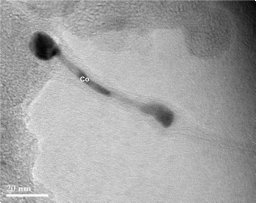 Samir Farhat合作论文数LIMHP Université Paris6
 G. Cicala合作论文数6
 Benoit Baudrillart合作论文数5
 Rui F Silva合作论文数5
 Filipe J. Oliveira合作论文数Ceramics Engineering Department, University of Aveiro5
 X. Bonnin合作论文数4B Baudrillart合作论文数4
 Celine Falentin-Daudre合作论文数4
 Jean-Pierre H. van Helden合作论文数4Nadira Derkaoui合作论文数4
 Cecile Arnas合作论文数4Damia Dekkar合作论文数3
 Cecile Floer合作论文数3Midrel Wilfried Ngandeu Ngambou合作论文数3
 Mehmel Lahcene合作论文数3A S C Nave合作论文数INP Greifswald3Cathy Rond合作论文数3s hamann合作论文数3
 Margarida Amaral合作论文数3
 Jürgen Röpcke合作论文数3Xavier Duten合作论文数LSPM CNRS UPR3407, Univ Paris 13,3
 R. Azouani合作论文数Institut Galilée, Université Paris-Nord3M. El Hakiki合作论文数3Jamal Bougdira合作论文数Laboratoire de Physique des Milieux Ionisés & Application (CNRS UPRES A 7040), Université Henri Poincaré3Philippe Goldner合作论文数Laboratoire de Chimie Appliquée de l’État Solide, CNRS3
 A. Michau合作论文数LIMHP-CNRS, Université Paris XIII3
 Vianney Mille合作论文数LIMHP-CNRS, Université Paris 13,3
 Sami Hage-Ali合作论文数3
 A. Mouberi合作论文数2J. Roepcke合作论文数2Chaimaa Mahi合作论文数2Katya Pashova合作论文数2Pauline Perrin合作论文数2




