The connected technologies of the Internet of Things (IoT) power the world we live in. IoT systems and devices are critical infrastructure-they provide a platform for social interaction, fuel the marketplace, enable the government, and control the home. Their increasing ubiquity and decision-making capabilities have profound implications for society. When humans are empowered by technology and technology learns from experience, a new kind of social contract is needed, one that specifies the roles and rules of engagement for a cyber-social world. In this paper, we describe the "impact universe," a framework for assessing the impacts and outcomes of potential IoT social controls. Policymakers can use this framework to guide technological innovation so that the design, use, and oversight of IoT products and services advance the public interest. As an example, we develop an impact universe framework that describes the social, economic, and environmental impacts of self-driving cars.
The Research Data Alliance (RDA) is a community-driven organization dedicated to the development and use of technical, social, and community infrastructure promoting data sharing and data-driven exploration.RDA is particularly important for the global academic community where research infrastructure is often ad hoc, may have a short shelf-life, and hard to fund.At its launch in 2013, RDA struck a chord.Since then, RDA has attracted more than 9400 members from 130plus countries and developed infrastructure used by groups all over the world.One of its founders is
In the 21st century, digital data drive innovation and decision-making in nearly every field. However, little is known about the total size, characteristics, and sustainability of these data. In the scholarly sphere, it is widely suspected that there is a gap between the amount of valuable digital data that is produced and the amount that is effectively stewarded and made accessible. The Stewardship Gap Project (http://bit.ly/stewardshipgap) investigates characteristics of, and measures, the stewardship gap for sponsored scholarly activity in the United States. This paper presents a preliminary definition of the stewardship gap based on a review of relevant literature and investigates areas of the stewardship gap for which metrics have been developed and measurements made, and where work to measure the stewardship gap is yet to be done. The main findings presented are 1) there is not one stewardship gap but rather multiple "gaps" that contribute to whether data is responsibly stewarded; 2) there are relationships between the gaps that can be used to guide strategies for addressing the various stewardship gaps; and 3) there are imbalances in the types and depths of studies that have been conducted to measure the stewardship gap.
Alfred P. Sloan Foundation; Rensselaer Polytechnic Institute; University of Colorado Boulder
Data science promises new insights, helping transform information into knowledge that can drive science and industry.
interconnected devices infected with malware mounted a " denial-of-service " cy-berattack on Dyn, a company that operates part of the Internet's directory service. Such attacks require us to up our technical game in Internet security and safety. They also expose the need to frame and enforce social and ethical behavior, privacy, and appropriate use in Internet environments. Social behavior and appropriate use become even more crucial as we build out the " Internet of Things " (IoT)—an increasingly interconnected cyber-physical-biological environment that links devices, systems, data, and people. At its best, the IoT has the potential to create an integrated ecosystem that can respond to a spectrum of needs, increasing efficiency and opportunity, and empowering people through technology , and technology through intelligence. At its worst, the IoT can open a Pandora's Box of inappropriate and unsafe behavior, unintended consequences , and intrusiveness. The difference between an IoT that enhances society and one that diminishes it will be determined by our ability to create an effective model for IoT governance. This model must guide social behavior and ethical use of IoT technologies while promoting effective security and safety. While we should not limit technology innovation too early with overly restrictive policy, neither should we leave the policy and governance discussion until the IoT is so mature that it cannot easily incorporate pro-tections. What Policy Will Be Needed for the IoT? Although much of the policy needed for the IoT may evolve from Internet gov-ernance, the scale, heterogeneity, complexity , and degree of technological autonomy within the IoT will require new thinking about regulation and policy and force new interpretations of current law. As an example of the complexity of the governance challenge, consider three key areas critical to ensure the positive potential of the IoT: 1. What are your rights to privacy in the IoT? The IoT will sharpen the tension between individual privacy and the use of personal information to promote effectiveness, safety, and security. Who should control information about you? Who should access it? Who can use it? The answer is not always clear-cut. Consider medical monitoring devices and the information they accumulate. Should your personal health information be shared when the Centers for Disease Control want to track a potential epidemic? When bio-medical researchers want to model potential treatment strategies on a richer dataset? When an employer is considering you for a job? At present, policy and …
Stakeholders in scholarly research are paying increased attention to stewardship of digital research data for the purposes of advancing scientific discovery, driving innovation, and promoting trust in science and scholarship. However, little is known about the total amounts, characteristics, and sustainability of data that could be used for these purposes. The Stewardship Gap is an 18-month project funded by the Alfred P. Sloan Foundation to understand issues in defining metrics for and measuring the stewardship gap: the potential gap between the amount of valuable data produced through sponsored projects in the United States and the amount that is effectively stewarded and made accessible. This paper reports on the first phase of the project, which sought to develop an instrument to gather information about research data sustainability from a broad variety of researchers and research disciplines and make progress toward the ultimate goals of 1) shedding light on the size, characteristics, and sustainability of valuable sponsored research data and creative work in the United States, and 2) recommending actions stakeholders can take to address the stewardship gap if one is found to exist.
This presentation to Pitt and CMU library faculty & staff on data sharing and the Research Data Alliance was given during Open Access Week 2015, jointly sponsored by the Carnegie Mellon University Libraries and the University Library System, University of Pittsburgh on Thursday, October 22, 11:00am - 12:00pm at the Mellon Institute Conference Room (MI 348), Carnegie Mellon University. Three years ago, the Research Data Alliance (rd-alliance.org) was launched as a community-driven international organization with a mission to develop social and technical infrastructure that supports and accelerates data sharing world-wide. Since its launch, the RDA has grown precipitously and now has over 3100 members from 100+ countries. U.S. Chair Francine Berman discusses the opportunities and challenges of sharing research data, and describes RDA’s global efforts to build an agile and functional organization, a broad and cohesive community, and a pipeline of impact-focused infrastructure adopted by individuals, projects and organizations to solve problems. ABOUT THE SPEAKER: Francine Berman is the Edward P. Hamilton Distinguished Professor in Computer Science at Rensselaer Polytechnic Institute. She is a Fellow of the Association of Computing Machinery (ACM), a Fellow of the Institute of Electrical and Electronics Engineers (IEEE), and a Fellow of the American Association for the Advancement of Science (AAAS). In 2009, she was the inaugural recipient of the ACM/IEEE-CS Ken Kennedy Award for “influential leadership in the design, development, and deployment of national-scale cyberinfrastructure.” Dr. Berman is U.S. lead of the Research Data Alliance (RDA). She also serves as Chair of the Anita Borg Institute Board of Trustees, as co-Chair of the NSF Advisory Committee for the Computer and Information Science and Engineering (CISE) Directorate, as a member of the Board of Trustees of the Sloan Foundation, and as a member of the Board of Directors of the Monterey Bay Aquarium Research Institute (MBARI). Dr. Berman has served as Director of the San Diego Supercomputer Center and as Vice President for Research at Rensselaer Polytechnic Institute. She also served as co-Chair of the National Academies Board on Research Data and Information (BRDI), as co-Chair of the US-UK Blue Ribbon Task Force for Sustainable Digital Preservation and Access, and Chair of the Information, Computing and Communication Section (Section T) of the American Association for the Advancement of Science (AAAS). For her accomplishments, leadership, and vision, Dr. Berman was recognized by the Library of Congress as a “Digital Preservation Pioneer”, as one of the top women in technology by BusinessWeek and Newsweek, and as one of the top technologists by IEEE Spectrum.
The emergent field of data science is a critical driver for innovation in all sectors, a focus of tremendous workforce development, and an area of increasing importance within science, technology, engineering, and math (STEM). In all of its aspects, data science has the potential to narrow the gender gap and set a new bar for inclusion. To evolve data science in a way that promotes gender diversity, we must address two challenges: (1) how to increase the number of women acquiring skills and working in data science and (2) how to evolve organizations and professional cultures to better retain and advance women in data science. Everyone can contribute.
 Henri Casanova合作论文数Department of Information & Computer Sciences, University of Hawaii at Manoa27
 Rich Wolski合作论文数Department of Computer Science, University of California, Santa Barbara18
 Jack Dongarra合作论文数Department of Electrical Engineering and Computer Science, The University of Tennessee;Innovative Computing Laboratory, The University of Tennessee;Center for Information Technology Research, The University of Tennessee;School of Mathematics, University of Manchester;Computer Science and Mathematics Division, Oak Ridge National Laboratory12
 Jennifer M. Schopf合作论文数Texas Advanced Computing Center10
 Richard Wolski合作论文数9
 Walfredo Cirne合作论文数Universidade Federal de Campina Grande9
 Holly Dail合作论文数Semgrep9
 Silvia Figueira合作论文数Department of Computer Engineering;Santa Clara University;Department of Computer Engineering, Santa Clara University9
 Alexander Szalay合作论文数Department of Physics and Astronomy, Krieger School of Arts and Sciences, Johns Hopkins University;Department of Computer Science, Whiting School of Engineering, Johns Hopkins University;Institute for Data Intensive Engineering and Science, Johns Hopkins University;Eötvös University7
 Graziano Obertelli合作论文数7Stuart Feldman合作论文数6Bonnie Carroll合作论文数6Michael Stebbins合作论文数6Robert Miller合作论文数6Peter Schiffer合作论文数6John May合作论文数6
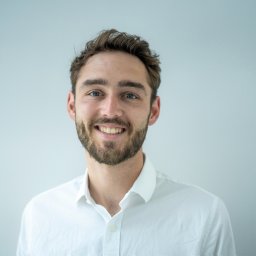 Maxwell L Elliott合作论文数Department of Psychology & Neuroscience, Duke University6
 Lisa Tauxe (丽莎·托克斯)合作论文数Geosciences Research Division, Scripps Institution of Oceanography, University of California, San Diego6
 Alexa McCray合作论文数Department of Biomedical Informatics, Harvard Medical School;Department of Medicine, Beth Israel Deaconess Medical Center;Blavatnik Institute Biomedical Informatics, Harvard Medical School6
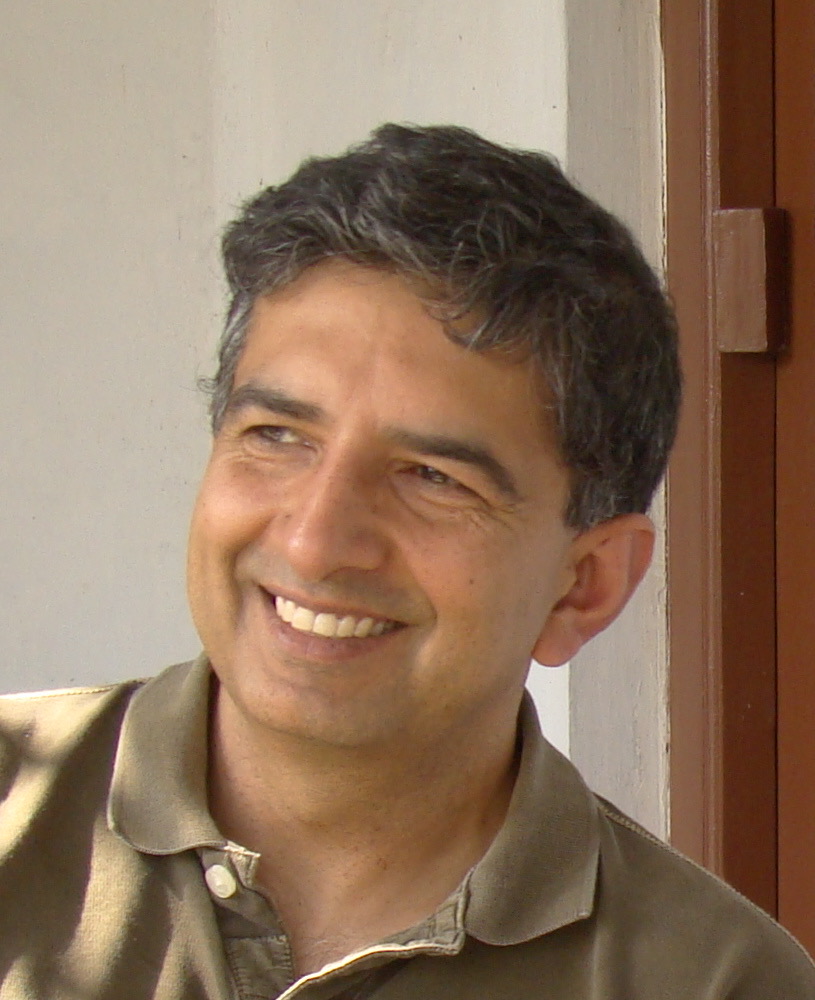 Salman Habib合作论文数Computational Science Division, Argonne National Laboratory;Kavli Institute for Cosmological Physics, University of Chicago;Northwestern Argonne Institute of Science and Engineering6
 James A. Hendler合作论文数Department of Computer Science, Rensselaer Polytechnic Institute6Alan Su合作论文数Cambridge, MA;Google Inc.6
 Gary Shao合作论文数Leidos6
 Paul F. Uhlir合作论文数6
 Donna K. Ginther合作论文数Center for Science, Technology & Economic Policy, Institute for Policy & Social Research, The University of Kansas;Economics Department, College of Liberal Arts & Sciences, The University of Kansas;National Bureau of Economic Research;Life Course Centre, University of Queensland6
 Edward Seidel合作论文数University of Wyoming6
 Sarah M Nusser合作论文数Department of Statistics, College of Liberal Arts and Sciences, Iowa State University6
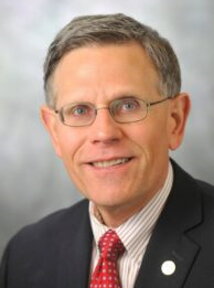 Kelvin K Droegemeier合作论文数Department of Climate, Meteorology & Atmospheric Sciences, School of Earth, Society & Environment, University of Illinois Urbana-Champaign6
 Amy Brand合作论文数6
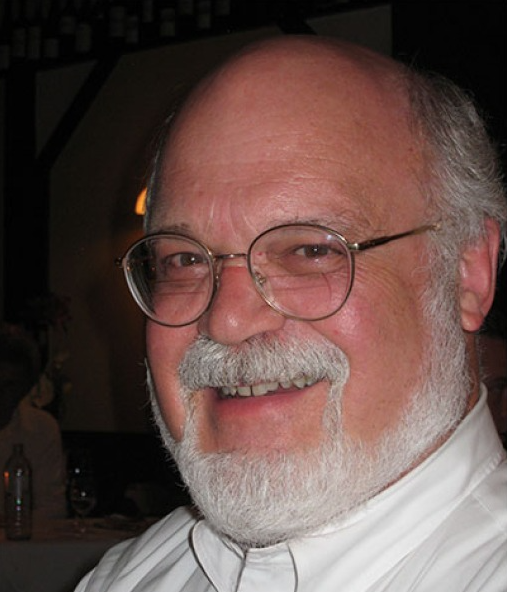 John Hildebrand合作论文数Department of Neuroscience, College of Science, University of Arizona6
 Barend Mons合作论文数University of Rotterdam and6Heng Xu合作论文数5
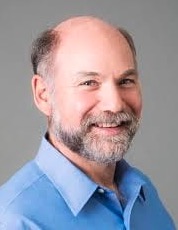 Carl F Kesselman合作论文数Daniel J Epstein Department of Industrial and Systems Engineering, Viterbi School of Engineering, University of Southern California;Biomedical Data Center, Information Sciences Institute, University of Southern California5
 Sathish Vadhiyar合作论文数Department of Computational and Data Sciences, Indian Institute of Science5
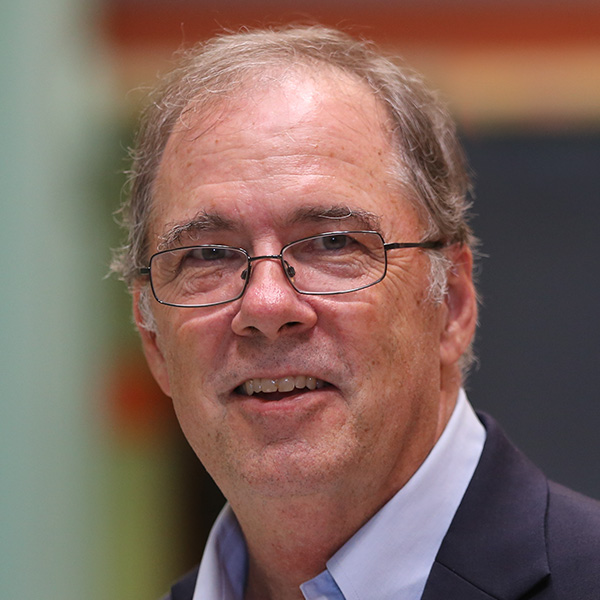 Keith D. Cooper合作论文数Department of Computer Science, Rice University5
 Dmitrii Zagorodnov合作论文数5Dennis Gannon合作论文数Department of Computer Science at Indiana University;Indiana Pervasive Technology Labs5
 Lennart Johnsson合作论文数College of Engineering, University of Houston;College of Natural Sciences and Mathematics, University of Houston5
 Daniel Reed合作论文数School of Computing, University of Utah5
 Tony Hey合作论文数Science and Technology Facilities Council4
 Ken Kennedy合作论文数Department of Computer Science, Rice University4
 Shava Smallen合作论文数San Diego Supercomputer Center4O. Sievert合作论文数4
 Marcio Faerman合作论文数Ohio Supercomputer Center4
 Mark Ellisman合作论文数Center for Research in Biological Systems, University of California, San Diego;National Center for Microscopy and Imaging Research4M Faerman合作论文数3M. Mazina合作论文数3jeremy york合作论文数3Stramm, B.合作论文数3




