The aerial parts of Gutierrezia resinosa gave 15 new diterpenes including 12 labdanes and three nerylgeraniol derivatives. The structures were elucidated by high field NMR spectroscopy.
The aerial parts of D. floribundum afforded, in addition to known compounds, 10 new clerodane derivatives while D. ericoides gave 2-beta-hydroxyhardwickiic acid and widespread compounds. The structures were elucidated by high field NMR spectroscopy. The chemotaxonomic aspects are discussed briefly.
The aerial parts of Olearia teretifolia afforded, in addition to two known diterpenes, 39 new ones, 20 ent-clerodanes and 19 ent-labdanes. Furthermore, a new enediynediene and coniferyl acetate were present. The structures were elucidated by high field NMR techniques. Chemotaxonomic aspects are discussed briefly.
Tamaulipa azurea gave two new seco-labdanes. Bishopiella elegans gave a known nerolidol derivative and a guaianolide. Campuluclinium megacephalum gave a tremetone derivative while Asanthus solidaginifolius afforded, in addition to polyalthic acid, two known germacranolides and large amounts of a cyclopropanogermacranolide, so far only isolated in trace amounts from a Cronquistia species. Cronquistianthus trianae also afforded germacranolides.
From 12 Ursinia species, in addition to known compounds, 31 new sesquiterpene lactones, 10 being germacranolides, 19 guaianolides, one eudesmanolide and a rearranged one, were isolated. Furthermore, seven sesquiterpene acids and methyl esters, including two fulvenes and a rearranged eudesmane, a nerolidol and seven farnesol derivatives, a furosesquiterpene derived from dehydrolasiospermane, three eudesmane and three eremophilane derivatives as well as a triynene were present. The structures were elucidated by high field NMR techniques. The chemistry supports the placement of the genus in the tribe Anthemideae, probably as a subtribe, together with related South African genera.
The aerial parts of Nauplius intermedius afforded, in addition to several known humulane derivatives, five new ones. The structures and the configurations were elucidated by high field NMR spectroscopy. The chemotaxonomic aspects are discussed briefly.
From two Tithonia species, in addition to known compounds, nine new sesquiterpene lactones were isolated: eight germacranolides and one eudesmanolide. The structures were elucidated by means of spectroscopic methods.
The aerial parts of Chrysocephalum ambiguum afforded, in addition to two known diterpenes, 28 new ones, 22 ent-labdanes, four ent-manoyloxide derivatives and two monocyclic diterpenes derived from helipterol. The structures were elucidated by high field H-1 NMR spectroscopy.
Investigation of 11Aspilia species afforded several known kaurane derivatives and other diterpenes. FromA. eenii a highly oxygenated germacrane bisepoxide was isolated. Comparison of the1H NMR data with those of several germacrane derivatives fromSenecio andLigularia species, spin decoupling and NOED led to corrections of the structures of several compounds.
The aerial parts of Brickellia californica afforded in addition to widespread compounds seven guaianolides, three of them not reported previously, and a germacranolide. From B. lemmonii 11 new ent-labdanes and three known ones were isolated. Structures were elucidated by high field NMR techniques.
A new eudesmanolide and seven sesquiterpene lactones with a new carbon skeleton were isolated from the aerial parts of Artemisia santolinifolia. Four of the new compounds were partially degraded. The biogenesis of these compounds is discussed. Furthermore, several glucopyranosides were present, three derived from phenolics, two from thujane, one from vomifoliol A and one from dimethylvinylcarbinol. The structures were elucidated by high field NMR techniques.
The aerial parts of Odixia angusta afforded five ent-kaurane succinates and a nor-derivative as well as diprenyl p-coumarate and a hemiacetal derived from the latter. Ozothamnus obcordatus gave five prenylated p-hydroxybenzoic acids probably formed by oxidative cleavage of the coumarates. The structures were elucidated by high field NMR techniques.
The investigation of two Chrysocoma species gave three new clerodanes, two being cis-decalin derivatives. The chemotaxonomy is discussed briefly.
From 11 Chilean Senecio species eight new furoeremophilanes and eremophilanolides, eight eremophilane, one cadinane, five germacrane, one oplopanone and five shikimic acid derivatives were isolated in addition to known compounds. The structures were elucidated by high field NMR techniques and the chemotaxonomic aspects are discussed briefly.
The investigation of two East African and a Madagascarian Vernonia species afforded several new sesquiterpene lactones. Vernonia colorata subsp. grandis gave 19-hydroxyglaucolide A and three vernodalin derivatives, V. holstii five new cistifoliolides and V. zanzibarensis five lactones closely related to brachycalyxolide. The structures were elucidated by high field NMR techniques. The chemotaxonomic relevance is discussed briefly.
From the aerial parts of Siegesbeckia orientalis, in addition to a known sesquiterpene lactone, nine new germacranolides, three melampolides, three geranylnerol derivatives and three ent-pimarenes were isolated. From Guizotia scabra a new eudesmanolide was obtained. The structures were elucidated by high field NMR techniques. The chemotaxonomic aspects are discussed briefly.
The aerial parts of Polyachyrus sphaerocephalus gave seven new eudesmane derivatives and a germacra-diendiol while a reinvestigation of P. fuscus afforded a new caryophyllene, two nerolidolglycosides, a curcumene and two bisabolene derivatives. Chaetanthera euphrasioides gave a clerodane and Ch. chilensis two thiophene acetylenes while several other species only gave known compounds. The structures were elucidated by high field NMR techniques. Chemotaxonomic aspects are discussed briefly.
Guaianolides were isolated from twoBrachylaena species. The compounds were all derived from desacyl cynaropicrin. The structures were elucidated by high field1H NMR spectroscopy and the chemotaxonomy of the genus is discussed briefly.
A reinvestigation of Aristeguetia buddleaefolia gave 16 new labdanes and two nor-labdanes, while A. glutinosa afforded, in addition to large amounts of 8,15-dihydroxylabdane, three new nor-labdanes. Badillao salicina gave six new cis-clerodanes and Grosvenoria rimbachii, guaianolides and tremetone derivatives, four of which were new. The structures were elucidated by high field NMR techniques and a few chemical transformations. The chemotaxonomy is discussed briefly.
 Robert M. King合作论文数342Christa Zdero合作论文数340Jasmin Jakupovic合作论文数Institute for Organic Chemistry, Technical University of Berlin, D-1000 Berlin 12, West Germany163Harold Robinson合作论文数156
 Harold E Robinson合作论文数US Natl Herbarium, Smithsonian Inst138
 Helmut Schwarz合作论文数Technische Universität Berlin96Michael Grenz合作论文数50Käthe-Marie Kleine合作论文数39
 Rajinder K. Gupta合作论文数Institute for Organic Chemistry, Technical University of Berlin37Jürgen Ziesche合作论文数33Christian Arndt合作论文数31Claus Köppel合作论文数29Albert Suwita合作论文数28A. Schuster合作论文数26Hans Bornowski合作论文数26Dieter Schumann合作论文数26
 Guillermo Schmeda Hirschmann合作论文数Instituto de Química de Recursos Naturales, Universidad de Talca24Pahup Singh合作论文数23Maniruddin Ahmed合作论文数21Hermann M. Niemeyer合作论文数Facultad de Ciencias, Universidad de Chile20
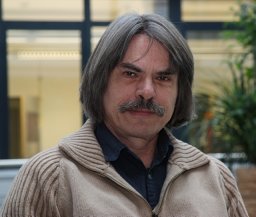 Wolf-Rainer Abraham合作论文数Institut für Organische Chemie, Technischen Universität Berlin19V. Castro合作论文数18Käthe-Marie Rode合作论文数17Ulrich Fritz合作论文数15Karl-Heinz Knoll合作论文数15Nagabhushan Rao合作论文数15Reinhard Zeisberg合作论文数15Xorge A. Dominguez合作论文数14
 Harald Greger合作论文数Division of Systematic und Evolutionary Botany, Department of Botany and Biodiversity Research, Faculty of Life Sciences, University of Vienna14Pradip K. Mahanta合作论文数14Abdolhossein Rustaiyan合作论文数14Robindra N Baruah合作论文数13G.M. Mungai合作论文数13Joachim Laser合作论文数13Michael Wallmeyer合作论文数13
 Ngo Le Van合作论文数13Ruth Jente合作论文数12Horst Czerson合作论文数12
 N. N. Misra合作论文数Ingenium Naturae Private Limited;Taif University12Ekkehard Winterfeldt合作论文数11Werner Skuballa合作论文数11K Nickisch合作论文数10Antoinette Suwita合作论文数10Lakshmi N. Dutta合作论文数10V.P. Pathak合作论文数10Peter‐Helmut Bonnet合作论文数10




