Although the ionization/desorption mechanisms in matrix-assisted laser desorption/ionization (MALDI) remain poorly understood, there is a clear difference between the energy absorption processes in the ultraviolet (UV) and infrared (IR) modes of operation. UV-MALDI demands an on-resonance electronic transition in the matrix compound, whereas results presented here support earlier work showing that a corresponding resonant vibrational transition is not a requirement for IR-MALDI. In fact, data from the present study suggest that significant absorption of radiant energy by a potential matrix impairs its performance, although this observation is at variance with some other reports. For example, sinapinic acid, with an IR absorption maximum close to the 2.94 micrometer wavelength of the Er-YAG laser, has been little used as an IR-MALDI matrix. By contrast, succinic acid, with much lower IR absorption and no history of use in UV-MALDI as it has no UV absorption at the wavelength of common UV lasers, has become widely recognized as a good general purpose matrix for IR-MALDI. Despite reports by others that glycerol is an effective matrix for IR-MALDI, we find that glycerol, which also absorbs strongly at 2.94 micrometer, is useful only if applied as a very thin film. Thus the cumulative evidence for the role of the matrix in IR-MALDI appears confusing and often contradictory. Water has been postulated to be a major contributor to the absorption of energy in IR-MALDI. Consistent with this, we find that samples dried from D(2)O, which does not absorb at 2.94 micrometer, give spectra of inferior quality compared with the same samples from H(2)O. Similarly, samples dried under vacuum, that probably contain less water than those dried in the open laboratory, give weaker and more erratic spectra. Another potential participant in energy absorption and energy transfer is the surface of the metal support, an alternative mechanism for IR-MALDI, for which some evidence is presented here.
Taking advantage of the remarkable technical advances in mass spectrometry over the last few years, previously difficult or intractable problems in protein biology can now be solved effectively. Currently three soft ionization techniques [liquid matrix secondary ion (LSI), electrospray (ESI) and matrix-assisted laser desorption (MALDI)] may be employed to elicit information on the molecular nature of a sample at several levels of structural detail. Each ionization method suffers from selectivity (or discrimination or suppression) toward any given sample and the type and quality of information which may be obtained varies depending upon the parameters of the ion optical configurations chosen. Thus, in many cases, more than one technique must be explored and employed to obtain eventually the information required. In cases where mass spectral information is obtained from several techniques on the same sample, it is many times complementary. In addition, one can anticipate the introduction of new ion optical strategies periodically. This chapter deals with problems ranging from protein primary sequence determination through identification of a variety of covalent modifications. Examples are presented which illustrate application of all the ionization methods currently available.
Organic Mass SpectrometryVolume 28, Issue 3 p. 289-290 OMS Letter Structural characterization of a glycoalkaloid at the femtomole level by means of four-sector tandem mass spectrometry and scanning-array detection† Syd Evans, Syd Evans Kratos Analytical Ltd, Barton Dock Road, Urmston, Manchester, UKSearch for more papers by this authorRod Buchanan, Rod Buchanan Kratos Analytical Ltd, Barton Dock Road, Urmston, Manchester, UKSearch for more papers by this authorAndrew Hoffman, Andrew Hoffman Kratos Analytical Ltd, Barton Dock Road, Urmston, Manchester, UKSearch for more papers by this authorFred A. Mellon, Fred A. Mellon AFRC Institute of Food Research, Norwich Laboratory, Norwich Research Park, Colney, Norwich NR4 7UA, UKSearch for more papers by this authorKeith R. Price, Keith R. Price AFRC Institute of Food Research, Norwich Laboratory, Norwich Research Park, Colney, Norwich NR4 7UA, UKSearch for more papers by this authorS. Hall, S. Hall School of Pharmacy, University of California, San Francisco, California 94143, USASearch for more papers by this authorF. C. Walls, F. C. Walls School of Pharmacy, University of California, San Francisco, California 94143, USASearch for more papers by this authorA. L. Burlingame, A. L. Burlingame School of Pharmacy, University of California, San Francisco, California 94143, USASearch for more papers by this authorSu Chen, Su Chen Institute of Mass Spectrometry and Department of Chemistry, University of Warwick, Coventry CV4 7AL, UKSearch for more papers by this authorPeter J. Derrick, Peter J. Derrick Institute of Mass Spectrometry and Department of Chemistry, University of Warwick, Coventry CV4 7AL, UKSearch for more papers by this author Syd Evans, Syd Evans Kratos Analytical Ltd, Barton Dock Road, Urmston, Manchester, UKSearch for more papers by this authorRod Buchanan, Rod Buchanan Kratos Analytical Ltd, Barton Dock Road, Urmston, Manchester, UKSearch for more papers by this authorAndrew Hoffman, Andrew Hoffman Kratos Analytical Ltd, Barton Dock Road, Urmston, Manchester, UKSearch for more papers by this authorFred A. Mellon, Fred A. Mellon AFRC Institute of Food Research, Norwich Laboratory, Norwich Research Park, Colney, Norwich NR4 7UA, UKSearch for more papers by this authorKeith R. Price, Keith R. Price AFRC Institute of Food Research, Norwich Laboratory, Norwich Research Park, Colney, Norwich NR4 7UA, UKSearch for more papers by this authorS. Hall, S. Hall School of Pharmacy, University of California, San Francisco, California 94143, USASearch for more papers by this authorF. C. Walls, F. C. Walls School of Pharmacy, University of California, San Francisco, California 94143, USASearch for more papers by this authorA. L. Burlingame, A. L. Burlingame School of Pharmacy, University of California, San Francisco, California 94143, USASearch for more papers by this authorSu Chen, Su Chen Institute of Mass Spectrometry and Department of Chemistry, University of Warwick, Coventry CV4 7AL, UKSearch for more papers by this authorPeter J. Derrick, Peter J. Derrick Institute of Mass Spectrometry and Department of Chemistry, University of Warwick, Coventry CV4 7AL, UKSearch for more papers by this author First published: March 1993 https://doi.org/10.1002/oms.1210280326Citations: 16 † Presented at Kyoto '92 Biological Mass Spectrometry, Kyoto, September 1992. AboutPDF ToolsRequest permissionExport citationAdd to favoritesTrack citation ShareShare Give accessShare full text accessShare full-text accessPlease review our Terms and Conditions of Use and check box below to share full-text version of article.I have read and accept the Wiley Online Library Terms and Conditions of UseShareable LinkUse the link below to share a full-text version of this article with your friends and colleagues. Learn more.Copy URL Share a linkShare onFacebookTwitterLinkedInRedditWechat No abstract is available for this article.Citing Literature Volume28, Issue3Special Issue: Dedicated to Professor Dr H. Budzikiewicz on the Occasion of his 60th BirthdayMarch 1993Pages 289-290 RelatedInformation
Several types of artifacts were shown to be present in 4-sector tandem collision-induced dissociation (CID) mass spectra. In CID spectra of protonated peptides produced by liquid secondary-ion mass spectrometry (LSIMS), peaks corresponding to successive losses of matrix molecules from the precursor ion were observed. In addition, peaks corresponding to MH+ ions of smaller peptides that were also present in the sample/matrix mixture in greater abundance than the selected precursor ion were observed. Both of these types of artifact peaks were shown to originate from the 'peak-at-every-mass' chemical noise at the same nominal mass as that selected by the first 2 sectors (MS1). These noise ions are transmitted through to the collision cell and produce fragments that are analysed and detected in the next 2 sectors (MS2). A second, unrelated, kind of artifact was found to be due to decompositions in the second field-free region of MS2 in an EBEB geometry machine. These artifacts, which are detectable over only a very limited mass range when using a conventional single-point detector, can be present over a much greater mass range when an array detector is used and when the collision cell is floated above ground potential. A clear understanding of the origins of all peaks in a CID spectrum is important in order to have a firm foundation for interpretation, manual or computer-aided, of the spectra of unknown compounds.
AbstractA 4‐sector EBEB mass spectrometer, fitted with a liquid secondary‐ion mass spectrometer (Cs+) ion source and an array detector has been in use at UCSF for the past 18 months. Using this period, calibration procedures have been developed and operating software refined such that the instrument can now be operated in the tandem mass spectrometry (MS/MS) mode using the array on a routine basis and with a high sample throughput. The instrument has been applied successfully to the analysis of a wide range of peptides, up to molecular weights in excess of 2500. The array is usually operated with a mass resolution of about 1500 full width at half maximum (FWHM), and under these conditions a fragment ion dynamic range of 3000:1 is obtainable. Mass assignment is typically reproducible to within 0.1 u.
ADVERTISEMENT RETURN TO ISSUEPREVArticleNEXTIon source for liquid matrix secondary ionization mass spectrometryA. M. Falick, G. H. Wang, and F. C. WallsCite this: Anal. Chem. 1986, 58, 7, 1308–1311Publication Date (Print):June 1, 1986Publication History Published online1 May 2002Published inissue 1 June 1986https://pubs.acs.org/doi/10.1021/ac00298a009https://doi.org/10.1021/ac00298a009research-articleACS PublicationsRequest reuse permissionsArticle Views61Altmetric-Citations55LEARN ABOUT THESE METRICSArticle Views are the COUNTER-compliant sum of full text article downloads since November 2008 (both PDF and HTML) across all institutions and individuals. These metrics are regularly updated to reflect usage leading up to the last few days.Citations are the number of other articles citing this article, calculated by Crossref and updated daily. Find more information about Crossref citation counts.The Altmetric Attention Score is a quantitative measure of the attention that a research article has received online. Clicking on the donut icon will load a page at altmetric.com with additional details about the score and the social media presence for the given article. Find more information on the Altmetric Attention Score and how the score is calculated. Share Add toView InAdd Full Text with ReferenceAdd Description ExportRISCitationCitation and abstractCitation and referencesMore Options Share onFacebookTwitterWechatLinked InRedditEmail Other access optionsGet e-Alertsclose Get e-Alerts
The design and performance of a cooled sample introduction probe for fast atom bombardment or other liquid secondary ionization mass spectrometric studies are described. Cooling relatively volatile matrix materials (sulfolane, thioglycerol, and tetraglyme, for example) in situ in the ion source can increase the duration of the sample spectrum by a factor of 10. Cooling also permits a much wider range of matrix materials to be used. As an example, the spectrum of the carbohydrate, peracetyl [Glu(β1 → 3)]7 Glucitol in tetraglyme matrix, is shown to give an excellent spectrum including cleavage peaks corresponding to losses of the first five sugar residues. The spectrum lasted approximately 10 times longer when the probe tip was cooled to 9 ± 1°C than when no cooling was used, corresponding to a 10-fold increase in integrated sensitivity.
Journal Article Design, Implementation, and Performance of a High Resolution Gas Chromatography/High Resolution Mass Spectrometry/Real-Time Computer System for the Analysis of Complex Organic Mixtures Get access J. Meili, J. Meili Space Sciences Laboratory, University of California, Berkeley, California 94720 Search for other works by this author on: Oxford Academic PubMed Google Scholar F.C. Walls, F.C. Walls Space Sciences Laboratory, University of California, Berkeley, California 94720 Search for other works by this author on: Oxford Academic PubMed Google Scholar R. McPherron, R. McPherron Space Sciences Laboratory, University of California, Berkeley, California 94720 Search for other works by this author on: Oxford Academic PubMed Google Scholar A.L. Burlingame A.L. Burlingame Space Sciences Laboratory, University of California, Berkeley, California 94720 Search for other works by this author on: Oxford Academic PubMed Google Scholar Journal of Chromatographic Science, Volume 17, Issue 1, January 1979, Pages 29–42, https://doi.org/10.1093/chromsci/17.1.29 Published: 01 January 1979
Journal Article Real-Time Gas Chromatography/High Resolution Mass Spectrometry and its Application to the Analysis of Physiological Fluids Get access B. J. Kimble, B. J. Kimble Search for other works by this author on: Oxford Academic PubMed Google Scholar R. E. Cox, R. E. Cox Search for other works by this author on: Oxford Academic PubMed Google Scholar R. V. McPherron, R. V. McPherron Search for other works by this author on: Oxford Academic PubMed Google Scholar R. W. Olsen, R. W. Olsen Search for other works by this author on: Oxford Academic PubMed Google Scholar E. Roitman, E. Roitman Search for other works by this author on: Oxford Academic PubMed Google Scholar F. C. Walls, F. C. Walls Search for other works by this author on: Oxford Academic PubMed Google Scholar A. L. Burlingame A. L. Burlingame Space Sciences Laboratory, University of California, Berkeley, CA 94720 Search for other works by this author on: Oxford Academic PubMed Google Scholar Journal of Chromatographic Science, Volume 12, Issue 11, November 1974, Pages 647–655, https://doi.org/10.1093/chromsci/12.11.647 Published: 01 November 1974
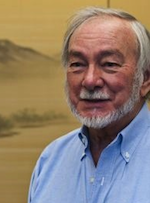 Al Burlingame合作论文数School of Pharmacy, University of California, San Francisco;The Liver Center, School of Medicine, University of California, San Francisco6
 Alma L Burlingame合作论文数4
 p c wszolek合作论文数4Arnold M Falick合作论文数3
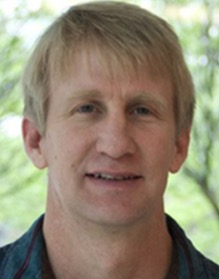 Karl Clauser合作论文数Broad Institute of MIT and Harvard2
 Katalin F. Medzihradszky合作论文数Laboratory of Proteomics Research, Biological Research Centre of the Hungarian Academy of Sciences2
 Steven C. Hall合作论文数Department of Pediatric Anesthesia, Children’s Memorial Hospital2Richard W Olsen合作论文数2Rw Olsen合作论文数1Victor L. Talrose合作论文数1Sc Hall合作论文数1GIBSON BRADFORD W合作论文数1AL BURLINGAME合作论文数1RV MCPHERRON合作论文数1Bj Kimble合作论文数1David Maltby合作论文数1Su Chen合作论文数1Maurette M.合作论文数1J. Borg合作论文数1y langevin合作论文数1
 Roger A. Laine合作论文数Division of Biochemistry and Molecular Biology, Department of Biological Sciences, College of Science, Louisiana State University;TumorEnd, LLC;Department of Chemistry, College of Basic Sciences, Louisiana State University1Tran Huu M合作论文数Joint BioEnergy Institute;Sandia National Laboratories, Livermore, CA 94550, USA.;Sandia National Laboratories, Joint BioEnergy Institute1Jeanpierre Bibring合作论文数1W. Aberth合作论文数1
 Guoxiu Wang (王国秀)合作论文数College of Life Sciences, Huazhong Normal University1
 Richard Buchanan合作论文数Carnegie Mellon University1Keith R. Price合作论文数1A Falick合作论文数1Syd Evans合作论文数1
 Michel Maurette合作论文数1
 Fred Mellon合作论文数Institute of Food Research, Norwich Research Park1Rod Buchanan合作论文数1B.J. Kimble合作论文数1Lois B. Epstein合作论文数1Alistair Riddoch合作论文数1Randy M. Whittal合作论文数Department of Chemistry, University of Alberta1Lori E. Andrews合作论文数1
 Maria D. Person合作论文数College of Pharmacy, University of Texas at Austin1Peter J Derrick合作论文数Department of Physics, University of Auckland1




