Cardiogenic shock complicates takotsubo syndrome (TTS) in approximately 10
Ischaemic heart disease shows important differences between men and women, requiring an understanding of sex and gender dissimilarities to improve outcomes. This Scientific Statement provides an updated review of the current knowledge from risk factors to prognosis. It discusses the unequal impact of certain traditional risk factors between men and women, along with additional factors, such as hormonal changes and treatments (including those for transgender people and cancer), pregnancy-related complications, and autoimmune diseases, which contribute to the sex-specific risk profiles. Moreover, it outlines functional and structural sex differences in the pathophysiology (e.g. coronary atheroma plaques and burden, coronary dissection, vasospasm, and microvascular disease) with women being more prone to microvascular disease and endothelial dysfunction, while paradoxically experiencing less severe myocardial ischaemia at similar levels of coronary stenosis. The document further addresses the evaluation of diagnostic tools, which often have a male-centric bias, resulting in underdiagnosis in women who also tend to receive less guideline-recommended treatment. Additionally, women can have different responses and side effects to various preventive and therapeutic treatments, potentially contributing to the worse prognosis documented in acute coronary syndromes with obstructive coronary artery disease, particularly at a young age. Considering all these sex and gender differences and the low enrolment of women in randomized controlled trials, questions arise regarding the optimal treatment for women. Addressing sex differences requires conducting sex-specific research to close the knowledge gap. Overall, the Scientific Statement highlights all relevant sex- and gender-specific dissimilarities to advance clinical practice and identify directions for future research to improve guideline recommendations for equitable care.
BACKGROUND:The pathogenesis of Takotsubo syndrome (TTS) is poorly understood, but differences in outcome depending on the triggering factor imply differences in the pathophysiology. Beyond the established trigger-based InterTAK (International Takotsubo Registry) classification, the newly proposed distinction between primary and secondary TTS aims to differentiate emotionally primed heart dysfunction from TTS driven by direct myocardial injury. To explore these potential differences, we utilized cardiovascular magnetic resonance imaging to assess left ventricular function, myocardial edema, and myocardial injury across the InterTAK classification and between primary and secondary TTS. METHODS:For this multicenter cohort study, 110 patients (95% women, age 66±12 years) from the InterTAK registry were included who received cardiovascular magnetic resonance 3 (interquartile range, 2-5) days after symptom onset. Cardiovascular magnetic resonance included assessment of myocardial function, edema (T2-weighted spin-echo and T2-mapping when available), and late gadolinium enhancement. RESULTS:No significant differences were observed in left ventricular volumes, function, or mass across the 3 InterTAK groups or between primary and secondary TTS. Patients with emotional triggers exhibited significantly larger myocardial edema (72% versus 60% for physical triggers; P<0.01), supported by higher T2-mapping values in a subset of 22 patients with T2-mapping. In multivariable regression, only emotional trigger (P<0.01) and the absence of coronary artery disease (P=0.04) were independently associated with the extent of myocardial edema. Secondary TTS showed a higher prevalence of focal or patchy late gadolinium enhancement (primary 19%, secondary 54%; P<0.01). In multivariable logistic regression, secondary TTS (P<0.01) and early cardiovascular magnetic resonance (P=0.02) were associated with the presence of any late gadolinium enhancement. CONCLUSIONS:TTS due to emotional stress is associated with larger myocardial edema, and secondary TTS exhibited late gadolinium enhancement more frequently, indicative of direct myocardial damage. These findings suggest that emotionally primed heart dysfunction and direct myocardial injury contribute to TTS pathophysiology to varying extents, influenced by both the triggering factor and preexisting conditions.
BACKGROUND AND AIMS:Many patients with cancer develop heart failure (HF), and many patients with HF develop cancer. Inter-relationships between their natural histories are rarely reported. METHODS:Health records were obtained for a Scottish region. People aged >50 years were classified by the presence or absence of HF, loop diuretics (a pharmacological marker of congestion), and cancer. Incident cancer, mortality, and cause of death were recorded. RESULTS:Of 317 178 people aged >50 years, 11 268 (3.6%) had HF of whom 6276 were prescribed loop diuretics; a further 19 044 (6.0%) received loop diuretics. Thus, 30 312 (9.6%) people met an expanded definition of heart failure (HFexp). Annual cancer incidence was slightly higher for those with HFexp (incidence rate ratio 1.10; P < .001), varying amongst cancer types. For people with neither cancer nor HFexp, mortality was <3% annually; most deaths were cardiovascular. For those with cancer but not HFexp, annual mortality was 6.3% for women and 9.0% for men; most died of cancer. For those with HFexp but not cancer, annual mortality ranged from 6.6% to 18.4% depending on sex and HFexp criteria applied; most deaths were cardiovascular. For those with both cancer and HFexp, annual mortality ranged from 14.5% to 28.4%; cardiovascular and cancer mortality rates were similar. Few patients died at home (∼20%). CONCLUSIONS:Patients with HFexp have a slightly higher risk of cancer overall, but this may vary according to cancer type. Patients with both cancer and HFexp have a poor prognosis with a similar proportion of deaths attributed to cancer and cardiovascular disease.
Coronary plaque erosion is the second most common mechanism causing acute coronary syndromes (ACS), after coronary plaque rupture, accounting for approximately one-third of all ACS cases. The prevalence of coronary plaque erosion may be on the rise, likely due to more effective lipid-lowering therapy primarily targeted at the prevention of coronary plaque rupture. Moreover, the wider use of more refined diagnostic tools, including high-resolution intracoronary imaging modalities, has enabled more precise classification of ACS with eroded vs ruptured plaque. Optical coherence tomography (OCT) enables real-time detection of ACS with intact fibrous cap (IFC, plaque erosion) and ACS due to ruptured fibrous cap (RFC, plaque rupture), facilitating the development of potentially more personalized preventive therapeutic strategies in the future. A better understanding of specific pathological mechanisms underlying ACS due to plaque erosion has therefore become a major scientific focus over the past decade. This review explores advancements in comprehending the complex, multifaceted pathophysiology of ACS with plaque erosion and discusses potential therapeutic and preventive avenues for these patients.
BACKGROUND:Cancer and heart failure (HF) frequently coexist due to population ageing and improved survival for both conditions. HF is a well-recognised complication of oncologic therapies and a potential association between HF and subsequent cancer incidence has been recently noticed. We therefore conducted a meta-analysis to quantify cancer incidence and mortality in patients with and without HF. METHODS:Databases were searched from inception to 15 February 2026. Data from observational studies and randomised trials on individuals with and without HF and reporting cancer incidence and/or mortality during follow-up were included. The main outcome of interest was the incidence of any cancer; secondary outcomes included site-specific cancer incidence (lung, colorectal, breast, and prostate) and all-cause, cardiovascular, and cancer-related mortality. RESULTS:Twelve studies comprising 8,979,195 individuals were included. HF was associated with a higher incidence of cancer (hazard ratio [HR] 1.33, 95% confidence interval [CI] 1.14-1.54), with substantial heterogeneity (I2 = 99.7%). Cancer site-specific analyses showed increased incidences of lung (HR 1.70, 95% CI 1.26-2.29), colorectal (HR 1.28, 95% CI 1.11-1.48), and breast (HR 1.19, 95% CI 1.04-1.37), but not prostate, cancer. Effect estimates varied according to analytical strategy: matched HF and non-HF cohorts reported higher risk estimates than those using covariate adjustment without matching. Mortality data were sparse and heterogeneous. CONCLUSIONS:HF is associated with a higher incidence of cancer, although with marked heterogeneity among studies and cancer types. Mortality and cause of death were rarely reported. The observed HF-cancer association is influenced by statistical methodology, shared risk factors, differences in surveillance intensity and cancer type, that confound analyses investigating possible causal biological links. More granular and harmonised studies are required.
 Niccoli Giampaolo合作论文数400Gaetano Antonio Lanza合作论文数354
 Carlo Trani合作论文数Institute of Cardiology, Catholic University of the Sacred Heart294
 Antonio Maria Leone合作论文数Diagnostic and Interventional Cardiology Unit, UTIC;Center of Excellence in Cardiovascular Sciences Center of Excellence in Cardiovascular Sciences of the Ospedale Isola Tiberina Gemelli Isola;Università Cattolica del Sacro Cuore285Giovanna Liuzzo, Md合作论文数265
 Francesco Burzotta合作论文数Department of Cardiovascular Sciences, Fondazione Policlinico Universitario Agostino Gemelli IRCCS, Università Cattolica del Sacro Cuore Rome254Luigi M. Biasucci合作论文数246
 Italo Porto合作论文数231A Maseri合作论文数172
 Rocco Antonio Montone合作论文数Department of Cardiovascular and Thoracic Sciences, Policlinico Universitario Agostino Gemelli;Intensive Cardiac Care Unit and Interventional Cardiology Unit, Fondazione Policlinico Universitario A. Gemelli IRCCS, Catholic University of the Sacred Heart167Domenico D'Amario合作论文数148
 Rocco Vergallo合作论文数129Cristina Aurigemma合作论文数Department of Cardiovascular Sciences, European Hospital112Sestito A合作论文数109
 Enrico Romagnoli合作论文数108Massimo Massetti合作论文数104
 Leonarda Galiuto合作论文数Institute of Cardiology, Catholic University of the Sacred Heart102
 Felicita Andreotti合作论文数Dipartimento di Scienze cardiovascolari e pneumologiche, Faculty of Medicine and Surgery Med, Università Cattolica del Sacro Cuore98Gemma Pelargonio合作论文数97Daniela Pedicino合作论文数91
 Francesca Graziani合作论文数Institute of Cardiology, Catholic University of the Sacred Heart80Antonio G. Rebuzzi合作论文数79
 Maria Lucia Narducci合作论文数Department of Cardiovascular Medicine, Catholic University of the Sacred Heart79
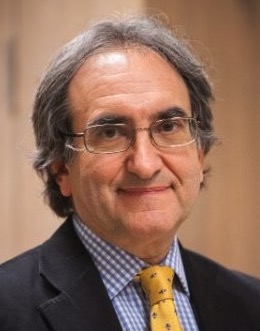 Juan Carlos Kaski合作论文数St George's University Hospitals NHS Foundation Trust;Molecular and Clinical Sciences Research Institute, St George's University of London;Glycardial Diagnostics73Nicola Cosentino合作论文数73Achille Gaspardone合作论文数St Eugenio Hosp67Antonino Buffon合作论文数65Antonella Lombardo合作论文数64Mattia Galli合作论文数63Massimiliano Camilli合作论文数62
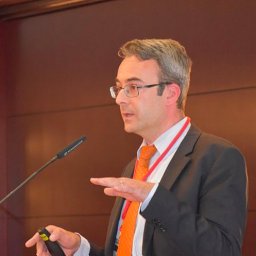 Sgueglia Gregory A合作论文数Interventional Cardiology, Ospedale Santa Maria Goretti61
 Attilio Maseri合作论文数Heart Care Foundation61Fulvio Bellocci合作论文数59Dario Pitocco合作论文数58
 Giuseppe Biondi Zoccai合作论文数Dip. di Scienze e Biotecnologie Medico Chirurgiche, Sapienza University of Rome;Ospedale Santa Maria Goretti57Anna Severino合作论文数56Rocco Mongiardo合作论文数54
 Domenico Cianflone合作论文数54Francesco Versaci合作论文数53
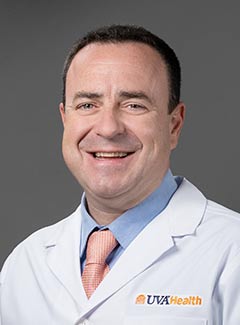 Antonio Abbate合作论文数Advanced Heart Failure and Transplant Center, University of Virginia;Heart and Vascular Center Fontaine, University of Virginia53Fabio Infusino合作论文数52
 Gianluigi Bencardino合作论文数51F Tomai合作论文数50Francesco Fracassi合作论文数49Ag Rebuzzi合作论文数49Pa Gioffre合作论文数49
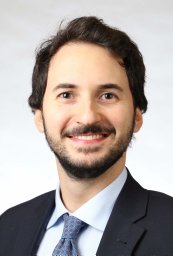 Marco Giuseppe Del Buono合作论文数Department of Cardiovascular Medicine, Fondazione Policlinico Universitario A. Gemelli IRCCS49
 Giulio Russo合作论文数49




